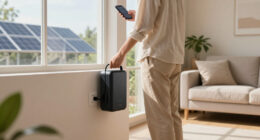
Shopping for portable solar power banks means accepting one hard truth up front: the small panel built into these batteries is an emergency trickle charger, not a replacement for a wall outlet. With that expectation set, the best models still earn their place in a camping kit or emergency bag by pairing big batteries with rugged, weather-sealed shells. My top pick is the Soarise 48000mAh with four fold-out solar panels, the only model here whose solar input can meaningfully refill the battery during a trip. If weight matters more, the Blavor 10,000mAh delivers 20W fast charging and wireless top-ups in a pocketable, flight-safe package, while the Durecopow 20,000mAh covers the basics with four built-in cables at a budget price. The real tradeoffs in this category come down to capacity versus weight, solar panel count versus pack size, and cable convenience versus long-term durability. Read on for the full breakdown of all 12 models and who each one is actually for.
Listen free for 30 days with Audible
Thousands of audiobooks and originals — cancel anytime.
Start your free trialAs an affiliate, we earn on qualifying purchases.
Key Takeaways
- Solar input is the real differentiator, not capacity. Eleven of these 12 models rely on a single small panel that needs a week or more of sun for a full charge; only the Soarise 48000mAh’s four-panel fold-out array cuts that to a usable timeframe, which is why it ranks first despite costing more.
- Bigger batteries create travel problems. Nine of the 12 models exceed 36,000mAh, putting them over the 100Wh airline carry-on ceiling — the Blavor 10,000mAh and Durecopow 20,000mAh are the only picks I would pack for a flight.
- Built-in cables quietly won the convenience battle. The top half of the ranking leans toward models with four integrated cables (Soarise, SOARAISE, Durecopow), because a dead phone plus a forgotten cable is exactly the failure these emergency batteries exist to prevent.
- Duplicate listings are everywhere in this category. Two separate 49,800mAh models and two near-identical Blavor 10,000mAh variants made the cut; when spec sheets overlap this closely, brand track record and warranty support separate the picks more than any single feature.
- Fast wired charging beats wireless every time off-grid. Models with PD 20W output, like the MINRISE 40000mAh, refill a phone two to three times faster than the 5-15W wireless pads and waste far less stored energy doing it.
| Solar Charger Power Bank 49800mAh with USB-C & Wireless Charging |  | Best Overall | Battery Capacity: 49800mAh | Battery Type: Lithium Polymer | Fast Charging: QC 3.0 via USB-C | VIEW LATEST PRICE | See Our Full Breakdown |
| Solar Power Bank 49800mAh with Wireless Charging & Built-in Cables |  | Best for Emergencies | Capacity: 49800mAh | Wireless Charging: 15W | Built-in Cables: USB-A, USB-C, Micro-USB, iOS | VIEW LATEST PRICE | See Our Full Breakdown |
| SOARAISE Solar Power Bank 48000mAh with 4 Solar Panels |  | Best for Off-Grid Solar Charging | Capacity: 48000mAh | Solar Panels: 4 fold-out panels | Ports: 2 USB-A + 1 USB-C (input/output) | VIEW LATEST PRICE | See Our Full Breakdown |
| Blavor Solar Power Bank 10,000mAh with 20W Fast Charging |  | Best Compact Pick | Capacity: 10,000mAh | Fast Charging: 20W USB-C | Wireless Charging: Yes | VIEW LATEST PRICE | See Our Full Breakdown |
| MINRISE Solar Power Bank 40000mAh PD 20W |  | Best Value | Capacity: 40000mAh | Output: 20W PD fast charging | Weight: 1.1 lbs | VIEW LATEST PRICE | See Our Full Breakdown |
| YELLOMIN 38800mAh Solar Power Bank |  | Best Lightweight High-Capacity Pick | Capacity: 38800mAh | Weight: 280g | Ports: USB-C, 2x USB-A | VIEW LATEST PRICE | See Our Full Breakdown |
| Soarise Solar Power Bank 48000mAh with 4 Solar Panels |  | Best for Extended Off-Grid Trips | Capacity: 48000mAh | Solar Panels: 4 fold-out high-efficiency panels | Wireless Charging: Yes | VIEW LATEST PRICE | See Our Full Breakdown |
| Durecopow Solar Charger Power Bank 20,000mAh |  | Best Value Pick | Capacity: 20,000mAh | Built-in Cables: USB-C, Lightning, Micro USB, USB-A | Ports: USB-C in/out, 2x USB-A out | VIEW LATEST PRICE | See Our Full Breakdown |
| Blavor Solar Power Bank 20000mAh with Wireless Charging |  | Best Feature-Packed Pick | Capacity: 20000mAh | Built-in Cables: 2x USB-C, iOS, USB-A | Wireless Charging: Yes — phone and Apple Watch | VIEW LATEST PRICE | See Our Full Breakdown |
| Solar Power Bank 40000mAh PD20W Fast Charging |  | Best Overall | Capacity: 40000mAh | Fast Charging: 20W PD (USB-C) | Built-in Cables: USB-C, iOS, Micro USB | VIEW LATEST PRICE | See Our Full Breakdown |
| BLAVOR Solar Power Bank 10,000mAh Portable Wireless Charger with 20W Fast Charging and Solar Panel |  | Best Compact Pick | Battery Capacity: 10,000mAh | Fast Charging: 20W USB-C; wireless charging supported | Ports: 3 (USB-A, USB-C, Lightning) | VIEW LATEST PRICE | See Our Full Breakdown |
| 36800mAh Solar Power Bank with Fast Charging, IP65 Waterproof, LED Flashlight, Dual USB, Emergency Backup, Travel-Ready |  | Best for Emergency Kits | Battery Capacity: 36,800mAh | Charging Ports: 3 (dual USB outputs) | Waterproof Rating: IP65 (dust-tight, water-jet resistant) | VIEW LATEST PRICE | See Our Full Breakdown |
| portable solar power bank | Capacity | Fast Charging | Built-in Cables | Ports |
|---|---|---|---|---|
| Solar Charger Power Bank 49800 | — | QC 3.0 via USB-C | 4 (USB-C, Lightning, Micro-USB, USB-A) | 3 |
| Solar Power Bank 49800mAh with | 49800mAh | — | USB-A, USB-C, Micro-USB, iOS | — |
| SOARAISE Solar Power Bank 4800 | 48000mAh | PD QC 3.0 (5V/3A) | 4 | 2 USB-A + 1 USB-C (input/output) |
| Blavor Solar Power Bank 10,000 | 10,000mAh | 20W USB-C | — | — |
| MINRISE Solar Power Bank 40000 | 40000mAh | — | — | — |
| YELLOMIN 38800mAh Solar Power | 38800mAh | — | — | USB-C, 2x USB-A |
| Soarise Solar Power Bank 48000 | 48000mAh | PD + QC 3.0, 3A USB-C | USB-C, Lightning, USB-A, Micro | 2x USB-A, 1x USB-C (input/output) |
| Durecopow Solar Charger Power | 20,000mAh | — | USB-C, Lightning, Micro USB, USB-A | USB-C in/out, 2x USB-A out |
| Blavor Solar Power Bank 20000m | 20000mAh | 20W via USB-C | 2x USB-C, iOS, USB-A | — |
| Solar Power Bank 40000mAh PD20 | 40000mAh | 20W PD (USB-C) | USB-C, iOS, Micro USB | USB-C in/out, USB-A out, Micro in |
| BLAVOR Solar Power Bank 10,000 | — | 20W USB-C; wireless charging supported | — | 3 (USB-A, USB-C, Lightning) |
| 36800mAh Solar Power Bank with | — | — | — | — |
More Details on Our Top Picks
Solar Charger Power Bank 49800mAh with USB-C & Wireless Charging
This is the most complete package in the lineup, and it earns the top slot on balance rather than on any single spec. The 49800mAh capacity refills a typical phone nine or ten times, and the four built-in cables — USB-C, Lightning, Micro-USB, and USB-A — mean nobody at the campsite hunts for a cord. Against the Blavor 10,000mAh it stores five times the energy, though it’s also considerably heavier; this rides in a backpack, not a pocket. The IP65 sealing handles rain and trail dust with more credibility than the unrated waterproofing on the MINRISE. The honest tradeoff: the single solar panel is a slow emergency trickle, so I’d still wall-charge before leaving and treat sunlight as a safety net, not a fuel source.
Pros:- 49800mAh covers roughly a week of phone charges
- Four built-in cables plus a wireless pad eliminate cord clutter
- IP65 waterproof, dustproof, and shockproof housing built for real trail abuse
- QC 3.0 fast charging over USB-C for quick top-ups
Cons:- Heavy and too large for pocket carry
- Single solar panel recharges very slowly — emergency top-ups only
- Capacity class usually exceeds airline carry-on battery limits
Best for: Multi-day campers and overlanders who want one rugged bank with every cable built in and nothing left to pack separately
Not ideal for: Air travelers and ultralight hikers — a bank this large typically exceeds airline carry-on battery limits and weighs down a minimalist pack
- Battery Capacity:49800mAh
- Battery Type:Lithium Polymer
- Fast Charging:QC 3.0 via USB-C
- Wireless Charging:Yes
- Built-in Cables:4 (USB-C, Lightning, Micro-USB, USB-A)
- Ports:3
- Waterproof Rating:IP65
- Extras:LED flashlight, shockproof, dustproof
Our verdict“The one solar power bank I’d hand to almost any outdoor traveler who wants maximum capability in a single rugged package.”
Solar Power Bank 49800mAh with Wireless Charging & Built-in Cables
Where the Best Overall pick spreads its budget across weather sealing, this one leans into power-outage readiness. The dual LED flashlights with SOS mode are genuinely useful in a blackout or roadside breakdown — brighter and more visible than the single light on most rivals — and the same 49800mAh reserve keeps a household’s phones alive for days. The 15W wireless pad earns its place on a nightstand when nobody wants to fumble for cables in the dark. Two things hold it back from the top slot: there’s no stated waterproof rating, so I’d think twice before leaving it out in a storm, and its single solar panel refills far slower than the four-panel SOARAISE. For a go-bag or glovebox, the lighting focus still wins.
Pros:- Same 49800mAh-class runtime as the top pick
- Dual LED flashlights with SOS mode designed for blackouts and breakdowns
- 15W wireless charging plus four built-in cables for cable-free use
- Impact-resistant housing suited to go-bag duty
Cons:- No stated waterproof or IP rating
- Single small solar panel means slow solar recovery
- Too bulky for everyday pocket carry
Best for: Households building emergency kits or storm-season go-bags who need days of phone power plus serious lighting
Not ideal for: Kayakers and wet-weather backpackers — with no stated IP rating, it needs more protection from rain than sealed rivals
- Capacity:49800mAh
- Wireless Charging:15W
- Built-in Cables:USB-A, USB-C, Micro-USB, iOS
- USB Ports:2
- Flashlights:Dual LED with SOS mode
- Housing:Impact-resistant, durable shell
Our verdict“The right pick for an emergency kit or storm go-bag where lighting and reserve power matter more than weather sealing.”
SOARAISE Solar Power Bank 48000mAh with 4 Solar Panels
Every other bank here treats its panel as an emergency drip; this is the one that takes sunlight seriously. The four fold-out solar panels expose roughly four times the surface area of the single-panel MINRISE or Blavor units, which turns a multi-day top-up into something achievable on a bright afternoon. Capacity sits at 48000mAh — a hair under the 49800mAh leaders, a difference nobody will feel — and PD QC 3.0 fast charging plus a wireless pad cover phones and tablets at proper wall-like speeds. The cost is carry weight: unfolded panels and a big battery make this the bulkiest pick in the roundup, and it belongs strapped to a pack, not slipped in a jacket. I’d skip it for casual weekend use; for week-long treks, it’s the obvious choice.
Pros:- Four fold-out panels recharge meaningfully faster in sun than any single-panel rival
- 48000mAh sustains days of device use off-grid
- Wireless charging plus PD QC 3.0 wired speeds
- Built-in cables keep multi-device charging simple
Cons:- Heaviest, bulkiest design in the lineup
- Panel array adds cost casual users won’t recoup
- Solar speed still depends heavily on cloud cover and panel angle
Best for: Week-long trekkers and off-grid campers who will genuinely depend on sunlight to recover charge between trailheads
Not ideal for: Casual weekend campers — the folding panel array adds bulk and cost they will never recoup on short trips
- Capacity:48000mAh
- Solar Panels:4 fold-out panels
- Ports:2 USB-A + 1 USB-C (input/output)
- Wireless Charging:Yes
- Fast Charging:PD QC 3.0 (5V/3A)
- Built-in Cables:4
- Compatibility:Smartphones and tablets
Our verdict“The only bank here I’d trust to meaningfully recharge itself from the sun on extended off-grid trips.”
Blavor Solar Power Bank 10,000mAh with 20W Fast Charging
Not every buyer needs a week of power, and this pick makes the most sense for people who count ounces. At 10,000mAh it holds two to three phone charges — a fraction of what the 49800mAh bricks above carry — but it’s genuinely pocketable, which none of the high-capacity options can claim. The 20W USB-C fast charging matches the wired speed of banks five times its size, so a quick top-up over lunch actually works. Extras like the dual flashlights and built-in compass punch above its price for day hikers. The limits are real: IPX5 handles splashes rather than the dust-tight IP65 sealing of the Best Overall pick, and the panel recharges slowly, though the ratio is less punishing than on the 40000mAh MINRISE. Buy it for day trips, not expeditions.
Pros:- Genuinely pocketable — the smallest, lightest design here
- 20W USB-C fast charging matches larger banks’ wired speed
- IPX5 splash resistance with a shockproof, dustproof shell
- Dual flashlights and a compass add trail-safety value
Cons:- 10,000mAh lasts only two to three phone charges
- IPX5 rating is weaker than IP65-sealed competitors
- Solar panel remains a slow trickle, not a primary charge method
Best for: Day hikers, festival-goers, and commuters who want a pocketable backup with fast wired charging and outdoor extras
Not ideal for: Anyone powering multiple devices through a multi-day trip — 10,000mAh runs dry fast off-grid
- Capacity:10,000mAh
- Fast Charging:20W USB-C
- Wireless Charging:Yes
- Waterproof Rating:IPX5
- Battery Type:Lithium-cobalt
- Materials:Flame-retardant ABS and PC
- Extras:Dual flashlights, compass
- Form Factor:Smallest and lightest in its class
Our verdict“The smart choice for day trips and light packers who value carry comfort over multi-day capacity.”
MINRISE Solar Power Bank 40000mAh PD 20W
On paper this reads like the Best Overall pick — 40000mAh, PD 20W fast charging, built-in cables, flashlights — yet it typically undercuts that model on price while giving up little most buyers would notice. The ten total ports and inputs, counting the attached cables, let a family charge several phones at once, something the three-port SOARAISE can’t match on ports alone. At 1.1 pounds it’s also a touch lighter than the 49800mAh class. Where the savings show: the solar panel is explicitly emergency-only, the waterproofing lacks a formal IP rating like the leader’s IP65 seal, and the brand doesn’t carry Blavor’s track record. I’d call this the smart buy for budget-conscious campers who can live with slower off-grid recovery.
Pros:- 40000mAh at a price that usually undercuts name-brand rivals
- Ten ports and inputs, including built-in cables, charge several devices at once
- PD 20W fast charging for modern phones
- 1.1 lb weight is manageable for its capacity class
Cons:- Solar input is emergency-only by design
- Waterproof claim lacks a formal IP rating
- Lesser-known brand with a shorter reliability record than Blavor
Best for: Budget-minded families and group campers who need to charge several phones at once without paying flagship prices
Not ideal for: Buyers who want verified durability claims — the waterproofing isn’t IP-rated, unlike the sealed IP65 leader
- Capacity:40000mAh
- Output:20W PD fast charging
- Weight:1.1 lbs
- Dimensions:6.67 x 3.35 x 1.22 in
- Inputs:Solar, USB-C, Micro-USB, USB-A
- Total Ports/Inputs:10 (including built-in cables)
- Durability:Waterproof, dustproof, drop-proof
- Extras:Dual LED flashlights
Our verdict“The budget buy for groups who need big capacity and many ports without paying for premium branding.”
YELLOMIN 38800mAh Solar Power Bank
Among the high-capacity options here, the YELLOMIN 38800mAh is the one I’d grab for a long hike. At 280g, it undercuts both the Soarise 48000mAh and the 40000mAh PD20W model by a wide margin, and that weight saving matters when every ounce in a pack is accounted for. The 38800mAh cell still covers several full phone charges, and the waterproof, dustproof shell plus dual LED flashlights with SOS and strobe modes fit the emergency-kit role well. The compromise is speed and convenience: there’s no wireless pad, no built-in cables, and the USB-A ports top out at 5V/2.4A, so wired refills feel slow next to the Blavor’s 20W output. I’d treat the solar panel strictly as a top-up trickle, not a primary recharge method.
Pros:- Remarkably light at 280g for a 38800mAh battery
- Waterproof and dustproof build suited to rough outdoor use
- Dual LED flashlights with Steady, SOS, and Strobe modes
- Recharges via wall outlet or solar for flexible top-ups
Cons:- No wireless charging or built-in cables
- USB-A output capped at 5V/2.4A, slower than 20W rivals
- Solar charging depends heavily on sunlight conditions
Best for: Hikers and backpackers who want near-40000mAh capacity without the half-kilo weight penalty of rival big batteries
Not ideal for: Cable-free minimalists — with no wireless pad or built-in cords, you carry separate cables, and its 12W USB-A output feels dated
- Capacity:38800mAh
- Weight:280g
- Ports:USB-C, 2x USB-A
- USB-A Output:5V/2.4A
- Recharge Options:Wall outlet, solar
- Flashlights:Dual LED (Steady, SOS, Strobe)
- Weatherproof:Yes — waterproof and dustproof
Our verdict“If you want the most milliamp-hours per gram for serious time outdoors, this is the pack I point to first.”
Soarise Solar Power Bank 48000mAh with 4 Solar Panels
Solar panels on power banks are usually decorative, but the Soarise 48000mAh is the one model here where they do real work: four fold-out panels soak up sun far faster than the single-panel YELLOMIN, which makes genuine off-grid recharging plausible rather than theoretical. Inside sits the largest battery in this lineup — 48000mAh — plus wireless charging, four built-in cables, and PD QC 3.0 speed through the USB-C port, so a group can keep seven devices alive without unpacking a single cord. My hesitation is the bulk. Fold-out panels and a battery this size add real heft, and it costs more than mid-range picks like the Durecopow 20,000mAh. For a weekend at a powered campsite it’s overkill; for a week beyond the grid, it’s the obvious call.
Pros:- Four fold-out panels deliver genuinely usable solar recharging
- Largest capacity in the lineup at 48000mAh
- Wireless pad plus four built-in cables charge up to 7 devices
- PD QC 3.0 fast charging via the 3A USB-C port
Cons:- Bulkiest and heaviest option here
- Costs more than mid-range 20,000mAh alternatives
- Solar gains still stall in overcast weather
Best for: Multi-day campers, van-lifers, and groups who need to keep several phones and tablets charged far from any outlet
Not ideal for: Day hikers and ultralight packers — the four-panel array and big battery make it the heaviest, bulkiest pick in this group
- Capacity:48000mAh
- Solar Panels:4 fold-out high-efficiency panels
- Wireless Charging:Yes
- Ports:2x USB-A, 1x USB-C (input/output)
- Fast Charging:PD + QC 3.0, 3A USB-C
- Built-in Cables:USB-C, Lightning, USB-A, Micro
- Simultaneous Charging:Up to 7 devices
Our verdict“For trips measured in weeks rather than weekends, the panel array and huge battery justify the extra size and spend.”
Durecopow Solar Charger Power Bank 20,000mAh
Not everyone needs a 48000mAh brick, and the Durecopow 20,000mAh is where I’d send buyers watching their budget. It matches the Blavor 20000mAh on raw capacity and even beats it on cable count — four built-in leads (USB-C, Lightning, Micro USB, USB-A) covering nearly any device in a drawer — while typically selling for less. The water-, shock-, and dust-resistant shell and a rated 1,000+ recharge cycles suggest it will survive years of camping seasons rather than one. What you give up versus the Blavor is wireless charging, faster 20W output, and extras like the thermometer. The 12-month warranty is also on the short side. For casual campers charging two phones and a headlamp, those are sensible sacrifices.
Pros:- Four built-in cables cover USB-C, Lightning, Micro, and USB-A
- Rated for over 1,000 recharge cycles
- Water-, shock-, and dust-resistant for outdoor abuse
- Charges up to six devices at once
Cons:- No wireless charging or 20W PD speed
- Warranty limited to 12 months
- Solar recharging is a slow secondary option
Best for: Budget-conscious weekend campers who want built-in-cable convenience and rugged construction without paying for wireless extras
Not ideal for: Power users with newer phones who want 20W fast charging and wireless top-ups — the Blavor serves them better at the same capacity
- Capacity:20,000mAh
- Built-in Cables:USB-C, Lightning, Micro USB, USB-A
- Ports:USB-C in/out, 2x USB-A out
- Durability:Water-resistant, shock-resistant, dustproof
- Flashlight:Dual LED with SOS and strobe
- Rated Lifespan:1,000+ recharge cycles
- Warranty:12 months
Our verdict“The pragmatic choice for occasional outdoor use — real durability and every cable you need at the lowest sensible spend.”
Blavor Solar Power Bank 20000mAh with Wireless Charging
The Blavor 20000mAh reads like a packing list in one device: wireless charging (Apple Watch included), 20W USB-C fast charging, four built-in cables, a flashlight, a camping light, a compass, a thermometer, a carabiner, and a flame-retardant shell rated waterproof, shockproof, and dustproof. Next to the plainer Durecopow at the same capacity, I see this as the pick for buyers who’d rather consolidate gear than save a few dollars — and its 20W output refills modern phones far quicker than the YELLOMIN’s 12W ports. The catch is that the kitchen-sink approach has a cost: it’s chunky in a jacket pocket, wireless pads charge slower than a cable, and anyone who just wants a battery is paying for tools they may never touch. Feature hunters will call that a fair trade.
Pros:- Wireless charging works with phones and Apple Watch
- 20W fast charging over USB-C
- Four built-in cables, charges up to 6 devices at once
- Full outdoor toolkit: camping light, compass, thermometer, carabiner
Cons:- Bulky for everyday carry
- Wireless charging slower than wired
- Extras inflate the price over the plainer Durecopow
Best for: Gadget-inclined campers and Apple Watch owners who want one rugged brick to replace a fistful of separate accessories
Not ideal for: Minimalists and everyday commuters — the added bulk and accessory overload buy nothing if you only need to charge a phone
- Capacity:20000mAh
- Built-in Cables:2x USB-C, iOS, USB-A
- Wireless Charging:Yes — phone and Apple Watch
- Fast Charging:20W via USB-C
- Shell:Flame-retardant ABS+PC
- Protection:Waterproof, shockproof, dustproof
- Extras:Flashlight, camping light, compass, thermometer, carabiner
Our verdict“If you’ll actually use the extras, no other 20,000mAh pack here replaces this much gear.”
Solar Power Bank 40000mAh PD20W Fast Charging
Of the five, the 40000mAh PD20W power bank balances capacity, speed, and toughness better than any rival, which is why it anchors this list. It nearly doubles the Blavor’s capacity, charges faster than the YELLOMIN thanks to 20W PD over USB-C, and carries an IP67 rating — the strongest water and dust sealing here — with built-in USB-C, iOS, and Micro cables so nothing extra goes in the bag. Against the Soarise 48000mAh it trades some capacity and the four-panel array for a meaningfully smaller footprint. The honest drawbacks: it’s still a hefty brick, solar input remains a slow emergency trickle, and the Micro USB input port feels dated. For most buyers wanting one bank to cover storms, campsites, and travel, this is my default answer.
Pros:- 40000mAh capacity paired with 20W PD fast charging
- IP67 rating — the best sealing in this lineup
- Built-in USB-C, iOS, and Micro cables
- Dual high-lumen flashlights with four modes
Cons:- Heavy and unfriendly to pockets
- Solar charging is slow and emergency-only
- Dated Micro USB input port
Best for: Buyers who want a single do-everything bank for power outages, camping, and travel without stepping up to the Soarise’s bulk
Not ideal for: Ounce-counting backpackers — the YELLOMIN carries nearly the same capacity at far less weight
- Capacity:40000mAh
- Fast Charging:20W PD (USB-C)
- Built-in Cables:USB-C, iOS, Micro USB
- Ports:USB-C in/out, USB-A out, Micro in
- Waterproof Rating:IP67
- Durability:Shockproof, dustproof
- Flashlights:Dual high-lumen LED, 4 modes
Our verdict“The one solar power bank I’d hand to someone who refuses to choose between capacity, charging speed, and durability.”
BLAVOR Solar Power Bank 10,000mAh Portable Wireless Charger with 20W Fast Charging and Solar Panel
Most of this roundup is a capacity arms race — 36,800mAh and 49,800mAh bricks that weigh down a pack. The BLAVOR 10,000mAh goes the other way, and I’d argue that’s the smarter call for anyone actually carrying their charger. At 9.3 ounces and under an inch thick, it disappears into a jacket pocket, while the 36800mAh Solar Power Bank below is closer to a second water bottle in bulk. You still get 20W USB-C fast charging, wireless charging for cable-free top-ups, plus dual flashlights and a compass that make sense on a trail. The tradeoffs are real: 10,000mAh means roughly two phone charges, not a week off-grid, and the IPX5 rating handles rain but not a drop in a creek. For day hikes and weekend trips where weight matters more than reserve, this is the pick.
Pros:- Genuinely pocketable at 9.3 ounces and 0.87 inches thick
- 20W USB-C fast charging plus wireless charging for cable-free top-ups
- Dual flashlights and a compass add real trail utility
- Three-year warranty is unusually long for this category
Cons:- 10,000mAh covers only about two phone charges — no multi-day reserve
- IPX5 resists rain but isn’t dust-sealed or submersible, unlike IP65 rivals
- 7-hour wall recharge time is slow for a cell this size
Best for: Day hikers and weekend campers who count ounces and only need a couple of phone charges between outlets
Not ideal for: Multi-day off-grid travelers and emergency preppers — 10,000mAh runs dry fast, and IPX5 won’t survive submersion or dusty conditions
- Battery Capacity:10,000mAh
- Fast Charging:20W USB-C; wireless charging supported
- Ports:3 (USB-A, USB-C, Lightning)
- Output Current:3A
- Waterproof Rating:IPX5 (water-resistant, not submersible)
- Weight:9.3 ounces
- Dimensions:5.91 x 3.07 x 0.87 inches
- Warranty:3 years
Our verdict“Buy this if you want a capable fast charger you’ll actually carry every day; skip it if you need days of reserve power.”
36800mAh Solar Power Bank with Fast Charging, IP65 Waterproof, LED Flashlight, Dual USB, Emergency Backup, Travel-Ready
If the BLAVOR 10,000mAh is built for a day pack, this 36800mAh Solar Power Bank is built for the scenario where the power stays out. The capacity is nearly four times the BLAVOR’s, which translates to a week of phone charges or several full recharges for a family’s devices during an outage — and the three flashlight modes (steady, SOS, strobe) are clearly aimed at emergency kits rather than campsite ambiance. The IP65 rating also beats the BLAVOR’s IPX5, sealing out dust completely and shrugging off heavier spray. Where it gives ground: there’s no wireless charging and no stated USB-C PD speed to match the 20W output you’d get from the BLAVOR or the YELLOMIN 38800mAh, and the bigger cell means more bulk and a longer wall-charge time. Treat the solar panel as a trickle backup, not a primary refill.
Pros:- 36,800mAh stretches to a week of phone charges or several devices during an outage
- IP65 sealing beats IPX5 rivals for both dust and water protection
- Three flashlight modes including SOS and strobe for real emergencies
- Three ports let multiple devices charge at the same time
Cons:- No wireless charging and no stated USB-C PD fast-charge speed
- Bulky and heavy compared with 10,000mAh-class options like the BLAVOR
- Solar panel is a slow trickle — it needs a full wall charge before you rely on it
Best for: Households building a blackout or storm kit, and car campers who want a week of phone charges without rationing
Not ideal for: Ultralight backpackers and daily commuters — the bulk and weight of a 36,800mAh cell make little sense when you’re carrying it all day
- Battery Capacity:36,800mAh
- Charging Ports:3 (dual USB outputs)
- Waterproof Rating:IP65 (dust-tight, water-jet resistant)
- Flashlight Modes:3 (Steady, SOS, Strobe)
- Material:ABS and PC
- Charging:Fast charging via cable; solar panel as backup trickle
Our verdict“The right pick for emergency kits and extended trips where capacity and weather sealing matter more than pocket size.”
How We Picked
I compared all 12 models on the factors that decide whether a solar power bank actually keeps devices alive away from an outlet: real solar recharging speed (panel count and surface area, not just the presence of a panel), usable capacity after conversion losses, wired charging speed, port and cable versatility, weather sealing, and the weight you pay for all of it. Raw milliamp-hours alone never moved a model up the list, because a 49,800mAh brick that takes over a week to sip sunlight is less useful outdoors than a smaller pack that plays to its strengths.
The ranking follows that logic. The Soarise 48000mAh leads because its four-panel array is the only solar input here that scales with the battery size. Mid-pack models like the MINRISE 40000mAh and YELLOMIN 38800mAh trade solar speed for output wattage or ruggedness, and each placed according to how cleanly it serves a specific use case. The Blavor 10,000mAh ranks higher than its capacity suggests because weight and airline compliance are deciding factors for travelers, and the duplicate listings — the two 49,800mAh units and the two Blavor 10,000mAh variants — were judged on brand history and included extras rather than their identical spec sheets.
Factors to Consider When Choosing Portable Solar Power Banks
Spec sheets in this category blur together — giant capacities, wireless pads, flashlights, waterproof badges — so the smart way to shop is to understand the handful of realities those spec sheets hide. These six factors cover where buyers most often misread this category, and where spending more actually changes what you get.
Treat the Solar Panel as a Backup, Not a Fuel Source
The single most common mistake buyers make in this category is expecting the built-in panel to replace a wall charger. A typical single panel on these units produces around 1 to 2 watts in good sun, which means a 20,000mAh battery can need a week or more of direct sunlight to refill from empty, and the 40,000mAh-plus models need even longer. Fold-out multi-panel arrays, like the four-panel design on the top-ranked Soarise, multiply input several times over and bring a full solar recharge down to a few days of decent weather. That is the difference between a novelty and a genuinely useful off-grid feature. The practical routine is simple: charge the bank to 100% at home, then let the sun stretch that stored power across your trip. If your plans depend on harvesting real energy daily, a separate 20W-plus foldable panel feeding a plain power bank will always outperform any of these integrated units. Buy the solar feature as an insurance policy, not a fuel tank.
Match Capacity to Your Trip, Not Your Anxiety
Capacity is the spec this category shouts about, but bigger numbers carry hidden costs. A 49,800mAh bank sounds reassuring until you hold it: most weigh well over a pound, and they take many hours to refill even from a wall outlet. There is also a hard regulatory ceiling — airlines limit carry-on lithium batteries to 100 watt-hours, roughly 27,000mAh at the 3.7 volts these cells run at, which disqualifies nine of the 12 models in this roundup from air travel. For day hikes and flights, a 10,000 to 20,000mAh unit covers two to four phone charges at half the weight. Car camping, festivals, and home emergency kits are where the 38,000mAh-plus models earn their bulk, since they can keep a family’s phones alive through a long weekend or outage. One more reality check: advertised capacity is not delivered capacity — voltage conversion and heat typically eat 30 to 40 percent, so plan around two-thirds of the number on the box. Choose the smallest capacity that covers your worst realistic day, not your imagined apocalypse.
Prioritize Wired Fast Charging Over Port Count and Wireless Pads
Nearly every model here advertises wireless charging and a crowd of ports, but neither tells you how fast your phone actually refills. The number that matters is wired output wattage: a USB-C port with 20W Power Delivery refills a modern phone to roughly half in 30 minutes, while the basic 10W ports on cheaper units take well over an hour to do the same. Wireless pads are slower still, typically 5 to 15 watts, and they waste a chunk of the stored energy as heat — a poor trade when every watt-hour came from a battery you cannot easily refill. Port count matters mainly for groups, and even then, check the fine print for shared total output, since many banks split a modest wattage across every occupied port. Built-in cables are the genuinely useful version of this story, provided one of them is USB-C with PD support. If a listing leads with wireless charging and stays vague about wired watts, assume the wired speed is unimpressive.
Built-In Cables Are Convenient Until One Breaks
The strongest trend across this year’s models is the shift to integrated cables — usually Lightning, USB-C, Micro-USB, and a USB-A recharging lead tucked into the shell. For emergency use this is a real advantage, because the most common way a backup battery fails you is a forgotten or lost cable, and a built-in set means the bank is always ready to hand to a friend or plug into a dying phone. The catch is permanence: if an integrated cable frays or its connector bends, you cannot swap it out the way you would a loose cord. That is why I favor models that pair built-in leads with at least one open USB-C port, which keeps the bank fully useful even after a cable casualty. Inspect cable strain relief in listing photos, since thin rubber joints are the first failure point in cold or wet conditions. Treated as a convenience layer over solid ports rather than a replacement for them, built-in cables are worth having.
Read Rugged and Waterproof Claims Literally
Almost every listing in this category says waterproof, but the IP codes behind that word differ in ways that matter outdoors. IPX5 means the unit shrugs off rain and splashes, while IP65 adds full dust sealing — neither rating permits submersion, so dropping a bank in a river is still a funeral regardless of marketing language. The physical weak point is rarely the shell; it is the rubber flap covering the ports, which stiffens, cracks, and stops sealing after a season or two of UV exposure. Silicone corner bumpers and textured grips do help these bricks survive drops onto rock, a realistic campsite accident. Weigh the extras honestly too: dual LED flashlights and carabiners are useful in a power outage or on a pack strap, but they should break a tie between two good banks, not elevate a mediocre one. Durability claims work best as tie-breakers layered on top of charging performance, never as the main event.
Spend More on Cell Quality, Not on Bigger Numbers
Price gaps in this category rarely reflect the spec sheet — two banks with identical 49,800mAh claims can differ by $20 or more, and the difference usually lives inside the case. Cheaper white-label units often use lower-grade lithium cells that lose capacity faster over charge cycles, run hotter, and sag under load, while established brands like Blavor buy better cells and back them with responsive warranty support. Paying up also tends to buy honest ratings; teardowns of generic high-capacity banks routinely find real capacity well under the printed figure. The sensible spending ladder looks like this: pay more for a brand with a track record and a warranty you can claim, pay more for multi-panel solar arrays if you genuinely camp off-grid, and refuse to pay more for raw milliamp-hours alone. For a glovebox emergency bank that sees light annual use, a budget model is perfectly rational. For anything you will rely on weekly or in bad weather, the extra $15 to $25 buys reliability you can feel a year later.
Frequently Asked Questions
Can a portable solar power bank fully recharge itself from sunlight?
Technically yes, but the timeline surprises most buyers. The single small panel on most of these units generates roughly 1 to 2 watts in direct sun, so refilling a 38,000 to 49,800mAh battery from empty can take well over a week of ideal weather — and clouds or indirect light stretch that further. Multi-panel designs change the math: the Soarise model’s four fold-out panels pull in several times that wattage, cutting a full solar recharge to a few good days. Even then, the sane approach is to leave home with the bank at 100% and use the sun to extend runtime, not to achieve self-sufficiency. If you need a daily solar harvest, pair a plain power bank with a dedicated 20W or larger foldable panel instead.
Can I bring a portable solar power bank on a plane?
It depends entirely on capacity, and this roundup splits almost exactly along that line. Aviation rules limit carry-on lithium batteries to 100 watt-hours without airline approval, which works out to about 27,000mAh at the 3.7V these cells use — and power banks must travel in the cabin, never in checked luggage. That means the Blavor 10,000mAh and the 20,000mAh models like the Durecopow and Blavor 20000mAh fly without issue, while every 38,800mAh and larger unit here technically exceeds the limit and can be confiscated at security. Some airlines allow 100 to 160Wh batteries with prior approval, but counting on that at the gate is a gamble. If your solar bank is meant for travel, stay at or under 20,000mAh and you will never have that conversation.
How many times will a 40,000mAh solar power bank actually charge my phone?
Fewer times than the box suggests, because rated capacity is measured at the battery’s internal 3.7 volts and loses energy being converted up to your phone’s charging voltage. Real-world efficiency lands around 60 to 70 percent, so a 40,000mAh bank delivers roughly 24,000 to 28,000mAh of usable charge. Against a modern phone with a 4,000 to 5,000mAh battery, that works out to about five to seven full charges — still plenty for a long weekend. Wireless charging shaves that further, since the pad wastes additional energy as heat, and cold weather trims a bit more. For trip planning, take the printed capacity, multiply by 0.65, and divide by your phone’s battery size for an honest estimate.
Is wireless charging worth using on a solar power bank?
At home, yes — off-grid, rarely. Wireless pads typically convert 30 percent or more of the energy they draw into waste heat, which is an acceptable tax when a wall outlet refills the bank overnight but a painful one when every watt-hour came from a finite battery. The pads on these units also top out around 5 to 15 watts, so a cabled 20W PD connection refills a phone two to three times faster. Where wireless earns its place is convenience: topping up earbuds, charging a phone with a worn-out port, or sharing power with someone whose cable you do not carry. My rule is simple — cable first when the bank’s charge is precious, wireless when convenience outranks efficiency. Treat it as a bonus feature, not a reason to pick one model over another.
Should I buy a solar power bank or a regular power bank with a separate solar panel?
It comes down to how often you will genuinely harvest sunlight. An all-in-one solar bank wins on simplicity and price: one device, no extra cables, always in the bag, and perfectly adequate for emergency top-ups and weekend camping. A separate setup — a plain 20,000mAh bank plus a 20 to 28W foldable panel — costs more and adds bulk, but its panel generates ten to twenty times the wattage of the tiny built-in cells, so daily off-grid charging becomes realistic rather than theoretical. Separates also fail independently: a dead panel does not kill your battery, and vice versa. For most buyers who want storm insurance and occasional campsite top-ups, the integrated units in this roundup are the right call. Thru-hikers, overlanders, and anyone living off-grid for days should spend the extra on a real panel.
Conclusion
After weighing solar input, capacity, charging speed, and durability across all 12 models, the recommendations sort cleanly by buyer type. Best overall: the Soarise 48000mAh with four solar panels — the only pick whose solar recharging scales with its battery, making it the strongest all-around choice for camping and emergency kits. Best value: the Durecopow 20,000mAh, which covers four-device charging, built-in cables, and a flight-safe capacity at the lowest practical price. Best compact pick and best for air travel: the Blavor 10,000mAh, the one model here I would call genuinely pocketable. Best for beginners: the Blavor 20000mAh with built-in cables, a balanced middle ground from an established brand that forgives every first-timer mistake. Best for base camp and group use: the MINRISE 40000mAh, where PD 20W speed and multi-day capacity justify the extra weight. And if your trips are wet and rough above all else, the YELLOMIN 38800mAh’s armored shell makes it the best for harsh outdoor conditions. Match the pick to the trip, charge it fully before you leave, and any of these will do its job.
Flea & tick season Picks
flea and tick prevention
As an affiliate, we earn on qualifying purchases.