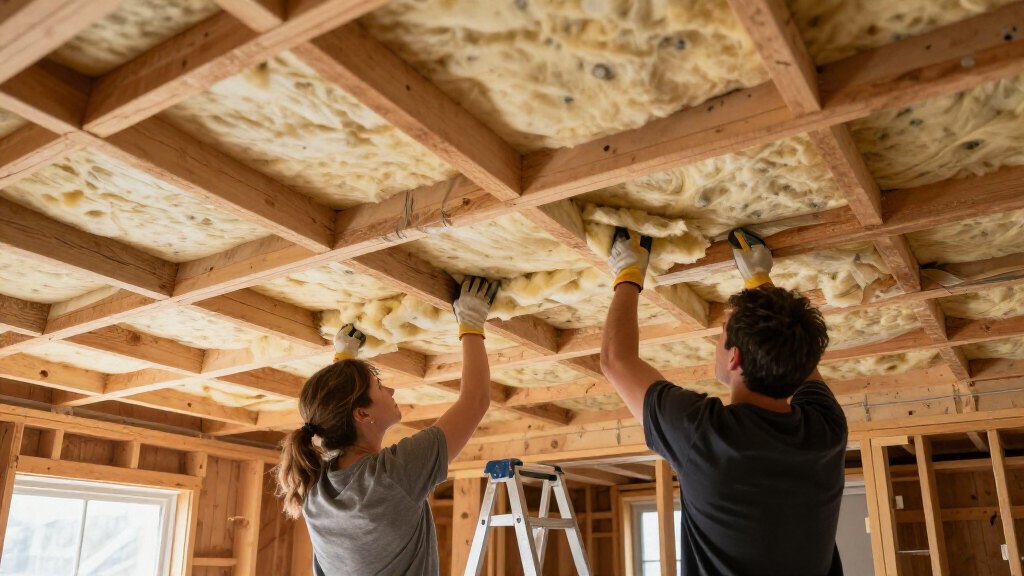

The best cathedral ceiling insulation in this roundup is Owens Corning R-30 Kraft Faced, a practical balance of cavity fit, R-value, and facing for many 2×8-style assemblies. For deeper cavities, Owens Corning R-38 offers more thermal resistance, while Knauf R-30 High Density is a strong alternative when cathedral-ceiling labeling and a 15-inch batt width suit the framing. The main tradeoffs are insulation depth, batt width, kraft facing, and whether the product matches the cavity without compression or gaps. No batt can compensate for a roof assembly that lacks suitable ventilation or moisture control. Read on for the full comparison and guidance on choosing for your ceiling framing.

Get backup power and energy gear delivered free — and shop member deals
- Fast, free delivery on millions of items
- Access to Prime Big Deal Days deals on October 6–7
- Prime Video, Amazon Music and more included
Key Takeaways
- R-30 is the most represented rating: four listed options target cathedral-style or 2×8-depth applications, giving buyers several choices in facing, width, and density.
- R-38 is the high-R choice, not a universal upgrade: the Owens Corning R-38 batt is listed for 2×12 framing, so it suits deeper cavities rather than a standard 2×8 space.
- Framing width can decide fit: the 15-inch Knauf and Owens Corning batts differ from CertainTeed’s 23-inch batt, which is meant for wider framing.
- Kraft-faced and unfaced batts serve different assemblies: the faced options include a vapor-retarder layer, while unfaced products leave that control to the rest of the roof design.
- Package coverage and batt dimensions matter as much as the brand: the two Owens Corning R-19 listings have different package coverage and lengths, so check the quantity against the project area and cavity layout.


| cathedral ceiling insulation | Brand | R-value | Coverage | Thickness |
|---|---|---|---|---|
| Owens Corning R-38 Kraft Faced | Owens Corning | R-38 | 341 sq ft | 12 inches |
| Owens Corning R-19 Unfaced Fib | Owens Corning | R-19 | 77.5 sq ft | 6.5 inches |
| Owens Corning R-30 Kraft Faced | Owens Corning | R-30 | 469 sq ft | 9.5 inches |
| Owens Corning R-19 Unfaced Fib | Owens Corning | R-19 | 775 sq ft | 6.25 inches |
| Owens Corning R-30 Unfaced Fib | Owens Corning | R-30 | 426.64 sq ft | 10 inches |
| Knauf R-30 Kraft Faced Fibergl | Knauf | R-30 | 440 sq ft | 8 inches |
| Certainteed R-30 Kraft Faced 2 | CertainTeed | R-30 | Approximately 613.36 sq ft | 8 inches |
More Details on Our Top Picks
Owens Corning R-38 Kraft Faced Fiberglass Insulation, 341 SQFT, 8 Bags of 16×48 Batt Fits 2×12 Attic
For cathedral ceilings framed with deep cavities, this R-38 batt offers the strongest thermal rating among these five products. Its 12-inch thickness is intended for 2×12 framing, so it is a poor match for shallower rafters where compressing the batt could undermine its fit. The kraft facing provides a built-in facing layer, while the Owens Corning R-30 Kraft Faced batt is thinner at 9.5 inches and covers more area overall. That makes the R-30 a more practical choice when cavity depth or coverage matters more than the higher stated R-value. This package covers 341 square feet across eight bags, but the deep, bulky batts may take more effort to move and place overhead. Check the ceiling assembly’s moisture-control requirements before choosing faced insulation.
Pros:- R-38 rating suits projects targeting higher thermal resistance than the R-19 options.
- 12-inch thickness is specified for deep 2×12 framing.
- Kraft facing provides a facing layer as part of the batt.
- Eight bags provide 341 square feet of coverage.
Cons:- The 12-inch thickness will not fit shallower cavities without compression.
- Bulky packaging and deep batts can be awkward to handle overhead.
- Kraft facing is not a substitute for checking the ceiling assembly’s moisture-control needs.
Best for: Homeowners insulating cathedral ceilings with 2×12 framing who want R-38 batts sized for deep cavities.
Not ideal for: Projects with shallow rafters, limited handling help, or ceiling assemblies that call for unfaced insulation.
- Brand:Owens Corning
- Type:Kraft faced fiberglass insulation
- R-value:R-38
- Coverage:341 sq ft
- Package:8 bags
- Batt dimensions:16 x 48 inches
- Thickness:12 inches
- Listed framing fit:2×12 attic framing
Our verdict“Choose this for deep 2×12 cathedral-ceiling cavities when R-38 is the priority, and skip it for shallower framing.”
Owens Corning R-19 Unfaced Fiberglass Insulation, 77.5 sq ft, 6.5 inches thick, fits 2×6 walls
This R-19 unfaced batt is the most suitable of these choices for a limited ceiling section with shallow framing, rather than a whole-ceiling insulation project. At 6.5 inches thick, it is specified for 2×6 framing; that profile is easier to match to a shallow cavity than the R-30 and R-38 batts, but it provides less thermal resistance than either. Its unfaced construction leaves moisture-control decisions to the installer, unlike the kraft-faced R-30 and R-38 options. The package covers just 77.5 square feet, far less than the other products here, which can help avoid excess material on a small repair but makes it a weak fit for broad coverage. It can also be used for sound reduction, though cathedral-ceiling buyers should verify that the framing and assembly suit this wall-sized batt.
Pros:- 6.5-inch thickness is listed for 2×6 framing.
- Unfaced fiberglass allows the installer to plan moisture control separately.
- Can provide both thermal insulation and sound reduction.
- Smaller coverage quantity may suit a repair or limited section.
Cons:- R-19 is below the R-30 and R-38 ratings of other options in this lineup.
- 77.5 square feet of coverage is limited for a full cathedral ceiling.
- No facing is included, so moisture-control materials may need to be planned separately.
Best for: DIYers insulating a small cathedral-ceiling section with 2×6-depth cavities and a separately planned moisture-control layer.
Not ideal for: Homeowners covering a large roof slope or seeking R-30-or-higher insulation from a single batt layer.
- Brand:Owens Corning
- Type:Unfaced fiberglass batt
- R-value:R-19
- Coverage:77.5 sq ft
- Dimensions:15 x 93 inches
- Thickness:6.5 inches
- Number of batts:8
- Listed framing fit:2×6 walls
Our verdict“Pick this for a small, shallow-framed section where unfaced R-19 fits the assembly, not for a full high-R cathedral ceiling.”
Owens Corning R-30 Kraft Faced Fiberglass Insulation, 469 sqft, 8 Bags, 16×48
This is the broad-coverage alternative to Owens Corning’s R-38 Kraft Faced batt: it gives up some stated thermal resistance but supplies 469 square feet in eight bags. Its 9.5-inch thickness may suit cavities that cannot accommodate the 12-inch R-38 product, though buyers still need to match batt depth to the actual rafter space. The kraft facing distinguishes it from the R-30 Unfaced batt, which leaves the facing and moisture-control plan to the installer. For cathedral ceilings, that convenience is useful only when a faced batt is appropriate for the assembly; the facing also must be protected from open flames. Bulk packaging can make overhead work harder, and the product data describes varied applications rather than a specific cathedral-ceiling framing fit, so check dimensions and installation requirements before ordering.
Pros:- R-30 rating provides more thermal resistance than the R-19 products in this group.
- 469 square feet of coverage is the largest stated area among these five products.
- Kraft facing provides a facing layer, unlike the R-30 Unfaced batt.
- 16 x 48-inch batts can suit framing laid out for that batt width.
Cons:- R-30 is below the R-38 option for buyers prioritizing the highest listed rating.
- The 9.5-inch thickness must match the available ceiling cavity.
- Kraft facing must be kept away from open flames and may not suit every assembly.
Best for: Homeowners insulating a sizable ceiling area who want R-30 faced batts and have cavities suited to 9.5-inch insulation.
Not ideal for: Buyers who need R-38, require an unfaced batt, or have framing shallower than the batt thickness.
- Brand:Owens Corning
- Type:Kraft faced fiberglass insulation
- R-value:R-30
- Coverage:469 sq ft
- Package:8 bags
- Batts per bag:10
- Batt dimensions:16 x 48 inches
- Thickness:9.5 inches
Our verdict“Choose this for broad coverage with R-30 faced batts when the ceiling cavity and moisture-control plan match its 9.5-inch profile.”
Owens Corning R-19 Unfaced Fiberglass Insulation 775 SQFT, 10 Bags (15 x 93, 6.25 inches thick)
When the priority is covering a broad area with unfaced batts, this package offers 775 square feet—substantially more than the 77.5-square-foot R-19 package in this roundup. Both are R-19 products, but this version’s 10-bag quantity better suits a large project, while the smaller package is easier to manage for repairs. Its 6.25-inch thickness is close to the other R-19 batt’s 6.5 inches, so neither is a high-R choice beside the R-30 or R-38 options. The unfaced, friction-fit design may simplify placement where the framing holds the batt securely, but the listing says it is not suitable for exterior walls and does not specify a cathedral-ceiling framing fit. Confirm the cavity depth and moisture-control plan before using it on a roof slope.
Pros:- 775 square feet of coverage suits larger projects.
- Unfaced design leaves the moisture-control approach to the installer.
- Friction-fit construction is intended to hold in compatible framing.
- R-19 rating is shared with the smaller package, but coverage is much greater.
Cons:- R-19 is lower than the R-30 and R-38 products in this roundup.
- The listing says it is not suitable for exterior wall insulation.
- No facing is included, and the cathedral-ceiling framing fit is not specified.
Best for: Installers covering a large ceiling or interior area who need unfaced R-19 batts and can confirm the cavity fit.
Not ideal for: Cathedral-ceiling projects needing higher R-value, a faced batt, or a product with a clearly listed roof-framing fit.
- Brand:Owens Corning
- Type:Unfaced fiberglass insulation
- R-value:R-19
- Coverage:775 sq ft
- Package:10 bags
- Dimensions:15 x 93 inches
- Thickness:6.25 inches
- Installation style:Friction fit
Our verdict“Choose this for large-area unfaced R-19 coverage only when the ceiling cavity and assembly are confirmed to suit it.”
Owens Corning R-30 Unfaced Fiberglass Insulation – 427 SQFT, 8 Bags (16 x 48, 10″ Thick)
This option suits buyers who want R-30 without kraft facing and can provide their own moisture-control plan. Its 10-inch thickness is slightly greater than the faced R-30 batt’s 9.5 inches, while coverage is lower at about 427 square feet versus 469. That tradeoff favors this product when unfaced material is the better match for the assembly, not when maximizing coverage per package is the main goal. The 16 x 48-inch format may work for compatible framing, but the supplied details do not name a cathedral-ceiling rafter fit, so measure cavity depth and spacing first. The listing describes thermal and acoustical insulation, yet the 170-pound package weight can make transport and overhead installation a two-person job. Unlike the R-38 faced option, it does not include a facing layer.
Pros:- R-30 rating offers more thermal resistance than the R-19 products.
- Unfaced construction allows a separate moisture-control approach.
- The 16 x 48-inch batt format may suit compatible framing.
- Described as providing both thermal and acoustical insulation.
Cons:- 10-inch thickness must fit the cavity without compression.
- The 170-pound package weight can complicate delivery and installation.
- No facing is included, and coverage is lower than the faced R-30 option.
Best for: Homeowners needing unfaced R-30 batts for a cathedral ceiling with a planned moisture-control strategy and cavities that fit 10 inches.
Not ideal for: Buyers who need kraft facing, lighter handling, or more coverage than the R-30 faced package provides.
- Brand:Owens Corning
- Type:Unfaced fiberglass insulation
- R-value:R-30
- Coverage:426.64 sq ft
- Package:8 bags
- Batt dimensions:16 x 48 inches
- Thickness:10 inches
- Package weight:170 pounds
Our verdict“Pick this for unfaced R-30 insulation when the 10-inch depth fits and you have a separate moisture-control plan.”
Knauf R-30 Kraft Faced Fiberglass Batt Insulation, 15 x 48, High Density (Cathedral), 8 Bags, 440 sq ft
Knauf’s 15-inch width suits cathedral-ceiling framing with narrower cavities, while its R-30 rating and 8-inch thickness are specified for 2×8 construction. The eight bags cover 440 square feet, making it a useful choice for a substantial project where the framing matches the batt dimensions. Compared with the CertainTeed R-30 in 23-inch width, this option targets narrower bays and covers less area per package; that can reduce trimming waste when the framing is a fit, but means more packages may be needed for a large roof. Product details conflict on facing: the title and specs say kraft faced, while the description says unfaced with no moisture barrier. I would verify the supplied facing before purchase, since that changes whether a separate vapor-control layer may be needed. Delivery may also take coordination.
Pros:- R-30 rating and 8-inch thickness are specified for 2×8 framing.
- 15 x 48-inch format may fit narrower bays with less trimming than a wider batt.
- Eight bags provide 440 square feet of stated coverage.
- Listed for cathedral ceilings as well as attics and floors.
Cons:- Facing information is inconsistent across the product details, so buyers should confirm whether it is kraft faced or unfaced.
- The 15-inch width will not match wider framing bays without a different batt size or additional fitting.
- Large-package delivery may require coordination.
Best for: Homeowners insulating cathedral-ceiling bays that measure 15 inches wide on center and can confirm the delivered batt has the intended facing.
Not ideal for: Buyers whose framing uses 23-inch bays, or anyone who needs an unambiguous moisture-barrier specification before ordering.
- Brand:Knauf
- Material:Fiberglass
- R-value:R-30
- Thickness:8 inches
- Batt dimensions:15 x 48 inches
- Package quantity:8 bags
- Coverage:440 sq ft
- Listed applications:2×8 construction, attics, floors, and cathedral ceilings
Our verdict“Choose this Knauf batt for 15-inch cathedral-ceiling bays when R-30 is the target and you can verify its facing before ordering.”
Certainteed R-30 Kraft Faced 23 x 48 Fiberglass Batt Insulation for 2×8 Floors or Attics (High Density, Cathedral)
CertainTeed’s 23-inch width is the main reason to choose it over the Knauf R-30: it is better matched to wider framing bays, and its product details clearly specify a kraft moisture barrier. At R-30 and 8 inches thick, it is listed for 2×8 construction and cathedral ceilings, with eight bags covering about 613.36 square feet. That stated coverage is greater than Knauf’s 440 square feet, which can make this the more practical package for a broad project when the bay spacing matches. The wider format is less suitable for narrower cavities, where fitting may involve extra cutting. It is fiberglass batt insulation, so it still needs careful installation in the cavity; the product’s R-value alone does not resolve ventilation or moisture-management details in a cathedral roof.
Pros:- R-30 rating and 8-inch thickness are specified for 2×8 construction.
- Kraft facing is identified as a moisture barrier in the product details.
- Eight bags cover approximately 613.36 square feet, more than the listed coverage of the Knauf option.
- Listed for cathedral ceilings, floors, and attics.
Cons:- The 23-inch width may not suit narrower cathedral-ceiling bays.
- Large, heavy-package delivery may require coordination.
- The product description notes potentially higher cost than other insulation options without specifying a price.
Best for: Roof and attic renovators with 23-inch-wide framing bays who want R-30 fiberglass batts with a clearly specified kraft facing.
Not ideal for: DIYers with 15-inch bays or irregular framing, since the wider batt may require substantial trimming and fitting.
- Brand:CertainTeed
- Material:Fiberglass
- R-value:R-30
- Thickness:8 inches
- Batt dimensions:23 x 48 inches
- Facing:Kraft faced
- Package quantity:8 bags
- Coverage:Approximately 613.36 sq ft
Our verdict“Pick CertainTeed over the narrower Knauf batt when your cathedral-ceiling framing is 23 inches wide and you want specified kraft facing.”

How We Picked
I ranked these products by how clearly their stated R-value, thickness, and batt dimensions align with cathedral-ceiling framing. Fit matters because a batt that is too wide, too thick, or compressed can leave a poorly insulated assembly rather than deliver its labeled performance. I also weighed facing type, whether the listing explicitly identifies a cathedral or high-density application, and package coverage as practical selection factors.
The ranking favors options with a clear match to common cathedral-ceiling cavity depths and enough listing detail to make the fit easier to judge. That puts the Owens Corning R-30 Kraft Faced option first as the broadest practical starting point, with Knauf’s cathedral-labeled R-30 close behind. R-38 ranks well for deeper framing but not as a default choice; the R-19 batts remain useful for shallower cavities or other parts of a project, but are less compelling when the goal is higher insulation levels in a cathedral ceiling. I treat manufacturer specifications and local code requirements as the basis for comparison, not a substitute for confirming the full roof assembly design.
| cathedral ceiling insulation | Brand | Type | R-value |
|---|---|---|---|
| Owens Corning R-38 Kraft Faced | Owens Corning | Kraft faced fiberglass insulation | R-38 |
| Owens Corning R-19 Unfaced Fib | Owens Corning | Unfaced fiberglass batt | R-19 |
| Owens Corning R-30 Kraft Faced | Owens Corning | Kraft faced fiberglass insulation | R-30 |
| Owens Corning R-19 Unfaced Fib | Owens Corning | Unfaced fiberglass insulation | R-19 |
| Owens Corning R-30 Unfaced Fib | Owens Corning | Unfaced fiberglass insulation | R-30 |
| Knauf R-30 Kraft Faced Fibergl | Knauf | — | R-30 |
| Certainteed R-30 Kraft Faced 2 | CertainTeed | — | R-30 |
Factors to Consider When Choosing Best Cathedral Ceiling Insulation
Choosing a batt for a sloped ceiling takes more than matching an R-value to a product name. I would check the framing cavity, roof ventilation plan, moisture strategy, and installation access before deciding which package to buy.
Match Batt Thickness to the Actual Rafter Cavity
Measure the usable cavity depth rather than relying on the nominal lumber size, since framing dimensions and added components can reduce the room available. A batt that is too thick may be compressed, which can reduce its effective insulation performance and interfere with ventilation space. A thinner batt can leave an uninsulated gap unless the assembly has a planned way to fill it. The R-38 listing here is intended for deeper 2×12 framing, while the R-30 options are more relevant to shallower cathedral cavities. If the cavity depth cannot accommodate the insulation and required air space together, ask a building professional about a different roof assembly rather than forcing a batt into place.
Choose Width for the Framing Layout
Batt width must suit the clear space between rafters; the listed products include 15- and 16-inch formats as well as a 23-inch format. A batt that is narrower than the cavity can leave side gaps, while one that is too wide may buckle or compress. Measure several bays because framing can vary, especially in older roofs. Do not assume the product’s “2×8” or “2×12” description tells you the exact clear opening. For irregular framing, careful cutting and support may be needed, and loose scraps should not be stuffed into gaps as a substitute for a planned fit.
Plan Ventilation Before Selecting a Higher R-Value
Many cathedral roofs need a clear ventilation channel between the insulation and roof sheathing, but the right design depends on the roof assembly and local rules. Insulation that blocks an intended air path can contribute to moisture and durability problems, even when its R-value looks suitable. Check whether the roof uses vented or unvented construction and how that approach manages air and vapor movement. A thicker batt is not automatically better if it crowds out a required channel. When plans or existing conditions are unclear, get advice from a qualified insulation or building-envelope professional before closing the ceiling.
Decide Whether Kraft Facing Fits the Assembly
Kraft facing can provide a vapor-retarder layer, but its suitability depends on climate, roof design, and the location of other vapor-control materials. Adding facing without checking the full assembly can trap moisture between layers. Unfaced batts avoid adding that layer, but they do not by themselves provide an air barrier or a complete moisture-control strategy. Follow local code and the roof designer’s specifications for facing orientation and vapor control. If you are replacing insulation in an existing ceiling, identify any existing membrane or foam layers before choosing faced or unfaced batts.
Compare Coverage and Installation Logistics
Package square footage helps estimate how many bags a project needs, but it does not account for offcuts, framing variations, or inaccessible corners. Compare the stated coverage alongside batt length and width, then add a reasonable allowance for waste based on the roof layout. Long, narrow batts can suit repeated rafter bays, while shorter pieces may be easier to handle in confined spaces. Check that the delivery and storage plan can accommodate bulky packages and keep insulation dry before installation. For a small repair, a large package can leave substantial unused material, so coverage may matter more than a modest difference in listed R-value.
Frequently Asked Questions
Can I use R-38 insulation in a cathedral ceiling with 2×8 rafters?
Not if the batt is thicker than the usable cavity allows or if fitting it would block a required ventilation channel. The Owens Corning R-38 option in this roundup is listed for 2×12 framing, so it is not a direct fit for a typical 2×8 cavity. Check the actual cavity depth and the roof assembly plan before buying. Forcing a thicker batt into a shallower space can compress it and create installation problems. If you need more thermal resistance than the cavity can hold, ask a professional about a different assembly strategy.
Should I choose faced or unfaced batts for a sloped roof?
Choose based on the roof assembly’s vapor-control plan, not on a general preference for one facing type. Kraft facing adds a vapor-retarder layer, while unfaced batts leave that control to other materials in the assembly. In the wrong location, an added vapor retarder can restrict drying and contribute to moisture accumulation. Check local code, climate guidance, and any existing membranes or foam before deciding. When those details are unknown, have the assembly reviewed rather than adding a facing layer by default.
What should I do if my rafter bays are wider than 16 inches?
Measure the clear opening across multiple bays, then choose a batt width that matches the actual framing pattern. This roundup includes a 23-inch CertainTeed option as well as narrower 15- and 16-inch products, but the wider batt is suitable only when the framing calls for it. A narrow batt placed in a wider bay can leave gaps that reduce coverage, while an oversized batt may bunch or compress. For nonstandard or inconsistent bays, cutting and fitting may be necessary. Avoid filling open spaces with loose scraps unless the installation instructions allow that method.
Is R-30 always a better choice than R-19 for cathedral ceilings?
R-30 provides a higher labeled thermal resistance, but it is only the better fit when the cavity and roof design can accommodate it correctly. The R-19 products in this roundup are thinner and may suit shallower cavities or other parts of a renovation. Forcing R-30 into a space that is too shallow can compress the batt or crowd out ventilation space. Compare the actual available depth with the product thickness and check the required assembly details. Local energy requirements may also set a target that affects which rating makes sense.
How do I estimate how many insulation bags I need?
Measure the ceiling area and compare it with the package coverage listed for the exact product, then allow for cuts and unusable scraps. Cathedral ceilings often include angled edges, skylights, or framing variations that make simple area division less exact. Verify that the batt dimensions suit each rafter bay before relying on the package’s total square footage. The two R-19 Owens Corning listings, for example, have different stated coverage and package formats, so their bag counts are not interchangeable. For a complex roof, calculate each section separately and confirm the quantity with the installer or supplier.
Conclusion
For the best overall choice, I would start with Owens Corning R-30 Kraft Faced because it pairs a widely useful R-30 rating with a familiar batt format, provided the facing suits the assembly. The best value in practical coverage is Owens Corning R-30 Kraft Faced, 469 sq. ft., when its 16-by-48 dimensions match the bays; compare package coverage rather than assuming the lowest-cost package. For a premium, higher-R option, choose Owens Corning R-38 only when deeper framing can take its thickness without crowding ventilation. Beginners may find Knauf R-30 High Density easier to shortlist because the listing directly identifies cathedral use, though fit still needs checking. For wide framing bays, consider CertainTeed R-30 at 23 inches; for shallower cavities or secondary areas, the Owens Corning R-19 products offer a thinner alternative. Before ordering, confirm cavity depth, width, ventilation, and facing requirements so the selected batt suits the whole roof assembly.
Fall Picks
fall essentials
As an affiliate, we earn on qualifying purchases.