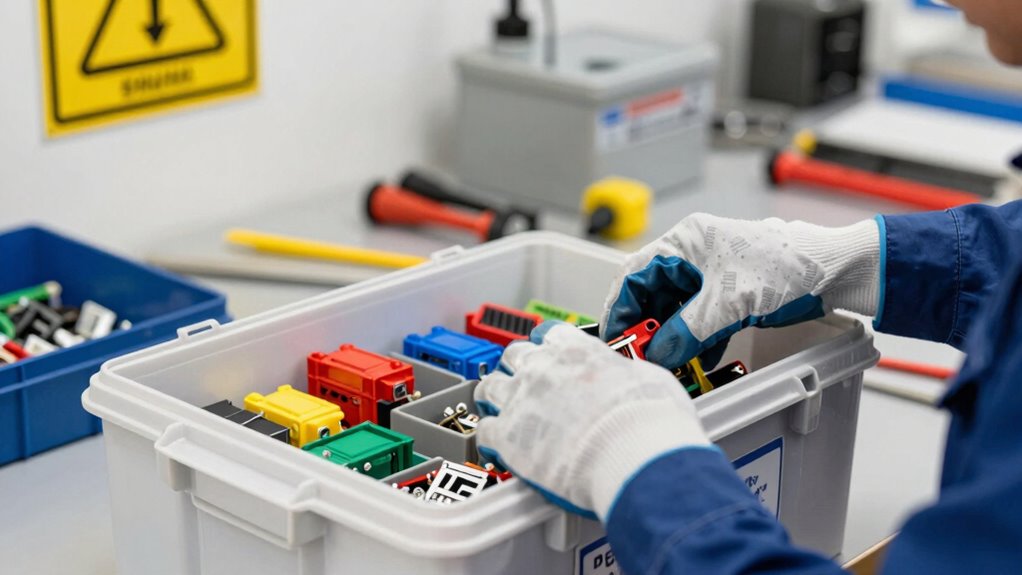

Box fill refers to how many wires, devices, and equipment you put in a single electrical box, and it matters because overloading can cause overheating, short circuits, or fires. Staying within the box’s capacity guarantees safety, easy troubleshooting, and code compliance. Proper management helps prevent hazards and keeps your system safe and reliable. If you want to know how to manage box fill effectively and keep risks at bay, keep exploring the details.

Get backup power and energy gear delivered free — and shop member deals
- Fast, free delivery on millions of items
- Access to Prime Big Deal Days deals on October 6–7
- Prime Video, Amazon Music and more included
Key Takeaways
- Box fill indicates the number of conductors and devices in an electrical box, ensuring it does not exceed capacity.
- Proper box fill prevents hazards like overheating, short circuits, and fires by maintaining safe wiring limits.
- Overfilled boxes can hide loose connections or damaged wiring, increasing the risk of electrical failure.
- Following box fill standards ensures compliance with safety codes and industry regulations.
- Effective management of box fill maintains electrical system safety, reliability, and ease of hazard detection.
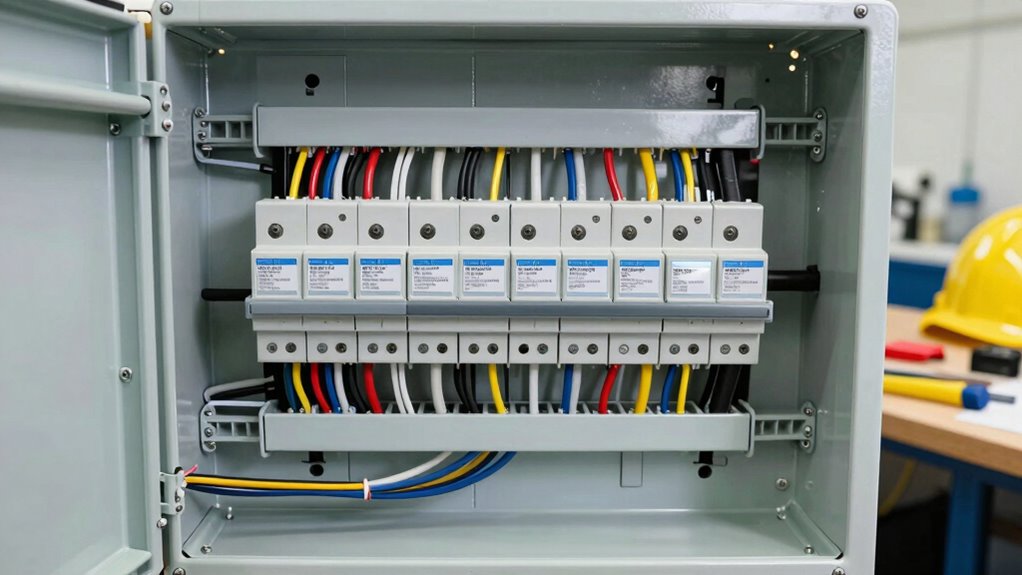
Ever wondered how to guarantee electrical boxes are safe and compliant? Understanding box fill is essential because it directly impacts safety and efficiency in electrical systems. Box fill refers to the number of conductors, devices, and equipment that can safely occupy a single electrical box without exceeding its capacity. When you overload a box, you risk overheating, short circuits, or even fires. Proper box fill ensures you stay within the box’s limits, preventing these hazards and keeping your work compliant with safety codes.
Proper box fill ensures safety, prevents hazards, and keeps your electrical work code-compliant.
One of the key reasons box fill matters is because it aids in hazard identification. When you accurately calculate how many conductors and devices a box can hold, you’re better equipped to spot potential problems early. Overfilled boxes can hide issues like loose connections or damaged wiring, which, if left unchecked, could lead to electrical failures or fires. By following box fill rules, you quickly identify when a box is nearing its capacity and take corrective measures before hazards develop. This proactive approach not only keeps people safe but also helps maintain the integrity of the electrical system. Additionally, understanding the industry standards for box fill ensures your wiring practices align with safety regulations and best practices. Knowing how to properly apply these standards is essential for compliance and overall safety. Properly managing box fill capacity also involves staying updated on safety guidelines, which can evolve over time to address new risks and technologies. Moreover, staying informed about the latest safety guidelines can help you adapt to evolving regulations and improve overall safety practices.
As an affiliate, we earn on qualifying purchases.
Frequently Asked Questions
How Is Box Fill Calculated in Electrical Panels?
You calculate box fill in electrical panels by adding up the wire gauge and circuit capacity for each component. Start with the number of conductors, including wires, devices, and splices. Then, consider their sizes and the circuit’s capacity to make certain the box isn’t overcrowded. This helps prevent overheating and electrical hazards, ensuring your panel remains safe and compliant with electrical codes.
What Tools Are Used to Determine Box Fill Capacity?
You use a tape measure or a box fill gauge to determine box fill capacity, guaranteeing proper cable management and compliance with safety regulations. These tools help you accurately assess how many conductors and devices fit within a box, preventing overcrowding. By checking box fill, you reduce fire hazards and electrical failures, maintaining safety standards. Proper tool use ensures your installation is safe, organized, and compliant with all relevant electrical codes.
Can Box Fill Violations Cause Electrical Code Violations?
Yes, box fill violations can cause electrical code violations. If you overfill an electrical box, it can lead to overheating or damaged cable insulation, risking safety. Proper circuit labeling helps guarantee correct connections, but exceeding the box capacity ignores these safety measures. Always adhere to box fill rules to prevent violations and maintain safe wiring practices, protecting both your work and those who rely on your electrical system.
How Often Should Box Fill Be Inspected?
Think of box fill safety like checking your tire pressure regularly—it’s crucial to prevent accidents. You should inspect box fill at least once a year, especially after any electrical work or alterations. Regular inspection ensures that wiring remains within safety limits, avoiding overloads or violations. Staying vigilant about inspection frequency helps you maintain a safe environment, preventing potential electrical hazards before they become serious issues.
Are There Different Box Fill Rules for Residential and Commercial?
Yes, there are different box fill rules for residential and commercial settings to guarantee fire safety and code compliance. Residential codes are generally less strict, focusing on basic safety, while commercial codes are more detailed due to higher risks. You need to follow the specific regulations applicable to your setting, regularly inspect your electrical boxes, and avoid overfilling to prevent fire hazards and maintain compliance with safety standards.
wire capacity calculator for electrical boxes
As an affiliate, we earn on qualifying purchases.
As an affiliate, we earn on qualifying purchases.
Conclusion
Understanding box fill is essential for safety, especially in busy environments. It helps prevent accidents caused by overcrowding or improper storage. Some might think it’s just about organization, but it’s really about avoiding injuries and ensuring smooth operations. By paying attention to box fill, you’re actively protecting yourself and others. Don’t overlook this simple step — it makes a big difference in keeping everyone safe and the workspace efficient.
As an affiliate, we earn on qualifying purchases.
As an affiliate, we earn on qualifying purchases.
Halloween Picks
halloween
As an affiliate, we earn on qualifying purchases.