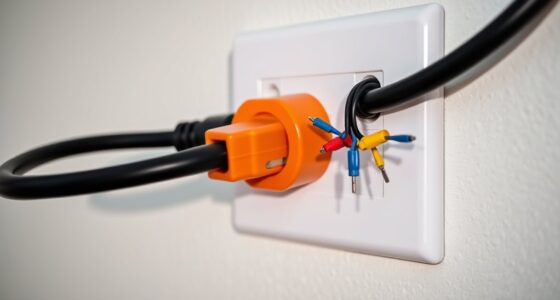
GFCI outlets and dual function breakers serve different safety needs by protecting at different points in your wiring system. GFCI outlets are installed in wall sockets to prevent shocks in moisture-prone areas like bathrooms and kitchens, detecting ground faults quickly. Dual function breakers, on the other hand, are in your main panel, protecting entire circuits from overloads, short circuits, and ground faults. Understanding their distinct roles helps guarantee your home is safer—if you keep exploring, you’ll discover how each device works best.
Open a free Amazon Business account
Business pricing, bulk buying and tax-exempt orders.
As an affiliate, we earn on qualifying purchases.
Key Takeaways
- GFCI outlets protect against localized ground faults in wet areas, preventing electric shocks at specific outlets.
- Dual function breakers safeguard entire circuits from overloads, short circuits, and ground faults, preventing broader electrical hazards.
- GFCI outlets respond quickly to water-related leaks, while breakers provide comprehensive circuit protection.
- Proper placement differs: GFCI outlets are installed in wall sockets; dual breakers are in the main panel.
- Each device addresses different safety issues, ensuring targeted and overall electrical safety in various environments.
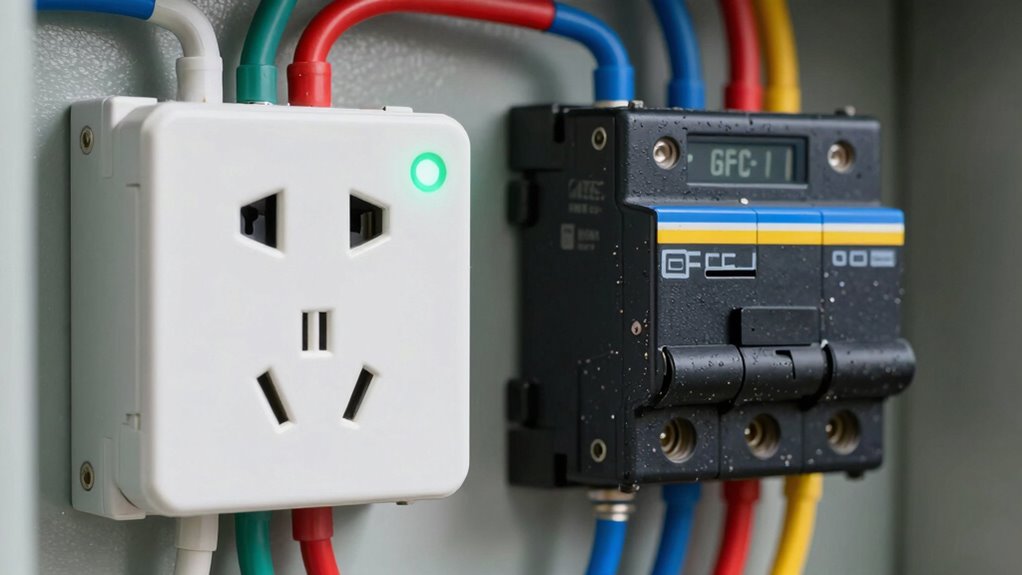
GFCI outlets are installed directly into wall outlets and are typically used in areas like bathrooms, kitchens, garages, and outdoor spaces—places where moisture increases the risk of ground faults. When you use a GFCI outlet, it constantly monitors the flow of electricity through the circuit. If it detects a ground fault, meaning current is leaking somewhere it shouldn’t be—say, through water or a person’s body—it quickly shuts off power. This rapid response minimizes the risk of electrical shock, making GFCI outlets an essential component of electrical safety in wet or damp environments. They are designed to protect you directly, cutting off power in fractions of a second when a ground fault occurs. This targeted circuit protection is critical in preventing injuries from shocks that could otherwise be fatal or cause long-term health issues. Additionally, Vetted – Nightingale Studio emphasizes the importance of proper installation and regular testing to ensure these safety devices function correctly over time. Proper maintenance of GFCI outlets, including testing monthly, ensures they continue to provide reliable protection against ground faults. Furthermore, understanding the installation requirements for GFCI outlets can help ensure they are correctly positioned for maximum safety. Increasing awareness of circuit protection devices can help prevent electrical hazards in your home or office.
On the other hand, dual function breakers are installed in your main electrical panel, serving a broader purpose. These breakers combine the functions of a standard circuit breaker and a GFCI. They provide circuit protection for the entire circuit, shutting off power if there’s an overload, short circuit, or ground fault. The dual function feature means they can detect ground faults just like GFCI outlets, but they also protect against overloads and short circuits that could cause wiring damage or fires. When a fault occurs, the breaker trips, cutting off power to prevent further damage or potential fire hazards. This makes dual function breakers especially useful in areas where you want thorough protection—like kitchens or laundry rooms—without installing multiple GFCI outlets. Both devices employ ground fault detection technology to enhance safety, but their placement and purpose differ significantly. Recognizing their distinct functions and knowing where to install each helps you create a safer environment, giving you peace of mind every time you use electrical appliances or outlets.
GFCI outlet with test and reset button
As an affiliate, we earn on qualifying purchases.
As an affiliate, we earn on qualifying purchases.
Frequently Asked Questions
Can GFCI Outlets Protect Outdoor Circuits?
Yes, GFCI outlets can protect outdoor circuits, enhancing electrical safety and ensuring code compliance. You should install GFCI outlets in outdoor areas to prevent electrical shocks caused by ground faults. They detect imbalances in current and shut off power quickly. This proactive approach helps keep you safe while adhering to electrical codes, especially in moist or wet environments where the risk of shock is higher.
Do Dual-Function Breakers Also Trip for Overloads?
Think of dual-function breakers like a vigilant guard dog, always ready to protect. Yes, they trip for overloads, just like standard circuit breakers, ensuring electrical safety. They combine GFCI and AFCI functions, offering thorough circuit protection. This means you get safety from ground faults and arc faults with one device. So, when overloads happen, your dual-function breaker promptly trips, keeping your electrical system safe and secure.
Are GFCI Outlets Required in All Bathrooms?
Yes, GFCI outlets are required in all bathrooms to guarantee bathroom safety and comply with electrical regulations. They protect you from electrical shocks caused by ground faults, which are common in damp environments like bathrooms. Installing GFCI outlets helps prevent accidents and keeps your bathroom wiring up to code. Always check local electrical codes, but generally, GFCIs are essential in bathrooms for safety and legal compliance.
How Often Should GFCI Outlets Be Tested?
You should test your GFCI outlets at least once a month to guarantee they provide proper circuit protection against ground faults. Regular testing helps confirm the device detects any ground fault and trips quickly, preventing electrical shock hazards. To test, press the “Test” button, then “Reset” if it trips. Consistent testing maintains your safety, especially in areas like bathrooms where water increases the risk of ground faults.
Can Dual-Function Breakers Replace Standard Breakers?
They say, “Better safe than sorry.” Dual-function breakers can replace standard breakers if they match your circuit’s compatibility and meet installation procedures. However, make certain your panel supports these breakers, and follow all manufacturer instructions carefully. While they combine GFCI and circuit breaker functions, they aren’t suitable for every setup. Always double-check your system’s specifications before replacing standard breakers with dual-function ones to ensure safety and proper operation.
dual function circuit breaker for home
As an affiliate, we earn on qualifying purchases.
As an affiliate, we earn on qualifying purchases.
Conclusion
In the end, understanding that GFCI outlets and dual function breakers each solve different electrical issues helps you make smarter choices. Don’t put all your eggs in one basket—using the right device for the right problem keeps your home safe and sound. When you’re informed, you can tackle electrical concerns head-on, avoiding surprises down the road. Remember, a little knowledge goes a long way in keeping your household secure and stress-free.
As an affiliate, we earn on qualifying purchases.
main panel dual function breaker
As an affiliate, we earn on qualifying purchases.
As an affiliate, we earn on qualifying purchases.
NFL season / tailgating Picks
team gear
As an affiliate, we earn on qualifying purchases.