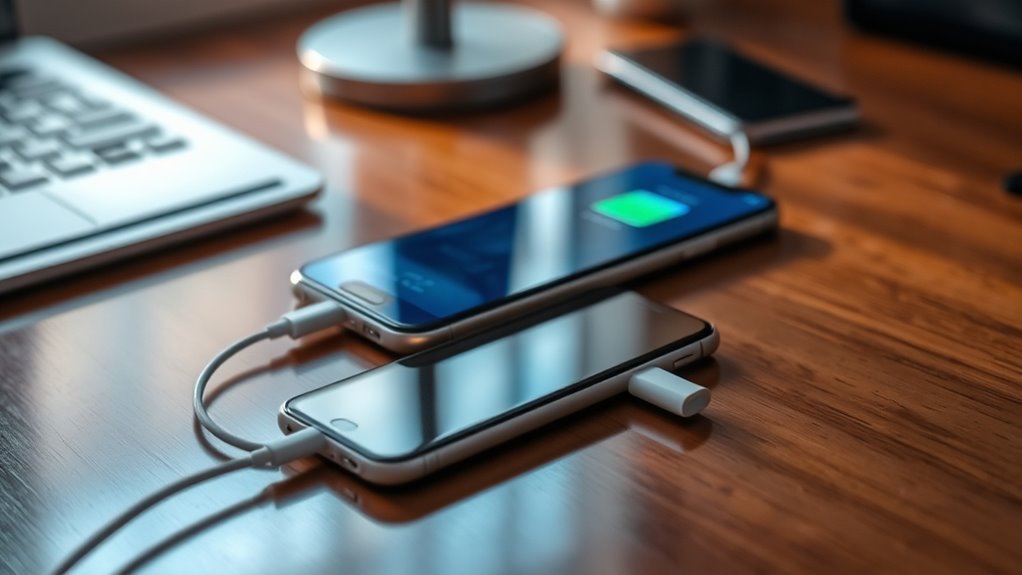

Charging your EV to 80% helps protect your battery’s health by reducing stress from high voltage levels, which speeds up wear. It also lowers the number of full cycles, extending its lifespan and maintaining performance longer. Many drivers prefer this limit because it provides enough range for daily use while keeping the battery healthier over time. If you want to understand more about why 80% is so effective, there’s plenty more to explore.

Get backup power and energy gear delivered free with Prime
- Fast, free delivery on millions of items
- Prime Video, Amazon Music and more included
- Member-only deals all year
Key Takeaways
- Charging to 80% reduces battery stress and slows chemical degradation, extending overall lifespan.
- It minimizes wear caused by high voltage levels associated with full 100% charges.
- Supports better long-term capacity retention and maintains battery health over years.
- Provides sufficient daily range for most users while balancing longevity.
- Many vehicles include automatic 80% charging settings to promote optimal battery preservation.
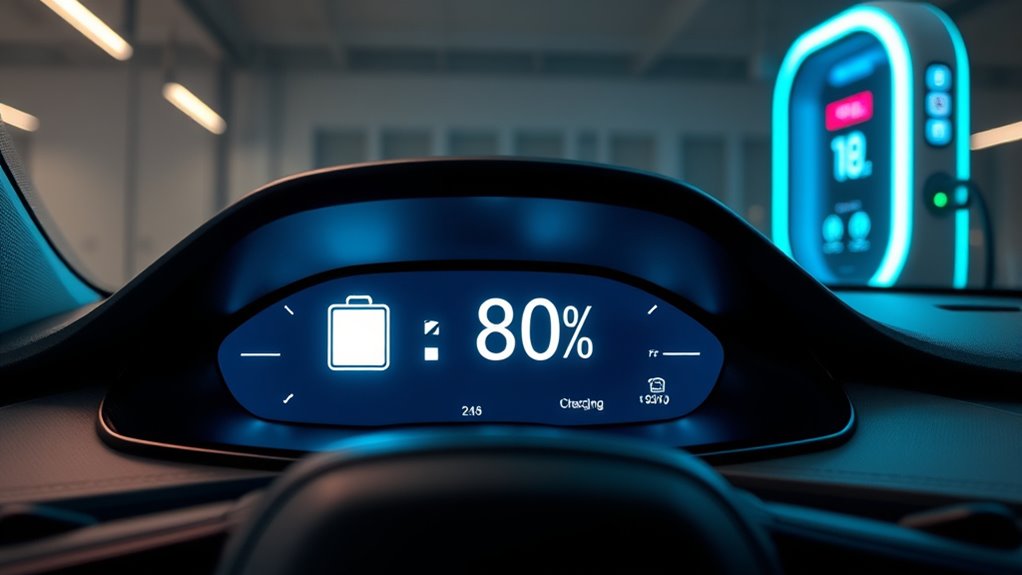
Many electric vehicle owners set their charging limits to 80% because it helps prolong battery life and optimize performance. This common practice isn’t just a matter of convenience; it’s rooted in understanding how charging habits influence battery longevity. When you consistently charge your EV to 100%, it exposes the battery to higher voltage levels that can accelerate wear over time. Keeping the charge at around 80% reduces stress on the battery cells, helping them stay healthier longer. This approach balances the need for sufficient range with the desire to maintain ideal battery health.
Your charging habits play a vital role in how well your EV’s battery performs over the years. By limiting your charge to 80%, you’re essentially adopting a more conservative approach that minimizes the risk of degradation. Many EV manufacturers recommend this practice because it’s backed by extensive research showing that lower charge levels help preserve the chemical stability of the battery. When you avoid frequently topping off to 100%, you reduce the number of full cycle charges, which are more taxing on the battery. Over time, this can translate into better battery capacity retention and fewer performance issues.
Additionally, charging to 80% is especially advantageous for daily use. If your typical commute doesn’t require a full 100% charge, setting your limit at 80% allows you to extend the lifespan of your battery without sacrificing much range. This habit means you’ll need to recharge more often, but it’s a small trade-off for improved battery health. Furthermore, many charging stations and vehicle settings enable you to set these limits automatically, making it easier to stick to good charging practices without manual intervention.
It’s worth noting that some drivers may need the full range for longer trips, and that’s okay. The key is understanding when to push beyond the 80% limit and when to keep it lower. For everyday driving, sticking to 80% can greatly slow down battery degradation, saving you money and hassle in the long run. As EV technology advances, manufacturers continue to refine charging algorithms, but your habits remain one of the most effective ways to protect your investment. In essence, setting your charging limit to 80% isn’t just a trend; it’s a smart, proactive way to maximize your battery’s lifespan and maintain peak performance over time. Understanding battery chemistry is crucial for making informed charging decisions that benefit long-term battery health.
As an affiliate, we earn on qualifying purchases.
Frequently Asked Questions
How Does Charging to 80% Extend Battery Lifespan?
Charging your battery to 80% helps extend its lifespan by reducing stress on the battery chemistry. When you limit the charge level, it minimizes the number of full charging cycles your battery undergoes, which can slow down capacity loss. This practice prevents overheating and reduces wear, ultimately preserving your battery’s health longer. By following this habit, you guarantee your device stays reliable and efficient over time.
Are There Any Drawbacks to Limiting Charging to 80%?
Limiting charging to 80% can slow battery degradation, but it also brings drawbacks. You might face charging inconvenience, especially when you need a full battery quickly. It reduces your available power, making long trips or heavy usage more challenging. While it extends your battery’s lifespan, it may also cause frustration, forcing you to plan your charging more carefully and accept the inconvenience of not always reaching a full charge.
Do All Electric Vehicle Brands Recommend 80% Charging Limits?
Most electric vehicle brands recommend an 80% charging limit to optimize battery life and preserve battery technology. Your charging habits matter, and sticking to this limit helps prevent battery degradation over time. While some brands might have different suggestions based on their battery tech, generally, following their recommendations ensures better longevity and performance. Always check your vehicle’s manual or manufacturer guidance for the best charging practices tailored to your EV model.
How Does Ambient Temperature Affect Charging to 80%?
Think of your EV’s battery like a delicate plant that thrives within specific temperature thresholds. When ambient temperatures drop or soar, thermal management kicks in to protect the battery. Charging to 80% during extreme temperatures might take longer or be less efficient because the system adjusts to maintain ideal health. So, climate impacts how effectively you can charge to 80%, especially when thermal management works overtime.
Can Charging Limits Be Customized on Most EVS?
Most EVs offer some degree of charging flexibility, allowing you to customize charging limits through the vehicle’s settings. You can set specific charge caps to protect your battery’s health and optimize performance. Regularly adjusting these limits helps with battery calibration, ensuring accurate capacity readings and longevity. Check your EV’s manual or app, as customization options vary by model, giving you control over how and when your vehicle charges.
electric vehicle battery charger
As an affiliate, we earn on qualifying purchases.
As an affiliate, we earn on qualifying purchases.
Conclusion
So, while charging your battery to 80% might seem like a simple habit, it actually hides a secret that could change how you think about device longevity. What if the next breakthrough lies just beyond that familiar limit? Staying within this range isn’t just about protecting your battery—it’s about revealing potential you haven’t yet imagined. Keep exploring, because the real story behind that 80% limit may surprise you when you least expect it.
As an affiliate, we earn on qualifying purchases.
As an affiliate, we earn on qualifying purchases.
Halloween Picks
halloween
As an affiliate, we earn on qualifying purchases.