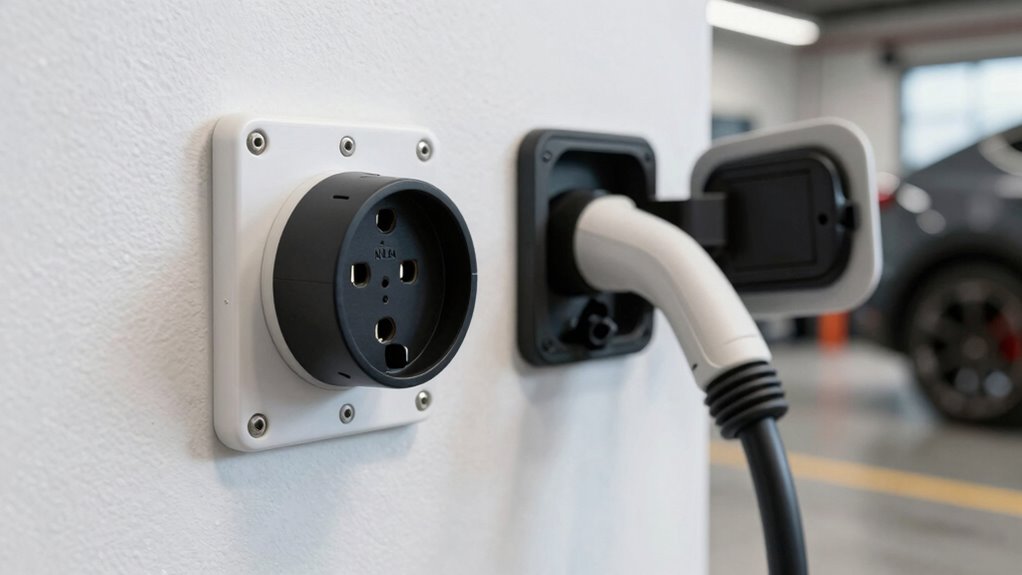

A NEMA 14-50 circuit is essential for a fast and reliable home EV charging setup, supporting Level 2 charging capabilities. It provides a high-power connection, reducing your dependence on public chargers and making daily charging more convenient. Before installation, you’ll need to check if your vehicle and electrical system are compatible and consider hiring a licensed electrician for safety and proper wiring. Keep exploring to discover how to optimize your home EV charging plan effectively.
Key Takeaways
- NEMA 14-50 circuits provide high-power, reliable connections ideal for Level 2 home EV charging.
- They support faster charging times, reducing reliance on public charging stations.
- Proper evaluation of vehicle compatibility ensures NEMA 14-50 is suitable for your EV’s charging needs.
- Installation requires assessing electrical capacity and following safety protocols, often needing a licensed electrician.
- Using NEMA 14-50 circuits enhances charging convenience, safety, and efficiency for daily EV use.

If you’re considering charging an electric vehicle at home, understanding NEMA 14-50 circuits is essential. These outlets are a popular option because they provide a reliable, high-power connection that can support faster charging times. Before installing, you need to evaluate your vehicle’s battery compatibility and what types of charging stations are suitable for your needs. Not all EVs are designed to handle the same charging speeds, so knowing your vehicle’s specifications helps determine whether a NEMA 14-50 circuit is the right fit. Many modern EVs can smoothly charge at this level, making it a practical choice for daily use.
Evaluating your EV’s battery compatibility is key to choosing the right home charging setup.
When planning your home charging setup, it’s important to consider the different charging station types available. The NEMA 14-50 outlet is versatile and compatible with various portable chargers and dedicated charging stations. Some EV owners opt for a simple portable charger that plugs directly into the outlet, which offers flexibility and ease of use. Others prefer installing a dedicated Level 2 charging station, which often comes with built-in safety features and optimized charging capabilities. The station type you choose will depend on factors like your daily driving habits, vehicle compatibility, and how quickly you need your car to charge.
Battery compatibility is another critical factor. Not all EV batteries are designed to handle high-voltage charging directly through a NEMA 14-50 outlet, so it’s vital to check your vehicle’s specifications. If your battery supports Level 2 charging, then a NEMA 14-50 circuit can provide a convenient home solution that cuts down on charging time compared to standard outlets. Additionally, understanding the contribution of different circuit types helps you select the most efficient setup for your needs. Proper understanding of electrical circuit compatibility is essential to ensure safe and effective charging. Installing a NEMA 14-50 outlet may also require considering the electrical capacity of your home, especially if your existing wiring is limited. It’s also important to consider the cost of installation and whether your electrical system needs upgrades to support this setup. However, if your vehicle is limited to lower voltages or slower charging speeds, you might not see the full benefits of this setup. Making sure your vehicle is compatible with this circuit type helps you avoid potential issues and maximizes efficiency.
Installing a NEMA 14-50 outlet is generally straightforward if you follow proper electrical codes and safety protocols. You might want to hire a licensed electrician to ensure the circuit is correctly wired and grounded, which is essential for safety and performance. Once installed, this outlet offers a reliable way to keep your EV charged without constantly relying on public charging stations. It’s a significant step toward making home charging more convenient, especially if you plan to use your vehicle frequently.
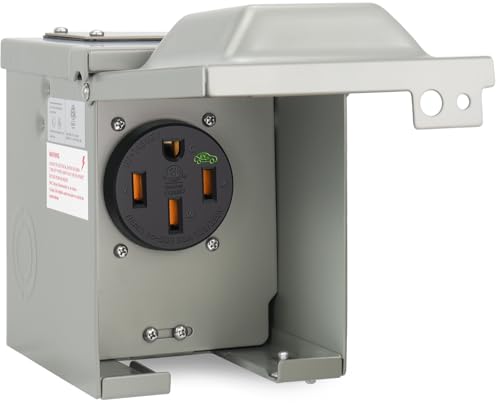
50 Amp 125/250 Volt EV Power Outlet Box, NEMA 14-50R 50 Amp EV Charging Receptacle Outlet Box, Enclosed Lockable Weatherproof Outdoor Electrical NEMA 14-50R Receptacle Panel, Heavy Duty, ETL Listed
ETL Listed: NEMA 14-50R receptacle 125/250V, 50 Amp EV outlet with rainproof type 3R enclosure, designed for plug-in…
As an affiliate, we earn on qualifying purchases.
As an affiliate, we earn on qualifying purchases.
Frequently Asked Questions
Can NEMA 14-50 Outlets Support Other High-Power Appliances?
Yes, NEMA 14-50 outlets support other high-power appliances due to their appliance versatility and outlet compatibility. You can use them for appliances like electric ranges, clothes dryers, and welders, thanks to their high amperage capacity. However, confirm the appliance’s voltage and power requirements match the outlet specifications. Always check your device’s compatibility and consult an electrician if you’re unsure about wiring or safety considerations.
What Safety Precautions Are Necessary When Installing NEMA 14-50 Circuits?
You need to guarantee proper grounding, circuit breaker sizing, and adherence to electrical codes when installing NEMA 14-50 circuits. Verify grounding requirements to prevent shocks, select a circuit breaker that matches the outlet’s amperage for safety and performance, and always turn off power before working. Consulting a licensed electrician guarantees correct installation, minimizes risks, and ensures your setup meets all safety standards, protecting both your home and your vehicle.
How Does NEMA 14-50 Compare to Other EV Charging Options?
You’ll find that NEMA 14-50 offers faster charging speeds than standard outlets, making it a popular choice for EV owners. Its installation complexity is moderate—more involved than a standard outlet but less complex than dedicated Level 2 chargers. Compared to other options like Level 2 chargers, NEMA 14-50 provides a good balance of speed and ease, making it versatile for home setups and compatible with many EV models.
Are NEMA 14-50 Circuits Compatible With All Electric Vehicle Models?
Yes, NEMA 14-50 circuits are compatible with most electric vehicle models, but your vehicle’s battery capacity influences charging speed. A 14-50 outlet provides a higher power level, enabling faster charging. However, some EVs may require specific chargers or adapters for best performance. Always check your vehicle’s charging specifications to guarantee compatibility, and consider how the battery capacity affects how quickly your car recharges using this circuit.
What Is the Typical Installation Cost for a NEMA 14-50 Circuit?
You might be surprised, but the typical installation cost for a NEMA 14-50 circuit ranges from $300 to $1,000, depending on your home’s wiring and potential installation challenges. Cost considerations include labor, materials, and any necessary upgrades to your electrical panel. While the process is straightforward for some, unforeseen installation challenges can increase expenses, so it’s wise to get a detailed quote from a qualified electrician upfront.

AIMILER Level 2 Electric Vehicle (EV) Charger(WIFI APP/Plug-play), 32A, 25ft Cable ETL Certified, 220V-240V NEMA 14-50P Plug EVSE w/ J1772 Connector, Portable EV Car Charging Stations for Home Level 2
❤ [Equipped with Nema 14-50 plug 240V, Compatible with 110-120V Nema 5-15p to 14-50r EV Adapter(Not packaged) or…
As an affiliate, we earn on qualifying purchases.
As an affiliate, we earn on qualifying purchases.
Conclusion
Thinking about upgrading your home for EV charging? A NEMA 14-50 circuit offers a reliable, versatile solution that fits perfectly into your plans. It’s a smart investment, ensuring quick, efficient charging when you need it most. So, why wait to make your home future-ready? With this setup, you’ll enjoy the convenience and peace of mind that comes with knowing you’re prepared for the electric vehicle revolution—aren’t you ready to embrace the change?

EVIQO Level 2 EV Charger, 40 Amp 240V, J1772 for Non-Tesla EVs, 25ft Cable, WiFi (2.4GHz) Smart App, Weatherproof Indoor/Outdoor (IP66, NEMA 4), UL & ETL Certified, NEMA 14-50 Plug-in, 9.6kW
PLUG-IN, NO ELECTRICIAN: EVIQO Level 2 EV charger with a max output of 40A on a dedicated 50A…
As an affiliate, we earn on qualifying purchases.
As an affiliate, we earn on qualifying purchases.

EMPORIA Level 2 EV Charger – NEMA 14-50 EVSE w/NACS, Compatible with Tesla – 48 amp EV Charger Level 2, 240v Electric Vehicle Charging Station, UL/Energy Star, 25ft Cable, White
No Adapter Needed: Charge your Tesla or any vehicle requiring the NACS connection. Emporia's new NACS-specific ev charger…
As an affiliate, we earn on qualifying purchases.
As an affiliate, we earn on qualifying purchases.