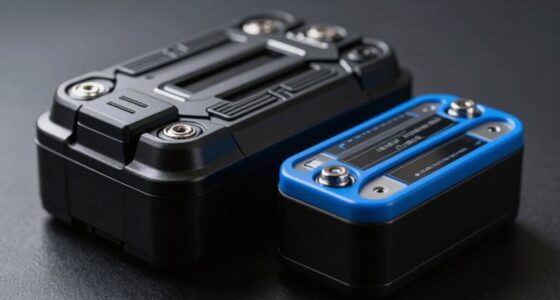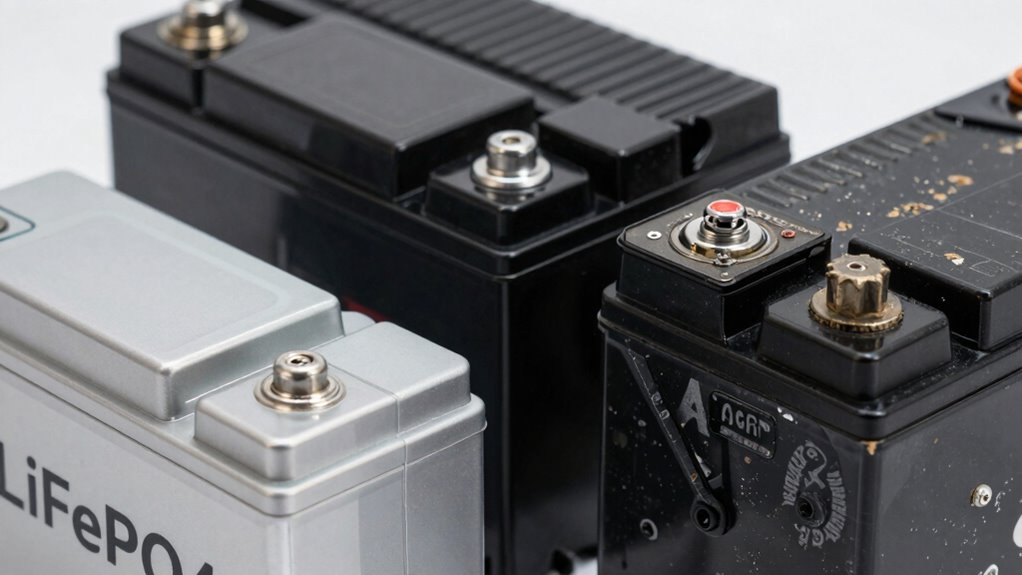
LiFePO4 batteries excel in demanding deep cycle applications like renewable energy, RVs, or marine use because they last longer, handle higher depths of discharge better, and charge more efficiently than AGM batteries. AGM options are easier to maintain and work well for less intensive needs. Knowing the differences helps you choose the right battery for your usage. Keep exploring to discover how each type fits different scenarios and what makes them unique.

Get backup power and energy gear delivered free — and shop member deals
- Fast, free delivery on millions of items
- Access to Prime Big Deal Days deals on October 6–7
- Prime Video, Amazon Music and more included
Key Takeaways
- LiFePO4 batteries have a longer cycle life and higher DoD, making them ideal for demanding deep cycle applications.
- AGM batteries offer easier maintenance and are suitable for shallow cycling or less intensive use cases.
- LiFePO4 charges faster and more efficiently, reducing downtime in high-demand or renewable energy setups.
- AGM batteries are safer and more stable, often preferred for simpler, less critical applications.
- Cost-effectiveness varies; LiFePO4 is better for long-term, high-performance needs, while AGM suits short-term or low-maintenance uses.
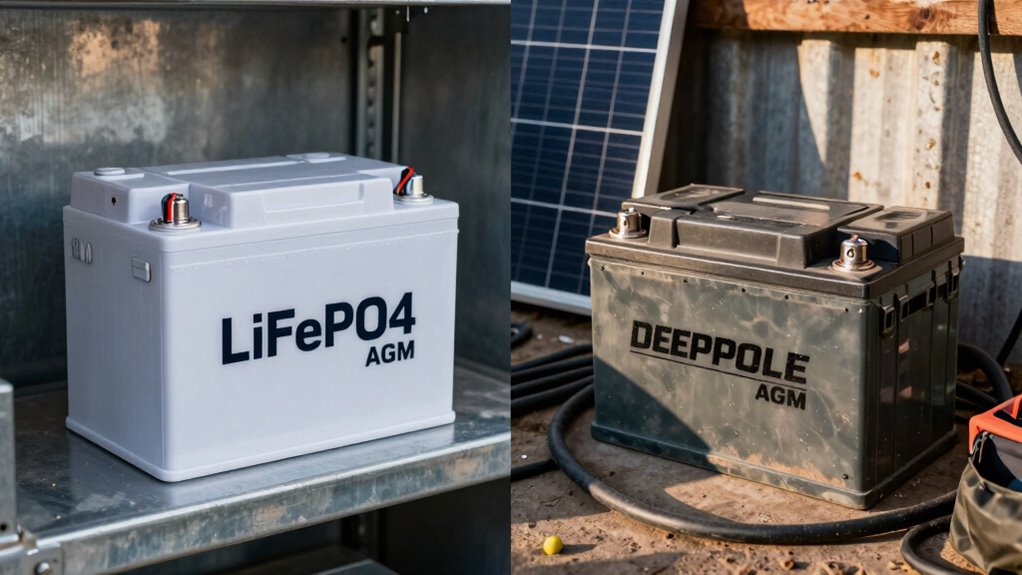
When choosing a battery for your application, understanding the differences between LiFePO4 AGM and deep cycle batteries is essential. Both types serve specific needs, but their performance characteristics can significantly influence your overall experience. One of the key aspects to consider is battery longevity. LiFePO4 batteries are known for their extended lifespan, often lasting 2,000 to 5,000 cycles, which far surpasses traditional lead-acid options. This means you won’t need to replace them as often, saving you money and reducing waste over time. AGM batteries also offer decent longevity but generally fall short of LiFePO4’s capacity, especially under frequent deep discharges. Recognizing how each battery type handles cycle life helps you align your choice with your usage pattern, whether it’s for a renewable energy system, RV, or marine application.
Charging efficiency is another critical factor that differs between these batteries. LiFePO4 batteries tend to charge faster and more efficiently than AGM batteries. They accept higher charging currents with less heat generation, which means you can reduce charging times without risking damage. This efficiency ensures your system spends less downtime during recharges, maximizing the available power for your needs. AGM batteries, while easier to maintain and less sensitive to charging conditions, typically require longer charging times and are more prone to sulfation if not properly maintained. If quick turnaround and energy management are priorities, LiFePO4 batteries provide a clear advantage. Additionally, LiFePO4 chemistry is inherently safer and more stable, reducing the risk of thermal runaway or other safety concerns. Understanding the chemistry behind each type helps you make a more informed decision based on performance and safety considerations. Moreover, the cost-effectiveness of each battery type can vary greatly depending on your specific application and usage patterns, making it important to analyze long-term benefits.
Moreover, the way each battery handles depth of discharge (DoD) influences their practical use. LiFePO4 batteries can safely discharge up to 80-100% without damaging the cell, giving you more usable capacity and better overall performance. AGM batteries, on the other hand, usually recommend a 50% DoD to prolong their life. This means you need to be more mindful of how deeply you drain each type of battery, especially during intensive use. When considering your application, think about how often you’ll need to draw power and how much capacity you require. LiFePO4’s higher DoD tolerance combined with its longer lifespan makes it ideal for applications demanding frequent deep cycling, while AGM batteries can work well in less demanding scenarios or where ease of maintenance is more important. Understanding the battery chemistry behind each type helps you make a more informed decision based on performance and safety considerations.
Ultimately, your choice hinges on balancing these factors. If you’re looking for superior battery longevity and charging efficiency, LiFePO4 batteries generally outperform AGM options. However, AGM batteries may still be suitable for simpler, less intensive uses. By understanding these distinctions, you can select the right battery that offers optimal performance, cost-effectiveness, and reliability for your specific needs.
LiFePO4 deep cycle battery for RV
As an affiliate, we earn on qualifying purchases.
As an affiliate, we earn on qualifying purchases.
Frequently Asked Questions
How Do Lifepo4 AGM and Deep Cycle Batteries Compare in Cost?
You’ll find that LiFePO4 batteries are generally more expensive upfront than AGM and deep cycle batteries, making cost comparison important for your budget. However, LiFePO4 offers better battery affordability over time due to longer lifespan, faster charging, and higher efficiency. While initial costs are higher, investing in LiFePO4 can save you money in the long run through fewer replacements and improved performance.
Which Battery Type Is Better for Cold Weather Performance?
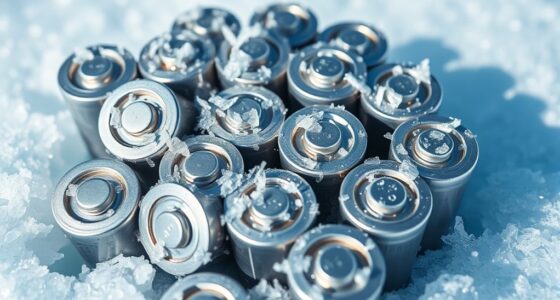
You’ll find LiFePO4 batteries perform better in cold weather due to their superior temperature resilience and cold weather efficiency. They maintain consistent power output even in low temperatures, unlike AGM or traditional deep cycle batteries, which can suffer from reduced capacity. If you’re dealing with cold climates, LiFePO4 batteries are the smarter choice because they offer more reliable performance and longer lifespan under cold conditions.
Are Maintenance Requirements Different Between AGM and Deep Cycle Batteries?
You’ll find that AGM batteries generally require less maintenance than traditional deep cycle batteries, as they’re sealed and don’t need water refilling. LiFePO4 batteries, on the other hand, have minimal maintenance needs and are eco-friendly, thanks to their longer lifespan and easier battery recycling. Both types reduce environmental impact compared to older lead-acid options, but LiFePO4 batteries tend to be the most eco-conscious choice.
How Do Lifespan and Cycle Life Vary Between These Batteries?
A stitch in time saves nine, so understanding battery lifespan is key. LiFePO4 batteries generally offer longer cycle life and better battery longevity compared to AGM and deep cycle batteries. They maintain performance consistency over many charge cycles, often lasting several thousand cycles. AGM batteries may have a shorter lifespan but can handle high power demands. Your choice depends on balancing longevity, performance needs, and maintenance considerations.
Can These Batteries Be Used Interchangeably in All Applications?
You can’t use these batteries interchangeably in all applications due to differences in battery compatibility and application flexibility. LiFePO4 batteries offer longer lifespan and better cycle life, making them ideal for high-demand uses. AGM batteries are more versatile for general applications but may not match LiFePO4’s longevity. Always consider your device’s specifications and power needs to choose the right battery type for safety and performance.
As an affiliate, we earn on qualifying purchases.
Conclusion
In the world of batteries, choosing the right one can dramatically determine your device’s durability and dependability. Whether you favor the fierce longevity of LiFePO4, the reliable reassurance of AGM, or the versatile vigor of deep cycle batteries, each serves a specific, strategic purpose. By understanding their unique use cases, you empower yourself to make smarter, safer, and more satisfying selections. So, step confidently into your power-packed future—your perfect battery awaits!
high cycle life lithium iron phosphate battery
As an affiliate, we earn on qualifying purchases.
As an affiliate, we earn on qualifying purchases.
As an affiliate, we earn on qualifying purchases.
Halloween Picks
halloween
As an affiliate, we earn on qualifying purchases.