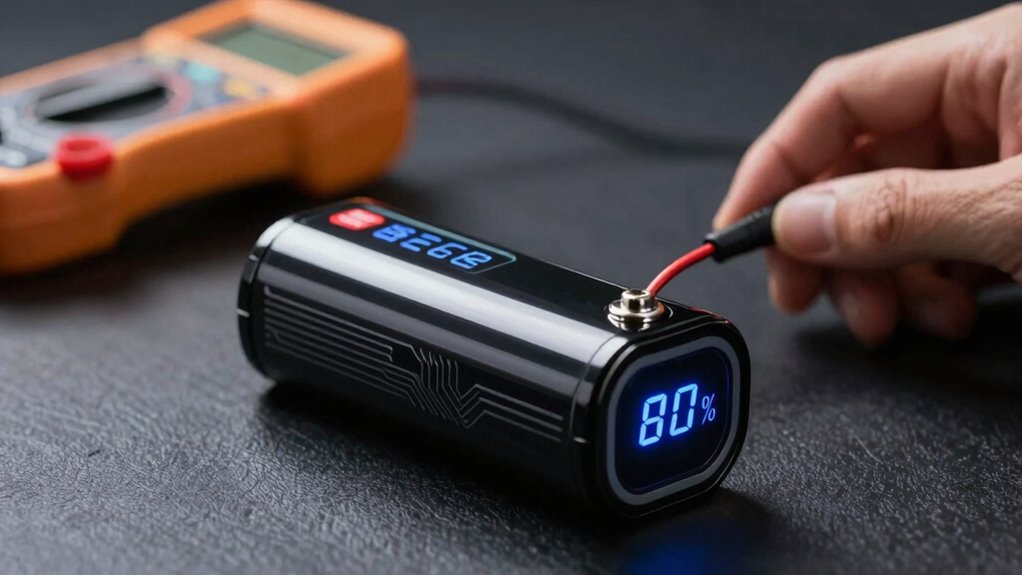

The depth of discharge (DoD) impacts your battery’s lifespan because frequent deep discharges cause more wear and tear on its cells, speeding up capacity loss. If you often drain your battery to very low levels, you’ll notice it won’t last as long over time. Keeping your discharges shallow—around 20-30%—can markedly extend your battery’s healthy life. To learn how managing DoD benefits your device’s battery, keep exploring the details.
Open a free Amazon Business account
Business pricing, bulk buying and tax-exempt orders.
As an affiliate, we earn on qualifying purchases.
Key Takeaways
- Limiting Depth of Discharge reduces internal stress, slowing capacity degradation over time.
- Shallow cycling minimizes wear on battery cells, extending overall lifespan.
- Deep discharges accelerate capacity loss, leading to shorter usage periods between charges.
- Proper management of DoD decreases the number of full charge cycles, preserving battery health.
- Consistently shallow discharges help maintain stable performance and maximize battery longevity.

Have you ever wondered how the way you use your battery affects its lifespan? It’s all about understanding how battery cycling and depth of discharge (DoD) play a role in maintaining capacity retention over time. Every time you use your device, you’re engaging in battery cycling—discharging and recharging the battery. How much you drain it before recharging, known as the depth of discharge, directly influences how well your battery preserves its capacity.
When you frequently drain your battery to very low levels, you’re pushing it into a high DoD. This deep discharge causes stress on the battery’s internal chemistry, leading to faster capacity loss. Over time, your battery won’t hold as much charge as it did when it was new, which means shorter usage times between charges. Conversely, limiting the depth of discharge—say, only using 20-30% of the battery before recharging—helps protect the battery’s health. This shallow cycling minimizes strain on the cells and supports better capacity retention, allowing your battery to last longer overall.
Understanding battery cycling is crucial because each charge and discharge cycle wears the battery down incrementally. The more cycles your battery endures at high DoD, the quicker it’ll decline in performance. That’s why manufacturers often specify the number of cycles a battery can handle before its capacity drops below a certain threshold. Proper battery management techniques, such as avoiding full discharges, can significantly extend the lifespan of your device’s battery. Recognizing the importance of battery health can help you make more informed choices about your device usage and charging habits. By managing your DoD, you reduce the number of full cycles your battery experiences, which extends its effective lifespan.
Keeping your battery’s capacity retention high means you get the most out of every charge. If you regularly drain your battery completely, you accelerate its aging process. Instead, try to keep your usage within a moderate DoD. For example, recharge when your battery hits around 20-30%, rather than waiting until it’s almost empty. This practice not only slows capacity fade but also improves overall battery longevity. Additionally, avoiding extreme discharge levels can help prevent unnecessary stress on the battery cells. Proper battery cycling practices, such as shallow discharges, are recommended to optimize battery lifespan and performance.
In the end, how you manage your battery’s DoD directly impacts its health and longevity. Shallow, mindful cycling preserves capacity retention, letting your device run longer and reducing the need for frequent replacements. Paying attention to this aspect of battery use empowers you to extend its lifespan, saving you money and hassle over time. So, next time you’re charging your device, consider how much you’re discharging it—small adjustments can make a big difference in keeping your battery healthy for years to come.
As an affiliate, we earn on qualifying purchases.
Frequently Asked Questions
How Does Temperature Affect Depth of Discharge?
Temperature greatly influences your battery’s depth of discharge, affecting its lifespan. When it’s too hot or cold, thermal management becomes crucial to prevent exceeding discharge limits. Excessive heat speeds up chemical reactions, reducing battery life, while cold temperatures hinder performance, forcing shallower discharges. Maintaining ideal temperature ensures you stay within safe discharge limits, prolonging your battery’s life. Proper thermal management helps you avoid damage caused by extreme temperatures, maximizing your battery’s longevity.
Can Shallow Discharges Prolong Battery Lifespan?
Yes, shallow discharges can prolong your battery’s lifespan. By avoiding deep discharges, you reduce stress on the battery, helping it stay healthier longer. Regularly calibrate your battery to maintain accurate charge readings, and follow proper storage precautions when not in use for extended periods. These practices help minimize capacity loss, ensuring your battery remains reliable over time. Shallow discharges combined with proper maintenance considerably extend your battery’s overall lifespan.
What Is the Ideal Depth of Discharge for Lithium-Ion Batteries?
Think of your lithium-ion battery like a delicate dance partner—you want to keep it in rhythm. The ideal depth of discharge is around 20-30%, which helps extend lifespan. To maintain this, practice good storage habits and calibrate your battery regularly. Avoid full discharges or constant shallow cycles. By doing so, you guarantee your battery stays healthy, performing smoothly over time, much like a well-rehearsed dance.
How Does Depth of Discharge Impact Charging Cycles?
When you increase the depth of discharge, you use more of your battery’s capacity, which can reduce its overall number of charging cycles. This impacts charging efficiency because deeper discharges strain the battery, leading to faster capacity loss over time. To maximize battery life, keep the depth of discharge moderate, preserving more of the battery’s capacity per cycle and enhancing overall charging efficiency.
Are There Differences in DOD Effects Across Battery Types?
Depth of Discharge effects vary dramatically across battery types, making it essential to understand different battery chemistries. You’ll find that lithium-ion batteries tolerate deeper discharges better than lead-acid ones, which fear discharge like the plague. Discharge patterns influence lifespan markedly, with some chemistries designed for frequent deep discharges, while others prefer shallow ones. Knowing these differences helps you optimize your battery’s longevity and performance for your specific needs.
As an affiliate, we earn on qualifying purchases.
Conclusion
Think of your battery as a garden: the more you harvest (discharge), the more it strains the plants. To keep your battery thriving and long-lasting, avoid deep discharges often. Lightly tending it with shallow cycles allows it to bloom season after season. Remember, treating your battery with care is like watering a delicate plant—consistent, gentle attention yields the best, most vibrant results over time. Keep it shallow, and your battery will flourish.
lithium-ion battery cycle monitor
As an affiliate, we earn on qualifying purchases.
As an affiliate, we earn on qualifying purchases.
As an affiliate, we earn on qualifying purchases.
Fall Picks
fall essentials
As an affiliate, we earn on qualifying purchases.