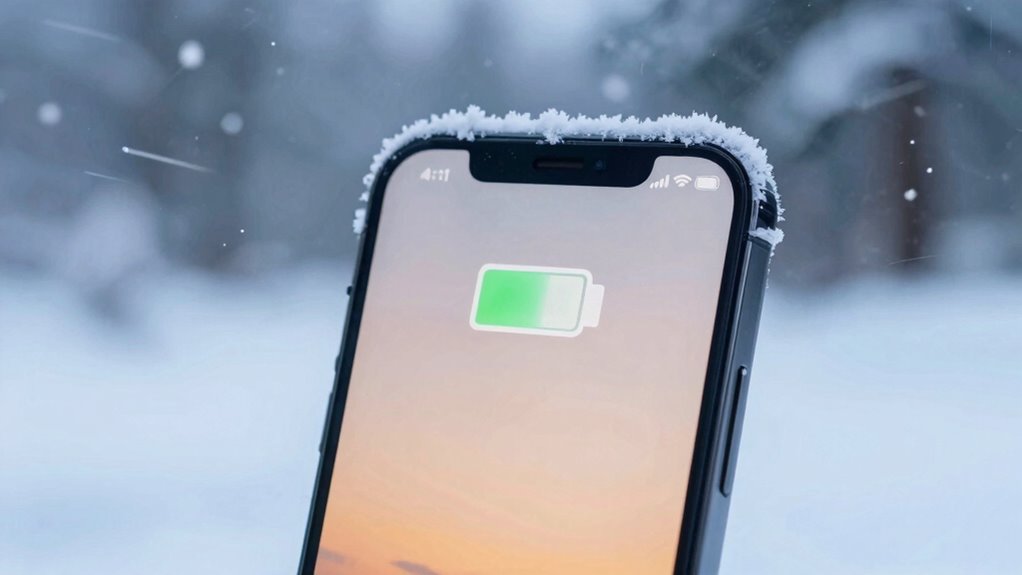

Cold weather slows down the chemical reactions inside your battery, making ion movement less efficient. When it’s cold, heat transfer inside the battery gets worse, causing internal parts to become colder. This results in lower voltage, reduced capacity, and shorter usage time. Your device may also struggle to start. To understand how design and materials help protect batteries in cold conditions, keep exploring the details behind this cycle.

Get backup power and energy gear delivered free with Prime
- Fast, free delivery on millions of items
- Prime Video, Amazon Music and more included
- Member-only deals all year
Key Takeaways
- Cold temperatures slow chemical reactions in batteries, reducing voltage and capacity.
- Poor heat transfer in cold environments causes internal battery parts to become colder.
- Lower internal temperatures further hinder ion movement and chemical processes.
- Battery materials and design influence how well a battery performs in cold conditions.
- Thermal management strategies, like insulation and heating, help maintain optimal battery temperature.
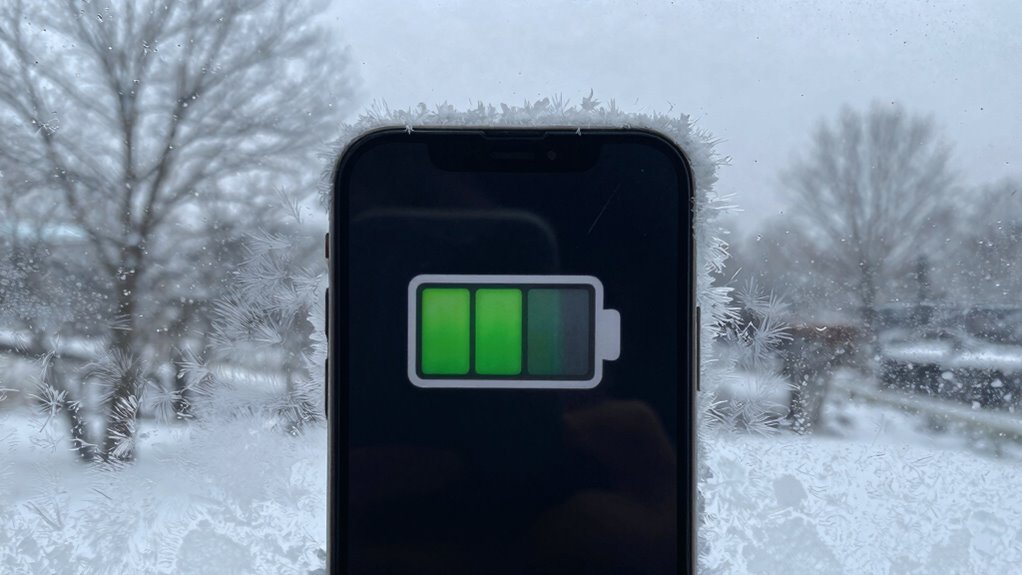
When temperatures drop, your battery’s performance can decline sharply, often leaving you frustrated with devices that won’t hold a charge or start as easily. This drop isn’t random; it’s rooted in the fundamental way batteries work and how cold affects their internal processes. To understand why cold weather impacts batteries so much, you need to consider the battery chemistry at play. Most common batteries, like lithium-ion ones, rely on chemical reactions to generate electrical energy. These reactions slow down significantly in low temperatures because cold temperatures reduce the rate at which ions move within the battery. When ions move sluggishly, the chemical reactions become less efficient, leading to decreased voltage and capacity. Essentially, the battery can’t produce as much power as it would in warmer conditions, which results in shorter usage times and difficulty starting devices.
In addition to battery chemistry, thermal conductivity plays a crucial role in how batteries respond to cold. Thermal conductivity refers to a material’s ability to transfer heat. In a battery, this means how well heat can move within its internal components. When it’s cold outside, heat doesn’t flow easily through the battery’s materials, making it harder for the device to maintain an optimal temperature. This lack of heat transfer causes the internal parts to become colder, further dampening chemical reactions. The battery’s internal temperature drops even more, creating a vicious cycle where the cold hampers heat flow, which in turn slows down the chemical processes further. That’s why, in freezing conditions, your battery can become almost sluggish, unable to produce enough power quickly enough to meet your device’s demands. Understanding battery chemistry and how it interacts with temperature can help in finding effective ways to protect your devices during winter. Additionally, thermal conductivity is influenced by the materials used in the battery’s design, which can vary between different types and brands. Using batteries with better thermal management can significantly improve performance in cold weather. Moreover, some manufacturers incorporate insulating materials or heating elements specifically to combat these issues, highlighting the importance of thermal regulation in battery design. Research also shows that battery performance can be improved by choosing batteries with enhanced thermal properties suited for cold climates.
This influence of temperature on thermal conductivity and battery chemistry explains why you often see a sudden drop in battery life during winter. It’s not just about the external cold; it’s about how the internal physics and chemistry of the battery respond to those conditions. To mitigate this, many devices are designed with insulation or heating elements to keep the battery at a more stable temperature. But even with these measures, extremely cold weather still hampers battery performance, which is why your devices might die faster or fail to start altogether. Ultimately, understanding the science behind battery chemistry and thermal conductivity helps clarify why your battery behaves so differently when the weather turns cold, and why keeping batteries warm is essential for optimal performance during winter months.
cold weather lithium-ion battery heater
As an affiliate, we earn on qualifying purchases.
As an affiliate, we earn on qualifying purchases.
Frequently Asked Questions
How Can I Extend My Battery Life in Cold Weather?
To extend your battery life in cold weather, you should focus on battery insulation and power optimization. Keep your device in a warm pocket or insulated case to prevent it from getting too cold. Enable power-saving modes and reduce screen brightness to lessen energy drain. Avoid frequent charging and unplug when fully charged. These steps help maintain battery temperature and efficiency, ensuring your device lasts longer even in chilly conditions.
Do All Battery Types Perform Equally in Low Temperatures?
No, not all battery types perform equally in low temperatures. Battery chemistry impacts their temperature sensitivity; for example, lithium-ion batteries handle cold better than zinc-carbon ones. You’ll notice some batteries lose capacity quickly in cold weather, while others maintain performance longer. If you want better cold-weather performance, choose batteries with chemistries designed for low temperatures, and keep them warm when possible to minimize performance drops.
Can Pre-Warming My Device Prevent Battery Drain?
Pre-warming your device can help prevent battery drain in cold weather by maintaining ideal temperature. Battery insulation and thermal management are essential for this, as they keep your battery warmer and functioning efficiently. You can use a thermal wrap or keep your device in a warmer pocket before use. This reduces the impact of cold temperatures, ensuring better performance and longer battery life in chilly conditions.
How Does Cold Weather Affect Battery Safety?
Cold weather can compromise your battery’s safety because low temperatures affect its chemistry, increasing the risk of internal damage or failure. Thermal insulation helps protect your battery from extreme cold, maintaining peak performance and reducing safety hazards. When the battery gets too cold, it becomes less efficient and can even crack or leak, so keeping it insulated and warm prevents dangerous situations and prolongs its lifespan.
Are There Specific Brands Better Suited for Cold Environments?
You’ll find that brands like Honda and Toyota excel in cold environments because they use batteries with superior battery material and temperature resilience. Coincidentally, these vehicles often start on the first try even in freezing temperatures, showing how essential quality components are. When choosing a brand, look for those known for reliable cold-weather performance, ensuring your vehicle stays dependable through winter’s toughest moments.
battery thermal insulation for winter
As an affiliate, we earn on qualifying purchases.
As an affiliate, we earn on qualifying purchases.
Conclusion
Understanding why cold weather affects your battery helps you prepare better, protect your devices, and extend their lifespan. Recognize the impact of low temperatures on capacity, charge, and overall performance. Anticipate the effects, adapt your habits, and take proactive measures. By doing so, you guarantee that your battery remains reliable, efficient, and ready to perform whenever you need it most—regardless of the chill in the air. Stay informed, stay prepared, and stay powered up.
As an affiliate, we earn on qualifying purchases.
As an affiliate, we earn on qualifying purchases.
Halloween Picks
halloween
As an affiliate, we earn on qualifying purchases.