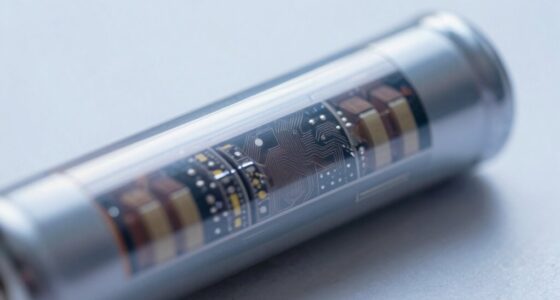
Charge cycles considerably impact your device’s battery lifespan because each time you partially or fully recharge, you use one cycle, which gradually wears down the battery’s capacity. Lithium-ion batteries typically handle around 300-500 cycles before performance drops noticeably. By adopting smart charging habits—like avoiding full drains, reducing heat, and keeping devices cool—you can extend battery life. Curious about how to optimize your charging routine? Keep exploring for practical tips to protect your battery health.

Get backup power and energy gear delivered free with Prime
- Fast, free delivery on millions of items
- Prime Video, Amazon Music and more included
- Member-only deals all year
Key Takeaways
- Each full charge cycle gradually reduces battery capacity over time.
- Lithium-ion batteries typically endure 300-500 cycles before significant capacity loss.
- Partial charging (20-80%) minimizes cycle count and extends battery lifespan.
- Heat generated during charging accelerates chemical wear and capacity decline.
- Proper habits and environment can slow cycle-related battery degradation.

Understanding how charge cycles impact your battery’s lifespan is vital to maximizing its performance and longevity. Every time you use your device and recharge it, you’re completing a charge cycle—discharging the battery partially or fully before recharging. Over time, these cycles wear down the battery’s capacity, gradually diminishing how long it can hold a charge. But the impact of charge cycles isn’t just about the number; it’s also deeply influenced by the battery chemistry and your charging habits. Different types of batteries, like lithium-ion or nickel-metal hydride, react differently to charge cycles. For example, lithium-ion batteries, which are common in smartphones and laptops, tend to have a limited number of full charge cycles—usually between 300 and 500—before their capacity drops considerably. That’s why understanding the specifics of your battery chemistry helps you better gauge how many cycles it can handle before performance declines. Additionally, some batteries are more sensitive to temperature fluctuations, which can accelerate capacity loss.
Your charging habits play a vital role in how quickly those cycles add up. If you frequently let your battery drain completely and then recharge it to 100%, you’re effectively using up a full cycle each time. Conversely, if you keep your device charged between 20% and 80%, you reduce the strain on the battery, extending its lifespan. This practice minimizes the number of full charge cycles your battery endures and slows down capacity loss. Additionally, avoiding frequent fast charging can be advantageous. While fast chargers are convenient, they generate more heat, which can accelerate chemical degradation inside the battery. Excess heat during charging causes the battery’s internal chemical reactions to speed up, leading to increased wear and tear over time. Proper charging practices can significantly influence the overall health of your battery.
Another key aspect is maintaining ideal charging conditions. Keeping your device in a cool, well-ventilated environment prevents overheating, which can damage the battery’s chemistry. Also, it’s wise to avoid keeping your device plugged in at 100% for prolonged periods, as this can cause stress to the battery and hasten capacity fade. Instead, unplug it once it reaches a healthy charge level. Understanding your battery’s chemistry and adjusting your charging habits accordingly helps you reduce unnecessary stress on the cells, thereby extending the overall lifespan. Furthermore, being aware of factors like battery chemistry can help you adopt better charging practices and prevent premature wear. By being mindful of these factors, you can make smarter choices about how often and how long you charge your device, ensuring your battery remains healthy and efficient for as long as possible.
Products Worth Considering

Ring Battery Doorbell and Chime (3rd Gen), Satin Nickel

Ring Battery Doorbell Plus (2nd Gen) and Indoor Cam Plus Bundle, Nickel Silver and White

Ring Battery Doorbell (2nd Gen), Indoor Cam Plus, and Chime (3rd Gen) Bundle
As an affiliate, we earn on qualifying purchases.
Frequently Asked Questions
Do Different Battery Types Have Varying Sensitivities to Charge Cycles?
Yes, different battery types have varying sensitivities to charge cycles. Your lithium-ion batteries, for example, are generally more durable than older nickel-based batteries, thanks to their chemistry. Additionally, manufacturing quality plays an essential role; higher-quality batteries often withstand more cycles before degrading. Understanding these factors helps you manage your device’s battery life better, ensuring you get the most out of each charge and prolonging overall lifespan.
Can Fast Charging Increase the Number of Charge Cycles a Battery Can Endure?
Fast charging acts like a swift river rushing through your battery, but it can strain the delicate sail of battery chemistry. While it might seem it could extend your battery’s endurance, it often accelerates wear. Advanced charging algorithms aim to balance speed with longevity, reducing strain. So, if you want your battery to survive longer voyages, opt for smarter charging rather than just faster currents.
How Does Temperature Impact the Effect of Charge Cycles on Battery Health?
Temperature fluctuations markedly impact how charge cycles affect your battery’s health. When temperatures are too high or too low, it accelerates battery degradation, even with fewer charge cycles. Proper thermal management keeps your device within ideal temperature ranges, reducing wear and prolonging battery life. By maintaining stable temperatures, you help guarantee each charge cycle causes less damage, extending your battery’s overall lifespan and keeping your device running smoothly longer.
Are There Signs Indicating a Battery Has Reached Its Cycle Limit?
Like a vintage radio losing its tune, your battery shows signs of reaching its cycle limit through decreased capacity, longer charging times, or unexpected shutdowns. Battery degradation becomes noticeable, and you might find yourself needing more charge awareness to manage usage. Keep an eye on these indicators, as they signal your battery’s health is declining, and it’s nearing the end of its cycle life, prompting you to contemplate a replacement.
Do Software Updates Influence the Battery’s Ability to Handle Charge Cycles?
Software updates can influence your battery’s ability to handle charge cycles by improving power management. These updates often include battery calibration features, helping your device better estimate remaining capacity and optimize charging behavior. As a result, your battery can operate more efficiently, potentially extending its lifespan. Regularly updating your software guarantees your device benefits from the latest power management improvements, keeping your battery healthier over time.
Conclusion
Think of your battery like a delicate garden; each charge cycle is a gentle watering. Over time, too many waterings can cause the plants to wither. Similarly, every charge cycle wears down your battery’s capacity, gradually diminishing its lifespan. By mindful charging—like tending your garden—you can extend its significance. Remember, every thoughtful recharge helps your battery bloom longer, ensuring your device stays lively and ready whenever you need it.