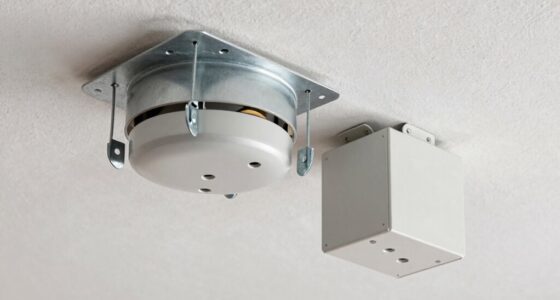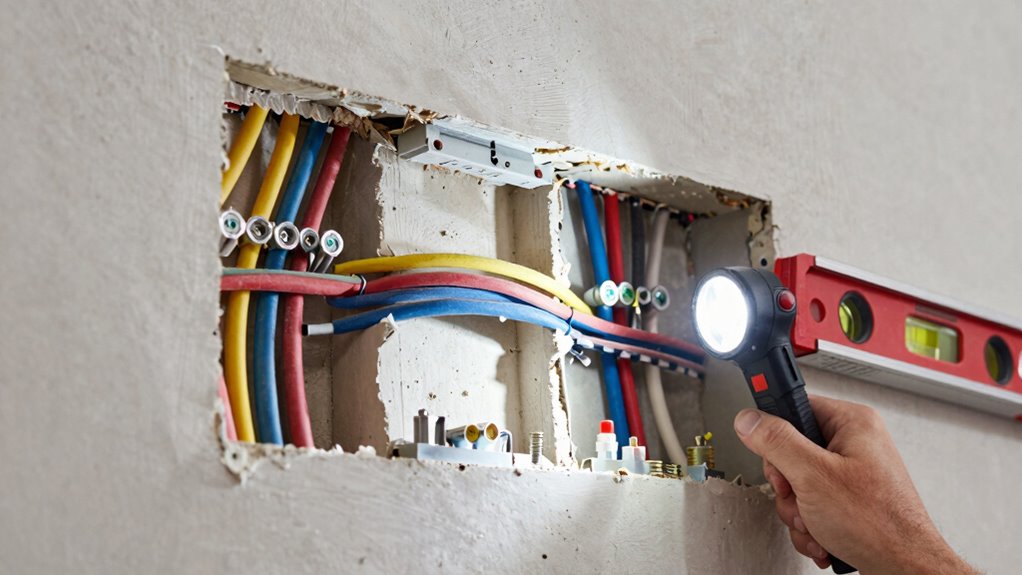

To plan electrical runs before opening a wall, start by reviewing your building plans or creating a detailed sketch of your space. Mark the locations for outlets, switches, and fixtures, and consider future needs like appliances or smart devices. Identify the best routes for wiring, avoiding existing plumbing or ductwork. Make certain safety by turning off power and following electrical codes. For more tips on mapping and safety precautions, keep exploring how to effectively prepare your electrical system.
Key Takeaways
- Review building plans and create a detailed sketch marking outlet, switch, and fixture locations.
- Identify optimal routes for wiring, considering existing infrastructure and future needs.
- Incorporate both traditional wiring and modern wireless options for flexibility.
- Mark all planned wire runs clearly and double-check circuit de-energization before proceeding.
- Account for load capacity, add extra outlets, and ensure compliance with electrical codes.
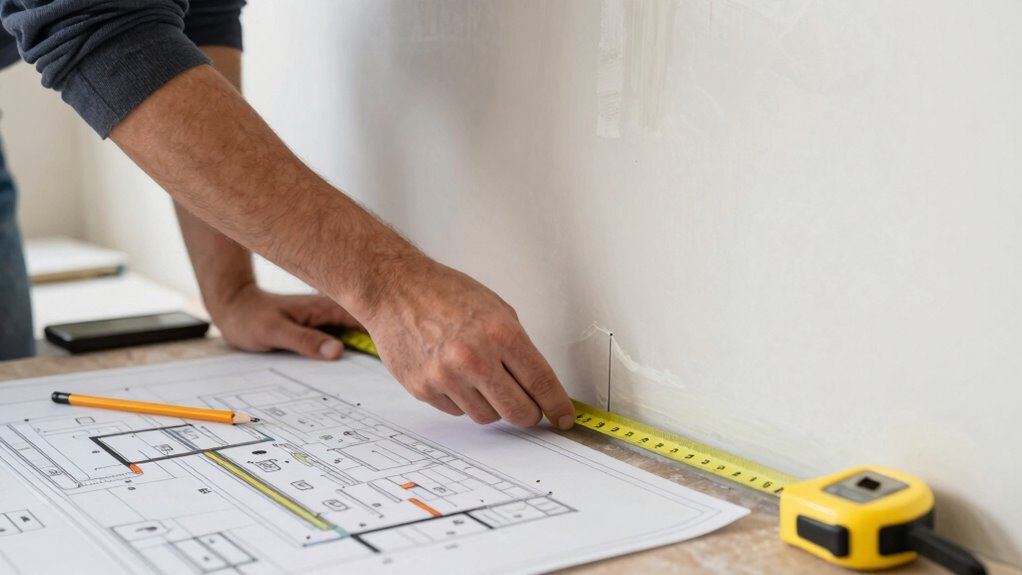
Planning electrical runs before opening a wall is essential to guarantee your wiring is safe, efficient, and meets code requirements. Taking the time to map out your electrical system beforehand helps prevent costly mistakes and ensures a smooth installation process. Start by reviewing your building plans or creating a detailed sketch of the space. Identify where outlets, switches, and fixtures will go, and consider the location of appliances or electronics that might need dedicated circuits. This planning stage allows you to determine the best routes for wiring, minimizing the need to make adjustments once the wall is open.
In modern homes, wireless alternatives are increasingly popular, offering flexibility and reducing the number of wires needed. If you’re considering smart home devices or wireless lighting controls, factor these into your plan. Wireless options can sometimes eliminate the need for running wires through walls, which simplifies installation and enhances safety by reducing the risk of accidental damage during construction. However, keep in mind that traditional wiring still remains indispensable for many applications, especially for high-power devices or reliable internet connections. Proper planning also involves understanding the importance of adhering to electrical codes, which can help ensure your project remains safe and compliant.
Before you start running wires, always prioritize safety precautions. Turn off the main power supply to prevent electrical shocks, and double-check that circuits are de-energized before cutting into walls. Use proper tools and wear safety gear like gloves and goggles. Mark all planned wire runs clearly on your sketch, including outlet and switch locations, to avoid confusion. Be mindful of existing infrastructure—look out for plumbing, ductwork, or other electrical cables that could be hidden inside walls. Avoid running wires through areas where they could be damaged or cause interference. Additionally, understanding wire gauge and load capacity is crucial to prevent overloads and ensure circuit safety. It’s also beneficial to familiarize yourself with local electrical regulations, which can help you stay compliant and avoid potential penalties.
When planning your electrical runs, consider future needs as well. Adding extra outlets or circuits now can save you from costly upgrades later. Use appropriate gauge wire for the load, and ensure your connections comply with local electrical codes. If you’re unsure about code requirements or safety standards, consulting with a licensed electrician is a wise move. Proper planning helps you avoid issues like overloading circuits or creating fire hazards. It’s also recommended to incorporate safety features such as GFCI outlets****, especially in moist areas like kitchens and bathrooms, to enhance safety.

Klein Tools ET310KIT AC Circuit Breaker Finder Kit, Electric Tester, GFCI Tester, Leads, Adapters and Case
- Accurate Breaker Identification: Quickly locate the correct breaker
- Visual and Audible Cues: Clear signals when breaker is found
- Built-in GFCI Tester: Test GFCI outlets and wiring
As an affiliate, we earn on qualifying purchases.
As an affiliate, we earn on qualifying purchases.
Frequently Asked Questions
What Safety Precautions Are Necessary During Electrical Planning?
You should wear protective gear and turn off power at the main breaker to guarantee safety during electrical planning. When considering wireless planning, avoid placing equipment near metal or dense insulation that could interfere. Insulation considerations are vital; avoid running wires through thick insulation to prevent overheating or signal disruptions. Always follow local electrical codes and consult a professional if unsure, maintaining a safe environment before opening any walls.
How Do Local Building Codes Affect Electrical Run Planning?
Local building codes greatly impact your electrical run planning by requiring electrical code compliance and adherence to wiring permit requirements. You must follow specific regulations for wiring methods, wire sizes, and outlet placements to guarantee safety and legality. Before starting, check with your local authority to obtain necessary permits and confirm your plans meet all codes. This step helps prevent future issues and ensures your electrical system is safe and up to code.
What Tools Are Essential for Planning Electrical Runs?
Think of planning your electrical runs as mapping a treasure route; you need the right tools to chart a safe, efficient circuit layout. Essential tools include a stud finder, tape measure, circuit tester, and a digital level for wire routing precision. These tools help you visualize the path, avoid obstacles, and guarantee your wiring is secure, making your project smoother and safer from start to finish.
How Can I Identify Existing Electrical Wiring Inside Walls?
You can identify existing electrical wiring inside walls by performing wire tracing and circuit mapping. Use a wire tracer or circuit tester to follow the path of the wires without damaging the wall. Turn off power before testing to stay safe. Carefully scan the wall to locate outlets, switches, or fixture boxes, helping you understand the wiring layout. This process guarantees you avoid damaging existing wiring and plan your new runs accurately.
When Should I Consult a Professional Electrician?
Did you know nearly 80% of electrical fires involve improper wiring or troubleshooting? You should consult a professional electrician whenever you’re unsure about circuit breaker selection or facing complex electrical troubleshooting. If you’re planning new wiring or modifying existing circuits, an expert guarantees safety and code compliance. Don’t risk damage or injury—call a professional when in doubt, especially before opening walls or making significant electrical changes.

2 Pcs Stainless Steel Thickness Gauges Wire Gauge Measuring Tool
- Premium Material: Made of high-quality stainless steel
- Rust-Resistant: Anti-rust properties for durability
- Complete Set: Includes dual-sided wire gauge and thickness gauge
As an affiliate, we earn on qualifying purchases.
As an affiliate, we earn on qualifying purchases.
Conclusion
Planning your electrical runs carefully before opening a wall saves you time and headaches later. By mapping out your circuits, identifying potential obstacles, and ensuring compliance, you set yourself up for a smooth project. Remember, a stitch in time saves nine — it’s better to be thorough now than to fix mistakes later. With proper planning, you’ll avoid unnecessary surprises and keep your project running like clockwork. Stay prepared, and you’ll reap the rewards of a job well done.
Klein Tools ET310KIT AC Circuit Breaker Finder Kit, Electric Tester, GFCI Tester, Leads, Adapters and Case
- Accurate Breaker Identification: Quickly locate the correct breaker
- Visual and Audible Cues: Clear signals when breaker is found
- Built-in GFCI Tester: Test GFCI outlets and wiring
As an affiliate, we earn on qualifying purchases.
As an affiliate, we earn on qualifying purchases.

Klein Tools 56250 Wire Marker Book for Cable Management, Electric Panel Organization Wire Label Stickers, Numbered 1-48
- More pages for low numbers: Includes extra pages for numbers 1-24
- Separate pages for odd/even markers: Organize panel with distinct marker pages
- Large, clear print labels: Features easy-to-read 0.25 x 1.5-inch labels
As an affiliate, we earn on qualifying purchases.
As an affiliate, we earn on qualifying purchases.