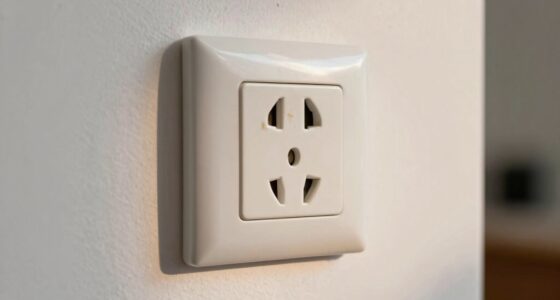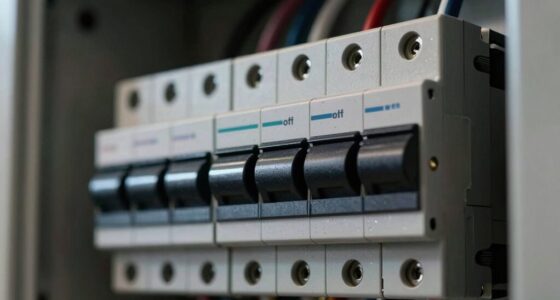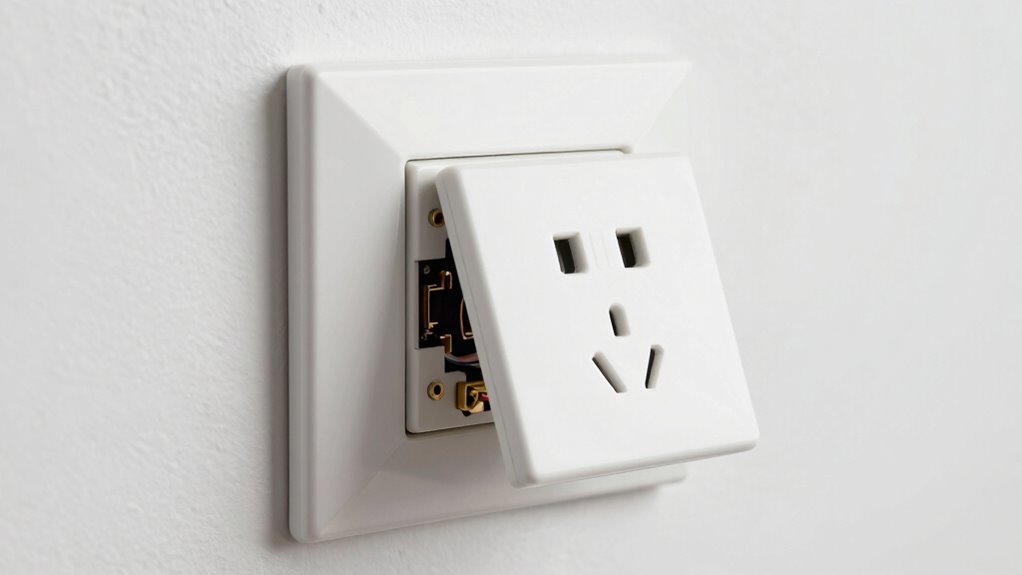

If your GFCI won’t reset, it usually signals a persistent circuit fault like damaged wiring, a short circuit, or a faulty appliance. You should turn off the power at the breaker before inspecting for visible damage, loose connections, or corrosion. Often, GFCIs fail over time and need replacement. Faulty wiring or connected devices can also cause repeated trips. For safety and reliability, understanding these causes can help you address the issue effectively; discover more if you’re curious about how to fix it properly.
Key Takeaways
- A persistent circuit fault, like damaged wiring or a short circuit, prevents the GFCI from resetting.
- Loose or corroded connections at the outlet can block the reset button from functioning properly.
- The GFCI may be faulty or worn out, especially after multiple trips, requiring testing or replacement.
- Connected appliances causing continuous trips can trip the GFCI and hinder resetting.
- Internal damage or age-related failure of the GFCI device itself can be the reason it won’t reset.
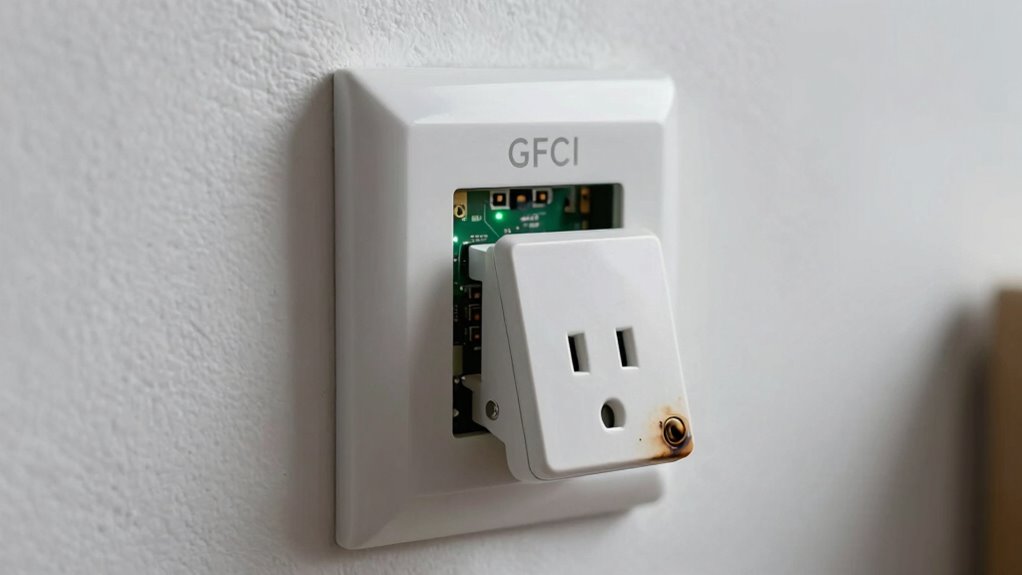
If your GFCI outlet won’t reset, it’s often a sign of a problem that needs troubleshooting before you can restore power safely. GFCI outlets are designed for electrical safety, protecting you from ground faults that could cause shocks or fires. When they trip, it’s a clear signal that something’s wrong. But sometimes, trying to reset the outlet doesn’t work, which can be frustrating and worrisome. The key is understanding the underlying causes so you can address them properly.
First, it’s important to recognize that a GFCI that won’t reset could be indicating a persistent fault somewhere in the circuit. This isn’t something to ignore, as it could be a sign of a deeper electrical issue, such as damaged wiring, a short circuit, or a faulty appliance. Before attempting to reset, make sure the power is turned off at the breaker. Then, carefully inspect the outlet and surrounding wiring for visible damage or signs of burning. Sometimes, loose or corroded connections can prevent resetting, and tightening these connections might resolve the issue. However, if you’re unsure or uncomfortable working with electrical components, it’s safer to call in a professional.
Another common reason a GFCI won’t reset is that it’s been damaged or has reached the end of its lifespan. GFCIs are designed to trip for safety, but they can also wear out over time. If your outlet is old or has experienced frequent trips, it might need replacing. Testing the GFCI with a dedicated tester can help determine if it’s functioning properly. If the tester indicates a problem or if the reset button remains stuck, replacing the outlet is often the best course of action. Remember, working with electrical devices always requires caution—if you’re not confident, hire an electrician. Additionally, faulty wiring or connections can cause repeated trips, and addressing these issues is essential for ongoing electrical safety. Knowing how to test and replace GFCIs can help you maintain a safe and reliable electrical system. Sometimes, the problem isn’t with the GFCI itself but with the circuit wiring or connected appliances. Faulty appliances can cause continuous trips, preventing a successful reset. Disconnect all devices plugged into the circuit and then try resetting the GFCI. If it resets successfully, reconnect appliances one at a time to identify the culprit. This process is part of effective circuit troubleshooting, helping you maintain electrical safety while isolating the source of the fault. Additionally, understanding how home electrical systems work can help you better diagnose and prevent future issues. Moreover, being aware of electrical safety precautions can protect you from potential hazards when working on your electrical system.

Klein Tools RT250 GFCI Outlet Tester with LCD Display, Electric Voltage Tester for Standard 3-Wire 120V Electrical Receptacles
CLEAR LCD READOUT: GFCI Receptacle Tester features a large backlit LCD readout for easy voltage reading and clear…
As an affiliate, we earn on qualifying purchases.
As an affiliate, we earn on qualifying purchases.
Frequently Asked Questions
Can a GFCI Reset Itself After Tripping?
A GFCI can sometimes reset itself after tripping, but it mainly depends on the cause of the ground fault. If the ground fault was temporary or corrected, the GFCI might reset automatically or with a simple push of the reset button. However, if the ground fault persists or there’s a wiring issue, it won’t reset as part of circuit protection. Always check for underlying problems before attempting to reset a GFCI.
Is It Safe to Force a GFCI to Reset?
It’s not safe to force a GFCI to reset if you suspect grounding issues or circuit overloads. Doing so can hide underlying problems that might cause electric shocks or fires. Instead, turn off the power, check for overloaded circuits, and inspect grounding connections. If it still won’t reset, consult a qualified electrician. Safety comes first—never bypass safety features or force resets without proper troubleshooting.
How Often Should GFCIS Be Tested?
You should test your GFCI monthly to guarantee electrical safety and proper functioning. Regular testing helps identify ground faults early, preventing potential shocks or fires. To test, press the “Test” button, then confirm the reset button trips, cutting power. If it doesn’t, or if it doesn’t reset afterward, it’s time to replace or have it inspected. Regular testing keeps you safe by catching issues before they become hazardous.
Do GFCI Outlets Wear Out Over Time?
Yes, GFCI outlets do wear out over time. Their lifespan depends on usage and quality, but generally, outlet durability decreases after about 10-15 years. Frequent testing or trips can accelerate wear. Over time, internal components may weaken, causing the GFCI to malfunction or fail to reset properly. To guarantee safety, you should regularly test your GFCI and replace it if it shows signs of aging or doesn’t reset properly.
Can Multiple GFCIS Share the Same Circuit?
Yes, you can share a circuit with multiple GFCIs, but it’s not recommended because it can cause false trips and interfere with proper ground fault detection. When multiple GFCIs share the same circuit, a ground fault in one outlet might trip all others, making troubleshooting difficult. To guarantee safety and proper functioning, it’s better to have each GFCI on its own circuit or follow local electrical codes.

ELEGRP G1215CM2 G20CMR Patented Auto-Monitoring GFCI Replacement Plug Inline Assembly, Manual Reset 15 Amp Non-Grounded 2 Wires 2-Prongs for Power Tools, Lawn Equipment etc, UL Listed, 1 Pack, Black
✅【Patented Auto-Monitor Every 5 Seconds】 This is the newer model of our original GFCI plug of G1215CM2. This…
As an affiliate, we earn on qualifying purchases.
As an affiliate, we earn on qualifying purchases.
Conclusion
When your GFCI refuses to reset, think of it as a cautious guardian, hesitant to let you back in until all dangers are tamed. Sometimes, it’s just warning you of hidden trouble lurking beneath the surface, like a lighthouse flickering in a storm. So, take a moment to check the circuit, clear any faults, and let safety be your guiding star. Remember, a reset is only possible when the path ahead is safe and clear.

Klein Tools ET310KIT AC Circuit Breaker Finder Kit, Electric Tester, GFCI Tester, Leads, Adapters and Case
ACCURATE CIRCUIT BREAKER IDENTIFICATION: Quickly locate the correct breaker with precision using the transmitter and receiver of the…
As an affiliate, we earn on qualifying purchases.
As an affiliate, we earn on qualifying purchases.

SIEMENS QF120A Gfci Circuit Breaker, Plug In, Self Testing, 20 Amp, 1-Pole, 120 Volt
Single pole, 20 Amp, type QPF2 GFCI Circuit Breaker
As an affiliate, we earn on qualifying purchases.
As an affiliate, we earn on qualifying purchases.