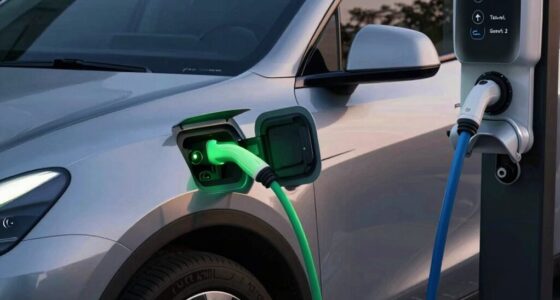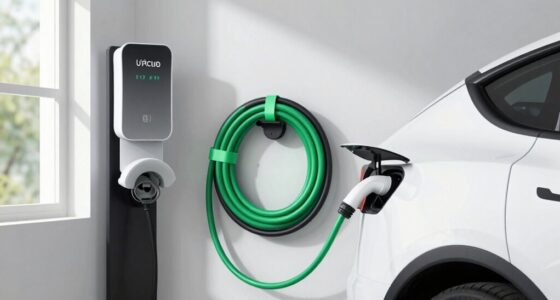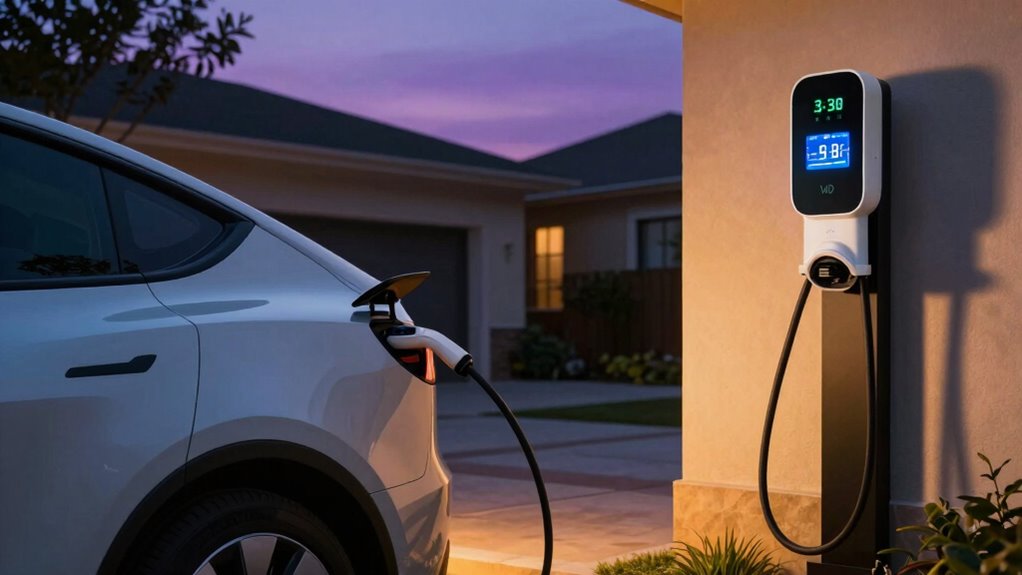

Time of Use rates change the value of your home charging by making it cheaper during off-peak hours when electricity demand is lower. Charging at these times saves you money on your bills and reduces stress on the grid, helping your battery last longer. If you want to learn how smart charging can maximize these benefits and keep your costs even lower, keep exploring—there’s more to discover.
Key Takeaways
- TOU rates vary by time, making charging during off-peak hours more cost-effective.
- Charging during peak times increases electricity costs and accelerates battery wear.
- Smart chargers optimize charging schedules, maximizing savings and extending battery lifespan.
- Integrating smart technologies and grid responses enhances efficient energy management.
- Understanding rate fluctuations helps homeowners reduce expenses and improve EV value.
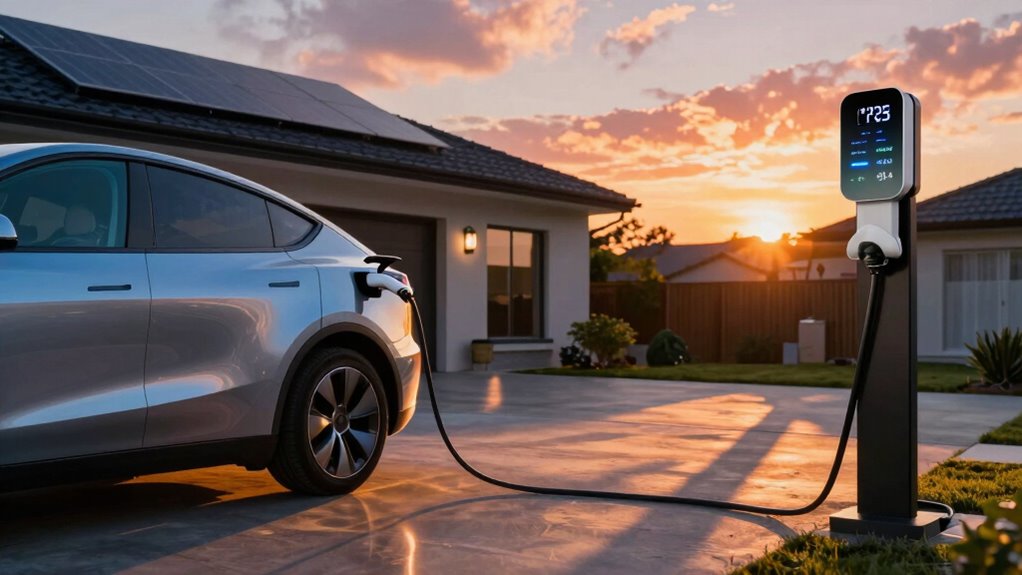
If you own an electric vehicle, understanding how Time of Use (TOU) rates affect your home charging can save you money. These rates fluctuate depending on the time of day, which means charging your EV at different hours can have a significant impact on your electricity bill. Charging during off-peak hours, when electricity is cheaper, lets you maximize savings, while charging during peak times can lead to higher costs. But beyond just saving money, TOU rates influence your overall charging strategy and the long-term health of your vehicle’s battery.
Charging at high rates during peak hours can accelerate battery degradation over time. When you frequently charge your EV during expensive, high-demand periods, the battery experiences more stress, which can shorten its lifespan. This is especially true if the charging process involves rapid or high-voltage charging, which can further impact battery health. This means you might need to replace your battery sooner, leading to costly replacements down the line. Conversely, charging during off-peak hours, typically late at night or early in the morning, tends to be gentler on the battery, helping preserve its capacity and longevity. So, understanding TOU rates isn’t just about saving on your bill; it’s also about maintaining your vehicle’s value and performance.
Charging during off-peak hours helps preserve your EV battery’s health and extends its lifespan.
Another factor influenced by TOU rates is charging station costs. If you rely on a home charging station, the initial setup and ongoing operational costs can vary depending on when and how often you charge. Some advanced charging stations allow you to program charging times or adjust power levels to align with off-peak hours, helping you avoid higher rates and reduce wear on the vehicle’s battery. Investing in a smart charger might seem like an added expense at first, but it can pay off by optimizing your charging schedule and lowering both your electricity costs and potential battery degradation. Additionally, streamlining AI Agent governance can ensure your charging data and systems are secure and compliant with enterprise standards. Moreover, incorporating smart grid integration can enable your home system to better respond to dynamic rates and grid demands. Being aware of electricity pricing structures can further enhance your ability to make informed decisions about when to charge. Recognizing the importance of power management systems can also help you better balance your energy consumption and costs. Implementing demand response programs can additionally help you further optimize your energy use and savings.

ChargePoint HomeFlex Level 2 EV Fast Charger, J1772, Smart, Hardwired, 50A
- Reliable Home Charging: Builds dependable EV charging stations
- 24/7 Support: Around-the-clock assistance available
- Mobile App Control: Manage charger via smartphone app
As an affiliate, we earn on qualifying purchases.
As an affiliate, we earn on qualifying purchases.
Frequently Asked Questions
How Do TOU Rates Vary by Geographic Location?
You’ll notice that TOU rates vary by geographic location due to regional pricing differences and rate variability. In some areas, electricity costs are higher during peak hours because of local demand and supply factors. This means your home charging costs can fluctuate based on where you live, encouraging you to charge during off-peak times when rates are lower. Always check your local utility’s TOU schedule to optimize your savings.
Can I Switch Between Different Utility Rate Plans Easily?
Yes, you can usually switch between different utility rate plans easily, especially with a smart grid that offers rate flexibility. Many utilities allow you to change plans online or through customer service. This flexibility helps you optimize your home charging, especially during off-peak hours. Just check with your utility provider for specific options and procedures, and take advantage of the smart grid to maximize savings and efficiency.
What Are the Long-Term Cost Implications of TOU Rates?
With TOU rates, you’ll likely see lower long-term costs if you shift your charging to off-peak times, thanks to reduced peak pricing. However, the billing structure can sometimes make it tricky to predict expenses, so you should monitor your energy use closely. Over time, this approach can save you money, but it requires consistent effort to optimize your charging schedule according to the utility’s peak periods.
Do TOU Rates Affect Off-Peak Renewable Energy Incentives?
Time of Use (TOU) rates can complicate the calculation of off-peak renewable energy incentives. You might find the fluctuating rates make it tricky to maximize benefits, as incentives often depend on when you charge. Rate complexity can diminish the appeal of off-peak renewables, potentially reducing their financial favorability. To optimize savings, you’ll need to carefully plan charging times, balancing rate periods with renewable incentives.
How Do TOU Rates Impact the Resale Value of My Home?
Time of Use rates can boost your home’s resale value by highlighting your commitment to solar incentives and grid integration. Buyers see the potential for savings on energy costs, especially if you have a home solar system or energy storage. This illustrates a forward-thinking, eco-friendly property that benefits from current utility pricing structures, making it more attractive and valuable in the real estate market.
home EV charging station with app control
As an affiliate, we earn on qualifying purchases.
As an affiliate, we earn on qualifying purchases.
Conclusion
So, here’s the irony: while Time of Use rates aim to save you money, they might just make charging your EV feel like a game of timing. You’ll carefully plan your home charging schedule, only to wonder if the savings are worth the hassle. Ultimately, these rates remind us that even in a future driven by clean energy, a little unpredictability keeps things interesting—sometimes, the best things in life are just a matter of timing.

Lectron Level 1 EV Charger – ETL Certified, 110V, 15 Amp, 16 ft Extension Cord & J1772 Cable – Portable Electric Car Charger for J1772 EVs with NEMA 5-15 Plug
- Certification: ETL Certified for safety
- Voltage and Current: 120V, 15 Amp power
- Extension Cord Length: 16 ft extension cord
As an affiliate, we earn on qualifying purchases.
As an affiliate, we earn on qualifying purchases.
energy management system for home
As an affiliate, we earn on qualifying purchases.
As an affiliate, we earn on qualifying purchases.