
Before you plug into a NEMA 14-50 circuit, make certain your setup matches its specifications—providing 240 volts at up to 50 amps with the proper wiring and a compatible breaker. Confirm the outlet is weatherproof if outdoors, and always follow safety guidelines like grounding and turning off the circuit breaker when working on the system. Knowing these essentials helps prevent hazards and ensures reliable power, so keep exploring what it takes to install and maintain this high-power outlet properly.
Key Takeaways
- Ensure the NEMA 14-50 outlet is properly rated for 50 amps and installed by a qualified electrician.
- Verify the circuit breaker matches the outlet’s specifications to prevent overloads and electrical hazards.
- Use 6 AWG gauge wiring for safe high-current transmission, following proper wiring diagrams and grounding practices.
- Confirm the outlet is weatherproof and suitable for indoor or outdoor use, especially in outdoor installations.
- Regularly inspect connections, grounding, and breaker function to maintain safety and optimal performance.
Understanding NEMA 14-50 Specifications
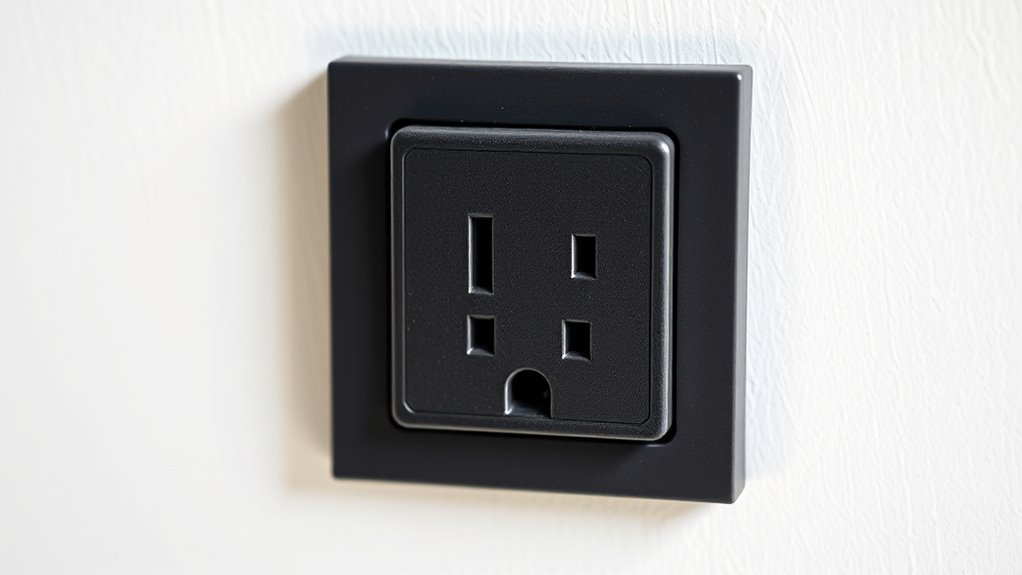
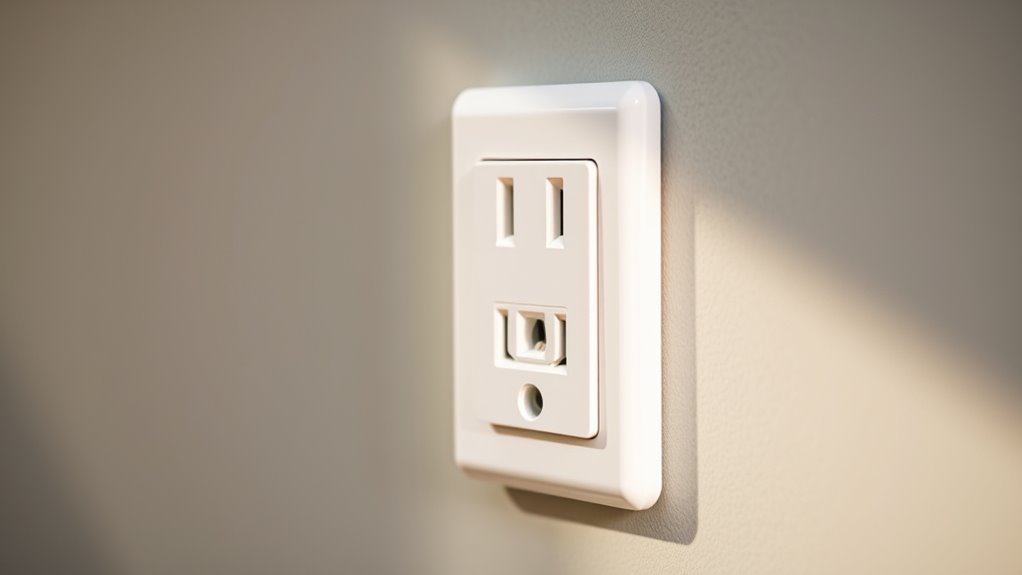
Understanding NEMA 14-50 specifications is essential if you want to install or work with this type of outlet properly. This outlet is designed for both indoor and outdoor installation, making durability and weather resistance critical. You’ll need to ensure your circuit breaker can handle the outlet’s amperage, typically 50 amps, to prevent overloads or electrical hazards. Proper wiring is vital; use the correct gauge wire and secure connections to maintain safety and performance. When planning an outdoor installation, check that the outlet and wiring are rated for outdoor use and protected from moisture. Ensuring your circuit breaker matches the outlet’s specifications helps prevent tripping or damage. Familiarizing yourself with these specifications guarantees a safe, reliable connection tailored for your specific electrical needs. Outdoor durability features are crucial for outdoor setups to withstand the elements and ensure long-term safety.
Common Uses and Applications of NEMA 14-50 Outlets

NEMA 14-50 outlets are widely used for electric vehicle charging and powering recreational vehicles. These outlets provide the high current capacity needed for fast charging and large appliances. Understanding their common applications helps you choose the right setup for your needs. Additionally, selecting the appropriate paint sprayer can ensure efficient and high-quality application for various projects. Proper installation and usage of NEMA 14-50 outlets also support efficient energy utilization, making them a versatile choice for many high-power needs. Being aware of safety considerations when installing these outlets is crucial to prevent electrical hazards and ensure reliable operation. Moreover, being aware of angel number soulmate signs can help you recognize moments of love and connection that may coincide with your energy setup, enhancing your overall well-being. Incorporating smart home integration can further enhance the functionality and safety of these outlets in modern residences.
Electric Vehicle Charging
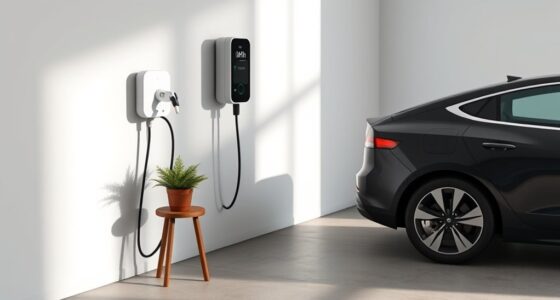
Have you ever wondered why NEMA 14-50 outlets are a popular choice for electric vehicle charging? These outlets provide the high current needed to quickly recharge your EV’s battery. Many homeowners install them in their garages to support Level 2 charging, which is faster than standard outlets. If you have a solar panel system, a power inverter can convert DC power into AC, making your solar energy compatible with your EV charger. This setup allows you to charge your vehicle using renewable energy, reducing reliance on the grid. The NEMA 14-50’s robust design handles the high amperage securely, making it ideal for EV charging applications. Installing one ensures you’re ready for efficient, eco-friendly vehicle charging whenever you need it.
Recreational Vehicle Power
Many recreational vehicles rely on NEMA 14-50 outlets to power essential appliances and maintain comfort during trips. These outlets are ideal for running your RV’s refrigerator, microwave, and air conditioning. They also support battery maintenance, helping keep your RV’s batteries charged and ready for travel. If you have a generator, NEMA 14-50 outlets facilitate seamless integration, allowing the generator to supply power without hassle. This setup ensures you can operate multiple appliances simultaneously, even in remote locations. Proper use of a NEMA 14-50 outlet in an RV enhances convenience, safety, and efficiency. Proper wiring and connection are crucial to prevent hazards and ensure reliable power delivery. Electrical safety measures should always be followed when working with high-current outlets to avoid accidents. Whether you’re plugged into shore power or using a generator, these outlets provide a reliable power source, making your RV experience more comfortable and worry-free. Additionally, understanding circuit requirements and ensuring your setup complies with electrical standards can help prevent overloads and outages. Recognizing load capacity is essential to avoid overloading circuits and causing electrical issues. Being aware of grounding procedures further ensures safe operation and minimizes risks during setup and use.
Voltage and Amperage Details for Safe Operation

Understanding the voltage and amperage limits for NEMA 14-50 circuits is essential to guarantee safe operation. This outlet typically supplies 240 volts at up to 50 amps, so your circuit breaker must match this capacity to prevent overloads. Using the correct wiring gauge, usually 6 AWG, ensures the circuit can handle the current without overheating or fire risk. A circuit breaker acts as a safeguard, disconnecting power if the current exceeds safe limits. Never bypass or oversize the breaker, as this compromises safety. Always confirm your wiring gauge aligns with the amperage rating, and ensure your breaker is rated correctly. Proper attention to these details helps prevent electrical hazards and ensures your NEMA 14-50 outlet functions reliably and safely.
Differences Between NEMA 14-50 and Other Outlets
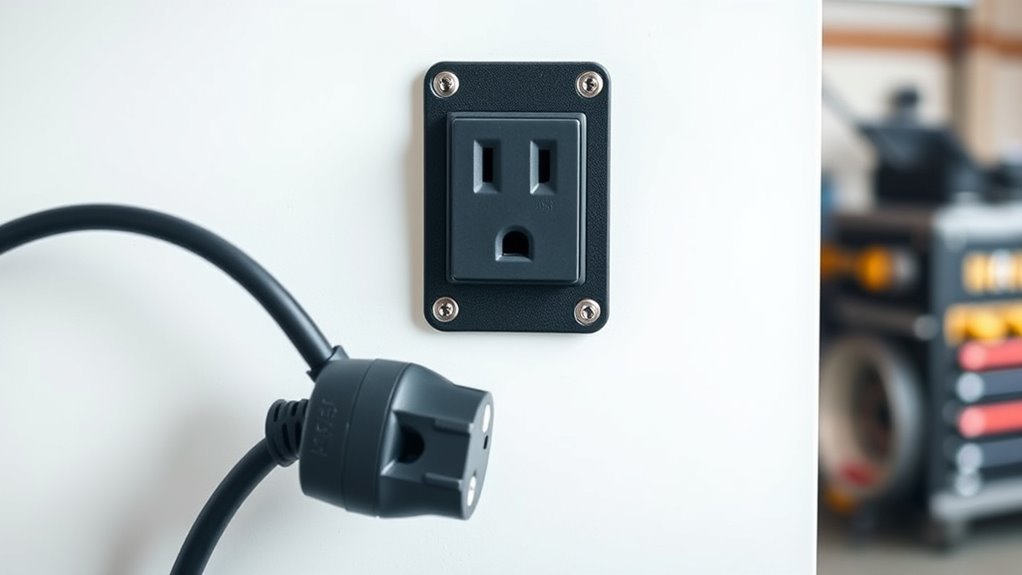
NEMA 14-50 outlets are designed specifically for high-current appliances and EV charging, setting them apart from other common outlets like NEMA 5-15 or NEMA 6-20. The key outlet differences include their voltage capacity, as NEMA 14 50 provides 240 volts, compared to 120 volts for standard outlets. NEMA 14-50 also supports higher amperages—typically up to 50 amps—making them suitable for heavy-duty applications. In contrast, outlets like NEMA 5-15 are limited to 15 amps and are meant for basic household devices. Understanding these outlet differences helps guarantee you select the right outlet for your needs, preventing overloads or unsafe connections. NEMA 14-50 outlets are specifically built for higher power demands, unlike many other outlet types. Additionally, projector technology requires appropriate power supplies, underscoring the importance of choosing the correct outlet for safety and performance. Properly matching outlet types with electrical specifications ensures safe and efficient operation of all connected devices.
Proper Installation and Wiring Requirements

Proper installation of a NEMA 14-50 outlet requires careful wiring to guarantee safety and reliable performance. First, ensure you follow the correct wiring diagrams specific to your outlet model. Second, pay close attention to grounding requirements; a proper ground connection prevents electrical hazards. Third, use appropriately rated gauge wire to handle the circuit’s amperage, typically 6 AWG for 50 amps. Confirm all connections are tight and secure, avoiding loose wires that can cause overheating. Always verify that the wiring matches the diagram and grounding standards for your area. Proper installation minimizes risks and ensures your outlet functions correctly, especially when powering high-demand devices like electric vehicles or large appliances. Additionally, understanding proper wiring techniques can help you ensure a safe and effective setup, reducing the risk of electrical faults or fire hazards. Regularly inspecting your electrical connections ensures ongoing safety and compliance with electrical codes, which is crucial for long-term reliability. Incorporating proper maintenance practices can further enhance safety and longevity of your installation.
Safety Precautions When Using NEMA 14-50 Circuits

To guarantee your safety when using a NEMA 14-50 circuit, always turn off the power supply before plugging or unplugging any devices. Ensuring proper grounding requirements is essential; confirm the outlet is grounded correctly to prevent electrical shocks. Always verify that the circuit breaker is switched off before working on or connecting your device, as this is key to circuit breaker safety. Never bypass grounding or circuit breaker protections, as doing so increases the risk of electrical hazards. Use insulated tools and wear rubber-soled shoes to minimize shock risk. Regularly inspect outlets and cords for damage. Additionally, being aware of circuit protection precautions can help prevent accidents related to faulty wiring or equipment. Proper grounding requirements are crucial in preventing overloads and potential fires when handling high-capacity circuits like the NEMA 14-50. Following these precautions helps protect you from potential electrocution or fire hazards associated with improper handling of high-capacity circuits like the NEMA 14-50. Remember to inspect wiring regularly to identify any signs of wear or damage that could compromise safety.
Troubleshooting Common Issues With NEMA 14-50 Outlets

Even when you follow all safety precautions, issues can still arise with NEMA 14-50 outlets. Common problems often relate to grounding issues or circuit breaker problems. To troubleshoot:
Even with safety precautions, grounding or breaker issues can still cause NEMA 14-50 outlet problems.
- Check the grounding connection to ensure it’s secure and intact; poor grounding can cause electrical faults. Proper grounding is essential for indoor safety and to prevent potential hazards.
- Inspect the circuit breaker for tripping or wear; a faulty breaker may cut power or fail to deliver proper voltage.
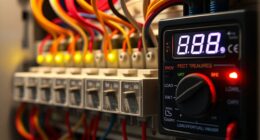
- Test the outlet with a multimeter to verify correct voltage levels and identify any wiring faults or loose connections.
- Staying informed about electrical safety standards can help prevent potential hazards and ensure proper installation and maintenance.
Upgrading or Replacing Your NEMA 14-50 Circuit

Before upgrading or replacing your NEMA 14-50 circuit, you need to assess whether your existing setup can handle the changes. It’s vital to upgrade components safely to prevent hazards and guarantee reliable operation. Hiring qualified electricians is indispensable to get the job done correctly and in compliance with electrical codes.
Assessing Circuit Compatibility
Evaluating your circuit’s compatibility is a crucial step before upgrading or replacing your NEMA 14-50 outlet. First, check your existing circuit capacity to guarantee it can handle the increased load without tripping. Second, perform compatibility testing to confirm that your wiring, breaker size, and outlet fit together safely and meet code requirements. Third, verify that your electrical panel can support the new or upgraded circuit without overloading. If your current setup falls short in any of these areas, you’ll need to address those issues before proceeding. Skipping these steps can lead to electrical hazards or circuit failure. Taking the time to assess your circuit’s capacity and compatibility ensures a safe, reliable upgrade that meets your power needs.
Upgrading Components Safely
Upgrading or replacing your NEMA 14-50 circuit requires careful attention to safety to prevent electrical hazards. First, confirm you follow proper grounding practices to reduce the risk of shocks or fire. Verify that your grounding wire is secure and properly connected. When selecting a new component, choose the right circuit breaker type—single-pole or double-pole—based on your circuit’s load and compatibility. Use a breaker rated for the circuit’s amperage to prevent overloads. Always turn off the power before working on the circuit, and double-check connections to avoid shorts. If you’re unsure about any step, consult the manufacturer’s guidelines or a professional electrician. Properly upgrading components ensures your NEMA 14-50 outlet remains safe and reliable for your electrical needs.
Hiring Qualified Electricians
Hiring a qualified electrician guarantees your NEMA 14-50 circuit is installed or upgraded safely and correctly. They understand electrical codes and ensure your setup meets all safety standards. A professional will assess your current circuit capacity to prevent overloads and future issues. When hiring, consider these key factors:
- Verify licensing and insurance to ensure compliance with local regulations.
- Confirm experience with NEMA 14-50 circuits, especially upgrades or replacements.
- Request a detailed plan that adheres to electrical codes and specifies circuit capacity needs.
A qualified electrician will handle wiring, grounding, and breaker installation properly, reducing risks of fire or electrical failure. Trusting a professional guarantees your system’s safety, reliability, and compliance, giving you peace of mind with your upgraded or replaced NEMA 14-50 circuit.
Frequently Asked Questions
Can I Use a NEMA 14-50 Outlet for Other Appliances?
You can use a NEMA 14-50 outlet for other appliances, but you need to take into account appliance compatibility and outlet versatility. Not all appliances match the outlet’s voltage and current ratings, so check the device’s specifications first. Using the outlet for incompatible appliances could cause damage or safety hazards. Always verify that the outlet’s capacity aligns with your appliance’s requirements and avoid overloading to ensure safe, versatile use.
What Is the Lifespan of a NEMA 14-50 Outlet?
Imagine a sturdy bridge standing strong over time—that’s your NEMA 14-50 outlet. Its electrical durability means it can last 15 to 20 years with proper use and regular inspections. You’ll notice outlet longevity by checking for signs of wear, corrosion, or loose connections. Keep it clean, avoid overloading, and schedule periodic inspections. With care, your outlet will serve you reliably, providing safe power for years to come.
Are NEMA 14-50 Outlets Compatible With All Electric Vehicle Chargers?
Yes, NEMA 14-50 outlets are compatible with most electric vehicle chargers, thanks to their versatile design and widespread use. You’ll find they offer excellent charging compatibility, accommodating various EV charger models. Keep in mind, though, that some chargers might require adapters or specific settings. Overall, their outlet versatility makes them a popular choice for home EV charging setups, ensuring you can efficiently power your vehicle.
How Often Should I Inspect My NEMA 14-50 Circuit for Safety?
It’s a good idea to keep up with regular circuit maintenance and safety inspections to guarantee everything runs smoothly. You should inspect your NEMA 14-50 circuit at least once a year, checking for signs of wear, loose connections, or damage. This routine helps catch potential issues early, keeping your charging setup safe and reliable. Remember, staying proactive with safety inspections is key to avoiding unexpected problems down the line.
Is a Permit Required for Installing or Replacing a NEMA 14-50 Outlet?
Yes, you’ll need an electrical permit for outlet installation or replacement of a NEMA 14-50 outlet. Permits confirm your work complies with local codes and safety standards. Before you start, check with your local building department to see if a permit is required. Getting the permit beforehand helps avoid fines and ensures your installation is inspected and safe. Always follow proper procedures for a secure and compliant setup.
Conclusion
Before you plug in, remember that a NEMA 14-50 circuit is powerful enough to handle more than your average outlet—think of it as the superhero of electrical connections. By understanding its specs, safety precautions, and proper installation, you’ll prevent mishaps and keep your home running smoothly. Don’t underestimate its might; treat it with respect, or risk turning your home into chaos faster than you can say “short circuit.” Stay safe and stay informed!