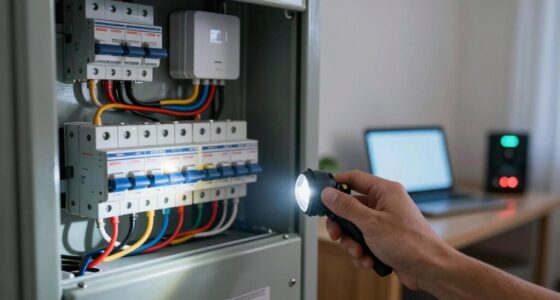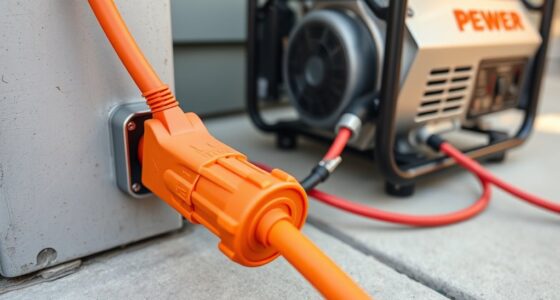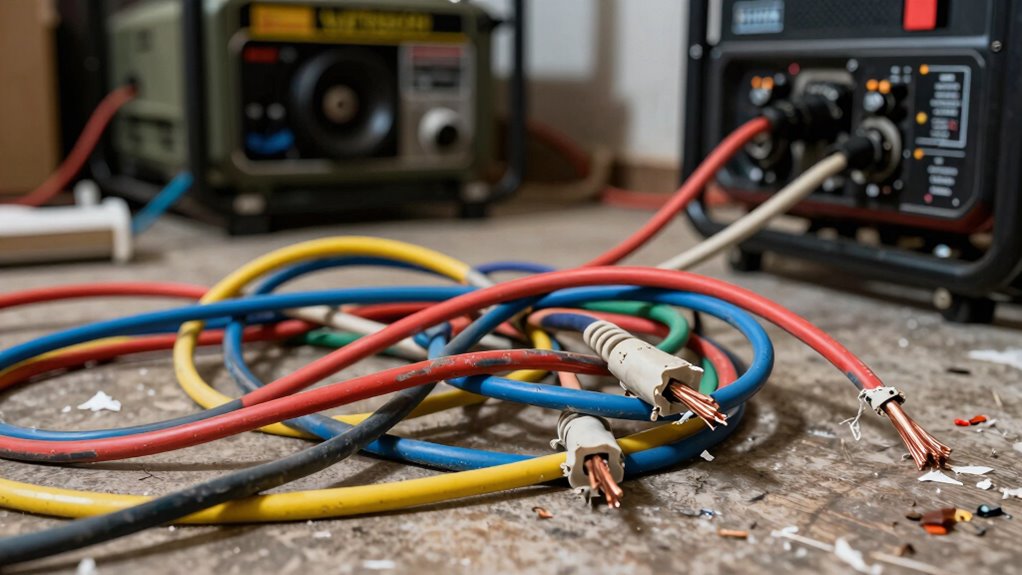

Using extension cords with backup power sources can pose safety risks if you overuse or improperly connect them. Overloading cords beyond their capacity can cause overheating, fires, and damage to your backup system. Daisy-chaining multiple cords or connecting heavy loads increases these dangers. To stay safe, match devices to cord ratings, avoid long stretches, and inspect cords regularly. Protect yourself by following proper practices—you’ll discover essential tips to prevent hazards if you keep exploring.
Key Takeaways
- Improper extension cord use can overload backup power sources, causing damage or failure.
- Overloading extension cords increases fire and electrocution risks during backup power operation.
- Using extension cords beyond their rated capacity can lead to voltage drops, harming connected devices.
- Daisy-chaining cords or overloading backup sources compromises overall electrical safety.
- Regular inspection and proper matching of cords with backup power ratings are essential for safety.
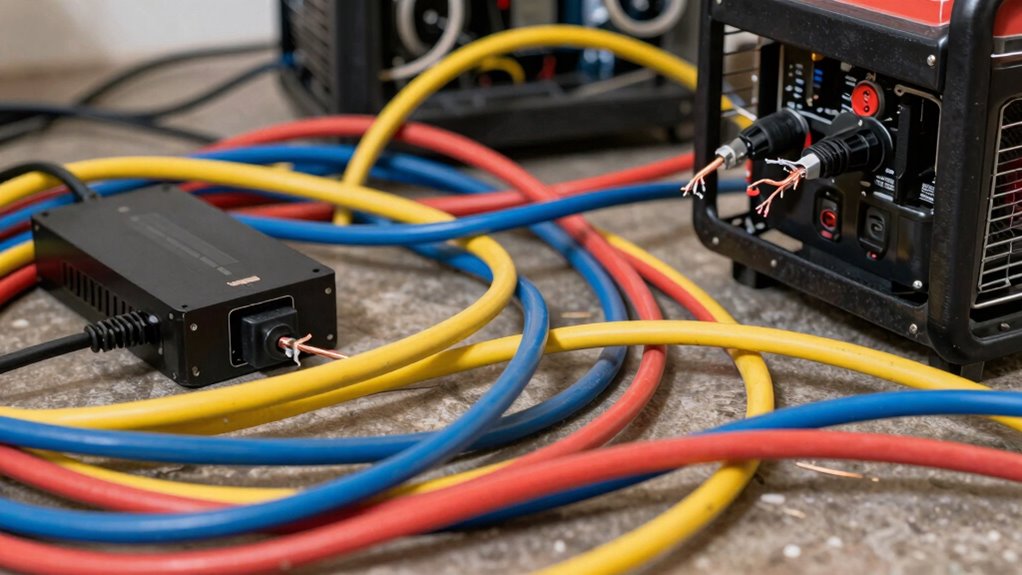
Extension cords and backup power sources are essential tools, but if used improperly, they can pose serious safety risks. When you connect a portable appliance to an extension cord, you’re adding more load to your electrical system, which can lead to electrical overload if you’re not careful. Overloading happens when the combined power draw of appliances exceeds the cord’s capacity, increasing the risk of overheating and potential fires. It’s crucial to understand the limits of your extension cords and backup power sources to prevent these hazards.
Using extension cords and backup sources improperly can cause overloads, overheating, and fire hazards. Stay safe by understanding your equipment limits.
Using extension cords as a permanent power solution can be especially dangerous. They’re designed for temporary use, not continuous operation. When you rely on them to power a portable appliance, you might inadvertently create a situation where the cord becomes a choke point for electrical flow. If the appliance draws more current than the cord can handle, the insulation might melt, exposing wires and increasing the chance of a short circuit or electrocution. To stay safe, always check the cord’s amperage rating and match it with the appliance’s power requirements.
Backup power sources, like generators or uninterruptible power supplies (UPS), are meant to provide temporary relief during outages. However, when you connect multiple devices—especially through extension cords—they can become overloaded quickly. Many people underestimate the total power consumption of their connected devices, leading to overloads that can damage both the equipment and the backup source. Always read the specifications for your backup power source and avoid plugging in more devices than it’s rated to support.
Your safety depends on proper usage. Instead of stretching extension cords across long distances or plugging multiple devices into a single cord, consider installing dedicated circuits or using higher-capacity cords designed for heavier loads. When using backup power, prioritize direct connections and avoid daisy-chaining extension cords, which can cause voltage drops and overloads. Regularly inspect your cords for frays, damage, or signs of overheating, and replace them immediately if you notice any issues. Proper understanding of electrical load capacity can help prevent dangerous overload situations, especially if you’re unfamiliar with the safe electrical practices necessary for handling backup power.

HUANCHAIN 12 Gauge Heavy Duty Outdoor Extension Cord 25 FT Waterproof
- Safety Indicator Light: Shows power status with lighted end
- Heavy Duty Design: Thicker, durable, high insulation safety
- Safety-Enhanced Plug: Extra size NEMA 5-15P and R for safety
As an affiliate, we earn on qualifying purchases.
As an affiliate, we earn on qualifying purchases.
Frequently Asked Questions
Can Using Extension Cords Void Backup Power Device Warranties?
Yes, using extension cords can void backup power device warranties. Extension cord hazards, like overloads or improper connections, often lead manufacturers to deny warranty claims. To protect your warranty, avoid using extension cords with backup power devices, especially if it’s against the manufacturer’s guidelines. Always read the warranty terms carefully, and opt for direct connections to guarantee safety and maintain your device’s coverage.
Are There Specific Extension Cord Ratings for Backup Power Setups?
Yes, there are specific extension cord ratings for backup power setups. You should look for extension cords with high amperage and wattage ratings to guarantee extension cord safety and backup power compatibility. Using cords rated below your device’s requirements can cause overheating or power failures. Always select heavy-duty, grounded cords designed for higher loads, and verify they meet safety standards to keep your backup system reliable and safe during outages.
How Do Extension Cords Impact Surge Protector Effectiveness?
Imagine you’re using a long extension cord to connect your backup power setup. This cord length can diminish surge protector effectiveness because it introduces resistance, leading to voltage drops. When the power travels through the cord, it may not reach your devices with stable voltage, risking damage. For portable power, choose the shortest, high-quality cords to guarantee your surge protector works properly and keeps your devices safe.
Can Extension Cords Cause Backup Power System Overloads?
Yes, extension cords can cause backup power system overloads, especially during temporary connections. When you use extension cords for power distribution, they may not handle the total load of connected devices, leading to overloads. Overloading can damage your backup power system, increase fire risks, and cause system failures. To stay safe, avoid daisy-chaining cords and guarantee your power distribution setup matches the system’s capacity.
Are There Safer Alternatives to Extension Cords for Backup Power?
You’re better off choosing safer options like portable generators or battery backups instead of extension cords. Portable generators provide reliable, high-capacity power with proper safeguards, while battery backups offer silent, maintenance-free support. These alternatives reduce risks of overloads and electrical hazards, ensuring your backup power is both safe and effective. Moving away from extension cords helps protect your equipment and peace of mind during outages, making your setup more resilient and secure.
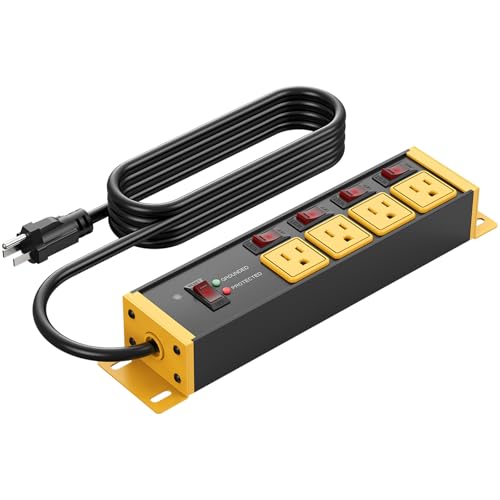
CCCEI Heavy Duty Surge Protector, 20A Individual Switches, Yellow, 6FT, 1
- Heavy Duty Power Strip: 20A with 4 outlets and switches
- Heavy Duty Extension Cord: 6ft, 12 gauge for durability
- Independent Circuit Breakers: 20A per outlet for safety control
As an affiliate, we earn on qualifying purchases.
As an affiliate, we earn on qualifying purchases.
Conclusion
Remember, using extension cords with backup power sources can considerably increase the risk of electrical hazards. Did you know that nearly 3,800 electrical fires each year are caused by improper use of extension cords? To keep your home safe, always use cords properly, avoid overloading outlets, and opt for quality, purpose-built equipment. Staying cautious now can prevent dangerous incidents later—your safety depends on it.

CyberPower ST425 Standby UPS Battery Backup and Surge Protector
- Power Capacity: 425VA/260W standby UPS
- Output Waveform: Simulated sine wave output
- Outlets: 8 NEMA 5-15R outlets
As an affiliate, we earn on qualifying purchases.
As an affiliate, we earn on qualifying purchases.

POWGRN 50 ft 12/3 Outdoor Extension Cord Waterproof Heavy Duty with Lighted Indicator End 12 Gauge 3 Prong, Flexible Cold-Resistant Long Power Cord Outside, 15Amp 1875W SJTW Yellow ETL Listed
- High Power Capacity: Up to 1875W for heavy-duty use
- Lighted End Indicator: LED lights show power status
- Bright PVC Jacket: Easily visible and safe to use
As an affiliate, we earn on qualifying purchases.
As an affiliate, we earn on qualifying purchases.