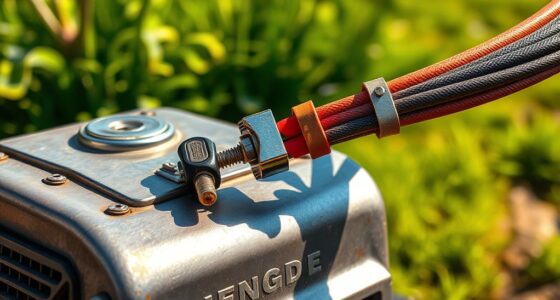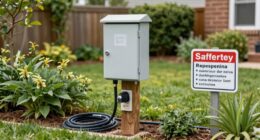
To prevent melting the jacket of your extension cord, make sure its amperage rating matches or exceeds the power requirements of your devices. Using a cord with too low a rating can cause overheating, damage insulation, and pose fire risks. Fully unroll the cord before use and avoid overloading it with high-power tools or multiple devices. Keeping an eye on these safety tips helps guarantee your extension cord stays safe and functional—continue to learn more about proper use and maintenance.
Key Takeaways
- Match the extension cord’s amperage rating with your device’s amp requirements to prevent overheating.
- Fully unroll the cord during use to allow heat dissipation and reduce jacket melting risks.
- Avoid overloading the cord with multiple high-power devices beyond its amperage capacity.
- Regularly inspect the cord for damage or frayed insulation, and replace if the jacket shows signs of melting or wear.
- Use cords designed for your specific environment (indoor or outdoor) to ensure proper insulation and heat management.
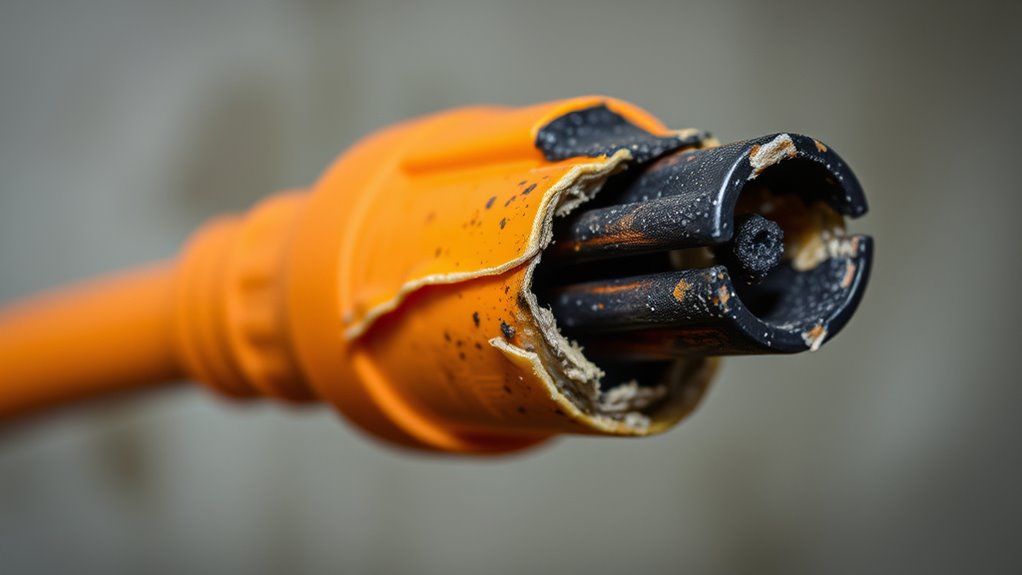
When choosing an extension cord, understanding its amperage rating is vital to guarantee safety and proper performance. If you pick a cord with an amperage that’s too low for your intended device, you risk overheating the cord, damaging the insulation, or even causing a fire. Conversely, using a cord rated for higher amperage than needed isn’t necessarily dangerous, but it can lead to unnecessary bulk and reduced flexibility. To make sure you’re selecting the right cord, always check the amperage rating listed on the packaging or the cord itself, and compare it with the power requirements of your appliances or tools. Staying within the recommended amperage limits helps prevent overheating and preserves the cord’s integrity over time. Additionally, understanding home theatre projector specifications can help you choose the appropriate extension cord to support your equipment safely.
Safety precautions are essential when working with extension cords to avoid potential hazards. Never overload a cord by plugging in multiple high-power devices that collectively exceed its rated capacity. Make a habit of plugging only what your cord can safely handle, and avoid daisy-chaining multiple cords together, which can create hidden overloads and increase fire risks. Regularly inspect your extension cords for signs of damage—cracks, frayed insulation, or melted jackets—and replace any compromised cords immediately. Damaged insulation exposes the internal wiring, which can lead to short circuits or electrical shocks. When using an extension cord, avoid running it under carpets or furniture where heat can build up, and keep it away from water or moisture, as these conditions considerably raise the risk of electrical accidents.
Proper usage also means understanding how to connect and position your extension cord. Always unroll the cord fully before use to prevent heat buildup caused by coiled wiring. Avoid bending or twisting the cord sharply, which can weaken the insulation and internal wires over time. When plugging in devices, ensure they are compatible with the cord’s amperage rating. For example, don’t connect a high-powered tool to a lightweight extension cord. Use cords designed for outdoor or heavy-duty applications if you’re working outside or with tools that draw more current. Properly rated extension cords, combined with good safety practices, help prevent melting the jacket, which exposes the internal wires and creates a dangerous situation. Remember, safety isn’t just about avoiding immediate hazards—it’s about maintaining your equipment’s longevity and safeguarding everyone around you. By paying close attention to amperage ratings, following safety precautions, and practicing proper usage, you can make sure your extension cords perform reliably without risking damage or accidents.

POWGRN 50 ft 12/3 Outdoor Extension Cord Waterproof Heavy Duty with Lighted Indicator End 12 Gauge 3 Prong, Flexible Cold-Resistant Long Power Cord Outside, 15Amp 1875W SJTW Yellow ETL Listed
Up to 1875W Applications: Outdoor extension cord waterproof 12 gauge, 15 amp, 125 volts, 1875 watts, NEMA 5-15P…
As an affiliate, we earn on qualifying purchases.
As an affiliate, we earn on qualifying purchases.
Frequently Asked Questions
How Do I Identify the Correct Amp Rating for My Extension Cord?
To identify the correct amp rating for your extension cord, start by checking your device’s power requirements, usually marked on the label. Then, consider gauge selection; thicker gauges (lower AWG numbers) handle higher amps. Match the cord’s amp rating with your equipment’s needs, ensuring it can safely supply the required power without overheating. Always choose a cord with a slightly higher amp rating for added safety and durability.
Can Overloading an Extension Cord Cause Electrical Fires?
Overloading an extension cord is like trying to pour too much water into a small cup—it can spill over and cause a fire. It definitely risks electrical fires, especially if you ignore power strip safety and appliance compatibility. Always match your devices’ power needs to the cord’s amp rating, and avoid plugging in too many high-wattage appliances. This keeps your home safe and prevents dangerous overloads.
What Are the Signs of a Damaged Extension Cord?
You’ll notice signs of a damaged extension cord through insulation wear and visible damage, like cracks, cuts, or frayed wires. If the insulation is worn out or you see exposed wiring, stop using it immediately to prevent electrical hazards. Also, watch for scorch marks, a burning smell, or hot spots along the cord. These signs indicate the cord is compromised and needs replacing to stay safe.
Is It Safe to Connect Multiple Extension Cords Together?
No, it’s not safe to connect multiple extension cords together. Doing so can overload the cords, increasing the risk of overheating or melting the jacket. Instead, use a properly rated power strip with built-in safety features, following power strip safety guidelines. Remember, indoor and outdoor cords are designed differently; outdoor cords are more durable. Always choose the right cord for your environment to prevent hazards.
How Often Should I Replace an Extension Cord for Safety?
You should replace your extension cord every three to five years to guarantee cord safety. Did you know that over 3,300 electrical fires are caused by faulty cords annually? Regularly inspecting your cords for damage and adhering to electrical standards helps prevent accidents. If you notice frayed insulation, exposed wires, or overheating, replace the cord immediately. Staying proactive keeps your home safe and reduces the risk of electrical hazards.
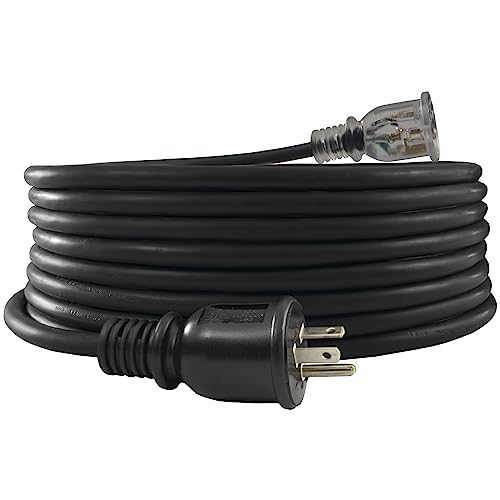
Conntek 20520-025 NEMA 5-20 Outdoor Extension Cord 20 Amps 125 Volts, 25 Feet
Rated: 20-Amp 125-Volt NEMA 5-20 SJTW Extension Cord
As an affiliate, we earn on qualifying purchases.
As an affiliate, we earn on qualifying purchases.
Conclusion
Now that you know the importance of checking your extension cord’s amps, don’t ignore the warning signs. A melted jacket isn’t just a minor issue—it could lead to dangerous fires or damage. Stay vigilant, and always prioritize safety. But remember, even the smallest oversight can have huge consequences. Will you take the necessary steps to protect yourself and your home? The choice is yours—don’t let a simple mistake turn into a disaster.

CCCEI Heavy Duty Power Strip Surge Protector 20 AMP, 8 Outlets 12 Gauge Industrial Shop Garage Metal Multiple Outlets, 6 FT Extension Cord 5-15P Adapter High Amp 6-20R T-Slot 20a for Appliance
Grey heavy duty power strip 20 amp switch with 8 outlets, overload and grounding protection. It comes standard…
As an affiliate, we earn on qualifying purchases.
As an affiliate, we earn on qualifying purchases.

Go Green Power Inc. 16/3 25ft Outdoor Extension Cord with Lighted End – Contractor Grade, Durable, and Moisture Resistant – Ideal for Heavy Duty Tools – GG-13725
Extension Cord: The GoGreen Power (GG-13725) is a contractor grade 16/3 SJTW extension cord. This item SHOULD NOT…
As an affiliate, we earn on qualifying purchases.
As an affiliate, we earn on qualifying purchases.