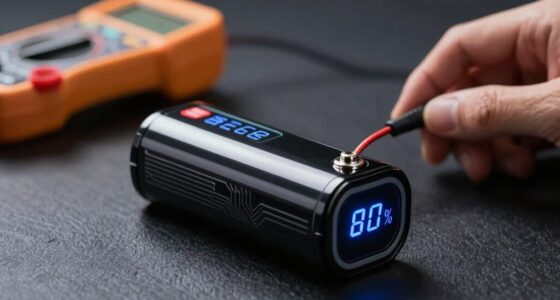

When your lead-acid battery vents, it releases hydrogen gas, which is highly flammable and can cause explosions if not handled properly. To stay safe, guarantee good ventilation, keep sparks, flames, or smoking away, and never try to reseal the vent. Use protective gear and disconnect the battery during venting episodes. Understanding these safety measures helps prevent accidents—continue exploring to learn essential tips for managing battery venting safely.

Get backup power and energy gear delivered free with Prime
- Fast, free delivery on millions of items
- Prime Video, Amazon Music and more included
- Member-only deals all year
Key Takeaways
- Hydrogen gas is produced during venting in lead-acid batteries, posing flammability and explosion risks.
- Ensure proper ventilation and keep open flames or sparks away from venting batteries.
- Use protective gear like gloves and eye protection when handling vented batteries or acid leaks.
- Regularly monitor charging processes to prevent overcharging and unnecessary hydrogen production.
- Never reseal or interfere with a venting battery to avoid pressure buildup and chemical hazards.
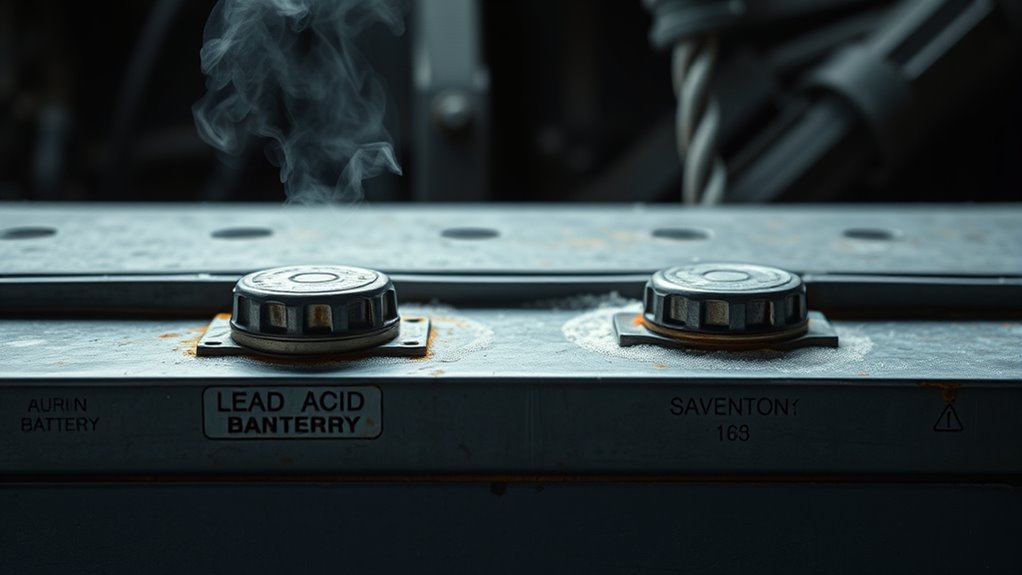
Battery venting occurs when a rechargeable battery releases gases to prevent pressure buildup inside its casing. In lead-acid batteries, this process is a vital safety feature, especially because it involves the release of hydrogen gas, which can be highly flammable. Understanding venting safety is necessary because improper handling or neglect can lead to dangerous situations, including fires or explosions. When a battery begins to vent, it’s often a sign that something is wrong—overcharging, excessive heat, or internal damage can cause the battery to produce more gas than normal. You need to be alert to these signs and handle the situation carefully.
Battery venting signals potential issues like overcharging or damage—handle carefully to prevent hazards.
Battery acid plays a significant role in venting safety. This corrosive liquid is present inside lead-acid batteries and can leak if the battery casing is compromised during venting. When gases are vented, they may carry tiny particles of battery acid in the form of mist or vapor. If you come into contact with this acid, it can cause severe burns and damage to skin, eyes, or respiratory tissues. That’s why it’s essential to wear proper protective gear, such as gloves and eye protection, whenever you’re working around venting batteries. Venting safety isn’t just about preventing explosions; it’s also about protecting yourself from harmful chemicals.
When you notice a battery venting, your first priority should be guaranteeing proper ventilation in the area. Hydrogen gas is odorless and highly flammable, so if it accumulates in enclosed spaces, it can ignite from a spark or static electricity. Avoid open flames, sparks, or smoking near venting batteries. If possible, disconnect the battery from any equipment safely, and move it to a well-ventilated area. Never try to reseal or contain the venting process yourself—interfering with a venting battery can increase the risk of rupture or explosion.
Keeping an eye on the charging process helps prevent unnecessary venting. Overcharging lead-acid batteries results in excess hydrogen production, which increases the chances of venting and battery acid leaks. Using proper chargers and monitoring voltage levels guarantees the battery operates within safe limits. Regular maintenance, correct charging practices, and protective measures are your best defenses. Additionally, maintaining a safe environment around batteries reduces the risk of accidents caused by hydrogen buildup. By understanding venting safety and respecting the dangers of battery acid, you can manage lead-acid batteries responsibly and avoid accidents caused by hydrogen buildup.
Frequently Asked Questions
How Often Should I Inspect Vent Caps for Damage?
You should inspect vent caps for damage during every routine maintenance check, ideally once a month. Regular vent cap maintenance helps prevent damage that could lead to hydrogen leaks or unsafe conditions. Look for cracks, corrosion, or loose fittings, and replace damaged caps promptly. Consistent inspections guarantee the venting system functions correctly, reducing the risk of hydrogen buildup and promoting safe lead-acid battery operation.
Are There Specific Safety Gear Recommendations for Venting Procedures?
Think of venting as a dance with danger—you need the right safety gear to stay in step. Always wear protective equipment like goggles, gloves, and a face shield to guard against hydrogen gas. Make certain proper ventilation systems are in place to disperse any fumes safely. These precautions protect you from potential hydrogen leaks, making your venting procedure safer and more controlled.
Can Venting Occur During Battery Charging or Only When Damaged?
Venting can occur during battery charging, especially with lead-acid batteries, due to their specific battery chemistry. The venting mechanisms release hydrogen gas when internal pressure increases from normal operation or damage. You should monitor your batteries closely during charging, as venting isn’t always a sign of damage; it’s part of their design to prevent overpressure. Always follow safety protocols to handle venting safely and prevent hazards.
What Are the Signs of Excessive Hydrogen Buildup?
You’ll notice hydrogen accumulation through subtle venting indicators like bubbling or hissing sounds, which ironically, are signs your battery is trying to tell you something’s off. Excessive hydrogen buildup can cause a dangerous environment, so watch for signs like a foul odor or swelling. If you see these, it’s a clear warning to ventilate immediately and guarantee proper safety measures are in place before anything worse happens.
How Long Does It Take for Hydrogen to Dissipate After Venting?
Hydrogen dissipation after venting typically takes anywhere from a few minutes to an hour, depending on factors like ventilation and ambient conditions. The venting duration is vital because it allows the hydrogen to disperse safely. You should guarantee proper airflow and wait until the smell of hydrogen is gone before handling the battery again. Always prioritize safety, and if in doubt, consult safety guidelines for your specific environment.
Conclusion
Understanding battery venting and hydrogen safety is like knowing the secret handshake to a safer world. By staying alert and following proper venting procedures, you protect yourself and your equipment from the hidden storm inside lead-acid batteries. Think of venting as the battery’s fresh breeze—without it, trouble brews. Keep these safety tips in mind, and you’ll navigate the world of batteries with confidence, turning potential hazards into nothing more than a whisper in the wind.
Halloween Picks
halloween
As an affiliate, we earn on qualifying purchases.