If you’re choosing a safer home storage option, LiFePO4 batteries are better than traditional lithium-ion ones. They have stronger thermal stability, making them less likely to overheat or catch fire, even under stress or damage. They also handle temperature changes more safely and last much longer, reducing replacement worries. While they may cost more upfront, their safety and durability provide better value over time. Discover more about why LiFePO4 might be your safest investment by exploring further.
Key Takeaways
- LiFePO4 batteries have superior thermal stability, reducing the risk of thermal runaway and fires compared to Lithium-Ion batteries.
- Their chemical stability makes LiFePO4 safer under damage, stress, or extreme temperatures, minimizing safety hazards.
- Manufacturing controls and inherent chemistry in LiFePO4 lower volatility and the likelihood of ignition during mishandling.
- LiFePO4 batteries offer longer lifespan and durability, decreasing the frequency of replacements and associated safety risks.
- Overall, LiFePO4 is considered a safer home storage option due to its fire-resistant properties and stable chemical composition.

ECO-WORTHY Powermega 48V 314Ah LiFePO4 Battery, 16.1kWh High Capacity Energy Storage with Breakers, 200A Active Balancing BMS, Aerosol Fire Protection,7" LCD, RS485/CAN/RS232 for Off-Grid&Home Backup
Version Update Notice: The former 48V 314Ah V1 is now upgraded to Powermega 48V 314Ah, featuring newly added…
As an affiliate, we earn on qualifying purchases.
As an affiliate, we earn on qualifying purchases.
Understanding Battery Chemistry and Safety Risks
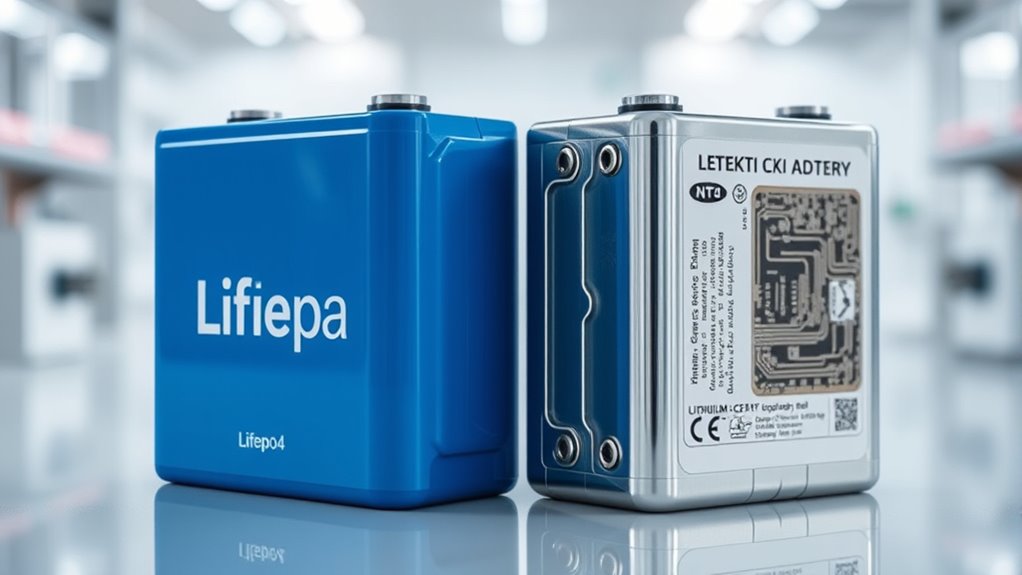
Understanding the chemistry behind batteries is crucial because it directly impacts their safety. Different chemistries, like Lithium-Ion and LiFePO4, have unique properties that influence how safe they are in home storage. During the manufacturing process, careful control of materials reduces risks such as overheating or leaks. Proper battery recycling also plays a role in safety by preventing the buildup of hazardous materials that could cause fires if mishandled. Lithium-Ion batteries contain volatile electrolytes, which can ignite under stress or damage, increasing safety concerns. In contrast, LiFePO4 batteries are more stable due to their chemical makeup. Recognizing these chemistry differences helps you understand potential safety risks and the importance of responsible manufacturing and recycling practices. Additionally, advancements in battery safety standards continue to improve the overall safety of home energy storage systems.

Phoenix Safe Lithium-ion Battery Charging Cabinet Safe, Contains and Prevents Spread of Battery Fires, 12 Outlets, Key Lock, 1 Shelf, 4.2 Cubic Feet, Model BSS6101
Protect your building or home from the devastation of fires caused by overheating and malfunctioning batteries. The Phoenix…
As an affiliate, we earn on qualifying purchases.
As an affiliate, we earn on qualifying purchases.
Comparing Fire Resistance and Stability

When comparing fire resistance and stability, you should consider how fire risk factors differ between Lifepo4 and lithium-ion batteries. Lifepo4 batteries generally offer better thermal stability, reducing the chance of thermal runaway. This means they are less likely to catch fire under stress or damage, making them a safer choice overall. Additionally, the headphone jack compatibility and connection options may influence how these batteries are integrated into various devices, impacting their safety and performance. Moreover, ongoing AI security developments help in monitoring and mitigating potential battery safety issues, further enhancing their reliability. Proper battery management systems are essential in maintaining safe operation and preventing overheating or other hazards. Understanding the chemical stability of Lifepo4 cells also contributes to safer usage by minimizing the risks associated with battery degradation over time.
Fire Risk Factors
Lifepo4 batteries generally resist fire better and remain more stable under stress compared to lithium-ion batteries. This enhanced stability reduces the risk of thermal runaway, one of the main fire hazards. Their manufacturing processes often involve safer chemical compositions, which contribute to their fire resistance. Additionally, Lifepo4 batteries are easier to recycle safely, minimizing hazards during disposal. The chemical stability of Lifepo4 also means they are less likely to experience thermal runaway even if damaged or improperly handled. The risk factors for fire are also influenced by how batteries are manufactured; inferior processes can introduce defects or impurities that increase fire risk. Proper manufacturing practices play a critical role in ensuring the safety and fire resistance of batteries. Furthermore, the inherent battery chemistry of Lifepo4 contributes to their improved fire safety profile, making them a more reliable choice for home storage. The manufacturing quality of batteries directly impacts their safety and longevity, emphasizing the importance of choosing reputable brands. Incorporating quality control measures during production significantly reduces the likelihood of defects that could lead to fires. Overall, Lifepo4’s stable chemistry and safer manufacturing methods make it less prone to fire, making it a better choice for home storage safety.
Thermal Stability
Thermal stability directly impacts a battery’s ability to resist fire and maintain safe operation under stress. Lithium Iron Phosphate (LiFePO4) batteries excel here, offering higher resistance to overheating and thermal runaway. This means you’re less likely to face dangerous failures or fires, especially during manufacturing processes or battery recycling. You can feel more confident knowing your home storage system is safer. Additionally, high thermal stability helps prevent the degradation of battery components over time, ensuring a longer lifespan for your energy storage. Moreover, the inherent chemical properties of LiFePO4 contribute to its fire-resistant qualities, making it a reliable choice for home energy systems. Furthermore, understanding the common causes of heat pump failure can assist in selecting a system with better safety features and durability. Recognizing these factors helps reinforce the importance of thermal stability in choosing a safe and durable home energy storage solution. A thorough understanding of battery chemistry can further enhance safety measures and system reliability.
Energizer Alkaline Power AAA Batteries, 32 Count, Long-Lasting Triple A Batteries, Suitable for Everyday Electronics and Emergency Gear
This pack includes 32 Energizer AAA Batteries to power a wide range of AAA battery devices, from household…
As an affiliate, we earn on qualifying purchases.
As an affiliate, we earn on qualifying purchases.
Impact of Temperature and Environmental Conditions

Temperature changes can substantially affect battery safety, causing overheating or reduced performance. Environmental conditions, like humidity and exposure to elements, also impact how long your batteries last. Understanding these factors helps you choose the right battery for your specific needs. Additionally, filter replacement intervals and material quality in battery storage solutions can influence their resilience to environmental stresses. Proper ventilation and thermal management systems are essential for maintaining battery safety in various settings. Being aware of storage environment conditions can further enhance battery longevity and safety. Maintaining optimal ambient conditions can prevent deterioration and potential hazards associated with improper storage.
Temperature Effects on Safety
Environmental conditions can markedly influence the safety of lithium-based batteries, especially when exposed to extreme temperatures. When temperatures soar or plummet, your battery’s cell design and thermal management become critical. High heat can cause overheating, leading to thermal runaway or fires, while cold temperatures reduce performance and may cause internal damage. Poor thermal management increases risks by allowing heat to build up or dissipate unevenly. Be aware that:
- Excessive heat can trigger dangerous chemical reactions.
- Freezing temperatures may cause internal cracks.
- Inadequate cell design amplifies temperature-related risks.
- Poor thermal management hampers safety and longevity.
- Proper thermal regulation is essential for maintaining battery safety and performance.
- Implementing temperature monitoring systems can help detect and prevent hazardous conditions before they escalate.
- Additionally, environmental control of storage areas minimizes exposure to harmful temperature fluctuations.
- Understanding how thermal dynamics influence battery behavior can aid in designing safer storage solutions.
- Regular maintenance and inspections of storage environments can further reduce temperature-related hazards and ensure consistent safety.
Environmental Impact on Longevity
Extreme environmental conditions can considerably shorten your battery’s lifespan, especially when exposed to fluctuating temperatures and humidity. High heat accelerates chemical degradation, reducing capacity over time, while cold temperatures slow down chemical reactions, limiting performance. These environmental stresses can increase recycling challenges, making disposal more complicated and less eco-friendly. Additionally, harsh conditions may demand more frequent replacements, which heightens resource extraction, further impacting the environment. Lifepo4 batteries tend to handle temperature swings better than lithium-ion, but both types still suffer from environmental exposure. Proper storage and usage are vital for maximizing your battery’s lifespan and environmental sustainability. Understanding environmental factors is crucial for proper battery care and maintenance.

Casil Simplex 2081-9279 Fire Panel Battery 12V 110AH Fire Alarm Control Panel and Solar Panel Backup- Durable Fire Alarm Panel Batteries for Efficient Power Supply CA121100
Solar Panel Batteries 100ah: The 2081-9279 Simplex Fire Panel Battery doubles as a solar panel battery, providing 100ah…
As an affiliate, we earn on qualifying purchases.
As an affiliate, we earn on qualifying purchases.
Lifespan and Durability in Home Settings
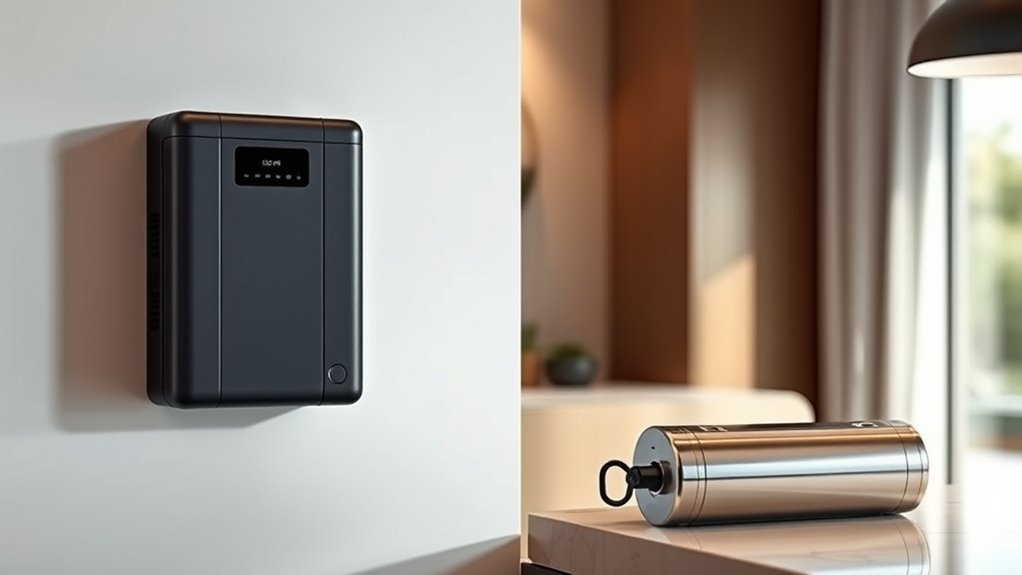
When it comes to lifespan and durability in home settings, lithium iron phosphate (LiFePO4) batteries generally outperform traditional lithium-ion batteries. They last longer, often exceeding 10,000 cycles, giving you reliable energy over many years. Plus, their stable chemistry makes them less prone to damage from temperature fluctuations and frequent use, ensuring your home stays powered through storms or outages. Their manufacturing processes emphasize safety and sustainability, making them easier to recycle and reducing environmental impact. When you choose LiFePO4, you benefit from batteries that resist degradation and maintain capacity longer. This durability means fewer replacements and less waste. Feel confident knowing you’re making a safer, smarter investment in your home’s energy system.
- Longer-lasting energy source
- Reduced waste through better battery recycling
- Safer, more stable chemistry
- Lower environmental impact
Charging and Discharging Safety Considerations
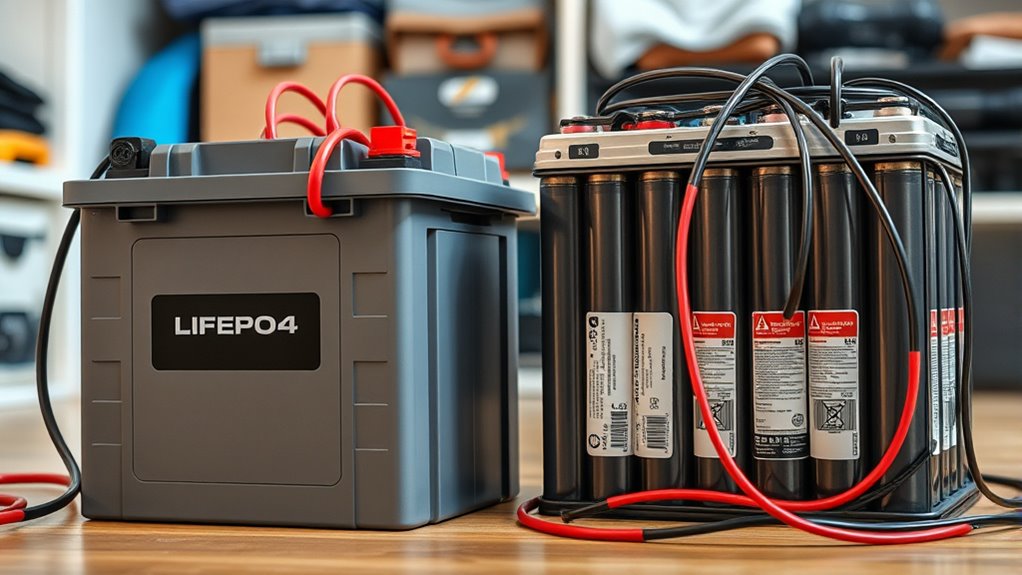
Charging and discharging lithium iron phosphate (LiFePO4) batteries requires careful attention to safety to prevent damage or hazards. You should avoid overcharging or discharging beyond recommended levels, as this can cause thermal issues or reduce battery life. Because LiFePO4 batteries are generally lighter than traditional lithium-ion options, their lower weight enhances safety by reducing strain on connections and mounts. Their flexible design allows for safer integration into various home setups, but proper voltage regulation and protective circuitry are essential. Always use compatible chargers and follow manufacturer guidelines to minimize risks. Properly managing charge and discharge cycles not only extends battery lifespan but also ensures safe operation, making LiFePO4 a reliable, safer choice for home storage.
Handling and Maintenance Requirements
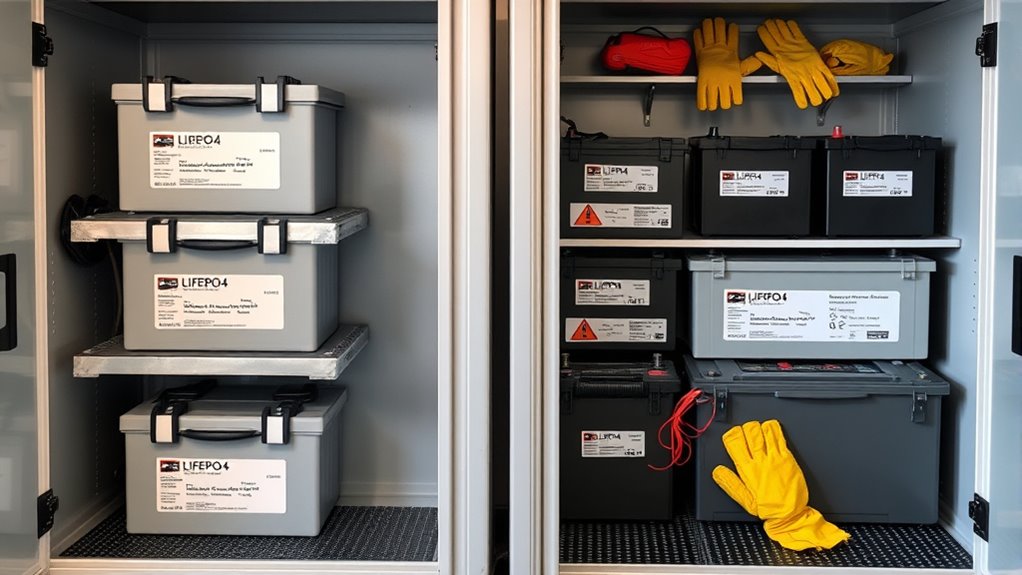
Proper handling and maintenance are essential to keep your LiFePO4 batteries operating safely and efficiently. You must follow proper procedures to prevent damage and ensure longevity. Always store batteries in a cool, dry place away from direct sunlight, and avoid over-discharge or overcharge. Regularly inspect for signs of wear or damage, and dispose of old batteries responsibly, supporting battery recycling initiatives. Understand that manufacturing processes influence battery quality, so sourcing from reputable suppliers matters. Remember, taking care of your batteries isn’t just about safety—it’s about protecting your home and the environment. Proper handling guarantees your investment lasts longer, reduces waste, and promotes sustainable battery recycling practices for a healthier planet.
Regulatory Standards and Certifications
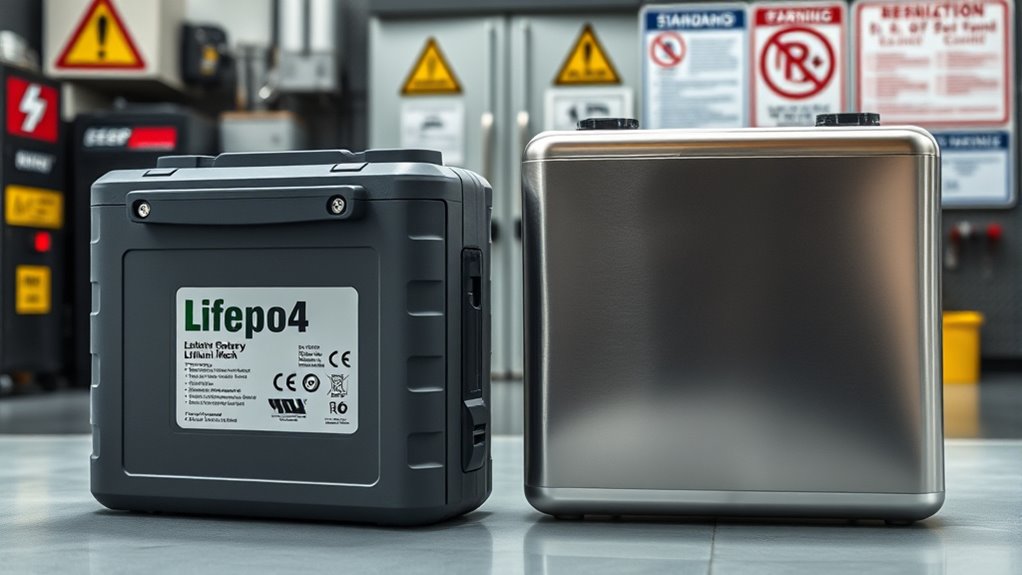
Regulatory standards and certifications play a crucial role in ensuring the safety, quality, and reliability of LiFePO4 batteries. These standards set clear manufacturing guidelines that manufacturers must follow, reducing risks like overheating or failure. Certifications also guarantee batteries meet safety guidelines for home use and can be safely integrated into your energy systems. Additionally, regulations promote responsible battery recycling, minimizing environmental impact and ensuring proper disposal. For lithium-ion batteries, strict standards help prevent hazards like thermal runaway, but LiFePO4 batteries often meet or exceed these safety benchmarks more easily. When choosing batteries, look for certifications like UL or IEC, which verify compliance with safety and environmental standards. This way, you’re assured of a safer, more reliable home storage solution that aligns with regulatory requirements.
Cost, Availability, and Long-term Value
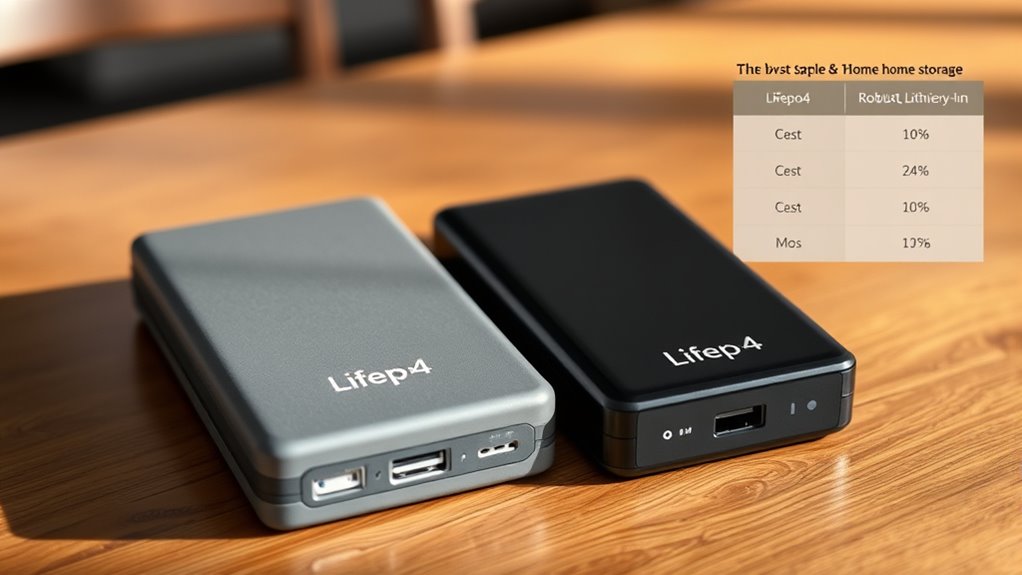
When comparing LiFePO4 and lithium-ion batteries, cost and availability are key factors that influence your decision. LiFePO4 batteries often have higher manufacturing costs upfront but offer longer life and easier battery recycling, reducing long-term expenses. Lithium-ion batteries are generally cheaper initially but may require more frequent replacements. Consider the following:
LiFePO4 batteries cost more upfront but last longer and are easier to recycle than lithium-ion options.
- Lower upfront costs of lithium-ion batteries can tempt you, but they may cost more over time.
- LiFePO4’s longer lifespan means fewer replacements and less waste.
- Battery recycling efforts make LiFePO4 a more sustainable, long-term choice.
- Manufacturing costs impact prices, but investing in durability pays off in the long run.
Ultimately, weighing initial costs against long-term value will help you choose the safer, more economical home storage option.
Frequently Asked Questions
Which Battery Type Is Easier for DIY Home Installations?
You’ll find LiFePO4 batteries easier for DIY home installations because of their installation simplicity and DIY compatibility. They typically come with straightforward wiring and require less complex safety measures, making them accessible for self-installers. Plus, their stable chemistry reduces risks, so you can work confidently. Overall, LiFePO4 batteries are a practical choice when you want a safer, simpler, and more manageable home energy storage solution.
How Do Batteries Perform During Power Outages?
During power outages, your batteries keep your essentials running seamlessly. Lithium-ion batteries typically have a lifespan of around 5-10 years, providing reliable backup power. Lithium iron phosphate (LiFePO4) batteries often offer better recharge efficiency and a longer lifespan, sometimes exceeding 10 years. This means you’ll experience consistent performance and fewer replacements over time, ensuring your home stays powered when you need it most.
Are There Specific Safety Features to Look for in Home Batteries?
You should look for home batteries with built-in fire safety features, such as thermal management systems, to prevent overheating. Chemical stability is also vital; batteries like LiFePO4 are more stable and less prone to thermal runaway. These safety features help protect your home by reducing the risk of fires or chemical leaks, ensuring your energy storage remains safe during everyday use or emergencies.
Can These Batteries Be Recycled Safely at Home?
You can’t recycle these batteries safely at home because battery recycling requires specialized processes and equipment. Attempting to do so risks chemical leaks, fire, or other hazards, which compromise home safety. Instead, you should follow local regulations and take your batteries to designated recycling centers. Proper battery recycling helps prevent environmental damage and ensures safe disposal, keeping your home and community safe from potential hazards associated with improper handling.
How Do Warranty and Support Compare Between Lifepo4 and Lithium-Ion?
Imagine you invest in a Lifepo4 battery for your home, and after two years, it shows issues. You’ll find that warranty coverage for Lifepo4 is often more extensive, covering longer periods and more potential faults. Customer support for Lifepo4 batteries tends to be more responsive and knowledgeable, giving you peace of mind. In contrast, lithium-ion warranties may be shorter, and support can sometimes be less personalized.
Conclusion
Choosing between LiFePO4 and lithium-ion batteries depends on your safety priorities and long-term needs. While LiFePO4 offers superior stability and safety, lithium-ion batteries may be more affordable upfront. Are you willing to sacrifice safety for initial savings? Ultimately, understanding their differences helps you make an informed decision. Prioritize safety, durability, and regulatory standards to ensure your home storage system keeps you protected for years to come.