
TL;DR

Get backup power and energy gear delivered free — and shop member deals
- Fast, free delivery on millions of items
- Access to Prime Big Deal Days deals on October 6–7
- Prime Video, Amazon Music and more included
Researchers in Spain and Argentina report that wireless bipolar electrodes increased the power output of a zinc-air battery by up to 80%. The design changes the battery’s internal architecture, not its core chemistry, but its performance beyond the reported study and its potential use in other battery types remain unconfirmed.
Researchers from Spain and Argentina report that adding wireless bipolar electrodes to a zinc-air battery increased its power output by up to 80%, without changing the battery’s core electrochemical materials. The architecture uses electrically isolated conductive elements to reduce internal resistance, a limitation that can constrain how quickly zinc-air batteries deliver power.
The research was conducted by teams at the Institute of Materials Science of Barcelona (ICMAB-CSIC), the Catalan Institute of Nanoscience and Nanotechnology (ICN2), and the National University of La Plata in Argentina. Their study, “Unlocking high power in membraneless Zn-air batteries: A paradigm shift via wireless bipolar electrochemistry,” was published in August in the journal Energy Storage Materials. Energy Storage News reported the development on October 6, citing the study.
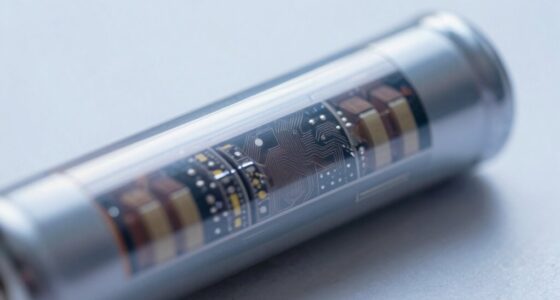
The design places small conductive elements inside the electrolyte, but does not wire them to the battery’s main electrodes or external circuit. During operation, the electric field between the main electrodes polarizes each isolated element, making one end positively charged and the other negatively charged. The researchers say this creates additional routes for charge transport without directly connecting the battery’s electrodes.
The reported gain is up to 80% in power output; the source does not state that every version or operating condition achieved that maximum. The approach instead changes the battery’s internal arrangement. The research describes it as a way to lower resistance-related losses while retaining the existing chemistry, rather than replacing the battery’s active materials.
A New Route to Higher Zinc-Air Power
Zinc-air batteries use an aqueous system and zinc oxidation, but the reaction involving oxygen is slower and can limit the rate at which the battery operates. That bottleneck matters because a battery’s energy capacity and its ability to deliver power quickly are different performance measures. The researchers’ result addresses power output by changing charge transport inside the cell, rather than by altering the oxygen reaction or the main battery materials.
If the reported effect can be reproduced in larger, practical cells, the method could offer a way to improve power performance without redesigning a battery’s core chemistry. But the reported figure alone does not establish commercial readiness, longer battery life, lower cost, or improved overall energy storage. Those outcomes were not provided in the source report.
As an affiliate, we earn on qualifying purchases.
How Isolated Elements Affect Charge Flow
Conventional battery design generally avoids conductive materials in the electrolyte because a direct conductive path between electrodes could cause a short circuit. The reported architecture takes a different approach: the conductive elements remain electrically disconnected from the external circuit and from the principal electrodes. Their response to the electric field is intended to influence charge movement without creating a direct connection between the two sides of the battery.
The work focuses on membraneless zinc-air batteries. The authors suggest that wireless bipolar electrochemistry may also be relevant to other energy-storage technologies, but the supplied report does not identify specific chemistries that have been tested. The wider application is a proposed possibility, not a demonstrated result.
“The architecture can increase power output by up to 80%.”
— The study authors, as described in the report
As an affiliate, we earn on qualifying purchases.
Performance Beyond the Reported Tests
The supplied report does not give the cell size, test duration, operating conditions, or comparison baseline for the up-to-80% power increase. It also does not describe how the design affects energy capacity, cycle life, stability, manufacturing requirements, or cost. Those details are needed to judge how the result might translate from the reported research to practical batteries.
It is also unclear whether the architecture has been tested in battery chemistries other than zinc-air. The authors’ proposed wider relevance should not be read as confirmation that the technique improves other storage systems.
As an affiliate, we earn on qualifying purchases.
Replication and Practical Cell Testing
The next evidence needed is further testing that reports the measurement conditions and compares performance across repeatable cells. Research into durability, scale-up, and integration would help show whether the power gain persists beyond the conditions in the study and whether the internal elements can be incorporated reliably.
The authors have raised the possibility of applying the principle to other energy-storage technologies, but the supplied source gives no timetable or named follow-up trials. For now, the confirmed development is a published research result in zinc-air battery architecture, not a commercial product or a proven improvement across battery types.
wireless bipolar electrodes for batteries
As an affiliate, we earn on qualifying purchases.
As an affiliate, we earn on qualifying purchases.
Key Questions
What did the researchers change in the zinc-air battery?
They added small conductive elements inside the electrolyte. The elements are not wired to the battery’s main electrodes or external circuit and become polarized by the electric field during operation.
How much did power output increase?
The study reports an increase of up to 80%. The source material does not provide the test conditions or comparison baseline for that maximum.
Did the design change the battery’s chemistry?
No change to the battery’s core electrochemical materials is reported. The proposed improvement comes from changing the internal architecture to affect charge transport and resistance.
Could this work in other types of batteries?
The researchers suggest the concept could apply to other energy-storage technologies, but the supplied report does not identify tests in other chemistries. Broader performance remains unconfirmed.
Source: rss
Halloween Picks
halloween
As an affiliate, we earn on qualifying purchases.