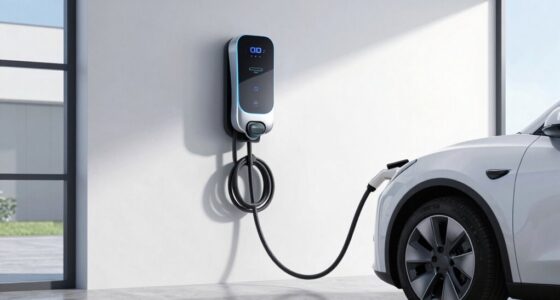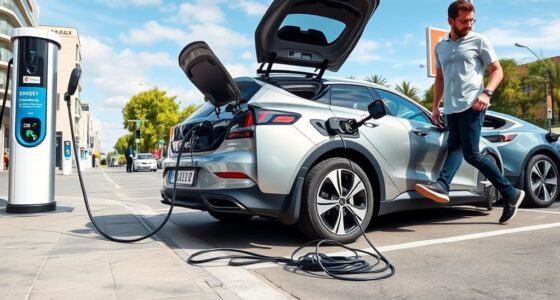

When charging in extreme heat, keep your device cool by avoiding direct sunlight and insulating covers. Use shaded areas or cool environments, and consider fans or cooling pads if available. Don’t leave your device unattended, and disconnect once fully charged or if it feels hot. Practice these safety tips to protect your battery’s lifespan and prevent hazards. Want to find out how to keep your device safer and longer-lasting in hot weather? Keep going for more tips.
Key Takeaways
- Charge devices in shaded, cool environments and avoid direct sunlight to prevent overheating.
- Remove insulating cases and use cooling pads or fans to dissipate heat during charging.
- Disconnect devices once fully charged or if they become hot to prevent thermal buildup.
- Delay charging if the device feels hot from use or sun exposure, allowing it to cool first.
- Monitor for signs of overheating, such as swelling or discoloration, and take immediate action to protect the battery.

When temperatures soar, charging your electronic devices can become more complicated and risky. High heat can cause batteries to overheat, which not only damages the device but also presents safety hazards like swelling, leaks, or even fires. To keep your devices safe and functioning properly, you need to prioritize battery cooling during hot weather. Proper battery cooling helps prevent overheating, ensuring that your device’s battery stays within safe temperature ranges while charging. This means avoiding direct sunlight, keeping devices in shaded or cool environments, and removing any bulky or insulating cases that might trap heat. When you’re charging your device outdoors on a hot day, try to find a shaded spot and avoid leaving it in a parked car, where temperatures can skyrocket quickly. Using a fan or a cooling pad designed for electronics can also help dissipate heat and maintain ideal battery temperatures during charging. Additionally, understanding thermal management systems can help you better assess how your device handles heat during charging.
Charging safety becomes even more critical when the heat is intense. Overheated batteries are more prone to malfunction, which can lead to dangerous situations like battery fires or explosions. To minimize these risks, never leave your device charging unattended in extreme heat. Always disconnect it once it’s fully charged or if you notice the device feels excessively hot to touch. Avoid charging your devices overnight or for extended periods during hot weather, as prolonged charging increases the risk of heat buildup. Additionally, use original chargers and cables supplied by the manufacturer, since incompatible or damaged charging equipment can generate excess heat and compromise safety. Keep an eye out for warning signs such as swelling, discoloration, or a strange smell—these indicate the battery is overheating and needs immediate attention.
In extreme heat, it’s wise to delay charging if possible. If your device’s battery is already hot from use or exposure to the sun, give it time to cool down before plugging it in. Allowing your device to reach room temperature before charging reduces the risk of thermal runaway, where heat causes a chain reaction leading to battery failure. Remember, even devices with advanced thermal management systems can benefit from your conscious efforts to keep them cool. Taking simple steps like avoiding direct sunlight, removing insulating covers, and charging in cooler environments greatly enhances charging safety and prolongs your device’s lifespan. By staying vigilant about battery cooling and practicing safe charging habits, you protect not just your device but also your safety during those scorching summer days.
As an affiliate, we earn on qualifying purchases.
Frequently Asked Questions
Can Extreme Heat Cause Battery Swelling or Leakage?
Yes, extreme heat can cause battery swelling or leakage. When exposed to high temperatures, thermal expansion occurs, causing the battery’s components to expand. Additionally, electrolyte evaporation can happen, leading to internal pressure buildup. This pressure may cause the battery to swell or leak. To prevent this, avoid charging or exposing your device to heat, and always store batteries in a cool, dry place to maintain safety and performance.
How Often Should I Check My Battery During Hot Weather?
You should check your battery every few hours during hot weather to guarantee it’s not overheating or swelling. Regular battery maintenance involves inspecting for signs of damage, leaks, or unusual swelling. Use cooling methods like removing the device from direct sunlight, placing it in a cool area, or using fans. These steps help prevent damage and extend your battery’s lifespan, especially when temperatures are high.
Are There Specific Chargers Better Suited for Hot Environments?
Did you know that 60% of battery failures in hot climates are due to poor charger choices? You should look for chargers with high durability and heat-resistant features, as they’re designed to withstand extreme temperatures. These chargers help prevent overheating and prolong battery life. Investing in a quality, heat-resistant charger ensures safe, reliable charging during scorching days, keeping your battery protected and your device working effectively.
What Are Signs of Battery Overheating During Charging?
You’ll notice signs of battery overheating during charging if the device becomes unusually hot to the touch or if it emits a burning smell. Thermal management and cooling systems help prevent this, but if those fail, the battery might swell, display warning indicators, or shut down unexpectedly. Keep an eye on these signs and make certain of proper cooling to avoid damage, especially in hot environments.
Does Hot Weather Reduce Battery Lifespan Over Time?
Yes, hot weather can reduce your battery’s lifespan over time. Excess heat stresses the battery, causing faster degradation. To prevent this, guarantee proper battery cooling and effective thermal management, especially during charging or use in high temperatures. Maintaining a cooler environment helps preserve battery health, extending its longevity. Always avoid exposing your device to extreme heat, and use cooling accessories if necessary, to keep the battery operating at its best.
As an affiliate, we earn on qualifying purchases.
Conclusion
As you navigate the sun’s warm embrace, think of your battery as a delicate flower blooming in a gentle breeze. By giving it extra care during the hottest days, you help it stay vibrant and healthy. Avoid pushing it too far under the blazing sun, and instead, provide a cozy shade for your pack. With a little extra attention, your battery will continue to blossom, ready to support your adventures when you need it most.
insulating phone case for heat protection
As an affiliate, we earn on qualifying purchases.
As an affiliate, we earn on qualifying purchases.
As an affiliate, we earn on qualifying purchases.