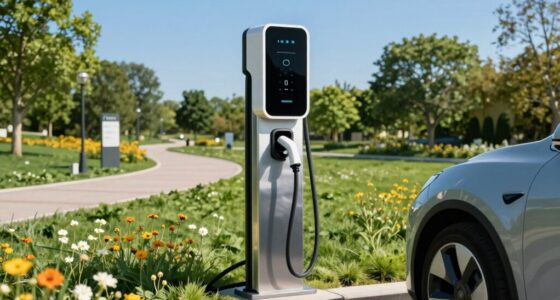
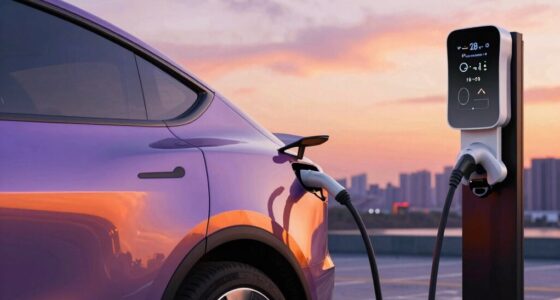
Using extension cords for EV charging is risky and generally unsafe. These cords aren’t designed to handle the high current your vehicle needs, which can cause overheating, melted insulation, or even fires. They also lack essential safety features like circuit breakers and proper grounding. Running cords across walkways or damaged cords increases the danger. If you want to understand how to keep your charging setup safe, keep exploring the key risks involved.

Get backup power and energy gear delivered free — and shop member deals
- Fast, free delivery on millions of items
- Access to Prime Big Deal Days deals on October 6–7
- Prime Video, Amazon Music and more included
Key Takeaways
- Extension cords are not designed for high current EV charging and can overheat, causing fire hazards.
- They lack safety features like circuit breakers and proper grounding, increasing electrical shocks risk.
- Using extension cords can lead to electrical damage, shorts, and deterioration of cords or vehicle ports.
- EV manufacturers advise against extension cords, recommending dedicated outlets for safe, reliable charging.
- Proper wiring and installation by licensed electricians are essential; extension cords are unsafe substitutes.

Charging your electric vehicle (EV) with an extension cord might seem like a convenient solution, but it requires careful consideration. While it might appear straightforward, using an extension cord for EV charging can pose serious risks related to charging safety and electrical hazards. The primary concern is that extension cords are typically not designed to handle the high current demands of EV chargers. Unlike standard household cords, these cords may not be rated for the continuous, high-power flow required, increasing the risk of overheating and potential fires. If the cord isn’t rated properly, it can become a safety hazard, especially if left unattended for extended periods.
Using extension cords for EV charging risks overheating and fires due to inadequate current capacity.
When you connect an EV charger to an extension cord, you’re often bypassing the built-in safety features of dedicated charging stations. Many extension cords lack proper grounding, insulation, or sufficient gauge wiring, which are essential for safe charging. Without these safeguards, there’s an increased chance of electrical hazards developing. Overloading the cord can cause the insulation to melt or degrade, exposing live wires and creating a risk of electric shock or fire. This danger is compounded if the cord runs across areas where it can be damaged or frayed, exposing conductors and creating hazardous conditions.
You might think that using a heavy-duty extension cord could mitigate these risks, but even the most robust cords are not a substitute for proper charging equipment. They may still lack critical safety features, such as circuit breakers or ground fault interrupters, which are vital for protecting both you and your vehicle. Additionally, extension cords are often not designed for outdoor or wet conditions, which can further compromise safety. Moisture can lead to short circuits or electric shocks, especially if the cord is run outdoors or in damp environments.
Furthermore, many EV manufacturers and safety experts explicitly advise against using extension cords during charging, emphasizing that proper, permanent wiring and dedicated outlets are essential for safe operation. Ignoring these guidelines might not only damage your vehicle’s charging port but also void warranties or insurance coverage in case of an accident. Always prioritize charging safety by using the correct equipment provided or recommended by your vehicle’s manufacturer. If you need to extend your reach, consult a licensed electrician to install a proper outlet or charging station that meets all safety standards. Remember, cutting corners with unsafe practices can lead to serious electrical hazards, endangering you, your vehicle, and your property. Proper wiring practices are essential for safe and efficient EV charging.
As an affiliate, we earn on qualifying purchases.
Frequently Asked Questions
Are There Safe Extension Cords Specifically Designed for EV Charging?
Yes, there are safe extension cords designed for EV charging, often labeled as heavy-duty or industrial-grade. These portable chargers are built to handle high amperage and are compatible with indoor outlets, providing a safer option than regular extension cords. Always check the cord’s specifications, verify it’s rated for the power your EV requires, and follow manufacturer guidelines to prevent overheating or electrical hazards.
How Long Can an Extension Cord Safely Be Used for EVS?
You should limit extension cord use for EVs to the shortest possible length, ideally under 25 feet, to preserve cable durability and power capacity. Longer cords risk overheating and losing efficiency, which can damage the cord or your vehicle’s charging system. Always choose a heavy-duty, UL-rated extension cord designed for high current, and avoid extending beyond manufacturer recommendations to ensure safe and reliable charging.
What Signs Indicate an Extension Cord Is Unsafe for EV Charging?
You’ll know an extension cord is unsafe for EV charging if the power cord durability is compromised, showing fraying or exposed wires. Also, check for connector compatibility—if the plug doesn’t fit securely or feels loose, it’s risky. Discoloration, overheating, or melting parts are clear signs. Never ignore these signs, as they indicate potential electrical hazards that can damage your vehicle or cause fires. Prioritize safety always.
Can Using an Extension Cord Void My Ev’s Warranty?
Using an extension cord might void your EV’s warranty if it’s not rated for high durability and safety standards. Manufacturers often specify that only manufacturer-approved charging methods are acceptable, and using an improper extension cord could be considered misuse. To avoid warranty implications, always check your EV’s guidelines and use dedicated, heavy-duty cables designed for EV charging, ensuring safety and preserving your vehicle’s warranty coverage.
Are There Government Regulations Regarding Extension Cords for EVS?
Yes, there are government policies and regulations regarding extension cords for EVs. You need to guarantee legal compliance by using cords rated for the necessary voltage and current, as many jurisdictions restrict or prohibit their use for charging. Always check local laws and manufacturer guidelines, as improper use can lead to safety hazards and potential fines. Staying informed helps you charge safely and avoid legal issues.
heavy-duty outdoor extension cord for EV
As an affiliate, we earn on qualifying purchases.
As an affiliate, we earn on qualifying purchases.
Conclusion
Using extension cords for your EV might seem like a quick fix, but it’s a risky shortcut. While it offers convenience, the potential for overheating, fires, and damage far outweighs the temporary ease. Think of it like using a bandage for a serious wound—it might seem enough now, but it won’t hold up long-term. Prioritize proper charging stations to protect your vehicle and home. Safety isn’t worth risking just to save a few minutes.
ground fault circuit interrupter (GFCI) outlet
As an affiliate, we earn on qualifying purchases.
As an affiliate, we earn on qualifying purchases.
As an affiliate, we earn on qualifying purchases.
Fall Picks
fall essentials
As an affiliate, we earn on qualifying purchases.