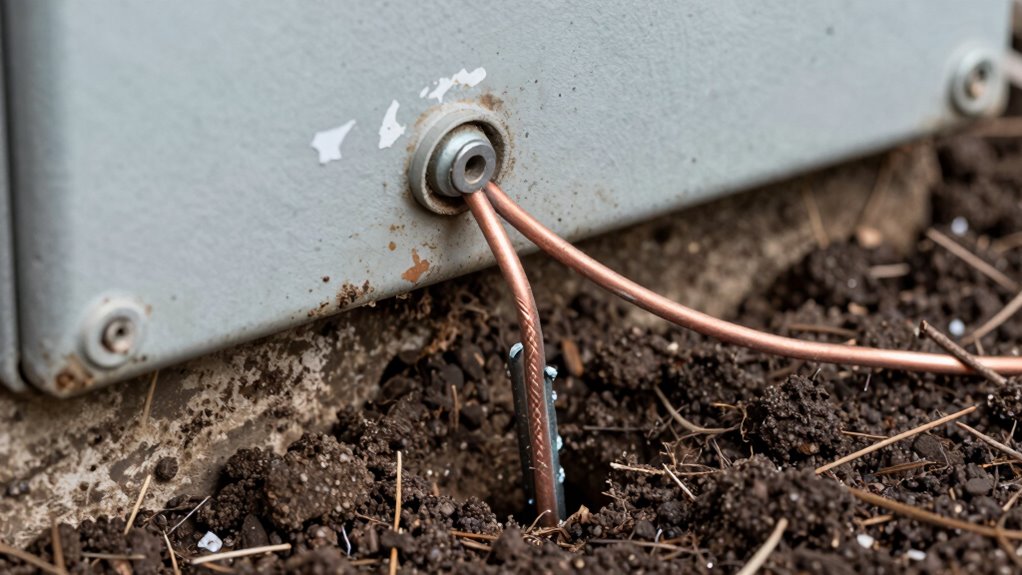

Ground wires exist to keep you safe by providing a direct path for stray or excess electrical current to flow into the earth, preventing shocks, fires, or damage. They act as a fail-safe during faults, directing dangerous currents away from your appliances and yourself. This improves overall system stability and protects sensitive electronics. Proper grounding reduces electrical hazards and guarantees safety. To learn exactly how ground wires achieve this and why they’re essential, keep exploring how they work.
Open a free Amazon Business account
Business pricing, bulk buying and tax-exempt orders.
As an affiliate, we earn on qualifying purchases.
Key Takeaways
- Ground wires provide a safe path for stray or excess electrical current to dissipate into the earth.
- They serve as a fail-safe to prevent electrical shocks, fires, and damage during faults.
- Ground wires protect devices and people by directing fault current away from conductive paths.
- They help stabilize electrical systems and reduce voltage fluctuations that can harm electronics.
- Proper grounding is essential for system safety, preventing electrical hazards and enabling effective circuit protection.

Have you ever wondered why ground wires are an indispensable part of electrical systems? They serve a pivotal role in keeping both people and property safe from electrical hazards. When you plug in a device or turn on an appliance, electrical safety is a top concern. Ground wires act as a fail-safe, providing a direct path for any stray or excess electrical current to safely dissipate into the earth. This prevents the current from seeking alternative paths that could cause shocks, fires, or damage to your electrical devices. Without proper grounding, even a small fault could turn into a dangerous situation, risking electrocution or fire hazard.
Circuit protection is at the heart of why ground wires exist. In the event of a short circuit or insulation failure, the electrical current can suddenly become unpredictable and dangerous. The ground wire detects these faults quickly, directing the excess current away from the device and user. This immediate diversion helps protect the wiring, appliances, and anyone near the system. It essentially acts as an emergency exit for excess current, making sure that it doesn’t build up in the system or cause damage. Proper grounding also helps to prevent electrical shock by providing a safe pathway for fault currents. Without a ground wire, the fault current might travel through other conductive paths—like a person touching a faulty appliance—leading to severe injury or even death. Additionally, grounding helps improve system stability by reducing voltage fluctuations that can harm sensitive electronics and appliances.
You might think about ground wires as an extra safety measure, but they’re also indispensable for circuit protection. They help prevent electrical overloads from causing fires or damaging sensitive electronics. When devices are properly grounded, they’re less likely to suffer from power surges or voltage spikes. This not only extends the lifespan of your appliances but also reduces the risk of electrical fires caused by faulty wiring or faulty devices. Ground wires work silently in the background, but their presence ensures that your electrical system remains stable and safe. Additionally, understanding side-channel attacks can help illustrate how electrical faults and unintended pathways can be exploited or mitigated for safety and security purposes. Recognizing the importance of grounding in electrical safety emphasizes the role of proper system design and maintenance.
As an affiliate, we earn on qualifying purchases.
Frequently Asked Questions
Are Ground Wires Necessary in All Electrical Systems?
Yes, ground wires are necessary in all electrical systems because they guarantee electrical safety standards are met. They provide a safe path for excess current to escape in case of a fault, preventing shocks or fires. Ignoring ground wire importance can lead to dangerous situations. Always follow electrical safety standards and guarantee your system includes proper grounding to protect yourself and your property effectively.
Can I Install a Ground Wire Myself?
You can install a ground wire yourself, but beware of ground wire myths that suggest it’s straightforward. Electrical work requires precision and safety, so if you’re inexperienced, it’s best to hire a professional. Ground wire colors typically follow standards—green or bare copper—so don’t rely on assumptions. Proper installation guarantees safety, prevents shocks, and complies with code. Always turn off power before working and consult local regulations.
What Happens if a Ground Wire Is Disconnected?
If a ground wire disconnects, your safety suffers considerably. You could experience electrical shock, especially if a faulty appliance energizes the metal parts. Ground wire safety is vital because it prevents electrical shock by providing a path to the ground, redirecting dangerous currents away from you. When it’s disconnected, the protection fails, risking injury. Always guarantee ground wires stay secure to promote safety and prevent potential electrical accidents.
How Often Should Ground Wires Be Inspected?
You should inspect your ground wires at least once a year to guarantee safety and proper function. During inspections, look for signs of ground wire corrosion, which can weaken the connection. If you notice corrosion or damage, consider grounding system upgrades to maintain safety. Regular inspections help prevent electrical hazards, ensuring your system remains reliable and effective, especially as environmental factors can degrade ground wires over time.
Are Grounding Requirements Different for Outdoor and Indoor Wiring?
Think of grounding like a safety net that varies for indoor and outdoor settings. Outdoor wiring needs robust ground wire materials like copper or aluminum, with colors like green or bare copper for visibility. Indoor wiring typically uses similar materials and colors, but codes may differ based on exposure. You must follow local electrical codes, ensuring your grounding requirements suit each environment, for safety and compliance.
As an affiliate, we earn on qualifying purchases.
Conclusion
Understanding ground wires is like having a safety net beneath a tightrope walker—they protect you from unexpected shocks and guarantee your electrical system stays grounded. By providing a direct path to the earth, they prevent dangerous electrical buildup and potential fires. Remember, neglecting ground wires is like ignoring an essential safety feature—you’re risking more than you realize. Keep them in good shape, and your home stays safe, steady, and reliable, just like a well-trained dancer on a tightrope.
As an affiliate, we earn on qualifying purchases.
As an affiliate, we earn on qualifying purchases.
Fall yard work Picks
leaf blowers
As an affiliate, we earn on qualifying purchases.