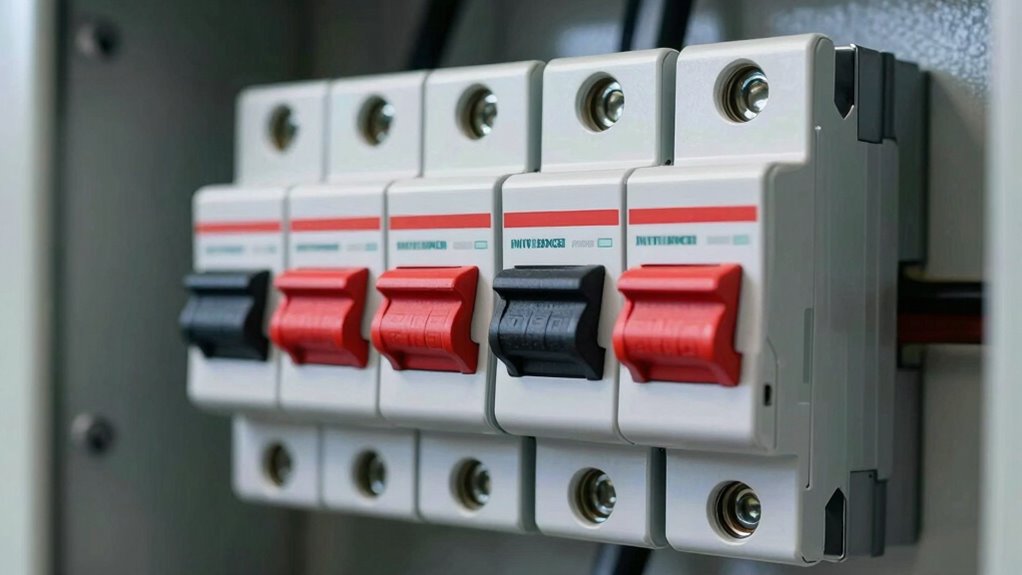

Double pole breakers work differently from single pole breakers because they disconnect both live wires at the same time in a 240-volt circuit, which provides better safety and power control. Single pole breakers only switch one wire, so they’re used for lower-voltage needs. By simultaneously shutting off both wires, double pole breakers help prevent electrical shocks and equipment damage. Want to understand how these differences affect your electrical system? Keep exploring to get the full picture.

Get backup power and energy gear delivered free — and shop member deals
- Fast, free delivery on millions of items
- Access to Prime Big Deal Days deals on October 6–7
- Prime Video, Amazon Music and more included
Key Takeaways
- Double pole breakers connect to two live wires, providing 240 volts, unlike single pole breakers that connect to one wire for 120 volts.
- They simultaneously disconnect both live wires, enhancing safety during faults, whereas single pole breakers only disconnect one wire.
- Double pole breakers are physically broader and require two wiring connections, while single pole breakers are narrower with a single connection.
- They are designed to handle higher voltage and current, suitable for large appliances, unlike single pole breakers for smaller circuits.
- Proper wiring of double pole breakers ensures balanced operation and reliable disconnection during electrical faults.
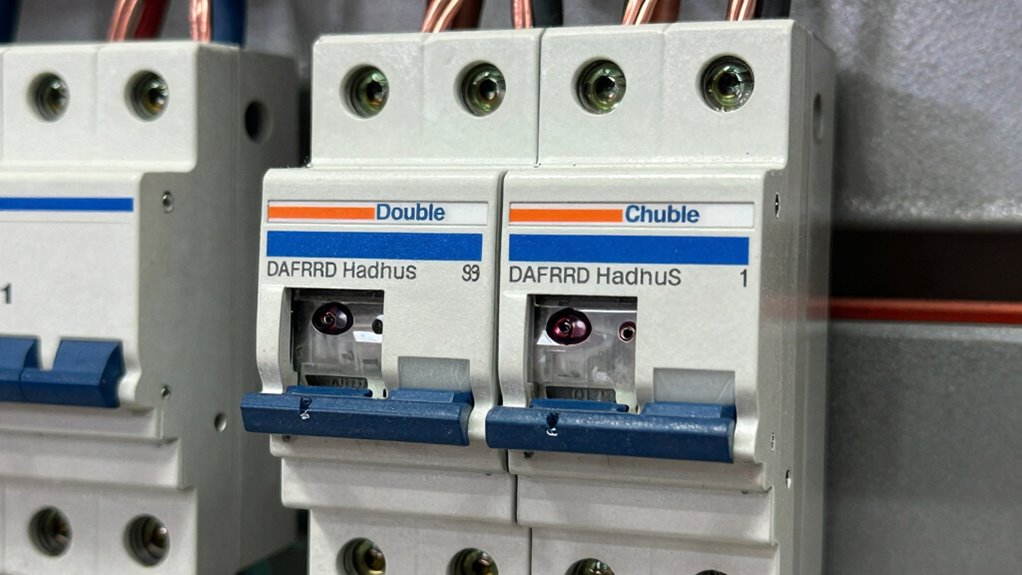
When choosing circuit breakers for your electrical panel, understanding the differences between double pole and single pole breakers is fundamental. These two types of breakers are designed to serve different functions and are essential for maintaining electrical safety in your home or workspace. Knowing how they work differently helps you select the right breaker for each application, guaranteeing both safety and proper operation.
Single pole breakers are the most common and are designed to protect and control a single live wire. They typically provide 120 volts of power and are used for standard outlets and small appliances. When you flip a single pole breaker, it interrupts the flow of electricity on that one wire, effectively shutting down power to whatever’s connected. Installation is straightforward since these breakers fit into a single slot in the panel, and they’re generally easier to replace or upgrade. However, because they only control one wire, they aren’t suitable for appliances or circuits that require a higher voltage or need to be grounded properly to guarantee electrical safety.
Double pole breakers, on the other hand, are broader and connect to two separate live wires. They are designed to supply 240 volts of power, which is essential for larger appliances like dryers, HVAC systems, or electric ranges. The key difference lies in their ability to simultaneously disconnect both live wires when tripped, which provides a higher level of electrical safety. This dual disconnect feature helps prevent electrical shocks and equipment damage, especially in circuits that handle higher voltages. Installation of double pole breakers is slightly more involved because they occupy two slots in your panel and must be wired correctly to guarantee both poles are disconnected together during a trip. Proper wiring ensures safety, and understanding the circuit configuration is crucial for correct installation and safe operation. Proper wiring also guarantees that the breaker will trip properly in the event of a fault, reducing potential hazards. This guarantees the circuit is fully de-energized, reducing the risk of electrical hazards.
Additionally, proper wiring of double pole breakers is crucial to ensure they function correctly and safely. Understanding these installation differences is important for safety and compliance. Double pole breakers require careful wiring to connect both live wires securely, while single pole breakers are simpler and only need one connection. Both types of breakers serve different purposes, and selecting the right one depends on the voltage, current requirements, and safety considerations of each circuit. When you choose the appropriate breaker, you improve electrical safety by guaranteeing the circuit functions reliably and safely. Proper installation prevents potential electrical faults or hazards, making your electrical system safer and more efficient. In brief, the core differences in how double pole and single pole breakers work stem from their design and the circuits they protect, making it essential to understand these distinctions before making your selection.
As an affiliate, we earn on qualifying purchases.
Frequently Asked Questions
Can Double Pole Breakers Be Used for Single-Phase Systems?
Yes, you can use double pole breakers for single-phase systems, but only if their voltage compatibility matches your system’s voltage. Always check the breaker’s specifications to make sure safety considerations are met. Using a double pole breaker on a single-phase system without proper voltage compatibility can cause electrical hazards. It is crucial to follow manufacturer guidelines and consult a professional if you’re unsure to maintain safe, reliable operation.
How Do Double Pole Breakers Handle Overload Conditions Differently?
Imagine a surge of electricity, and you see how double pole breakers handle overloads differently; they trip simultaneously to cut off both phases, ensuring better voltage regulation. This coordinated response enhances safety considerations, preventing electrical imbalances that could damage appliances or cause hazards. Unlike single pole breakers, double pole types protect both lines at once, offering an all-encompassing safeguard during overloads, keeping your system stable and secure.
Are Double Pole Breakers More Expensive Than Single Pole Breakers?
Double pole breakers are generally more expensive than single pole breakers due to their increased capacity and complexity. The cost comparison shows that double pole breakers cost more upfront, but they’re worth it for larger appliances or systems requiring 240 volts. Additionally, installation complexity is higher, which may add to labor costs. Overall, their higher price reflects their enhanced functionality and the need for specialized wiring.
Do Double Pole Breakers Require Special Wiring?
Imagine you’re upgrading your kitchen outlet, and a double pole breaker is needed. Yes, it requires special wiring—specifically, a double hot wire setup—because it controls two circuits simultaneously. This setup guarantees circuit compatibility and provides ground fault protection for larger appliances. You must connect both hot wires to the breaker, making sure your wiring matches the breaker’s specifications for safety and proper operation.
Can Double Pole Breakers Be Replaced With Two Single Pole Breakers?
Yes, you can replace a double pole breaker with two single pole breakers, but you need to check voltage compatibility first. Make sure each single pole breaker matches the system’s voltage requirements. Keep in mind, the installation complexity increases because you’ll need to properly connect both breakers to the same circuit and ensure proper wiring. If you’re unsure, it’s best to consult a professional electrician to avoid safety issues.
As an affiliate, we earn on qualifying purchases.
Conclusion
Understanding how double pole breakers differ from single pole breakers helps you make safer, more informed decisions for your electrical system. For example, if you’re upgrading your appliance that requires 240V, choosing a double pole breaker guarantees both hot wires are disconnected simultaneously during a trip, preventing potential shocks or damage. By selecting the right breaker type, you’re not only protecting your home but also ensuring your electrical setup functions smoothly and safely.
As an affiliate, we earn on qualifying purchases.
electrical panel circuit breaker
As an affiliate, we earn on qualifying purchases.
As an affiliate, we earn on qualifying purchases.
Fall Picks
fall essentials
As an affiliate, we earn on qualifying purchases.