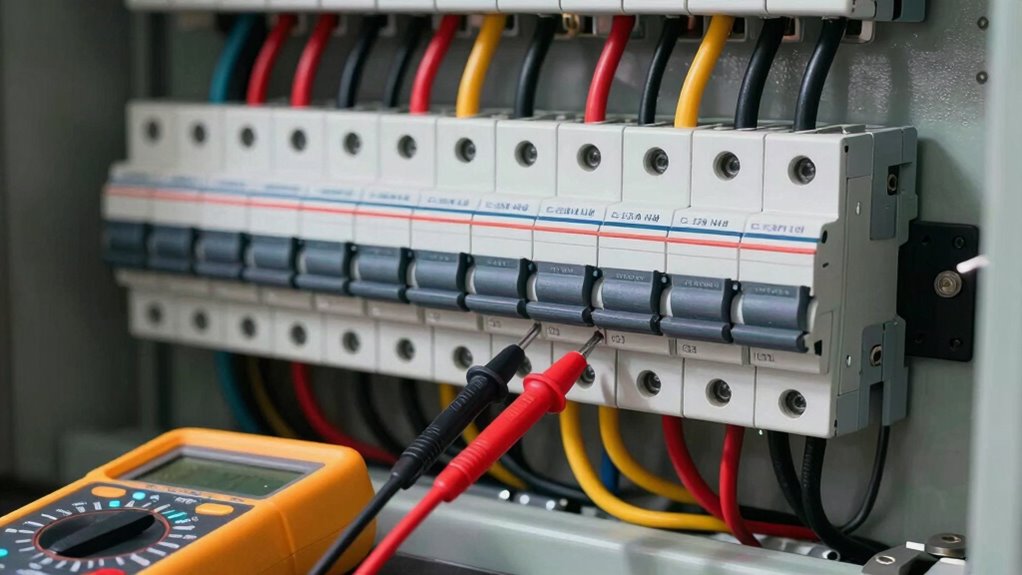

To understand household electrical loads, add up the wattages of all your appliances and devices, like your microwave, laptop, and lights. Know that a 15-amp circuit can handle about 1,800 watts, while a 20-amp circuit can manage around 2,400 watts. Distributing high-power devices across different circuits prevents overloads and risks. If you want to learn how to plan a safe and efficient electrical system, there’s more to discover below.

Get backup power and energy gear delivered free with Prime
- Fast, free delivery on millions of items
- Prime Video, Amazon Music and more included
- Member-only deals all year
Key Takeaways
- Add wattages of all regularly used appliances to determine total household load.
- Know circuit capacity (15A or 20A) to prevent overloads; 15A ≈ 1,800W, 20A ≈ 2,400W.
- Distribute high-power devices across multiple circuits to avoid tripping or hazards.
- Use wattage ratings from labels to accurately calculate total energy consumption.
- Proper load calculation guides safe system upgrades and ensures electrical safety.
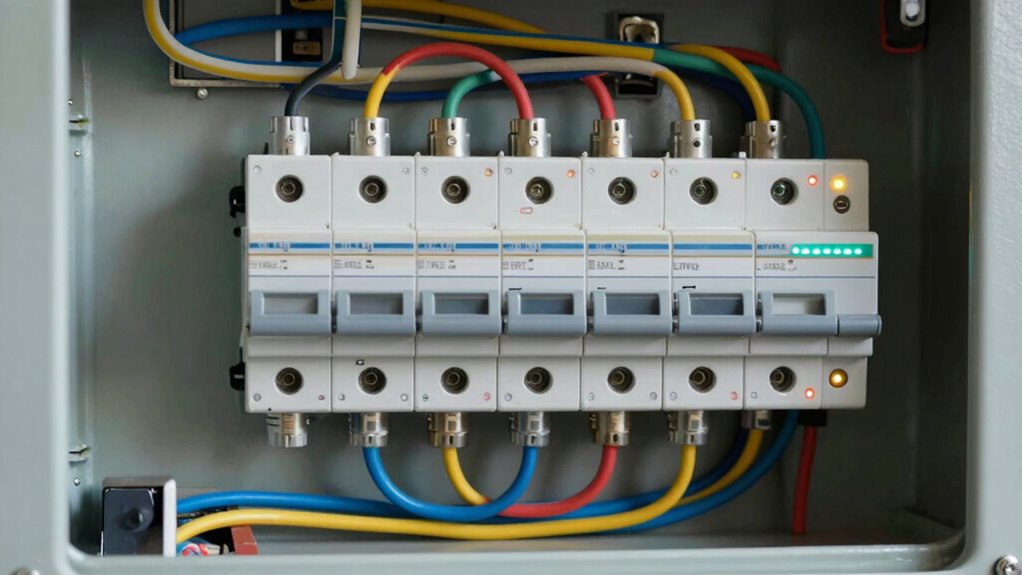
Understanding household electrical loads is essential because they determine how much electricity your home consumes and how your electrical system is designed. When you grasp the basics of power consumption, you’ll better understand how many appliances can run simultaneously without overloading your circuits. Power consumption, measured in watts, indicates how much energy an appliance uses. For example, a refrigerator might use around 150 watts, while a hairdryer could draw 1,200 watts. By knowing these figures, you can plan your circuit design more effectively, guaranteeing that your electrical system can handle your household’s needs without tripping breakers or risking hazards.
Understanding household loads helps prevent overloads and ensures safe, efficient electrical system design.
To get a clear picture of your household’s electrical load, start by listing all the appliances and devices you use regularly. Check their wattage ratings, which are often found on labels or in user manuals. Add up these wattages to find out your total power consumption at any given time. For instance, if you have five appliances running simultaneously—say, a microwave (1,000 watts), a laptop (50 watts), a TV (200 watts), lights (300 watts), and a fan (75 watts)—your total load is about 1,625 watts. This sum helps you understand what your current circuit load is and whether your electrical system can support additional devices.
Circuit design plays a vital role in safely managing your household’s power consumption. Residential circuits are typically rated for 15 or 20 amps, which equates to about 1,800 or 2,400 watts at 120 volts. Knowing this, you can guarantee that the total wattage of devices plugged into a single circuit doesn’t exceed its capacity. Overloading a circuit can cause frequent trips or, worse, electrical fires. Distributing high-power appliances across multiple circuits helps prevent overloads. For example, don’t run your microwave, toaster, and space heater all on the same circuit if their combined wattage exceeds the circuit’s limit. Understanding circuit capacity is crucial for ensuring safe and efficient household operation. Additionally, understanding the total load on your circuits helps you identify potential overload points before they become hazardous.
Understanding these math fundamentals behind household electrical loads allows you to make smarter decisions about how you use electricity. It also guides you in designing or upgrading your electrical system, especially if you’re adding new appliances or renovating. Proper circuit design based on accurate power consumption calculations keeps your home safe, efficient, and reliable. Recognizing the importance of power ratings helps prevent overloads and potential hazards. Additionally, understanding wattage and how they relate to your circuit limits enables you to better manage your household’s energy use. By keeping track of wattage and guaranteeing circuits aren’t overloaded, you prevent potential hazards and enjoy a smoother, more efficient electrical experience every day.
household circuit load calculator
As an affiliate, we earn on qualifying purchases.
As an affiliate, we earn on qualifying purchases.
Frequently Asked Questions
How Do I Calculate Total Household Electrical Load?
To calculate your total household electrical load, start by listing all appliances and their wattage. Add up their wattages to find the total load, guaranteeing it doesn’t exceed your circuit capacity. Use electrical load calculation techniques to estimate peak demand and plan your circuit capacity accordingly. This helps prevent overloads, ensures safety, and makes sure your electrical system can handle your household’s power needs efficiently.
What Safety Precautions Are Needed for High Electrical Loads?
To guarantee electrical safety with high loads, always keep load management in mind. Avoid overloading circuits, which can cause overheating or fires. Use appropriately rated circuit breakers and fuses, and never bypass safety devices. Regularly inspect wiring for damage, and consider professional help for high load installations. Following proper electrical safety protocols minimizes risks and keeps your household safe during heavy electrical use.
How Can I Reduce My Household’s Energy Consumption?
Sure, reducing energy consumption feels like a secret mission, but it’s simple. You can start by improving your home insulation—less heat loss means less energy for heating or cooling. Embrace solar power; it’s like giving your house a superhero cape to generate free energy. Small changes, like unplugging unused devices or switching to energy-efficient appliances, make a big difference. Who knew saving the planet could save you money too?
What Is the Difference Between Wattage and Amperage?
Wattage measures how much power an appliance uses, while amperage indicates the current flow. Voltage consistency across your home guarantees appliances run smoothly, but exceeding circuit breaker ratings can cause trips or hazards. When choosing devices or upgrading, consider both wattage and amperage to prevent overloads. Understanding these differences helps you manage electrical loads safely and efficiently, protecting your home’s wiring and maintaining consistent power delivery.
How Often Should Electrical Systems Be Inspected for Load Capacity?
You should have your electrical panel inspected annually by a qualified electrician to guarantee load capacity is adequate. They’ll check your circuit breakers for signs of wear or overload and verify that wiring isn’t stressed. Regular inspections help prevent potential hazards, such as overloaded circuits or faulty breakers, which can cause electrical failures or fires. Staying proactive with these inspections keeps your household safe and ensures your system handles your electrical load comfortably.
As an affiliate, we earn on qualifying purchases.
Conclusion
Understanding the simple math behind household electrical loads helps you make smarter choices, manage energy efficiently, and save money. It’s about knowing your appliances, calculating their power, and balancing your usage. It’s about recognizing the impact of small changes, controlling your consumption, and reducing waste. It’s about being aware, being proactive, and making informed decisions. When you grasp these basic principles, you empower yourself to create a safer, more efficient, and more sustainable home environment.
As an affiliate, we earn on qualifying purchases.
As an affiliate, we earn on qualifying purchases.
Fall Picks
fall essentials
As an affiliate, we earn on qualifying purchases.