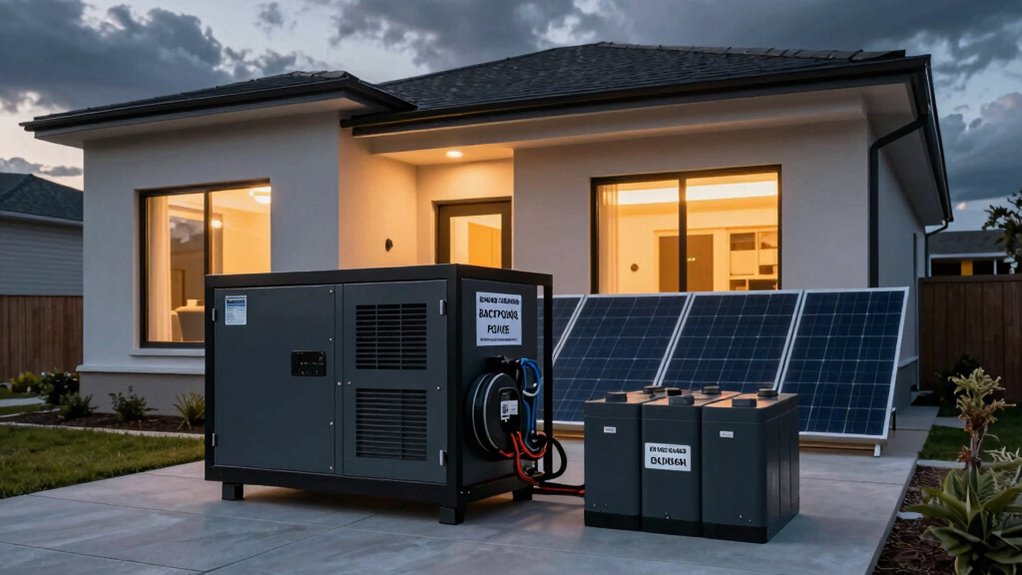

A resilient home backup power strategy relies on a combination of reliable energy sources like solar, wind, or generator systems, and regular maintenance to prevent unexpected failures. It’s important to manage fuel quality, test your equipment, and follow safety guidelines to keep everything running smoothly during outages. Diversifying your energy sources and ensuring proper systems are well-maintained boosts your household’s resilience. To learn how to strengthen your backup plan, keep exploring proven approaches and tips.

Get backup power and energy gear delivered free — and shop member deals
- Fast, free delivery on millions of items
- Access to Prime Big Deal Days deals on October 6–7
- Prime Video, Amazon Music and more included
Key Takeaways
- Integration of renewable energy sources like solar and wind enhances system flexibility and reduces reliance on fuel-dependent generators.
- Regular maintenance and inspections of backup generators ensure reliable performance during power outages.
- Combining multiple power sources creates a hybrid system that improves overall resilience and reduces downtime.
- Proper energy storage, such as solar batteries, enables continued power supply during grid failures.
- Compliance with safety and regulatory standards guarantees safe, legal, and effective backup power operation.

Have you ever been caught off guard by a power outage and wished you had a reliable backup plan? If so, you’re not alone. Power outages can strike unexpectedly, whether due to storms, grid failures, or other disruptions. That’s why building a resilient home backup power strategy is essential. A well-planned approach ensures your home keeps running smoothly, providing comfort, safety, and peace of mind during outages. To achieve this, you need to consider multiple factors, including the integration of renewable sources and proper generator maintenance.
Power outages happen unexpectedly—prepare with a resilient backup system that includes renewable energy and proper generator maintenance.
Renewable sources, such as solar panels or wind turbines, can greatly enhance your backup power system’s resilience. By harnessing clean energy, you reduce reliance on fuel-dependent generators and lower your carbon footprint. Incorporating renewable sources can also provide a sustainable, cost-effective way to generate power during an outage. For example, solar batteries store excess energy generated during sunny days, allowing you to draw from them when the grid fails. This setup not only enhances your energy independence but also minimizes downtime, especially if combined with a backup generator. When you have renewable sources integrated into your system, you create a hybrid setup that offers flexibility and increased reliability, guaranteeing your home remains powered no matter what. Understanding energy independence is key to designing an effective backup plan. Additionally, exploring connected home technology can help optimize your backup power system’s performance and monitoring.
However, having renewable energy components is only part of the equation. Regular generator maintenance is equally critical for a resilient backup plan. Generators are often the primary backup source during extended outages, and their reliability depends on consistent upkeep. Regularly inspecting and servicing your generator helps prevent unexpected breakdowns when you need it most. This includes checking fuel levels, testing startup functions, and cleaning filters. A well-maintained generator can run smoothly for hours or days, providing essential power for your home, medical devices, and refrigeration. Neglecting maintenance increases the risk of failure, which defeats the purpose of having a backup system in the first place. Scheduling routine checkups and working with qualified technicians ensures your generator operates at peak performance when needed. Properly managing fuel quality and storage can significantly impact your generator’s lifespan and reliability. Additionally, understanding the regulatory requirements related to generator installation and operation can help ensure compliance and safety, preventing potential legal issues down the line.
As an affiliate, we earn on qualifying purchases.
Frequently Asked Questions
How Often Should I Test My Backup Power Systems?
You should test your backup power systems at least twice a year to guarantee backup system longevity and power source compatibility. Regular testing helps identify potential issues before an outage occurs. During tests, verify that your system starts properly and supplies power as needed. Keep detailed records of each test to track performance over time. Consistent testing ensures your backup system remains reliable when you need it most.
What Safety Precautions Are Necessary for Backup Power Installation?
Are you aware of the safety protocols needed for backup power installation? You must follow proper installation guidelines to prevent hazards like electrical shocks or fires. Always wear protective gear, disconnect the main power before starting, and guarantee proper grounding. Consulting a professional ensures compliance with local codes. Do you realize that neglecting safety precautions can jeopardize your home’s safety and your own? Prioritize safety first to enjoy reliable backup power.
Can Backup Power Systems Handle Extreme Weather Conditions?
Backup power systems can handle extreme weather if you prioritize weatherproofing considerations and emergency preparedness. You should secure equipment against rain, snow, and wind, ensuring connections are sealed and protected. Regular maintenance is essential to keep everything functional during storms. Additionally, having an all-encompassing emergency plan helps you respond quickly if the power goes out, ensuring your backup system remains reliable when you need it most.
What Are the Ongoing Maintenance Requirements?
You need to regularly inspect your backup power equipment for durability issues and verify all components are functioning properly. Schedule routine maintenance like checking battery health, testing system redundancies, and cleaning to prevent failure. Keep spare parts on hand and follow manufacturer guidelines. This ongoing upkeep guarantees your system remains reliable during outages, maintaining resilience and peace of mind when you need power the most.
How Do I Determine the Right Capacity for My Needs?
To determine the right capacity, start by evaluating your home’s energy storage needs during outages, considering essential appliances and their power efficiency. Calculate your total energy consumption and add a buffer for unexpected needs. Choose a backup system with enough capacity to handle your critical loads comfortably. This guarantees you maintain energy storage flexibility and power efficiency, so your backup power reliably sustains your home without overpaying for unnecessary capacity.
As an affiliate, we earn on qualifying purchases.
Conclusion
A resilient home backup power strategy is your fortress against life’s storms, a steady lighthouse guiding you through darkness and doubt. By choosing the right mix of energy sources, maintaining your systems, and planning for the unexpected, you create a safety net woven with strength and foresight. Remember, your preparedness transforms uncertainty into calm waters, turning a potential chaos into a controlled, resilient haven where power and peace reign supreme amidst the tempests.
As an affiliate, we earn on qualifying purchases.
As an affiliate, we earn on qualifying purchases.
Fall Picks
fall essentials
As an affiliate, we earn on qualifying purchases.