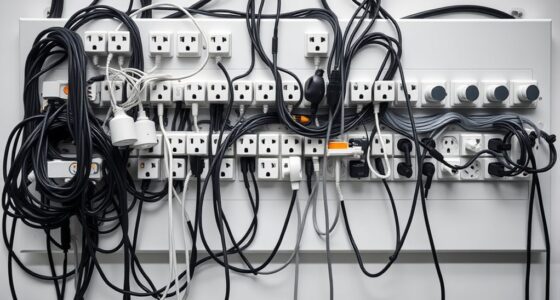
Most beginners miss how essential the neutral wire really is. It doesn’t just complete the circuit; it safely carries current back to the source, helping appliances work properly and safely. Incorrect neutral wiring can cause shocks, unexpected voltages, or equipment damage. Proper identification, following color codes, and turning off power before working are key. If you want to understand the true role of neutral wires and avoid hazards, keep exploring these critical safety tips.
Key Takeaways
- Neutral wires complete the circuit and carry current back to the source, not just serve as a grounding path.
- Proper neutral wiring prevents unexpected voltage and electrical shocks during troubleshooting or repairs.
- Correct identification and color coding are essential to avoid dangerous miswiring and equipment damage.
- Sharing a neutral across multiple circuits can cause overloads if loads are unbalanced.
- Turning off power and verifying wires before work is critical for safety and preventing electrical hazards.

Have you ever wondered what a neutral wire does in your home’s electrical system? It’s a question many beginners overlook, but understanding its role is essential for circuit safety. The neutral wire acts as a return path for current flowing through your appliances. When everything’s working correctly, electricity flows from the power source, through your device, and back via the neutral wire. This process keeps the electrical circuit complete and guarantees your devices operate smoothly. Without a properly functioning neutral wire, your appliances might not work correctly, or worse, electrical hazards could arise.
One key reason to understand the neutral wire is related to wiring color codes. These codes are standardized to help identify wires easily and prevent dangerous mistakes. In most countries, the neutral wire is colored white or gray, making it distinguishable from the live or hot wire, which is typically black or red. Ground wires, which are essential for circuit safety, are usually green or bare copper. Knowing these color codes helps you identify wires quickly, reducing the risk of incorrect connections that could lead to short circuits, shocks, or fires. When working on your home’s wiring, always adhere to these color standards to guarantee safety.
Understanding wiring color codes helps prevent dangerous mistakes and ensures safe, correct electrical connections in your home.
Many beginners assume that the neutral wire is just another wire, but its function is critical for maintaining circuit safety. Proper wiring, including correctly connecting the neutral, prevents electrical shock hazards and equipment damage. If the neutral wire isn’t connected properly, it can cause unexpected voltage on outlets, which might harm you or your appliances. That’s why understanding how the neutral works within the electrical system is indispensable, especially when performing any DIY wiring or repairs. Always turn off the power before working on any circuit, and double-check that wires are correctly identified using wiring color codes.
Additionally, understanding the importance of a neutral wire is crucial for ensuring proper circuit operation and avoiding overloads. The neutral wire isn’t just about completing circuits; it also plays a role in balancing loads across your electrical system. When multiple circuits share a neutral, an imbalance can cause unexpected behaviors or overloads. This is why professional electricians follow strict wiring safety standards, ensuring every neutral connection is secure and correctly color-coded. For beginners, paying close attention to circuit safety and wiring color codes isn’t just about following rules — it’s about protecting yourself and your home from potentially dangerous electrical faults. Understanding the true purpose of the neutral wire and respecting wiring standards will give you confidence and help you work safely, whether you’re troubleshooting or doing small repairs.

Klein Tools RT250 GFCI Outlet Tester with LCD Display, Electric Voltage Tester for Standard 3-Wire 120V Electrical Receptacles
CLEAR LCD READOUT: GFCI Receptacle Tester features a large backlit LCD readout for easy voltage reading and clear…
As an affiliate, we earn on qualifying purchases.
As an affiliate, we earn on qualifying purchases.
Frequently Asked Questions
Can Neutral Wires Carry Current Even When Appliances Are Off?
Yes, neutral wires can carry current even when appliances are off. Many neutral wire myths suggest they should be dead when appliances are unplugged, but in reality, they may still have voltage due to shared circuits or wiring issues. To guarantee safety, you should perform neutral wire testing properly. Always use appropriate tools and procedures, as assuming neutral wires are always safe can lead to dangerous shocks or electrical faults.
What Are the Signs of a Faulty Neutral Wire?
If you notice flickering lights, frequent circuit breaker trips, or outlets that feel warm, these are signs of neutral wire faults. You might also experience voltage fluctuations or a circuit imbalance, which can indicate a loose or damaged neutral wire. Address these issues promptly, as faulty neutral wires can compromise safety and cause electrical problems. Always consult a professional electrician to diagnose and fix neutral wire faults correctly.
Are Neutral Wires Necessary in All Electrical Systems?
Neutral wires are necessary in most electrical systems because they complete the circuit, ensuring safety and proper function. You should rely on color coding and wiring diagrams to identify them correctly. Without neutral wires, appliances may not operate correctly, and safety hazards increase. Understanding their role helps you troubleshoot effectively and avoid dangerous mistakes, making your electrical system safer and more reliable.
How Do Neutral Wires Differ From Ground Wires?
Neutral wires carry current back to the electrical panel, completing the circuit, while ground wires are safety features that redirect stray electricity away from you. Neutral wire identification involves looking for a white or gray wire, whereas ground wires are typically green or bare copper. In a ground wire comparison, ground wires don’t normally carry current unless there’s a fault, unlike neutral wires which always complete the circuit.
What Safety Precautions Should I Take With Neutral Wires?
You should always turn off power before working on neutral wires, ensuring proper grounding methods to prevent shocks. Use insulated tools and wear rubber gloves for added safety. Check that circuit protection devices like circuit breakers are functioning correctly, and avoid touching neutral wires while the circuit is live. Proper grounding and circuit protection are essential for safe handling, reducing the risk of electrical shock or damage.

American Autowire Car Wiring Harness, Route 9, Complete, 9 Power Outlets, GM Color Code, Universal, Kit
Product Type :Auto Part
As an affiliate, we earn on qualifying purchases.
As an affiliate, we earn on qualifying purchases.
Conclusion
Just like a relay race runner passing the baton smoothly, understanding the role of neutral wires keeps your electrical system running safely and efficiently. I once saw a novice electrician overlook this detail, leading to a confusing and risky situation. Remember, neutral wires are the unsung heroes that complete the circuit, ensuring everything works seamlessly. Grasping their importance now will keep you safe and confident as you tackle future electrical projects.
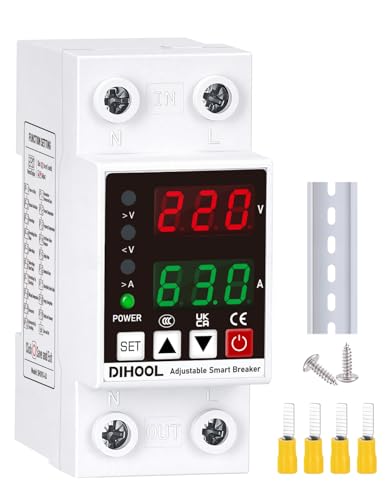
DIHOOL Smart Circuit Breaker with Adjustable Voltage Protection, 70-200V Low and 140-300V High Cutoff, 1-63A Overcurrent Protector, AC Disconnect Switch, DIN Rail Mount
19 Customizable Presets : Precisely adjust overvoltage (130-300V), undervoltage (80-210V), and overcurrent (1-63A) etc… UP to 19kinds value…
As an affiliate, we earn on qualifying purchases.
As an affiliate, we earn on qualifying purchases.

DongChu Insulated Electrician Gloves 500V Touch-Screen Voltage/Flame Retardant Work Gloves, Electrical Rubber Non-slip Texture Design for Electricians Prevent Shock (Large)
Insulation Performance: The palm part of the work gloves is insulated, making them ideal for use as an…
As an affiliate, we earn on qualifying purchases.
As an affiliate, we earn on qualifying purchases.