Extension cords are unsafe and should never substitute proper wiring in your home or workspace. They pose risks like tripping hazards, electrical shocks, and fires, especially when damaged or used improperly outdoors. Overloading cords can cause overheating and short circuits, increasing danger. Proper wiring by a licensed electrician ensures safety, reliability, and compliance with codes. Continuing to use extension cords as a permanent fix can put you at serious risk—discover how to prevent these hazards.
Key Takeaways
- Extension cords are temporary solutions and not designed for permanent wiring or continuous use.
- Damaged or frayed cords pose electrical shock, fire, and trip hazards.
- They can overheat and increase the risk of electrical fires if improperly used.
- Proper wiring by licensed electricians ensures safety, reliability, and compliance with electrical codes.
- Relying on extension cords instead of proper wiring can lead to long-term safety and functionality issues.
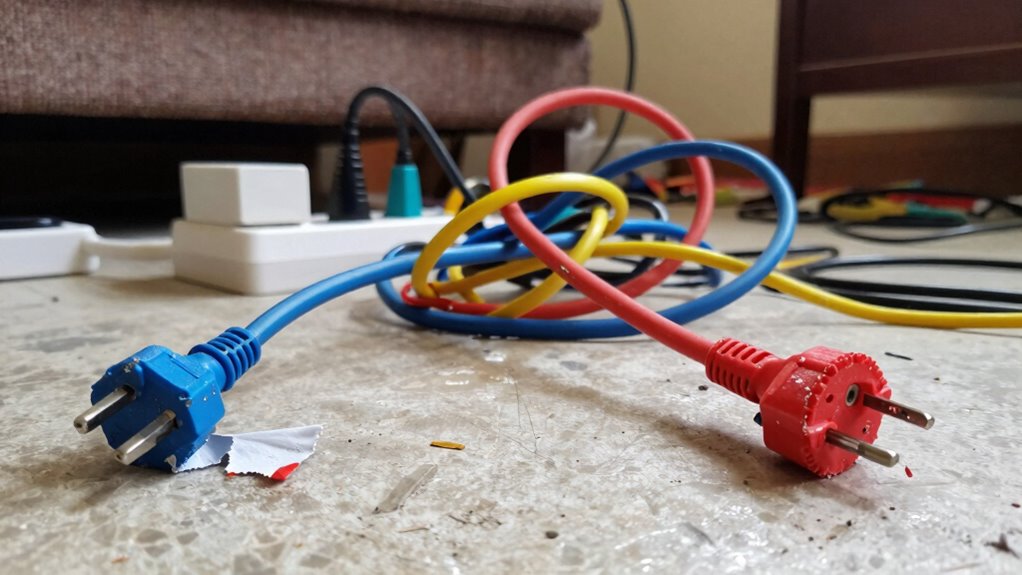
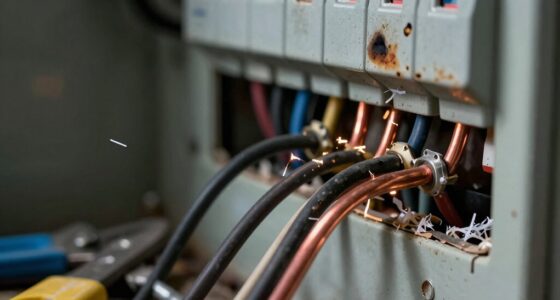
Extension cords also pose physical hazards. They can become tripping hazards if they run across walkways or doorways, leading to falls and injuries. If a cord is not properly secured or is damaged, it can expose the wires inside, creating a risk of electric shock. Damaged or frayed cords are particularly dangerous because they can cause short circuits or sparks. Using extension cords outdoors or in damp environments without proper insulation increases the risk of electrical shock, as moisture can conduct electricity and lead to severe injuries. Additionally, some extension cords are not rated for outdoor use, which can further increase safety risks. Proper handling and inspection are essential to avoid these hazards, especially considering that many extension cords are not designed for permanent installation or continuous use. The risk of fire** increases significantly if cords overheat or are used improperly. The best approach is to have a licensed electrician install additional outlets where needed. This ensures that your electrical system is safe, reliable, and up to code, considerably reducing safety hazards linked to improper wiring. Proper wiring with adequate capacity ensures that your electrical system can safely support your needs over the long term. In outdoor settings, utilizing natural landscaping** can also help minimize the need for extension cords and improve overall safety.

Skrizcable 16/3 25 FT Outdoor Extension Cord Waterproof, Weatherproof & Flame Retardant Black 3 Prong Power Cord Outside for Lawn & Garden, 13 Amps 1625 Watts 125 VAC 16AWG SJTW, ETL Listed
ETL Listed and Trusted: 25 ft extension cord rated 13 Amps, 1625 Watts and 125 VAC; Male NEMA…
As an affiliate, we earn on qualifying purchases.
As an affiliate, we earn on qualifying purchases.
Frequently Asked Questions
Can Extension Cords Be Used Outdoors Safely?
Yes, you can use extension cords outdoors safely if you choose ones designed for outdoor use. Always check for weather-resistant features, like waterproof insulation and heavy-duty ratings, to avoid indoor hazards. Keep the cord away from standing water, and don’t overload it. Remember, outdoor extension cords are built to handle weather considerations, but never use indoor cords outside—they’re not protected against elements and pose safety risks.
How Long Can an Extension Cord Safely Be?
You can generally use an extension cord safely up to about 50 to 100 feet, depending on its gauge and power needs. For cord safety, avoid exceeding the recommended extension length, as longer cords can cause voltage drops and overheating. Always choose the right gauge for your extension length, and never overload the cord. Properly inspecting and following manufacturer guidelines guarantees safe, effective use without risking electrical hazards.
Are There Specific Extension Cords for High-Power Appliances?
Yes, there are specific extension cords designed for high-power appliances. You should check their appliance compatibility and cord safety ratings to guarantee they handle the wattage safely. Look for heavy-duty cords with a high gauge rating, usually 12 or 10 AWG, which are built to support appliances like refrigerators or power tools. Always verify the cord’s ratings and ensure it matches your appliance’s power requirements for safe operation.
What Are the Signs of an Overloaded Extension Cord?
You can tell an extension cord is overloaded when it overheats, sparks, or the insulation feels hot to the touch. Signs also include frequent tripping of circuit breakers or blown fuses. To prevent this, check the extension cord’s durability and power capacity ratings before plugging in high-power appliances. Overloading can damage the cord, pose fire risks, and reduce its lifespan, so always match the cord’s capacity with your device’s needs.
Can Extension Cords Cause Electrical Fires?
Did you know that electrical fires caused by extension cords account for roughly 3,300 fires annually? Extension cords can definitely cause electrical fires if you’re not careful. Poor electrical safety practices, like overloading cords or using damaged ones, increase the risk. To protect yourself, choose durable cords designed for your needs, and never use them as a permanent wiring solution. Always prioritize safety to prevent hazards.

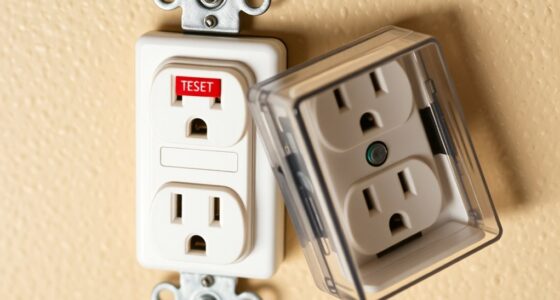
GE UltraPro Duplex Heavy-Duty Receptacle, White, Wall Outlet, Reinforced Yoke, Self-grounding Clip, 3 Prong, Supports 15A, UL Listed, 42157
Repair or Replace – This duplex receptacle is the perfect solution to repairs or replacements around your home,…
As an affiliate, we earn on qualifying purchases.
As an affiliate, we earn on qualifying purchases.
Conclusion
Remember, using extension cords as a permanent wiring solution is like putting a bandage on a broken bone — it might seem to work temporarily, but it won’t fix the real problem. For safety and reliability, always opt for professional wiring and proper outlets. Your home’s electrical system is like a well-oiled machine; neglecting it can cause bigger issues down the line. Don’t cut corners — safety should always come first.

6Ft Power Strip Surge Protector – Yintar Extension Cord with 6 AC Outlets and 3 USB Ports for for Home, Office, Dorm Essentials, 1680 Joules, ETL Listed, (Black)
Power Strip with 6 Outlets & 3USB Ports: 6 AC Surge protector outlets(1680 Joules) including 1 Widely Spaced…
As an affiliate, we earn on qualifying purchases.
As an affiliate, we earn on qualifying purchases.
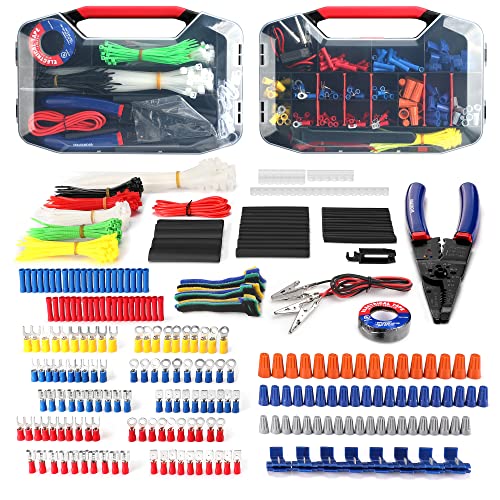
WORKPRO 582-piece Crimp Terminals, Wire Connectors, Heat Shrink Tube, Electrical Repair Kit with Wire Cutter Stripper
Assorted 582 electrical wire terminals and other accessories with transparent box for easy access
As an affiliate, we earn on qualifying purchases.
As an affiliate, we earn on qualifying purchases.