
A garage includes not just the enclosed space for parking and storage but also all electrical components inside, like outlets, wiring, garage door openers, and lighting fixtures. GFCI protection is required for outlets, and it’s best practice to guarantee the wiring and fixtures are protected as well. Proper protection minimizes shock and fire hazards. If you want to understand exactly what needs GFCI coverage in your garage, there’s more to contemplate.
Key Takeaways
- Any area designated as a garage, including attached and detached structures, requires GFCI protection for outlets.
- All electrical wiring within the garage, including for garage doors and lighting, must be GFCI protected.
- Switch-controlled lighting fixtures and hardwired components inside the garage are included in GFCI coverage.
- GFCI requirements extend beyond outlets to cover circuits and wiring that serve the garage space.
- Proper GFCI protection applies to all electrical elements in the garage, ensuring safety and code compliance.
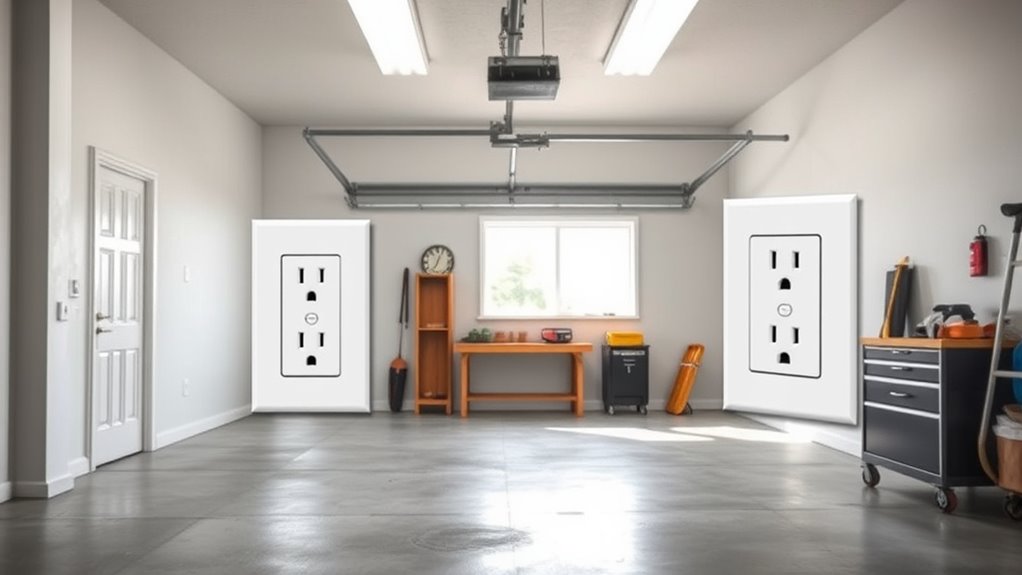
Are you confident your garage outlets are properly protected? If not, it’s time to take a closer look at your garage’s electrical setup. The National Electrical Code requires GFCI (Ground Fault Circuit Interrupter) protection for outlets in garages to prevent electrical shocks and improve safety. But what exactly counts as a garage? Many homeowners assume that only the outlets themselves need protection, but the scope extends beyond that. When considering GFCI coverage, you need to think about all electrical components within the garage, including garage door wiring and lighting fixture placement.
Garage door wiring is often overlooked but plays an essential role in overall safety. The wiring that powers your garage door opener and related components should be properly protected by GFCIs if they’re within the garage space. Faulty wiring or accidental contact with moisture can lead to dangerous situations. When inspecting your garage, check that the wiring for the garage door opener is installed according to code and that it’s protected by a GFCI outlet or protected circuit. This ensures that if a short or ground fault occurs, the GFCI will trip quickly, preventing shocks or fires.
Lighting fixture placement also impacts whether your garage qualifies as a protected space under GFCI rules. Light fixtures installed in garages are generally considered part of the garage’s electrical system, especially if they are hardwired or controlled by a wall switch. Since moisture and humidity are common in garages, these fixtures should be checked to ensure they’re properly grounded and protected. While lighting circuits typically aren’t required to have GFCIs, some installations—like those with receptacles near sinks or other water sources—must be GFCI protected. Proper placement and protection of lighting fixtures contribute to a safer environment, reducing risk of electrical hazards caused by moisture or improper wiring.
Additionally, understanding the scope of GFCI requirements for garages can help you ensure full compliance with electrical codes and enhance safety for all users. Ultimately, a garage isn’t just about the space behind your door; it’s about all electrical components within that space. Confirming that garage door wiring, lighting fixture placement, and outlets are properly protected with GFCIs is essential. Not only does this meet electrical codes, but it also provides peace of mind. Regularly inspect your garage’s wiring and receptacles, and if in doubt, consult a licensed electrician. Proper GFCI coverage means you’re safeguarding yourself from potential shocks, fires, and other electrical hazards that could occur in your garage. Being proactive about these protections helps maintain a safe and compliant space, so you can focus on your projects without worry.
Top picks for "garage gfci coverage"
Open Amazon search results for this keyword.
As an affiliate, we earn on qualifying purchases.
Frequently Asked Questions
Are Outdoor Sheds Considered Garages for GFCI Requirements?
Outdoor sheds are generally not considered garages for GFCI requirements, as garage definitions typically specify enclosed structures used for vehicles or storage. However, if your outdoor shed is attached to your home or has electrical outlets, it may need GFCI protection similar to a garage. Always check local electrical codes, since definitions can vary and specific situations might require GFCI coverage for outdoor sheds.
Do GFCI Outlets Cover Garage Door Openers?
GFCI outlets don’t typically cover garage door openers. You’ll want to check your garage’s electrical wiring, especially near garage lighting and outlets, to make certain safety. GFCIs protect against ground faults in areas with moisture, but garage door openers usually operate on dedicated circuits. To stay safe, consider installing GFCIs on outlets that power garage lighting and other nearby electrical wiring, but remember, garage door openers need separate, proper protection.
Are Laundry Areas Inside Garages Included in GFCI Coverage?
Yes, laundry areas inside garages are included in GFCI coverage. For laundry safety and GFCI compliance, you should install GFCI outlets in these spaces to protect against electrical shocks. This ensures that any potential water-related electrical issues are minimized, keeping you safe while using your washer and dryer. Regularly check these outlets to maintain GFCI functionality and uphold safety standards in your garage laundry area.
What Changes if My Garage Is Attached vs. Detached?
If your garage is attached, GFCI coverage usually extends to outlets inside it, including garage insulation and areas with ventilation requirements. For detached garages, you might need separate GFCI protection, especially near water sources or electrical equipment. You should check local codes, as they can specify GFCI needs based on insulation, ventilation, and whether the garage is attached or detached, ensuring safety and compliance.
How Do GFCI Rules Apply to Workshop or Hobby Areas?
In your workshop or hobby area, GFCI rules prioritize safety by requiring outlets to have Ground Fault Circuit Interrupters. This helps prevent electrical shocks during activities like woodworking or crafts. You should guarantee all outlets within 6 feet of water sources or workbenches with moisture are GFCI protected. Following hobby area regulations and workshop safety guidelines reduces risks, keeping you safe while working on projects.
Conclusion
Remember, a garage isn’t just a place to park your car—it’s a hub of activity and energy. Ensuring your GFCI coverage is up to date is like giving your home a shield of protection, guarding against unseen dangers. Don’t let complacency be the thief of safety. By understanding what counts as a garage, you’re taking an essential step toward peace of mind, turning your space into a safe haven where your family can thrive, worry-free.