
For outdoor lighting, the simple rule is to always connect your fixtures to a GFCI outlet or circuit breaker. GFCIs protect you from electrical shocks caused by ground faults, especially in wet conditions. Make sure your GFCI is installed outdoors with weatherproof covers and placed in a dry, accessible spot. Testing your GFCI regularly is key to safety. Keep these tips in mind, and you’ll know the important details to keep your outdoor lighting safe and compliant.
Key Takeaways
- Always connect outdoor lighting circuits to GFCIs to prevent electrical shocks from ground faults.
- Use weatherproof GFCI outlets or circuit breakers rated for outdoor use.
- Install GFCIs in accessible, dry locations away from direct weather exposure.
- Regularly test GFCIs using the built-in test button to ensure proper function.
- Follow manufacturer instructions and local electrical codes for safe outdoor wiring.
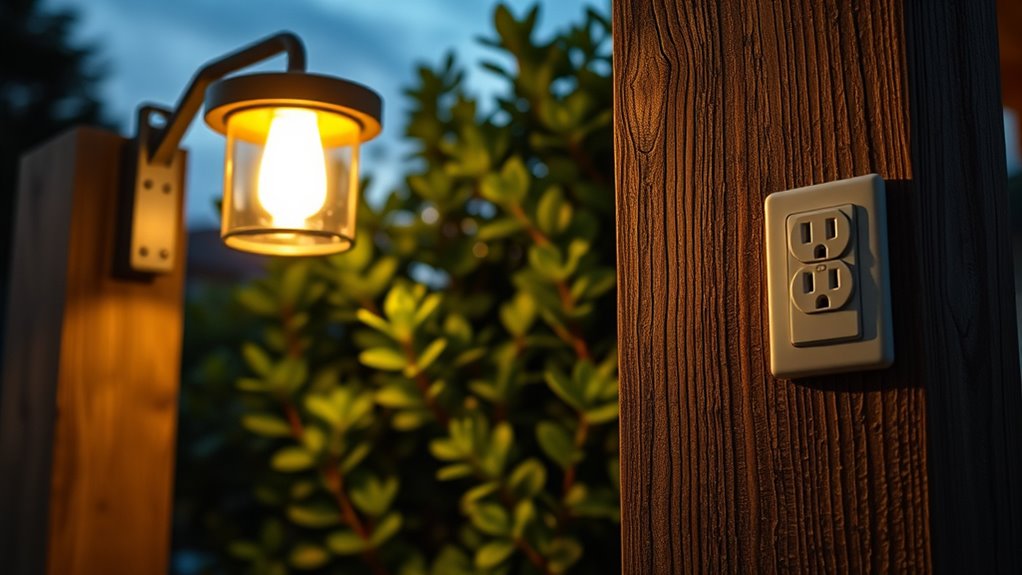
Are you wondering whether outdoor lighting should be connected to a GFCI? The answer is a definite yes, and understanding why is essential for ensuring safety and compliance. GFCIs, or Ground Fault Circuit Interrupters, are designed to prevent electrical shocks by shutting off power when they detect ground faults. Outdoor lighting often involves exposure to moisture, which increases the risk of electrical hazards. Connecting your outdoor lights to a GFCI isn’t just a recommendation; it’s a critical safety precaution that can protect you and your family from potential harm.
Connecting outdoor lighting to a GFCI is essential for safety and protecting against electrical hazards.
When it comes to installation tips, always start by turning off the power at the breaker before handling any wiring. This simple step helps prevent accidental shocks while working on your outdoor circuits. Next, use a GFCI outlet or circuit breaker rated for outdoor use. These are specifically designed to withstand the elements and provide reliable protection. Position the GFCI outlet in a dry, accessible location, ideally close to your lighting fixtures but away from direct exposure to rain or snow. Proper placement ensures that the GFCI can respond quickly to any ground faults, minimizing risks.
Make sure to follow the manufacturer’s instructions carefully during installation. Use weatherproof covers to shield the GFCI and connected outlets from water ingress, which could defeat the safety purpose entirely. All wiring should be properly grounded, and connections tight to prevent any loose contacts that could cause arcing or faults. If you’re not comfortable working with electrical components, hiring a licensed electrician is a wise choice. They can ensure that the installation complies with local codes and that safety precautions are fully adhered to, giving you peace of mind.
It’s also essential to test your GFCI regularly. Most units have a test button—press it to make sure the circuit trips properly. If it doesn’t, or if it’s not functioning correctly, replace or repair the unit immediately. Regular testing, combined with proper installation tips, keeps your outdoor lighting safe and reliable. Remember, outdoor electrical setups are exposed to weather, which can compromise safety if not properly protected. Using GFCIs effectively is one of the best ways to prevent electrical shocks, especially in wet conditions. Additionally, understanding electrical hazards associated with outdoor wiring reinforces the importance of proper safety measures.
Top picks for "outdoor light gfci"
Open Amazon search results for this keyword.
As an affiliate, we earn on qualifying purchases.
Frequently Asked Questions
Are All Outdoor Lights Required to Be GFCI Protected?
Not all outdoor lights are required to be GFCI protected, but it’s highly recommended for electrical safety. GFCI outlets detect ground faults, preventing electrical shocks and fires. You should verify that any outdoor lighting installed in wet or damp areas, like lawns or porches, is connected to GFCI-protected outlets. This simple measure enhances safety and helps protect you from potentially dangerous ground faults.
Can GFCI Outlets Be Used for Indoor Lighting?
Yes, you can use GFCI outlets for indoor lighting, and they’re like safety nets catching ground fault issues before they cause harm. GFCI outlets protect against electrical safety hazards, especially in damp areas. They trip if a ground fault occurs, reducing shock risk. So, installing GFCI outlets for your indoor lighting enhances safety, providing peace of mind just like a guardian angel watching over your home’s electrical system.
How Often Should GFCI Outlets Be Tested?
You should test your GFCI outlets at least once a month to guarantee they’re functioning properly. Incorporate testing into your regular maintenance schedule so you catch any issues early. To test, simply press the “test” button and confirm that the outlet cuts power. Then press “reset” to restore it. Regular testing helps protect you from electrical hazards and keeps your outdoor lighting safe and reliable.
Are There Exceptions to GFCI Requirements for Outdoor Lighting?
Think of the electrical code as your guiding star—most outdoor lighting must have GFCI protection to keep you safe from shocks. There are a few exceptions, like certain permanently installed landscape lighting or low-voltage systems, but generally, lighting regulations favor GFCI use outdoors. Always check local codes, because these rules can vary, ensuring your outdoor spaces stay safe and compliant with the electrical code.
What Are the Risks of Not Using GFCI With Outdoor Lighting?
Not using GFCI with outdoor lighting increases your risk of electrical shocks and water hazards. Without GFCI protection, if a wire becomes damaged or water enters the fixture, you could get shocked or face a fire risk. GFCI outlets detect ground faults instantly, shutting off power and preventing injury. Always use GFCI for outdoor lighting to guarantee safety against water hazards and avoid dangerous electrical shocks.
Conclusion
So, next time you’re installing outdoor lighting, remember the simple rule: use GFCI outlets for safety. It’s a small step that can prevent big accidents. Are you willing to take that extra precaution to protect your home and loved ones? Ensuring proper outdoor wiring might seem tricky, but following this straightforward guideline makes it manageable. Stay safe, stay smart—because when it comes to outdoor lighting, a little caution goes a long way.