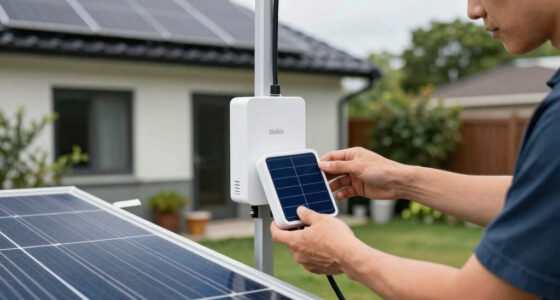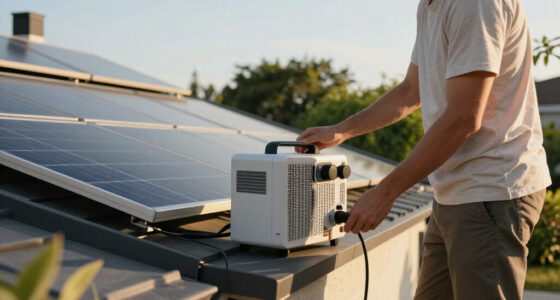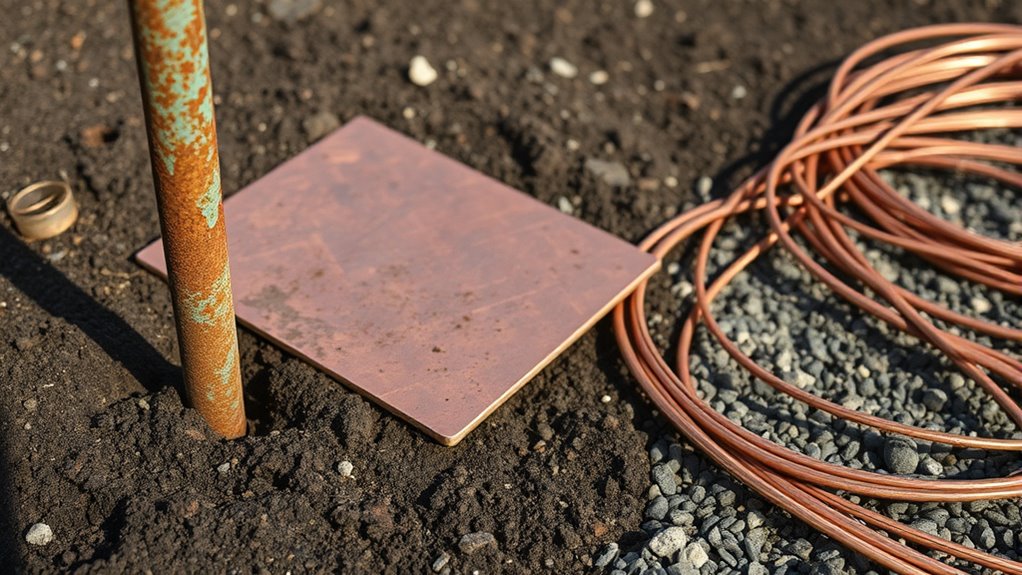

When selecting grounding electrodes for your PV system, consider your soil conditions and installation space. Rod electrodes are simple and cost-effective for most setups, while plate electrodes work well in low-conductivity soils by providing a low-resistance path. Ufer (concrete-encased) electrodes combine structural and grounding functions, ideal for durable and reliable grounding. To make the best choice, understand how each option performs in your environment—more insights lie just ahead.

Get backup power and energy gear delivered free — and shop member deals
- Fast, free delivery on millions of items
- Access to Prime Big Deal Days deals on October 6–7
- Prime Video, Amazon Music and more included
Key Takeaways
- Rod electrodes are simple, cost-effective, and suitable for standard PV systems with moderate soil conditions.
- Plate electrodes provide low resistance in poor soil conductivity areas, ideal for challenging soil environments.
- Ufer (concrete-encased) electrodes offer a large, durable grounding path, especially in structures with concrete foundations.
- Soil conductivity influences electrode choice; low conductivity soils may require multiple or larger electrodes.
- Proper installation and regular testing ensure optimal performance of any grounding electrode type for PV systems.

Have you ever wondered why grounding electrodes are vital for photovoltaic (PV) systems? They play a fundamental role in ensuring safety, system performance, and protection against electrical faults. Without proper grounding, stray currents or lightning strikes could cause equipment damage or pose serious safety risks. To achieve effective grounding, understanding the importance of soil conductivity and electrode material is key. Soil conductivity determines how well electrical currents can pass through the ground, affecting the overall effectiveness of your grounding system. When soil conductivity is high, less extensive grounding methods might suffice, but in areas with low soil conductivity, more robust electrodes are necessary to establish a reliable ground connection. The choice of electrode material directly influences durability, corrosion resistance, and conductivity. Common options include copper, galvanized steel, and aluminum, each with its advantages and limitations. Copper offers excellent conductivity and corrosion resistance but can be more expensive, while galvanized steel is affordable and durable but may corrode over time in certain soils. Aluminum provides a lightweight alternative but might not last as long as copper in aggressive soil conditions. The goal is to select the right electrode material that maintains low resistance over time, especially in challenging soil conditions.
Additionally, understanding the grounding electrode types and their specific applications can help optimize system safety and reliability. When considering electrode types, you have several options, like rods, plates, or Ufer (concrete-encased) electrodes. Each has its specific applications based on soil conditions and installation space. Rod electrodes are easy to install and widely used, especially in small or standard PV setups. They typically consist of copper or galvanized steel driven into the ground, providing a straightforward solution. Plate electrodes involve a large, flat conductive surface buried horizontally or vertically, offering low resistance in areas with poor soil conductivity. Ufer electrodes, which are embedded in concrete foundations, combine the benefits of a large conductive mass with structural support, making them highly effective and space-efficient, especially in settings where installing deep ground rods is challenging. The effectiveness of any grounding electrode depends on proper installation and understanding your soil conditions. If your soil has low conductivity, combining multiple electrodes or increasing their size can improve grounding performance. Additionally, periodic testing of ground resistance helps guarantee your system maintains a safe and effective ground connection over time.
grounding electrodes for PV systems
As an affiliate, we earn on qualifying purchases.
As an affiliate, we earn on qualifying purchases.
Frequently Asked Questions
What Are the Cost Differences Among Rod, Plate, and Ufer Grounding Electrodes?
You’ll find that rod grounding electrodes are usually the most affordable option, thanks to lower installation costs, but they may have durability concerns over time. Plate electrodes cost more initially but offer better durability, making them a solid investment. Ufer electrodes tend to be the most expensive due to complex installation, yet they provide excellent grounding performance and long-term durability. Your choice hinges on balancing upfront costs with long-term reliability.
Which Grounding Electrode Type Offers the Best Corrosion Resistance?
You’ll find that Ufer grounding electrodes generally offer the best corrosion resistance because they’re embedded in concrete, which provides a protective environment. Their material durability and compatibility with concrete help prevent corrosion over time. Plates also resist corrosion well, especially if made from copper or galvanized steel. Rods may corrode faster if exposed to soil moisture. Overall, choose Ufer or plates for enhanced corrosion durability based on your specific material compatibility needs.
How Does Soil Composition Influence Electrode Selection?
Soil composition markedly influences your electrode choice; in fact, soil with high mineral content can increase conductivity by up to 10 times. You should consider soil conductivity because it affects grounding effectiveness. For example, in soils with high mineral content, a Ufer electrode, embedded in concrete, performs better due to enhanced electrical connection. Conversely, in low-conductivity soils, a rod or plate might be more practical for reliable grounding.
Are There Specific Local Codes Affecting Electrode Choice?
You need to follow local code compliance when choosing your grounding electrode for PV systems. These codes specify acceptable electrode types and installation methods, guaranteeing safety and effectiveness. Check your local electrical code requirements before installing your electrode, whether it’s a rod, plate, or Ufer. Proper electrode installation not only meets regulations but also enhances system grounding, protects against surges, and ensures your system’s long-term reliability.
What Maintenance Is Required for Each Type of Grounding Electrode?
Did you know that proper maintenance can extend grounding electrode life by up to 50%? You should regularly inspect your electrodes for corrosion, especially in moist or salty environments. For corrosion prevention, clean and apply protective coatings if needed. Follow correct installation procedures during setup to ensure stability. For all types—rod, plate, or Ufer—routine checks and timely repairs keep your grounding system effective and safe over the long term.
copper grounding rod for solar panels
As an affiliate, we earn on qualifying purchases.
As an affiliate, we earn on qualifying purchases.
Conclusion
In choosing your grounding electrode, consider clarity, cost, and corrosion resistance. Whether you favor the firm footing of a rod, the plate’s persistent stability, or the Ufer’s unbeatable unity, remember your decision directly impacts safety and system success. Make a mindful, meaningful move to maximize protection, prevent problems, and promote peace of mind. Your grounding choice isn’t just a component — it’s the core of your clean, confident PV system. Choose wisely, connect securely, and cultivate confidence.
concrete-encased Ufer grounding electrode
As an affiliate, we earn on qualifying purchases.
As an affiliate, we earn on qualifying purchases.
As an affiliate, we earn on qualifying purchases.
Fall Picks
fall essentials
As an affiliate, we earn on qualifying purchases.