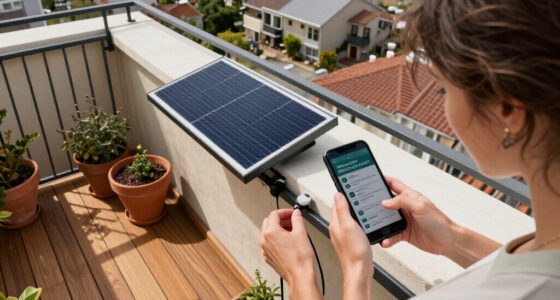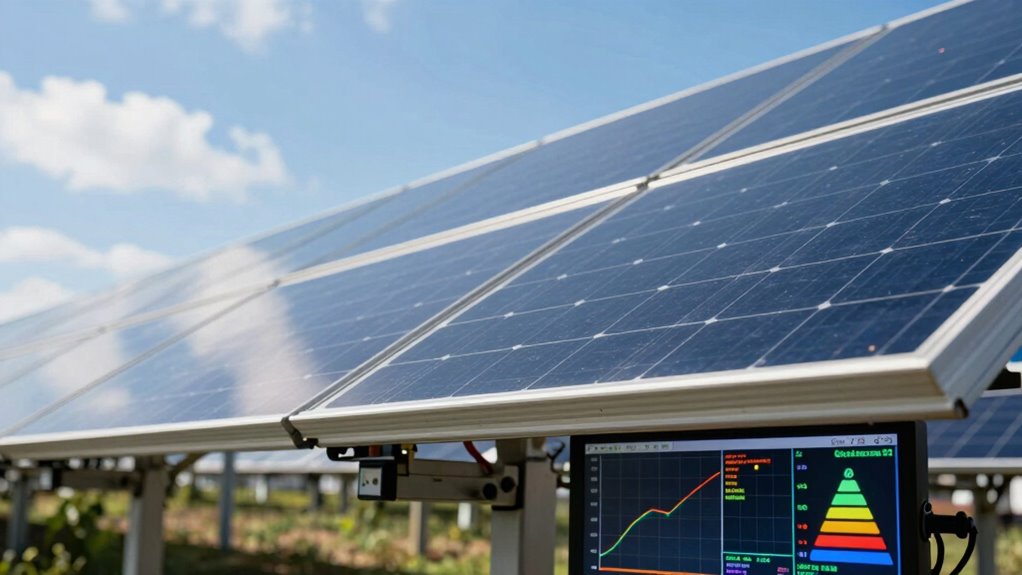

Solar monitoring data can show you how much energy your system produces daily, monthly, and yearly, helping you spot performance trends or issues early. It reveals if your system is operating efficiently, highlights opportunities for upgrades, and tracks overall health. By regularly reviewing this data, you can identify drops in output, troubleshoot problems, and optimize maintenance. Keep exploring to discover how this data can empower you to maximize your solar investment and keep your system running smoothly.

Get backup power and energy gear delivered free with Prime
- Fast, free delivery on millions of items
- Prime Video, Amazon Music and more included
- Member-only deals all year
Key Takeaways
- Reveals the actual efficiency and energy production of your solar system over time.
- Detects performance issues or component failures early through data analysis.
- Guides maintenance, cleaning, and upgrade decisions for optimal system performance.
- Compares real output against predicted models to identify discrepancies and environmental impacts.
- Monitors system health and degradation trends to ensure maximum return on investment.
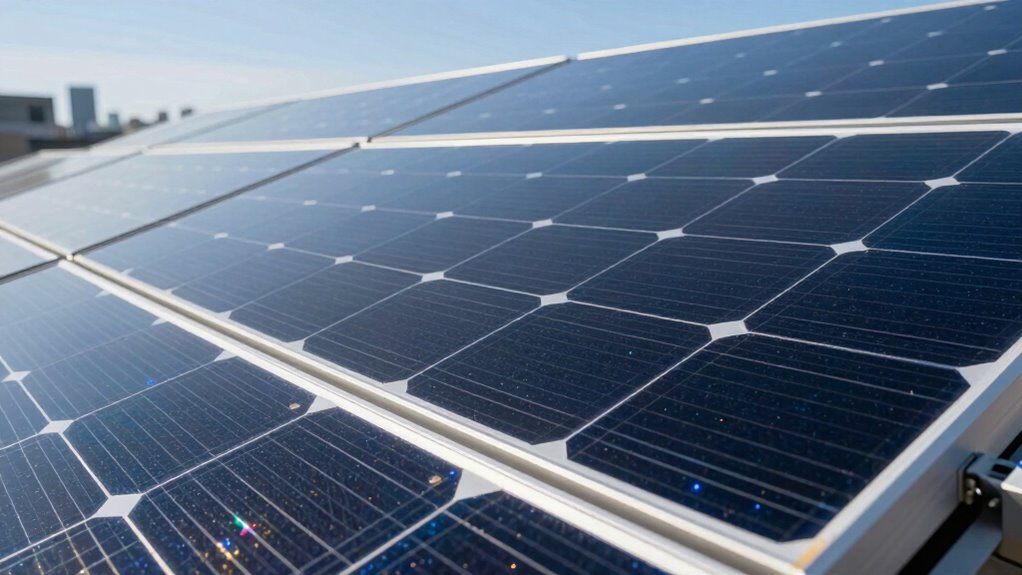
Have you ever wondered how solar energy systems are kept running efficiently? Solar monitoring data plays a vital role in giving you the insights needed to enhance your system’s performance. By analyzing this data, you can track the energy yield your system produces over time, helping you understand how much electricity your panels generate daily, monthly, and yearly. This information isn’t just about numbers; it’s about revealing the true efficiency of your solar setup and identifying patterns that could indicate issues or opportunities for improvement.
Solar monitoring data reveals your system’s true efficiency and highlights opportunities for improvement.
When you regularly review your solar monitoring data, you gain a clear picture of your system’s performance. For instance, if your energy yield suddenly drops, it might point to shading problems, dirt buildup, or equipment malfunctions. Spotting these changes early allows you to take corrective actions before they cause significant damage or lead to higher costs. Monitoring data also helps you verify that your system is operating as expected, ensuring you get the maximum return on your investment. If your system isn’t performing well, you can troubleshoot specific components like inverters or panels by comparing real-time data to expected outputs. Additionally, understanding how environmental factors impact your system’s output can help you optimize system performance.
Understanding system performance through detailed data analysis also empowers you to make informed decisions about maintenance and upgrades. For example, if you notice a gradual decline in energy production, you might consider cleaning your panels or replacing aging components. Conversely, if your system consistently exceeds expectations, it could justify expanding your setup or investing in higher-efficiency panels. Essentially, the data acts as a feedback loop, continuously guiding you toward peak operation and ensuring your solar investment remains productive. Incorporating monitoring equipment ensures you have accurate and real-time insights into your system’s status. Moreover, having access to accurate data can help you better understand how environmental conditions impact your system’s output, allowing for more precise adjustments. Regularly reviewing this data can also help you identify degradation trends, enabling proactive maintenance before issues escalate.
Furthermore, solar monitoring data enables you to compare your system’s actual output against predicted performance models. This comparison helps you identify discrepancies that could be caused by environmental factors or system degradation. By keeping a close eye on these metrics, you can fine-tune your system’s operation, adjusting angles or cleaning schedules to maximize energy yield. It also provides peace of mind, knowing that your system is functioning efficiently and that you’re actively managing its performance rather than relying solely on assumptions or periodic inspections. Additionally, leveraging solar monitoring data can help you understand how environmental conditions impact your system’s output, allowing for more precise adjustments.
As an affiliate, we earn on qualifying purchases.
Frequently Asked Questions
Can Monitoring Data Predict Future Solar Panel Failures?
Yes, monitoring data can predict future solar panel failures. By analyzing system diagnostics, you can spot early signs of issues like decreasing efficiency or unusual temperature spikes. This allows you to plan maintenance scheduling proactively, addressing problems before they cause complete failures. Regularly reviewing monitoring data helps you maintain peak performance, extend your panels’ lifespan, and avoid costly repairs, ensuring your solar energy system operates smoothly over time.
How Accurate Is Solar Monitoring Data Across Different Weather Conditions?
Solar monitoring data remains fairly accurate across different weather conditions, but weather variability can affect its reliability. Cloud cover, rain, or snow may cause fluctuations in data, making readings less precise temporarily. However, advanced systems incorporate weather adjustments to improve data reliability. By understanding these limitations, you can better interpret solar performance metrics during varying weather, ensuring you make informed decisions about your solar system’s efficiency and maintenance needs.
What Is the Best Way to Interpret Sudden Drops in Energy Production?
Imagine a sudden storm cloud eclipsing the sun, causing energy dips. When you see such drops, rely on real-time alerts to identify if it’s weather or system issues. Use system diagnostics to pinpoint problems, like inverter faults or shading. Acting quickly helps you differentiate between natural fluctuations and equipment malfunctions, ensuring your solar system stays efficient. Stay vigilant, and don’t let unexpected drops cloud your energy production.
Can Monitoring Data Help Optimize Overall Energy Consumption?
Yes, monitoring data can help optimize overall energy consumption by identifying patterns and inefficiencies. You can use this data to improve energy conservation and enhance system efficiency, adjusting your usage habits or system settings accordingly. Regular analysis reveals when your system underperforms or consumes excess energy, allowing you to make targeted improvements. This proactive approach helps save costs and reduces your environmental impact, making your energy use more sustainable.
How Often Should Monitoring Systems Be Calibrated for Accuracy?
You should calibrate your solar monitoring sensors at least once a year to guarantee data accuracy. Ignoring sensor calibration risks subtle drifts that can skew your readings over time, leading to costly inefficiencies. Regular calibration keeps your data reliable, revealing true energy production and system performance. Stay vigilant—accurate data isn’t just a number; it’s the key to optimizing your solar investment and catching issues early before they escalate.
solar energy performance monitor
As an affiliate, we earn on qualifying purchases.
As an affiliate, we earn on qualifying purchases.
Conclusion
Don’t underestimate what solar monitoring data can reveal. It might seem technical or overwhelming at first, but it’s actually your best tool to optimize performance and catch issues early. By regularly checking your data, you can guarantee your system runs efficiently and saves you money in the long run. So, even if you’re not a tech expert, trust that this info empowers you to make smarter decisions about your solar investment.
As an affiliate, we earn on qualifying purchases.
As an affiliate, we earn on qualifying purchases.
Halloween Picks
halloween
As an affiliate, we earn on qualifying purchases.