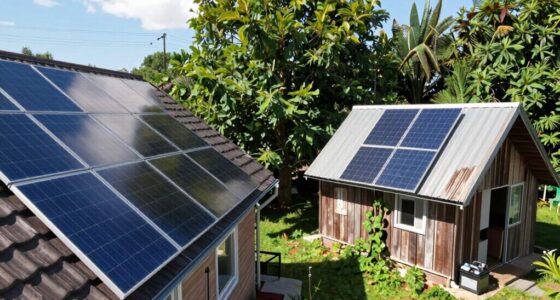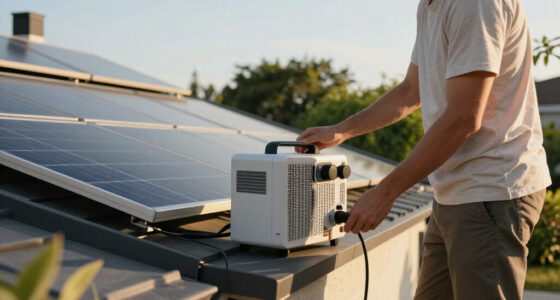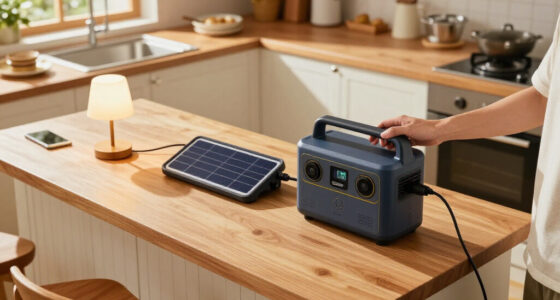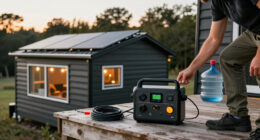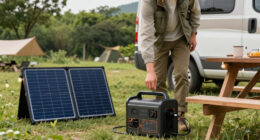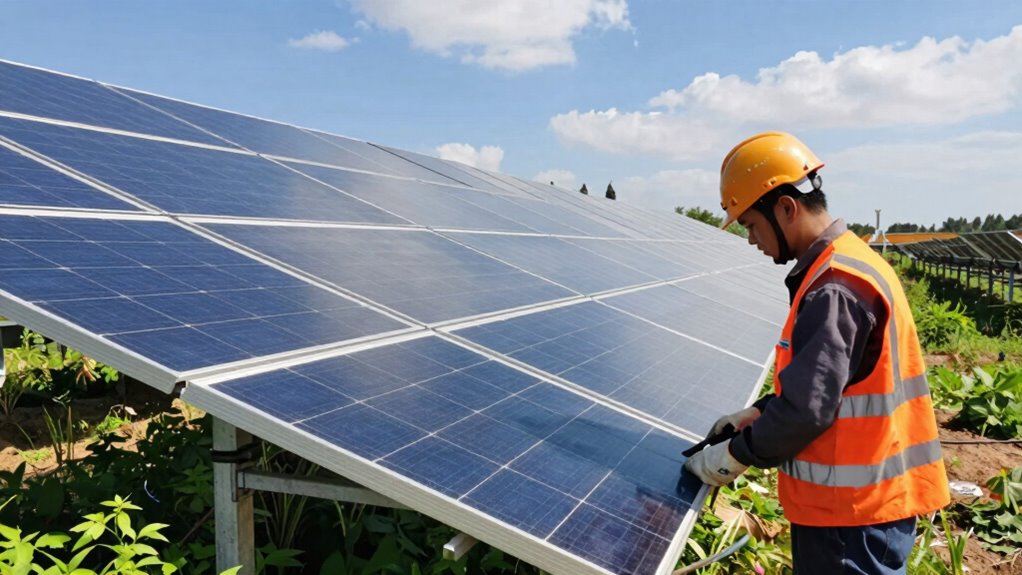

Solar safety involves much more than just the panels, as risks like fire and electrical hazards can occur from improper installation or neglect. Faulty wiring, damaged components, or poor connections can lead to sparks, overheating, or shocks. Proper installation by qualified professionals and regular maintenance are essential to prevent these dangers. If you want to understand how to protect yourself and your property effectively, explore the important safety practices beyond just the panels.

Get backup power and energy gear delivered free with Prime
- Fast, free delivery on millions of items
- Prime Video, Amazon Music and more included
- Member-only deals all year
Key Takeaways
- Solar safety encompasses fire and electrical risks beyond the panels themselves, including wiring, inverters, and system components.
- Proper installation by qualified professionals ensures adherence to safety standards and reduces hazards.
- Regular maintenance and inspections help detect potential issues like corrosion or faulty wiring before they cause harm.
- Electrical hazards from high-voltage systems and improper grounding pose significant safety concerns.
- Safe solar use involves proactive measures such as landscaping, correct equipment ratings, and avoiding DIY repairs.
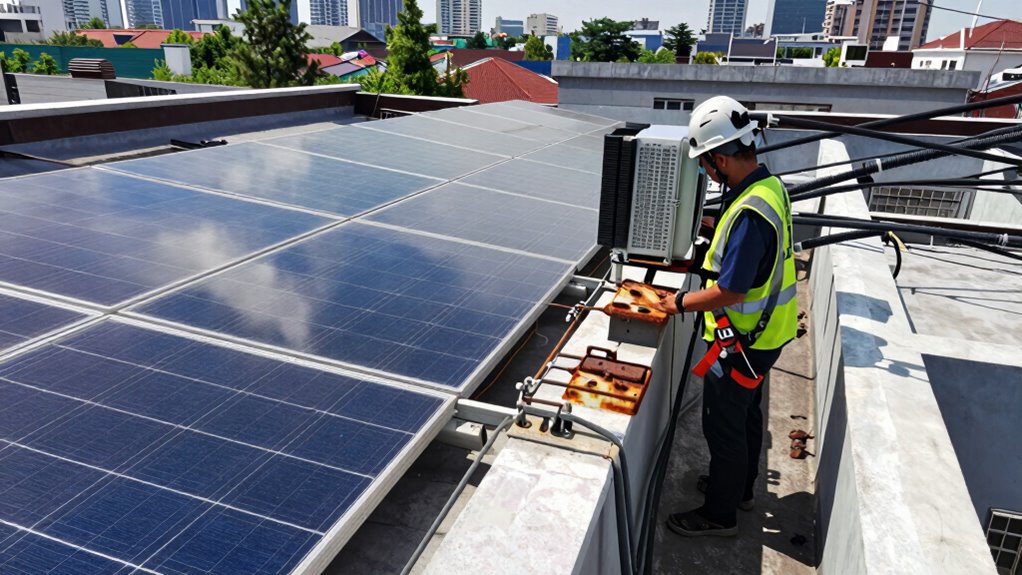
Have you ever considered the safety risks associated with solar energy systems? It’s easy to focus on the benefits—clean energy, lower bills, and sustainability—without giving much thought to potential hazards. But understanding the full scope of solar safety means looking beyond just the solar panels themselves. The risks extend to fire hazards and electrical risks, which can pose serious dangers if not properly managed. While solar panels are generally safe when installed correctly, mistakes during installation or maintenance can lead to problems that compromise safety. For example, improper system connections can lead to fire hazards or electrical failures that endanger your home and loved ones.
Fire hazards are one of the paramount concerns. Faulty wiring, damaged components, or improper system connections can cause sparks or overheating, increasing the risk of fire. For example, if the inverter or wiring isn’t rated for your specific system, it can become a heat source, especially in high temperatures or humid conditions. Over time, corrosion or damage from severe weather may expose live wires, creating sparks that could ignite nearby materials. If your system isn’t installed by qualified professionals who follow safety standards, these risks multiply. Regular inspections help catch potential issues before they escalate, but neglecting maintenance can leave your system vulnerable to fires. Additionally, proper installation is crucial to ensure all safety protocols are followed, reducing the likelihood of hazards. Incorporating landscaping that keeps combustible materials away from electrical equipment can further mitigate fire risks.
Faulty wiring and damage from weather can cause sparks and fires in solar systems. Regular inspections are vital.
Electrical risks are equally significant. Solar energy systems generate high-voltage electricity, and mishandling or faulty components can lead to electric shocks or short circuits. For instance, if the wiring isn’t properly insulated or connections are loose, you could encounter dangerous electrical arcs. This becomes especially risky during installation or repair work if the system isn’t de-energized properly. Without proper grounding, electrical faults can travel through your home’s wiring, creating additional hazards. Moreover, an improperly installed system might overload your home’s electrical panel, leading to tripped breakers or, worse, electrical fires. It’s essential to work with licensed electricians who understand the intricacies of solar systems and adhere to local electrical codes. Ensuring that system components are compatible and up to standards further reduces the likelihood of electrical failures.
Understanding that solar safety isn’t just about panels is essential. You need to recognize that fire hazards and electrical risks are real concerns that require proactive measures. Proper installation, using quality equipment, and ongoing maintenance are your best defenses against these dangers. Never attempt to install or repair a system yourself unless you’re qualified—solar systems involve high voltage and complex wiring that can be deadly if mishandled. By taking safety seriously and partnering with trained professionals, you can enjoy the benefits of solar energy while minimizing the potential risks that come with it.
solar system electrical safety kit
As an affiliate, we earn on qualifying purchases.
As an affiliate, we earn on qualifying purchases.
Frequently Asked Questions
How Do Solar Panels Affect Local Wildlife?
Solar panels can impact local wildlife by causing habitat disruption and wildlife disturbance. When installing panels, you might unintentionally displace animals or disrupt their natural behaviors. You should consider the location carefully, avoiding sensitive habitats like bird nests or wetlands. Proper planning and environmentally conscious installation help minimize these effects, ensuring that solar energy benefits your community without harming local ecosystems.
What Safety Precautions Are Needed During Solar Panel Installation?
Think of yourself as a modern-day Daedalus, maneuvering the complex world of solar installation. You need to wear protective gear—gloves, helmets, and harnesses—and guarantee proper installer training to stay safe. Follow safety protocols, check equipment, and be aware of electrical hazards. These precautions help prevent accidents, protect your team, and assure a smooth installation process, keeping everyone safe while harnessing the sun’s power.
Can Solar Panels Cause Electrical Fires?
Yes, solar panels can cause electrical fires if not properly maintained. Regular solar panel maintenance helps identify potential issues like damaged wiring or loose connections that could lead to short circuits. Electrical wiring concerns, such as outdated or improperly installed wiring, increase fire risk. Ensuring professional installation and routine inspections minimizes these risks, keeping your system safe and functioning efficiently. Always prioritize safety to prevent electrical fires from solar energy systems.
How Does Weather Impact Solar Safety Measures?
Did you know that severe weather hazards can damage solar systems in up to 25% of cases? Weather impacts solar safety measures considerably, so you must prioritize storm preparedness. Heavy winds, hail, and lightning can compromise panels and electrical components, increasing fire risks. To stay safe, regularly inspect your system, secure panels during storms, and follow local weather alerts. Proper planning minimizes damage and keeps your solar setup safe during severe weather events.
Are There Risks of Fire or Electric Shock From Solar Inverters?
Yes, there are risks of fire and electrical shock from solar inverter hazards. You should be aware that improper installation, damaged wiring, or inverter malfunctions can lead to electrical shock risks and even fires. To stay safe, make certain your inverter is installed by licensed professionals, regularly inspected, and maintained. Always follow manufacturer instructions and safety guidelines to minimize these dangers and protect yourself and your property from potential hazards.
solar panel fire prevention equipment
As an affiliate, we earn on qualifying purchases.
As an affiliate, we earn on qualifying purchases.
Conclusion
Remember, solar safety isn’t just about installing panels; it’s about understanding risks and proper maintenance. Did you know that improper handling can cause electrical fires or injuries? By staying informed and following safety guidelines, you can protect yourself and your home. Keep safety top of mind—it’s a small effort that makes a big difference in ensuring your solar system benefits you safely for years to come. Stay vigilant and prioritize safety every step of the way.
As an affiliate, we earn on qualifying purchases.
As an affiliate, we earn on qualifying purchases.
Fall Picks
fall essentials
As an affiliate, we earn on qualifying purchases.