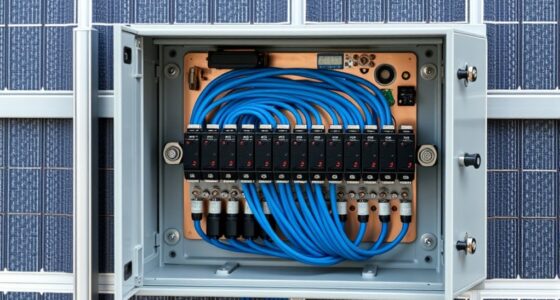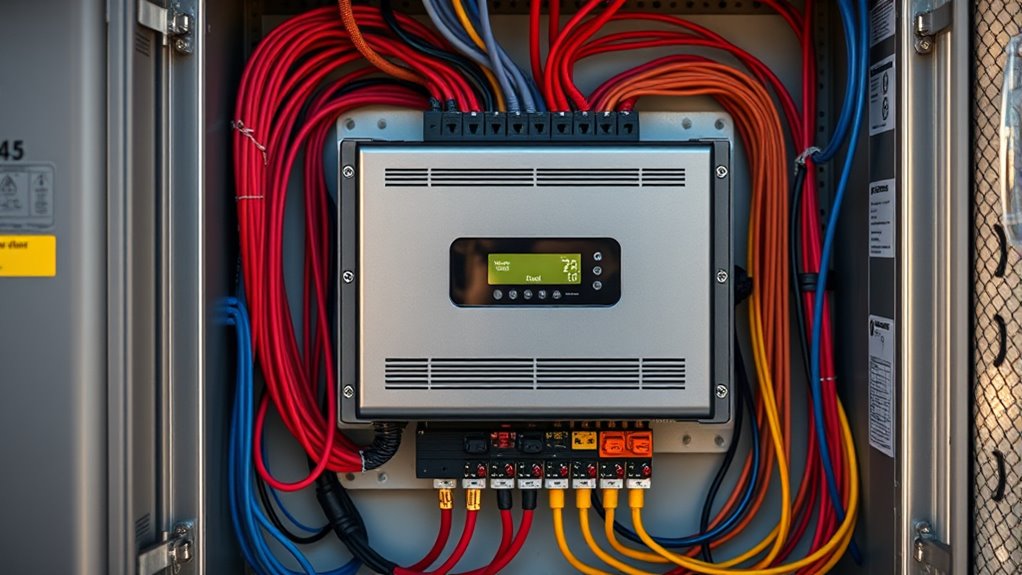

To keep your inverter within its “happy zone,” you need to properly size your string of batteries or panels. This means matching the total voltage and current to the inverter’s recommended input range. If your strings are too large or too small, you risk overloads, energy loss, or damage. Proper sizing guarantees efficient energy conversion and longer system life. Want to learn how to calculate the perfect size? Keep going to find out more.
Key Takeaways
- Ensure total string voltage and current stay within the inverter’s recommended input range for optimal performance.
- Match battery strings in type, voltage, and capacity to prevent uneven load and ensure system stability.
- Properly calculate string size to avoid overloads or underperformance, maintaining inverter efficiency.
- Regularly verify that string configuration keeps inverter operation within its “happy zone” for longevity.
- Consider additional system factors, like component compatibility, to optimize overall energy flow and system reliability.
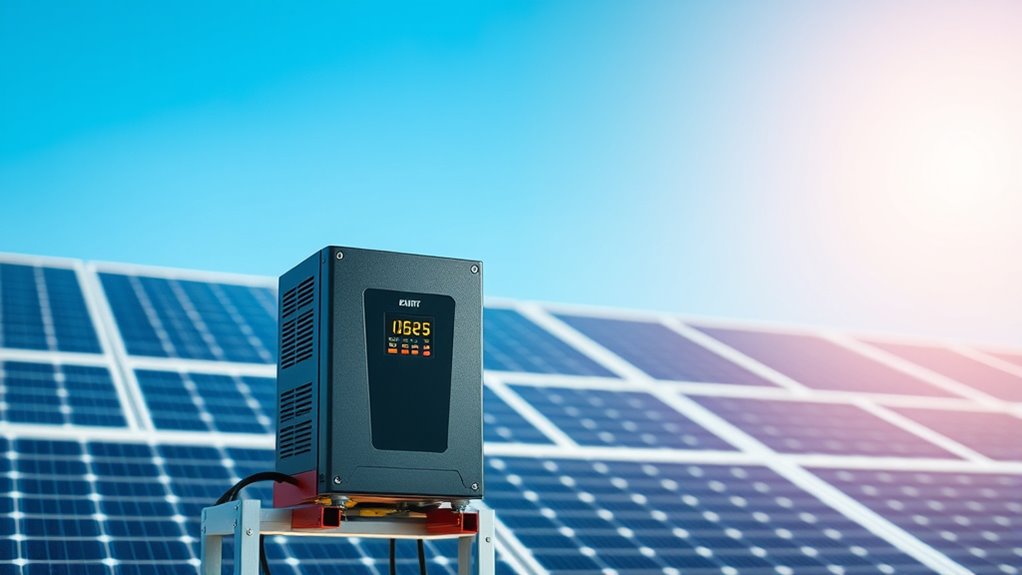
Have you ever wondered how to choose the right string size for your musical instrument? The same principle applies when you’re setting up a solar power system or an energy storage solution. In these cases, selecting the proper string size directly impacts your inverter’s performance and overall system efficiency. When you’re dealing with multiple batteries, battery compatibility becomes a vital factor. You need to make certain that all batteries are of the same type, voltage, and capacity to prevent uneven charging and discharging. Mismatched batteries can cause some to overwork while others underperform, which not only reduces lifespan but also hampers your system’s efficiency. Properly matched batteries help maintain consistent battery compatibility, enabling your system to operate smoothly and reliably.
Inverter efficiency is another key element that’s influenced by string sizing. When your string size is too large or too small, your inverter has to work harder to manage the power flow. Overloading the inverter can lead to energy losses, heat buildup, and even potential damage. Conversely, undersized strings might not supply enough power, forcing your inverter to run at subpar levels or frequently kick into backup modes. To keep your inverter within its happy zone, you need to carefully match your string size to the inverter’s rated capacity. This means calculating the total voltage and current of your string to fall within the inverter’s recommended input range. Doing so guarantees that your inverter operates at maximum efficiency, converting as much of the stored energy as possible into usable power without unnecessary strain or energy loss.
Additionally, understanding vetted vacuum options can help you choose the right cleaning tools for your home or vehicle, ensuring maximum efficiency and longevity of your appliances. Proper sizing, whether for batteries or vacuum cleaners, ultimately ensures optimal performance and system durability.
Frequently Asked Questions
How Does Inverter Size Affect Overall System Efficiency?
You’ll see that choosing the right solar inverter ratings directly impacts your system efficiency. If your inverter is too large, it may operate inefficiently at low sunlight, wasting energy. Conversely, an undersized inverter can limit your system’s output. By sizing your inverter correctly within its ideal range, you guarantee maximum system efficiency, minimizing energy loss and optimizing power production throughout the day.
Can Oversized Inverters Damage the Solar System?
Oversized inverters won’t typically damage your solar system, but they can lead to inefficiencies. Did you know that a 20% oversize can cause your inverter to operate outside its ideal range 30% of the time? When shading effects or limited battery capacity occur, an oversized inverter may not match the system’s output, reducing overall performance and lifespan. Keep your inverter within the recommended size to maximize efficiency and protect your investment.
What Are the Signs of an Undersized Inverter?
You’ll notice signs of an undersized inverter through frequent system shutdowns, reduced energy production, and overheating, which can shorten your inverter’s lifespan. It may also cause system compatibility issues, preventing your solar setup from operating efficiently. Keep an eye on these signs to avoid stressing your inverter, guarantee ideal performance, and extend its lifespan by choosing the right size for your system. Proper sizing keeps everything running smoothly.
How Does Temperature Impact Inverter Performance?
Did you know high temperatures can reduce inverter efficiency by up to 10%? Temperature effects substantially impact inverter performance, causing it to work harder and generate more heat. Over time, this can shorten inverter longevity, risking early failure. To keep your inverter running smoothly and extend its lifespan, guarantee proper ventilation and avoid installing it in hot environments. Keeping temperatures in check helps maintain ideal performance and durability.
Is It Better to Oversize or Undersize the Inverter?
You should avoid oversizing your inverter, as it can lead to higher installation costs and reduced inverter lifespan due to unnecessary stress. Undersizing may cause system underperformance, but it’s generally more cost-effective and helps extend inverter longevity. Proper sizing guarantees peak efficiency, minimizes wear, and balances initial investment with long-term reliability. Always choose an inverter that matches your system’s energy needs for the best performance and durability.
Conclusion
Think of your inverter as a skilled dancer, perfectly balanced on the stage. When you size your strings correctly, you keep the performance smooth and graceful, avoiding stumbling or missteps. Just like a dancer needs the right space to shine, your inverter needs its happy zone to operate at peak efficiency. By paying attention to string sizing, you guarantee your solar system performs like a flawless performance—harmonious, reliable, and ready to light up your world.