
When grounding PV arrays, equipment grounding connects metallic parts like modules and racks to ground, preventing shock hazards and providing a path for lightning surges. System grounding, on the other hand, involves grounding the system’s neutral conductor to stabilize voltage and facilitate protection devices. Both methods work together to ensure safety and system reliability. Understanding how these two grounding types function can help you optimize your solar installation’s safety—continue exploring to learn more.

Get backup power and energy gear delivered free — and shop member deals
- Fast, free delivery on millions of items
- Access to Prime Big Deal Days deals on October 6–7
- Prime Video, Amazon Music and more included
Key Takeaways
- Equipment grounding connects non-current-carrying metal parts to ground, protecting against faults and surges.
- System grounding involves grounding the system’s neutral conductor to stabilize voltage levels.
- Both grounding methods work together to ensure safety and code compliance in PV systems.
- Proper equipment grounding prevents shock hazards by bonding metallic parts and maintaining equal potential.
- System grounding provides a clear path for fault currents and lightning surges, enhancing overall system stability.
Grounding photovoltaic (PV) arrays is a critical safety measure that helps protect both people and equipment from electrical faults. Proper grounding ensures that in the event of a fault, excess electrical current is safely directed to the ground, minimizing the risk of electric shock, fire, or equipment damage. When it comes to grounding PV systems, understanding the difference between equipment grounding and system grounding is essential to designing a safe and compliant installation.
Grounding PV arrays protects equipment and people by safely directing electrical faults to the ground.
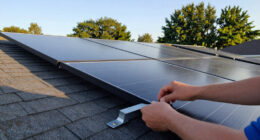
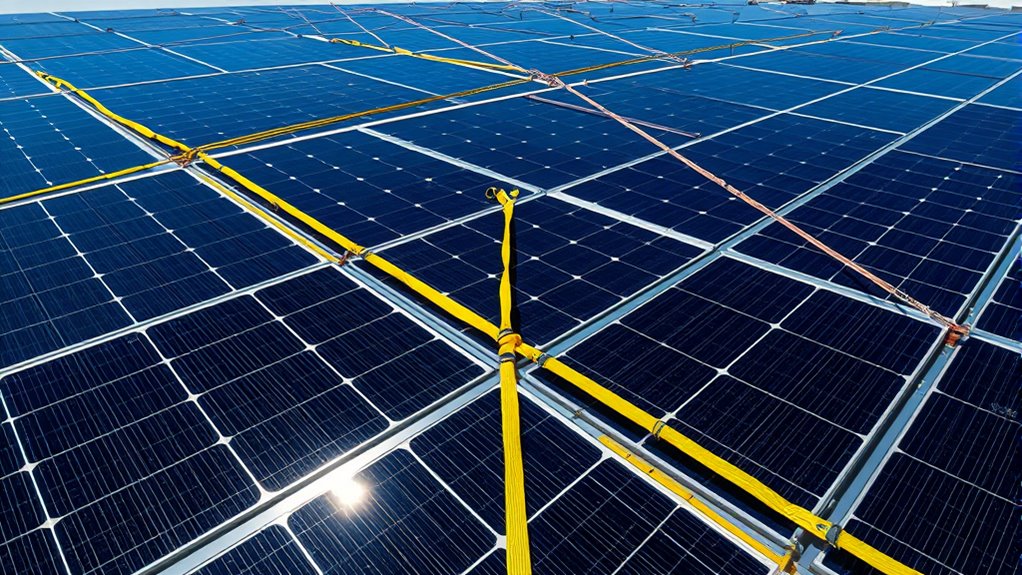
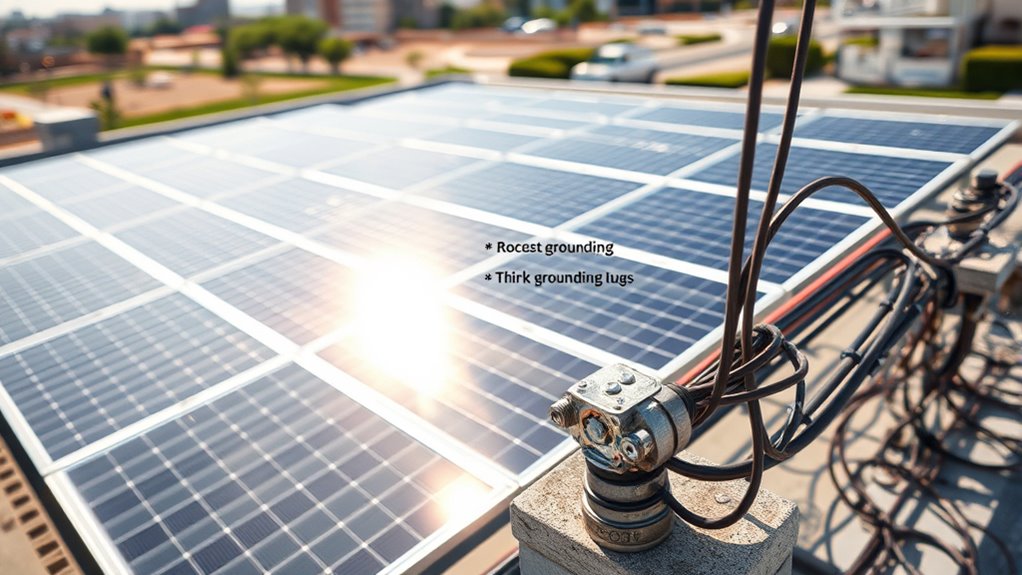
Equipment grounding involves connecting the non-current-carrying metallic parts of the PV system, such as the frames of modules, mounting racks, and enclosures, to the grounding system. This connection is vital for lightning protection because it provides a low-resistance path for lightning strikes or voltage surges, preventing damage and reducing the risk of fire. Bonding these metallic parts together ensures that they remain at the same electrical potential, thereby reducing the risk of electric shock if someone touches two different parts at different voltages. Equipment bonding is a core element of a robust grounding strategy because it maintains the safety integrity of the entire system.
System grounding, on the other hand, refers to grounding the electrical system itself, such as connecting the system’s neutral conductor to ground. This practice helps stabilize voltage levels and facilitates the operation of overcurrent protection devices. Proper system grounding also plays a crucial role in lightning protection by providing a clear path for lightning-induced surges and fault currents to safely dissipate into the earth. While system grounding is essential for overall system stability, it’s equally important to ensure that equipment bonding is thoroughly implemented to prevent potential differences that could pose shock hazards.
In your PV installation, you should recognize that these two grounding methods work together to enhance safety. Equipment grounding ensures that all metallic parts are bonded and grounded properly, reducing shock hazards and providing a route for lightning protection. Simultaneously, system grounding stabilizes the system voltages and offers a direct path for fault currents. Both are necessary for comprehensive safety and compliance with electrical codes.
Ultimately, your goal is to establish a grounding system that combines effective lightning protection with solid equipment bonding. This approach minimizes electrical shock risks, protects your investment, and ensures that your PV system operates efficiently and safely over its lifespan. Proper grounding isn’t just a regulatory requirement—it’s a fundamental aspect of safeguarding people and equipment from the unpredictable nature of electrical faults and lightning strikes.
As an affiliate, we earn on qualifying purchases.
Frequently Asked Questions
How Does System Grounding Impact Overall PV System Performance?
System grounding improves your PV system’s performance by providing a clear path for lightning protection and surge suppression, reducing the risk of equipment damage. It helps detect faults quickly, minimizing downtime and maintaining efficiency. Proper grounding guarantees safety and reliability, preventing potential hazards. By effectively managing electrical faults, you enhance the longevity of your system and optimize energy output, making your solar installation more resilient against surges and lightning strikes.
What Are the Costs Differences Between Equipment and System Grounding?
You’ll find that equipment grounding generally costs less due to simpler installation and fewer components, making it more affordable upfront. In contrast, system grounding involves a more complex setup with additional equipment like grounding conductors and busbars, increasing both material and labor costs. The cost comparison shows system grounding is pricier, but it offers enhanced safety and system reliability. Your choice depends on your budget and safety priorities.
Are There Specific Codes Governing PV Array Grounding Practices?
Oh, the joy of steering grounding standards! You must follow the National Electrical Code (NEC) and local regulations to guarantee code compliance. These standards specify proper grounding practices for PV arrays, whether equipment or system grounding. Ignoring them could lead to safety hazards or code violations. So, you’d better stick to these rules—after all, safety and legal compliance are worth more than a little extra effort.
How Does Grounding Affect PV System Maintenance and Troubleshooting?
Grounding considerably impacts your PV system maintenance and troubleshooting methods by providing a clear path for fault currents, reducing shock hazards, and protecting system components. Proper grounding techniques help you quickly identify issues, such as ground faults or wiring problems, making troubleshooting more efficient. When your system is correctly grounded, you can easily isolate faults, perform safe inspections, and ensure reliable operation, minimizing downtime and maintenance costs.
Can Improper Grounding Lead to System or Personnel Safety Risks?
Yes, improper grounding can pose safety risks to you and your system. It increases the chance of electrical shock and fire hazards, especially if ground faults occur. Poor grounding also allows electromagnetic interference to disrupt system operation and hampers ground fault detection, making it harder to identify issues quickly. Ensuring correct grounding helps protect personnel, maintains system reliability, and improves safety by enabling proper fault detection and reducing interference.
As an affiliate, we earn on qualifying purchases.
Conclusion
Think of grounding your PV arrays as planting strong roots in a vast solar forest. Whether you choose equipment or system grounding, you’re anchoring safety and stability into your setup. Just as a sturdy tree withstands storms, proper grounding shields your system from surges and faults. Remember, your choices today lay the foundation for a resilient, radiant future—turning your solar array into a flourishing grove that endures the tests of time.
As an affiliate, we earn on qualifying purchases.
lightning protection grounding for solar panels
As an affiliate, we earn on qualifying purchases.
As an affiliate, we earn on qualifying purchases.
Evergreen bestsellers Picks
bestsellers
As an affiliate, we earn on qualifying purchases.