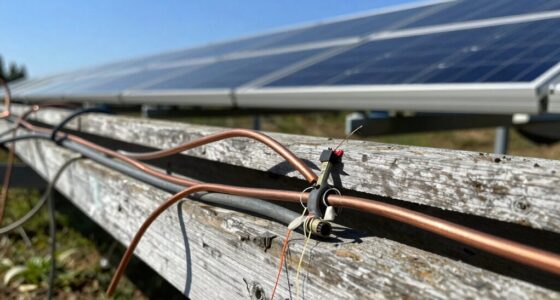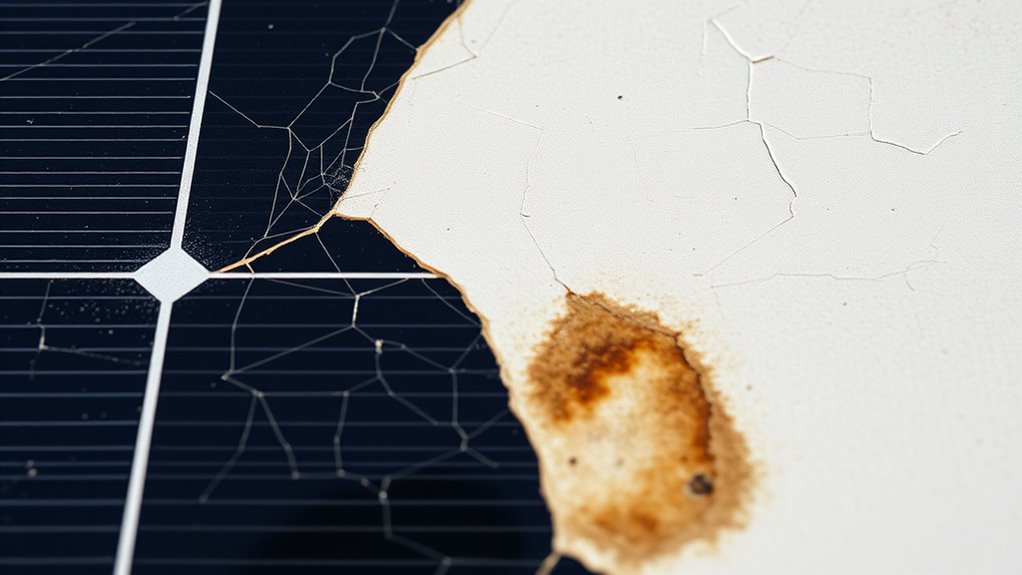

Modules degrade over time because exposure to heat causes materials to expand, crack, and weaken, while UV rays break down surface layers and cause discoloration. Environmental factors like moisture and temperature fluctuations accelerate wear, leading to corrosion and micro-cracks. Manufacturing defects can also speed up this process. Understanding how these elements affect your panels can help you take better care of them and maximize their lifespan—there’s more to discover beyond this overview.

Get backup power and energy gear delivered free — and shop member deals
- Fast, free delivery on millions of items
- Access to Prime Big Deal Days deals on October 6–7
- Prime Video, Amazon Music and more included
Key Takeaways
- Heat causes expansion and contraction, creating stress that leads to cracks and structural damage over time.
- UV radiation breaks down panel materials, causing discoloration, micro-cracks, and delamination.
- Environmental exposure accelerates deterioration, reducing efficiency and overall lifespan of solar modules.
- Moisture ingress from environmental factors causes internal corrosion, impairing electron flow and energy output.
- Manufacturing defects and material quality influence how quickly modules degrade under heat, UV, and environmental stress.
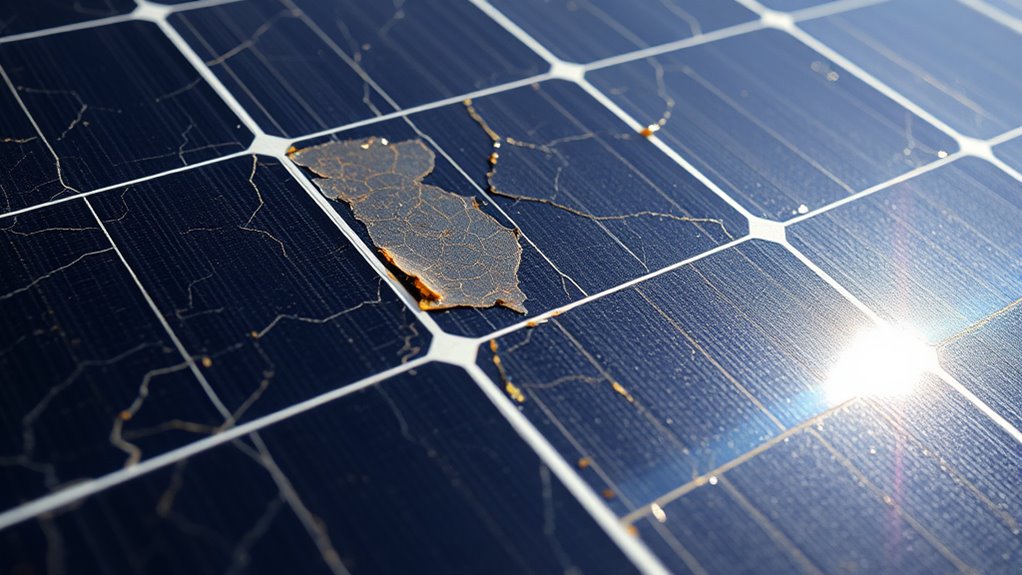
Modules degrade over time because exposure to environmental factors such as sunlight, moisture, and temperature fluctuations causes wear and deterioration. When your solar panels are constantly exposed to the elements, their ability to generate power gradually diminishes. This decline in solar panel efficiency isn’t just due to aging; it’s also influenced by various external conditions that accelerate wear. Sunlight, especially ultraviolet (UV) rays, can break down materials used in the panels, leading to discoloration, micro-cracks, and delamination. Over years, these small damages accumulate, reducing the panels’ capacity to convert sunlight into electricity effectively.
Modules degrade over time due to environmental exposure causing wear and reduced efficiency.
Moisture is another major factor that contributes to module degradation. Even tiny amounts of water infiltration can cause corrosion of internal components and degrade the protective layers of the panels. This corrosion hampers the flow of electrons, which directly impacts solar panel efficiency. Fluctuating temperatures cause expansion and contraction of the panel materials, creating stress that can lead to cracks and other structural damage. These thermal cycles weaken the integrity of the modules, making them more susceptible to environmental damage over time. Additionally, the use of advanced materials in manufacturing can help mitigate some of these effects, but no panel is entirely immune to environmental stressors. All these factors combined mean that, as years pass, your solar panels produce less energy, and their overall lifespan shortened.
Manufacturing defects also play a pivotal role in how quickly modules degrade. When panels are produced with flaws—such as poor soldering, defective encapsulants, or subpar materials—they are more prone to early failure. These defects can serve as entry points for moisture or cause uneven stress distribution across the module, leading to faster deterioration. If your panels had manufacturing defects, you might notice a decline in efficiency sooner than expected. High-quality manufacturing reduces the risk of such issues, but no panel is entirely immune to manufacturing imperfections. Identifying and addressing these defects early can help prolong the lifespan of your system.
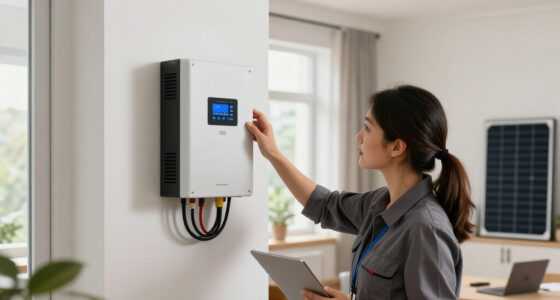
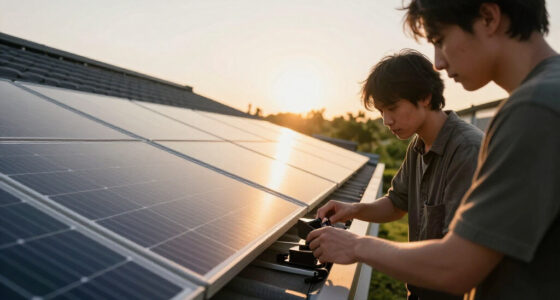
Understanding why modules degrade helps you better maintain your solar investment. Regular inspections can reveal early signs of damage caused by UV exposure, moisture ingress, or physical stress. Keeping panels clean and ensuring proper installation can also reduce the impact of environmental factors. While some degradation is inevitable over time, choosing high-quality panels and addressing manufacturing defects early can notably extend their operational life. Remember, the key to maintaining ideal solar panel efficiency and maximizing energy output lies in understanding these degradation factors and actively caring for your system.
As an affiliate, we earn on qualifying purchases.
Frequently Asked Questions
Can Modules Be Repaired After Degradation?
You can often repair modules after degradation, especially if the damage is minor. Inspect for degradation indicators like cracks or corrosion, then consider module recycling options for parts that are beyond repair. Some issues, such as broken cells or wiring, can be fixed or replaced, extending the module’s lifespan. However, extensive degradation might mean replacing the entire module is more efficient and cost-effective than repairing.
What Environmental Factors Accelerate Module Degradation?
Environmental stress markedly accelerates module degradation, with UV exposure causing up to 20% efficiency loss over a decade. You should be aware that factors like high temperatures, intense UV radiation, and harsh weather can weaken material durability. These elements break down the components faster, reducing lifespan. To maximize your module’s longevity, consider protective coatings and proper installation to shield against environmental stress.
How Long Do Modules Typically Last Before Degrading?
Most solar modules last around 25 to 30 years before degradation impacts their efficiency markedly. You can expect a gradual decline in performance over this lifespan, with the degradation timeline typically showing a 0.5% to 1% efficiency loss annually. Factors like heat, UV exposure, and weather conditions influence this lifespan estimate. Proper maintenance and quality modules can extend their effective life, ensuring you get the most value out of your investment.
Are There Protective Coatings to Prevent UV Damage?
Yes, you can protect your modules with UV protective coatings and anti-degradation films. These coatings form a barrier that absorbs or reflects UV rays, preventing damage from sun exposure. Applying anti-degradation films also helps reduce wear caused by UV, heat, and time. By choosing these protective options, you extend your module’s lifespan and maintain efficiency, ensuring your solar system performs reliably over many years.
Does Module Degradation Affect Energy Efficiency Significantly?
Yes, module degradation can considerably affect energy efficiency, leading to performance decline over time. As your modules age, they become less effective at converting sunlight into electricity, causing efficiency loss. Factors like heat, UV exposure, and weather accelerate this process. Regular maintenance and protective coatings can help slow degradation, but eventually, you’ll notice a dip in energy output, making it essential to monitor your system’s health and plan for upgrades.
As an affiliate, we earn on qualifying purchases.
Conclusion
As you consider the factors behind module degradation—heat, UV, and time—you realize it’s a complex dance of elements working against your system’s longevity. But what if the true challenge lies beyond what you can see? The deeper you look, the more questions arise about unseen forces and future threats. Staying vigilant and informed might just be your best defense, because in this game of resilience, the real battle is only beginning.
As an affiliate, we earn on qualifying purchases.
As an affiliate, we earn on qualifying purchases.
Evergreen bestsellers Picks
bestsellers
As an affiliate, we earn on qualifying purchases.