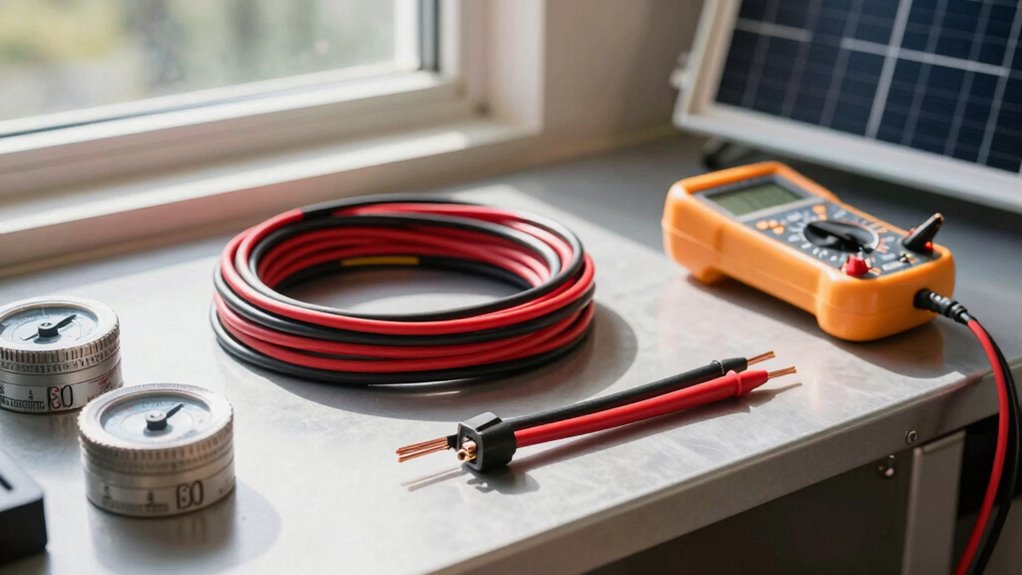

To think about solar wire sizing the right way, consider your system’s current, distance, and potential voltage drop—aiming for no more than 3%. Use the correct wire gauge to prevent overheating, safety hazards, and efficiency losses. Factor in environmental conditions and insulation needs to guarantee durability and safety. Proper sizing balances safety, cost, and system performance. Keep in mind these details, and you’ll be well on your way to choosing the right wire size for your setup.

Get backup power and energy gear delivered free with Prime
- Fast, free delivery on millions of items
- Prime Video, Amazon Music and more included
- Member-only deals all year
Key Takeaways
- Calculate the total current load and consider future system expansion to determine appropriate wire gauge.
- Minimize voltage drop by selecting the correct gauge for the wire length and current, aiming for no more than 3%.
- Account for environmental factors and insulation requirements based on installation conditions and potential hazards.
- Follow safety standards and local electrical codes to ensure system compliance and safety.
- Balance cost, safety, and efficiency by choosing a wire size that prevents overheating and maintains system performance.

Choosing the right wire size for your solar system is essential to guarantee safety, efficiency, and longevity. When it comes to wire gauge selection, you’re balancing current capacity with minimizing voltage drop, which can significantly impact your system’s performance. Picking the correct wire gauge isn’t just about avoiding overheating; it’s about ensuring your solar setup operates at peak efficiency over its lifespan. If you choose a wire that’s too thin, it might carry the current but will heat up, risking damage and safety hazards. On the other hand, an overly thick wire can be unnecessarily expensive and difficult to install, so finding that perfect balance is key.
Voltage drop considerations are critical in this process. As electricity travels along the wire, some energy is lost, especially over longer distances. This loss, or voltage drop, can reduce the amount of power your panels deliver to appliances or batteries, which means your solar system might not perform as well as expected. To prevent this, you need to carefully calculate how much voltage drop is acceptable for your setup, typically aiming for no more than 3% loss. Using a wire gauge that’s too small for the length and current of your system will increase voltage drop, making your panels less efficient and possibly damaging your components over time. Understanding wire gauge selection and its impact on system efficiency is vital for designing a reliable solar setup. Additionally, being aware of electrical safety standards ensures your system remains safe and compliant with local regulations. Properly assessing the installation environment can also influence your wire choice, especially in areas prone to weather extremes or physical damage. Being mindful of environmental factors can help you select the most durable and suitable wiring for your specific location. Furthermore, considering wire insulation types can enhance safety and durability based on your environment.
As an affiliate, we earn on qualifying purchases.
Frequently Asked Questions
What Are the Common Mistakes in Solar Wire Sizing?
Common mistakes in solar wire sizing include neglecting proper wire gauge selection, which can lead to voltage drops or overheating. You might also overlook the importance of installation safety, such as inadequate insulation or improper routing, increasing risks of damage or fire. Always double-check your wire gauge against system current and distance, and prioritize safety standards to guarantee your solar setup operates efficiently and safely over time.
How Does Temperature Affect Wire Sizing Calculations?
Temperature effects considerably impact wire sizing calculations because higher temperatures increase wire resistance, which can lead to overheating. When temperatures rise, you need to account for increased resistance by choosing a thicker wire gauge to prevent voltage drops and ensure safety. Conversely, in cooler environments, resistance decreases, potentially allowing for a smaller wire size. Always consider local temperature conditions to accurately determine the appropriate wire size for your solar system.
What Tools Are Best for Measuring Wire Length and Gauge?
You’ll want reliable tools for wire gauge selection and measurement techniques. A digital caliper offers precise measurements for wire gauge, while a flexible measuring tape or a wire length meter helps you accurately gauge distances. Using a multimeter can also verify wire continuity and gauge consistency. With these tools, you can confidently determine the correct wire length and gauge, ensuring your solar system operates safely and efficiently.
How Often Should Solar Wire Be Inspected or Replaced?
You should inspect your solar wire annually to guarantee wire insulation remains intact and free of damage. Regularly check for signs of corrosion, wear, or brittleness that can cause voltage drops. Replace any damaged or degraded wire promptly to prevent efficiency loss and safety hazards. Proper inspection helps maintain peak system performance and longevity, ensuring that voltage drops stay minimal and wire insulation stays effective against environmental elements.
Can Improper Wire Sizing Cause System Failure?
Improper wire sizing can definitely cause system failure. When the wire insulation is too thin, it risks overheating and melting, which can lead to shorts or fires. Inadequate sizing also affects grounding considerations, possibly leaving your system vulnerable to electrical faults. Always guarantee your solar wires are correctly sized for your system’s voltage and current, and that grounding is properly installed, to prevent failures and maintain safety.
As an affiliate, we earn on qualifying purchases.
Conclusion
By understanding how to size your solar wire correctly, you guarantee safety, maximize efficiency, and prolong your system’s lifespan. You prevent overheating, reduce voltage drops, and avoid costly repairs. You make smart choices, protect your investment, and gain peace of mind. When you prioritize proper wire sizing, you empower your solar journey, embrace reliability, and enjoy the full benefits of renewable energy. So, choose wisely, think carefully, and let your solar system thrive.
As an affiliate, we earn on qualifying purchases.
As an affiliate, we earn on qualifying purchases.
Fall Picks
fall essentials
As an affiliate, we earn on qualifying purchases.