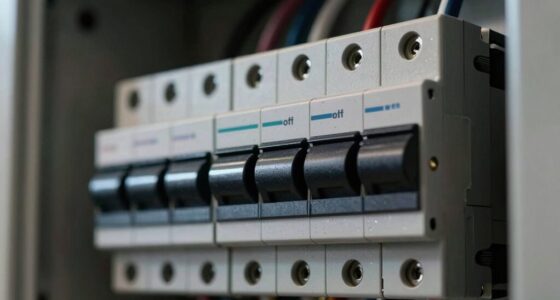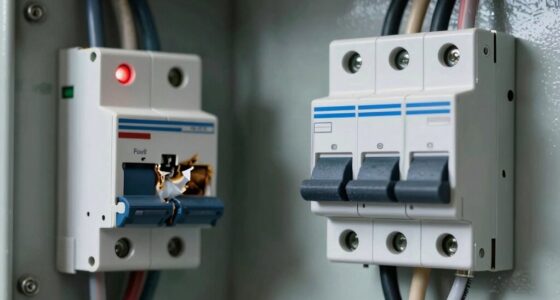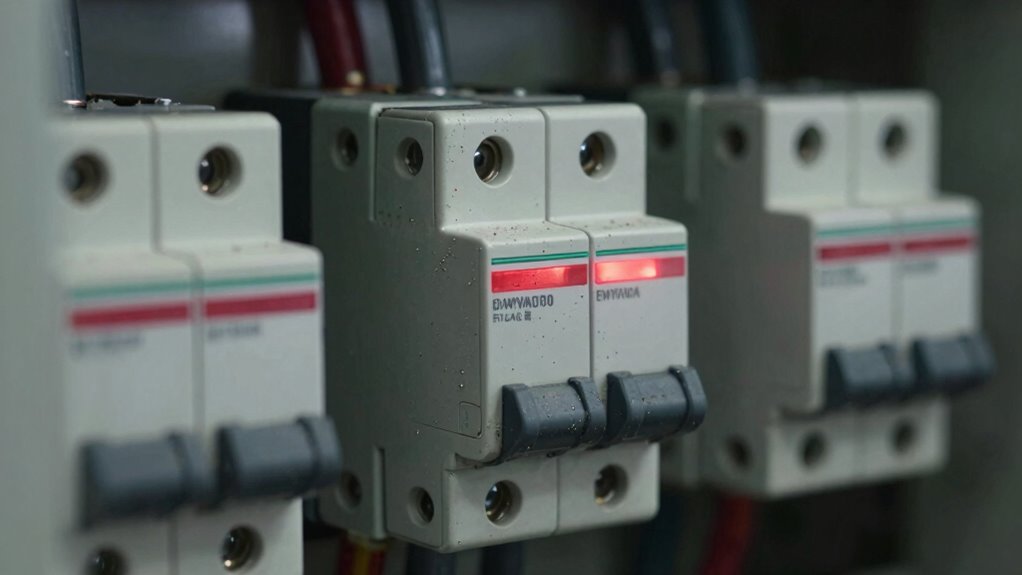

If your breaker feels hot, start by inspecting it visually for discoloration, burn marks, or loose and corroded connections. Check if the breaker is overloaded from high-power devices or shared circuits. Make sure the wiring is intact and not damaged or loose, and verify the area has proper ventilation. If the breaker continues to feel hot or shows signs of damage, it’s wise to seek professional help, as there’s more to take into account for your safety.
Key Takeaways
- Inspect the breaker for discoloration, burn marks, or melting signs indicating overheating or damage.
- Check for loose, corroded, or damaged connections that increase resistance and heat.
- Ensure the breaker is not overloaded by reviewing load distribution and connected devices.
- Verify proper ventilation and cleanliness around the breaker panel to prevent heat buildup.
- Schedule professional inspection if overheating persists or if you notice signs of damage or frequent tripping.
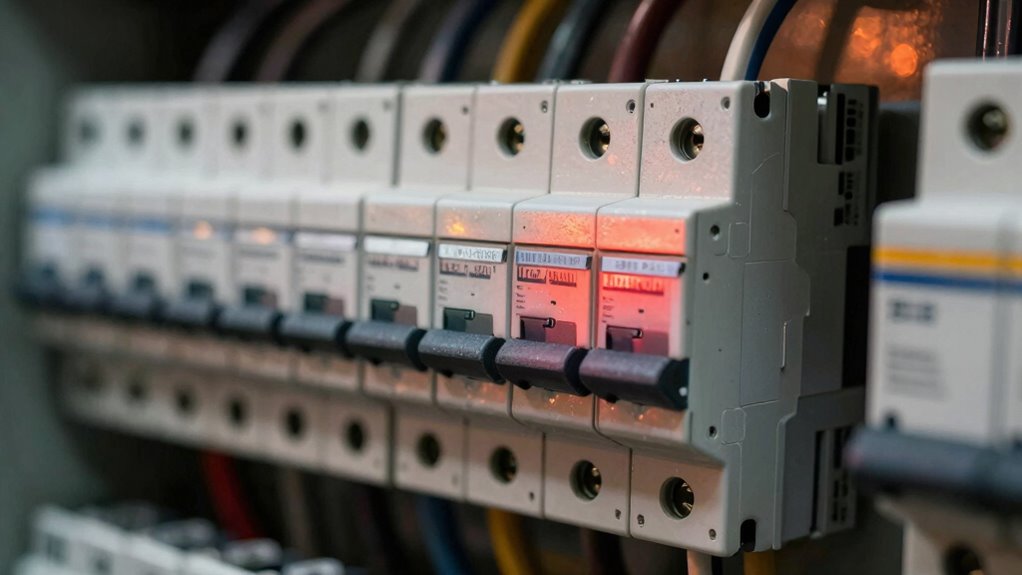
When your breaker keeps tripping or feels hot to the touch, it’s a clear sign that something isn’t right. Ignoring this warning can compromise electrical safety and lead to potential hazards like fires or damage to your appliances. The first step is to understand what might be causing the breaker to heat up and how you can check it safely. Breakers are designed to handle a certain amount of current, but when they become overloaded or faulty, they generate excess heat. This heat can cause the breaker to trip as a protective measure, but if it feels hot without tripping, it’s time to investigate further.
Start by turning off the breaker and inspecting it visually. Look for signs of damage, such as discoloration, burn marks, or a melted appearance. These are clear indicators that the breaker may be compromised and needs replacement. While inspecting, also check for loose or corroded connections, as these can increase resistance and generate additional heat. Tighten any loose terminals carefully, but if you notice corrosion or damage, it’s best to replace the breaker altogether. Remember, working with electrical components carries risks, so if you’re unsure or uncomfortable, calling a licensed electrician is the safest move.
Inspect the breaker for damage, loose connections, or corrosion, and replace if necessary—safety first with electrical issues.
Next, consider what loads are connected to that circuit. Overloading is a common cause of hot breakers. If you’ve recently added high-power appliances or multiple devices to the same circuit, you might be exceeding the breaker’s capacity. Distribute your loads more evenly across different circuits to prevent overloads. Also, check for any faulty wiring or damaged outlets connected to the circuit. Faulty wiring can cause increased resistance and heat build-up, which can be dangerous. Understanding the importance of color accuracy and proper calibration in electrical components can help prevent issues caused by incorrect connections or settings. Additionally, ensuring that your electrical system is up to date with current safety standards can help mitigate risks.
Regular maintenance tips can help prevent issues before they escalate. Schedule periodic inspections of your breaker panel, and keep an eye out for any unusual warm spots or smells that could indicate overheating. Keep the panel area clear of dust and debris, and ensure ventilation is adequate to dissipate heat. It’s also essential to understand that proper electrical system maintenance can significantly reduce the likelihood of overheating. Incorporating quality electrical components into your system can also help prevent overheating and ensure safety. Being aware of electrical safety practices can further reduce the risk of hazards related to overheating. If you notice persistent overheating or the breaker keeps tripping under normal loads, it’s vital to consult a licensed electrician. They can perform a thorough assessment, identify underlying problems, and replace faulty components to guarantee ongoing electrical safety. Remember, preventive maintenance is key to avoiding potentially dangerous situations.

Dreyoo Upgrade Circuit Breaker Finder Adapter Accessory Kit
Breaker Finder Accessory Kit: The package includes 1 piece clip adapter, 1 piece light socket adapter, 1 piece…
As an affiliate, we earn on qualifying purchases.
As an affiliate, we earn on qualifying purchases.
Frequently Asked Questions
How Hot Is Too Hot for a Circuit Breaker?
If your circuit breaker feels hot to the touch, it’s too hot—typically above 125°F (52°C). You should check the breaker insulation for signs of melting or damage and confirm proper panel ventilation to prevent overheating. A hot breaker indicates excessive current or poor connections. Turn off the breaker and consult an electrician if it remains hot, as continuing use could cause damage or fire hazards.
Can a Hot Breaker Cause Electrical Fires?
A hot breaker can indeed cause electrical fires if not addressed promptly. When a breaker overheats, it can weaken electrical insulation and increase the risk of short circuits. This overheating often results from circuit overload or poor connections. You should always turn off the breaker and have an electrician inspect it. Preventing further damage involves fixing overload issues and ensuring all wiring and connections are secure.
How Often Should I Inspect My Breakers for Heat?
Have you ever wondered how often you should check your breakers for heat? Regular breaker maintenance is key, and you should inspect them at least once a year. During heat detection, look for signs of overheating like discoloration or a burning smell. If your breakers feel hot more often, it’s time to get an electrician to evaluate them. Staying proactive prevents potential electrical fires and keeps your home safe.
Does a Hot Breaker Mean It Needs Replacement?
Yes, a hot breaker often indicates it needs replacement, especially if the breaker’s color appears discolored or faded. Overloading can cause it to heat up, so check its load capacity to guarantee you’re not exceeding limits. If the breaker remains hot after reducing the load or if it’s discolored, it’s best to replace it promptly to prevent potential electrical hazards and ensure safety.
Are There Any Safety Precautions Before Touching a Hot Breaker?
Before touching a hot breaker, make sure you wear proper personal protective equipment like insulated gloves and safety goggles to prevent shocks or injuries. Always follow emergency shutdown procedures to turn off power safely. Confirm the breaker is de-energized using a voltage tester. Avoid direct contact with the breaker until you’re certain it’s safe, and if unsure, call a licensed electrician to handle the situation.

DIYhz Thermal Circuit Breaker,98 Series 40A 125/250VAC Circuit Breaker Push-Button Reset with Quick Connect Terminals and Waterproof Button Cover 32VDC Thermal Overload Circuit Breaker – 40 Amp, 2Pcs
Power rating: 40A (amp),Package Included: 2 x Circuit Breaker
As an affiliate, we earn on qualifying purchases.
As an affiliate, we earn on qualifying purchases.
Conclusion
If your breaker feels hot, don’t ignore it. It might seem harmless, but heat can signal underlying issues like overloads or loose connections. Addressing these problems promptly could prevent a fire or electrical failure. Some believe a hot breaker is just normal, but consistent heat suggests otherwise. Trust your instincts—if it feels hot, check it out or call a professional. Taking quick action can keep your home safe and avoid costly repairs down the line.
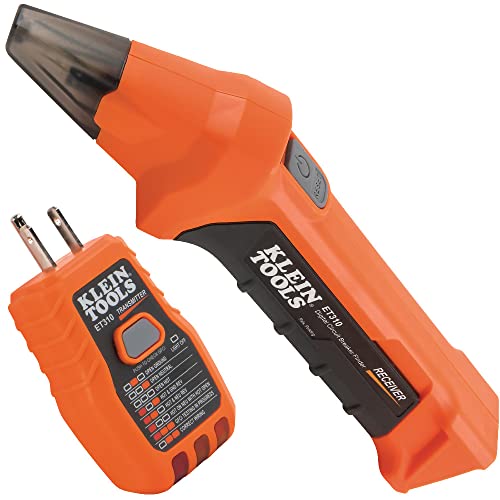
Klein Tools ET310 AC Circuit Breaker Finder, Electric and Voltage Tester with Integrated GFCI Outlet Tester
ACCURATE CIRCUIT BREAKER IDENTIFICATION: Quickly locate the correct breaker with precision using our circuit breaker finder, ensuring efficient…
As an affiliate, we earn on qualifying purchases.
As an affiliate, we earn on qualifying purchases.

Focemta Circuit Breaker Finder Kit with GFCI Outlet Tester for 90-135V AC Circuits,includes Light Socket Adapter, 3-2 Prong Grounding Adapter & Clip adapter,Portable Electrical Tool with Carrying Case
All-in-One Circuit Diagnosis: Combines Circuit Breaker Finder, Outlet Tester & GFCI Tester – Quickly locate breakers, test outlets…
As an affiliate, we earn on qualifying purchases.
As an affiliate, we earn on qualifying purchases.