
Lamps buzz on dimmers because of electrical vibrations caused by incompatible bulb types or dimmer switches. When the switch isn’t designed for certain bulbs like LEDs or CFLs, it can create vibrations in filaments or electronic components, leading to noise. Faulty wiring or poor connections also contribute to the problem. To reduce buzzing, verify your dimmer matches your bulbs and wattage. Keep exploring to discover more ways to eliminate this issue effectively.
Key Takeaways
- Buzzing occurs due to vibrations caused by electrical interactions between the dimmer and bulb components.
- Incompatible bulb types, especially LED or CFLs with older dimmers, can lead to noise and flickering.
- Dimmer switches not designed for energy-efficient bulbs often cause vibrations and humming sounds.
- Poor electrical connections or mismatched wattage ratings increase the likelihood of buzzing and safety issues.
- Upgrading to modern, LED-compatible dimmers reduces vibrations, noise, and improves overall safety.

Have you ever noticed a buzzing sound coming from your lamps when you turn down the dimmer? That familiar hum can be more than just a nuisance; it’s often a sign that something’s not quite right with your lighting setup. This buzzing occurs because of how dimmers interact with your lamps and the electrical components involved. When a dimmer switch isn’t compatible with your light bulbs or if electrical safety guidelines aren’t followed, you’re more likely to hear that annoying noise. It’s vital to understand that not all dimmers are created equal, and their compatibility with different types of bulbs can make a significant difference in both performance and safety.
If your dimmer isn’t designed to work with certain bulb types, such as LEDs or compact fluorescents, it can cause flickering, buzzing, or even damage over time. To avoid these problems, you need to check the dimmer’s compatibility with your specific bulbs before installation. Manufacturers usually specify which types of bulbs their dimmers support, so reading the labels and instructions beforehand can save you headaches later. Using incompatible bulbs with a non-dimmable dimmer isn’t just a recipe for noise; it can also compromise electrical safety. Poor connections or mismatched components might lead to overheating, short circuits, or even electrical fires, so confirming proper compatibility is essential for your safety and peace of mind.
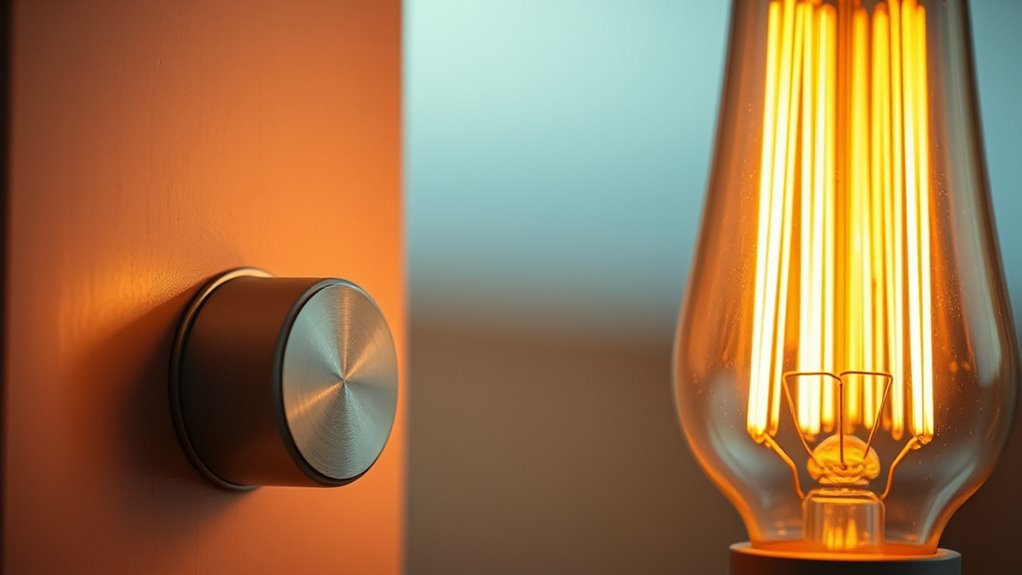
Additionally, the root cause of buzzing often relates to how the dimmer regulates electrical current. Dimmers work by adjusting the voltage sent to the bulb, and if this process isn’t smooth, vibrations occur in the filament or internal components, producing that hum. Many older dimmers were designed for incandescent bulbs, which have different electrical characteristics than modern LED or CFL bulbs. Upgrading to a dimmer specifically designed for these newer bulbs can eliminate much of the buzzing and improve overall electrical safety. Proper dimmer compatibility ensures optimal performance and safety, reducing the likelihood of electrical issues and noise, especially when using energy-efficient bulbs. When you choose a compatible dimmer and confirm it’s rated for the wattage you’re using, you minimize risks and enhance performance.
Frequently Asked Questions
Can Switching to LED Bulbs Eliminate the Buzzing?
Switching to LED bulbs can eliminate buzzing if you choose LEDs compatible with dimmers. Look for LED bulbs labeled as dimmer-compatible, which are designed to work smoothly with dimmer switches. Additionally, sound dampening features in certain dimmers can reduce buzzing noise. Upgrading to compatible LEDs and installing sound dampening dimmers helps create a quieter, more pleasant lighting experience without the buzzing.
Do Dimmer Switches Need Special Bulbs to Prevent Buzzing?
Think of your dimmer switch as a delicate dance partner—special bulbs are often needed to keep everything in harmony. Yes, dimmer switches require compatible bulbs to prevent flickering and buzzing. Using non-compatible bulbs can cause issues like flickering, buzzing, or even damage. To enjoy smooth dimming, always choose bulbs marked as dimmer-compatible, ensuring your lighting stays peaceful and your switch works seamlessly.
How Does Dimmer Compatibility Affect Buzzing Sounds?
Your dimmer compatibility directly impacts buzzing sounds. If your bulbs are incompatible with the dimmer, it can cause vibrations that produce noise. To reduce buzzing, verify your bulbs are compatible with your dimmer switch. Using dimmer-specific bulbs and checking for proper dimmer compatibility helps with buzz mitigation. Upgrading to a compatible dimmer can also considerably reduce or eliminate buzzing, creating a quieter, more comfortable lighting environment.
Is Buzzing Harmful to the Light Fixture or Electrical System?
Surprisingly, that buzzing isn’t harmful, just an annoying noise that tricks you into thinking your electrical system is under attack. It’s more of a noise nuisance than a threat. Still, for electrical safety, you should check your dimmer and bulb compatibility—poor matchups can increase noise. Proper installation and noise mitigation techniques protect your fixture and system, preventing unnecessary wear and ensuring your home stays safe and quiet.
Can Adjusting the Dimmer’s Settings Reduce the Noise?
Yes, adjusting the dimmer’s settings can reduce the buzzing noise. First, make certain your dimmer is compatible with your bulbs, as incompatible dimmers cause more buzz. Lowering the dimmer’s brightness slightly can often lessen the sound. You might also try switching to a different dimmer model designed for quiet operation. Properly matching dimmer compatibility with your bulbs and tweaking the settings can considerably reduce buzzing, improving your lighting experience.
Conclusion
Imagine the gentle hum of a lullaby, soothing yet persistent. That’s what buzzing lamps on dimmers can feel like—a reminder that sometimes, even quiet things need a little adjustment. When your dimmer causes flickering or buzzing, it’s like a song out of tune; fixing it restores harmony. Don’t let the noise drown out your cozy moments. With a bit of troubleshooting, you can bring back peace and quiet, turning your space into a true sanctuary.