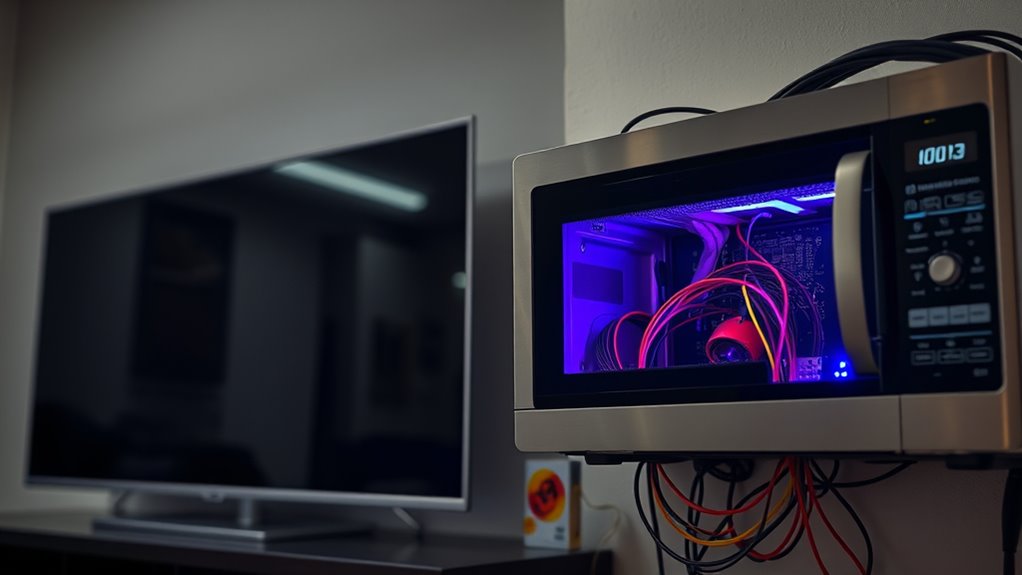
When your TV shuts off during microwave use, electromagnetic interference (EMI) likely disrupts your TV’s circuitry. This often happens if your circuits aren’t properly grounded or if the microwave and TV share insufficient shielding. Poor grounding allows EMI to interfere more easily with sensitive electronics. To fix it, you might need to upgrade your wiring, improve grounding, or separate the devices physically. Keep exploring to learn how circuit logic and grounding techniques can help prevent this issue.
Key Takeaways
- Microwave emissions generate electromagnetic interference that can disrupt the TV’s circuitry, causing it to shut off.
- Poor or faulty grounding in your electrical system increases susceptibility to EMI, leading to power interruptions during microwave operation.
- Inadequate wiring or lack of dedicated circuits for your TV and microwave allow interference to pass through, affecting device stability.
- Physical proximity of the microwave to the TV intensifies electromagnetic interference, triggering shutdowns during microwave use.
- Upgrading appliances, improving grounding, and adding EMI filters can mitigate interference and prevent the TV from shutting off.

If your TV shuts off whenever you use the microwave, you’re not imagining things—it’s a common issue caused by electrical interference. This disruption often results from EMI interference, or electromagnetic interference, which occurs when the microwave’s operation emits electromagnetic signals that interfere with your TV’s circuitry. Microwaves operate at a frequency that can easily disrupt the sensitive components inside your television, especially when the circuits aren’t properly grounded. Poor circuit grounding can make your TV more vulnerable to these signals, allowing interference to cause it to shut off or reset unexpectedly.
Understanding how circuit grounding plays a role helps clarify the problem. Proper grounding provides a safe path for excess electrical energy to dissipate, preventing interference from affecting your devices. If your electrical system or appliances aren’t grounded correctly, the microwave’s electromagnetic fields can easily leak into the wiring and impact your TV. This is particularly true if your outlets are old or damaged, or if the wiring in your home isn’t configured to minimize EMI interference.
Proper grounding prevents electromagnetic interference from disrupting your TV when using the microwave.
To address this, start by ensuring that your outlets are properly grounded. You might need to consult an electrician to verify that your circuits have a solid ground connection. Installing a dedicated circuit for your entertainment system can also help minimize EMI interference, keeping your TV isolated from other appliances that generate electromagnetic noise. Using surge protectors with EMI filtering features can further help shield your TV from interference when the microwave is in use.
Another step you can take involves physical separation. Keep your microwave and TV as far apart as possible, ideally on different circuits. This physical distance reduces the strength of electromagnetic signals reaching your TV, lessening the chance of it shutting off during microwave operation. You might also consider upgrading your home wiring or adding ferrite beads around cables to absorb and block EMI interference.
In some cases, the issue might not solely be wiring or grounding but also the quality of your appliances. Older microwaves or TVs with outdated or damaged components are more susceptible to interference. Replacing these with newer, more shielded models can noticeably reduce the problem. Additionally, using proper grounding techniques can significantly reduce the likelihood of electromagnetic interference affecting your devices.
Frequently Asked Questions
Can Installing a Filter Prevent the TV From Shutting Off?
Installing a filter can help prevent your TV from shutting off during microwave use by reducing interference. The filter installation blocks electromagnetic interference caused by the microwave, ensuring cleaner power flow. This interference prevention can stabilize your TV’s operation, so it doesn’t turn off unexpectedly. Make sure you choose the right filter designed for your appliances, and install it properly for ideal results in avoiding disruptions caused by microwave interference.
Does Using a Surge Protector Stop the Interference?
Surge protectors aren’t magic shields against interference, so don’t expect them to completely stop it. While they do provide surge protection, interference mitigation isn’t their strong suit. If your TV shuts off during microwave use, a surge protector may help reduce some power fluctuations, but it won’t eliminate the interference. For better results, consider dedicated filters or circuit modifications to truly prevent your TV from shutting off.
Are Older TVS More Likely to Turn off During Microwave Use?
Yes, older TVs are more likely to turn off during microwave use because they’re less resistant to electromagnetic interference. These TVs often lack advanced shielding and filtering, making them vulnerable to interference from microwaves. When you use a microwave, the electromagnetic interference can disrupt the TV’s circuitry, causing it to shut off or malfunction. Upgrading to a newer model with better shielding can help reduce this problem.
How Long Does It Take for the TV to Reset After Shutdown?
The power recovery time for your TV after shutdown varies but typically takes a few seconds to a minute. During this delay time, your TV resets its internal circuits, ensuring it’s safe to turn back on. If it doesn’t restart promptly, unplug it, wait at least 30 seconds for power discharge, then plug it in again. Be patient, as this reset process helps protect your TV from electrical surges caused by microwave interference.
Is This Issue Common With All Microwave Brands?
You might wonder if this issue affects all microwave brands, and the answer is yes—microwave interference can disrupt TV compatibility across many models. While some brands are more prone to causing interference, the problem isn’t isolated. Suspense builds because your devices could unexpectedly disconnect, making it essential to understand how circuit logic and electromagnetic interference interact. Stay alert, because not all microwaves behave the same, and your TV’s performance depends on it.
Conclusion
So, when your TV cuts out during microwave use, it’s a clear sign that electrical interference is throwing a wrench in the works. Don’t ignore the warning; fixing the grounding or adding a filter can save you from more headaches down the line. Remember, it’s better to nip problems in the bud than let them fester. Stay ahead of the game, and your devices will thank you for it.