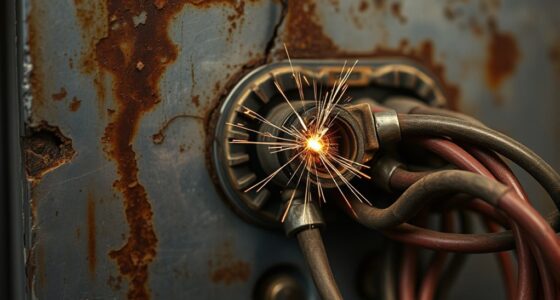
Sparks when plugging in an outlet can be normal if they’re brief and happen only at initial contact, especially with new or high-current devices. However, persistent or large sparks, especially if accompanied by burning smells, discoloration, or damage, might indicate a problem like loose wiring or faulty outlets. If sparks continue frequently or you notice signs of damage, it’s important to inspect and possibly call an electrician. Keep going to learn how to identify and fix electrical issues safely.

Get backup power and energy gear delivered free with Prime
- Fast, free delivery on millions of items
- Prime Video, Amazon Music and more included
- Member-only deals all year
Key Takeaways
- Occasional, brief sparks during initial contact are normal; persistent sparks may indicate electrical issues.
- Sparks accompanied by a burning smell, discoloration, or hot outlets suggest a problem needing inspection.
- Loose wiring or damaged outlets often cause persistent sparks and should be examined by a professional.
- Always turn off power if sparks are large, frequent, or accompanied by signs of damage or burning.
- Regularly inspect outlets for wear or damage and replace any that show signs of sparks or deterioration.

If you notice sparks when plugging in an appliance or device, it’s a warning sign that something isn’t right with your electrical outlet. Sparks during plug-in can be alarming, but understanding whether it’s normal or a sign of trouble is essential for your electrical safety. Small, brief sparks sometimes happen with new outlets or when plugging in devices that draw a high current, but persistent or large sparks shouldn’t be ignored. Recognizing the difference can help prevent electrical hazards and keep your home safe.
In many cases, a tiny spark occurs because of the initial contact between the plug prongs and the outlet terminals. This is often harmless, especially if it happens once when plugging in a device and then stops. However, if sparks happen repeatedly or produce a popping or sizzling sound, it indicates a problem that needs attention. Such issues might stem from loose wiring, damaged outlets, or faulty devices. Regular plug maintenance becomes essential here; inspecting your outlets periodically for signs of wear, discoloration, or burn marks can alert you to potential dangers before they escalate. Proper plug maintenance involves ensuring that the outlet is secure, clean, and free of debris or corrosion that could cause poor connections and sparks. Conducting periodic inspections of your electrical outlets can help identify issues early and prevent hazards.
Electrical safety is paramount when dealing with sparks at outlets. Never ignore persistent sparking or signs of damage. If you see blackened or scorched areas around an outlet, or if the outlet feels warm or emits a burning smell, turn off the power immediately and consult a qualified electrician. This prevents electrical fires or shocks, which can be life-threatening. Additionally, always use properly rated plugs and avoid forcing incompatible adapters into outlets. Using grounded, surge-protected devices can also add a layer of safety, reducing the risk of electrical faults and protecting your electronics.
When dealing with outlet sparks, your best move is to prioritize plug maintenance and electrical safety practices. If you’re unsure about the condition of your outlets, it’s wise to have a professional inspection. They can identify underlying issues like wiring faults or outdated outlets and recommend repairs or replacements. Remember, even if the sparks seem minor, consistent or strong sparks should never be dismissed. Regular checks and prompt repairs help guarantee your electrical system remains safe and functional. Keeping your outlets well-maintained and following electrical safety guidelines not only prevents sparks but also protects your home and loved ones from potential electrical hazards.
As an affiliate, we earn on qualifying purchases.
Frequently Asked Questions
Can Outlet Sparks Cause a Fire Hazard?
Yes, outlet sparks can cause a fire hazard. Sparks indicate potential electrical issues that require immediate electrical maintenance to guarantee outlet safety. Ignoring sparks can lead to overheating, short circuits, or electrical fires. To prevent accidents, regularly inspect your outlets, avoid overloading them, and address sparks promptly by consulting a qualified electrician. Proper electrical maintenance keeps your home safe and reduces fire risks associated with faulty outlets.
How Often Should I Check My Outlets for Sparks?
You should check your outlets at least once a month for sparks or signs of damage. Studies show that about 30% of electrical fires start at outlets, making regular plug maintenance essential. During your outlet inspection, look for flickering lights, scorch marks, or constant sparks. Address issues immediately to prevent fire hazards. Regular checks help make certain your home stays safe and your electrical system functions properly.
Are Certain Appliances More Likely to Cause Sparks?
Some appliances are more likely to cause sparks, especially if they have appliance malfunctions or are prone to power surges. High-wattage devices like space heaters, hairdryers, or refrigerators can create more sparks when plugged in or used. Always inspect these appliances for damage or malfunction, and avoid plugging them into outlets showing signs of sparking. Taking these precautions helps prevent electrical issues and potential fire hazards.
What Safety Precautions Should I Take if Sparks Occur?
Oh, sparks at your outlet? What a surprise! You should unplug the device immediately, turn off the power at the breaker, and avoid using the outlet until inspected. Always prioritize electrical safety by keeping moisture away, not overloading sockets, and inspecting cords for damage. Sparks indicate a hazard, so prevent further risk by consulting a professional electrician—because ignoring these sparks is the best way to invite electrical accidents and compromise hazard prevention.
When Should I Call an Electrician for Outlet Sparks?
You should call an electrician immediately if sparks keep flying from your outlet, especially if you notice frequent or large sparks. This could indicate grounding issues or outdated wiring that’s causing electrical faults. Don’t ignore the problem, as it can lead to fire hazards or electrical shocks. An electrician can assess the situation, identify the root cause, and safely repair or replace your wiring to prevent future hazards.
outlet tester with indicator lights
As an affiliate, we earn on qualifying purchases.
As an affiliate, we earn on qualifying purchases.
Conclusion
So, next time your outlet decides to throw a little spark party, don’t pretend it’s just a quirky feature. Maybe it’s warning you that your home’s electrical system is auditioning for a role in a disaster movie. Remember, sparks at the plug aren’t just a surprise—they’re a neon sign saying, “Hey, I might burn down your castle.” Stay vigilant, or you might just be the star of your own fiery adventure.
grounded electrical outlet cover
As an affiliate, we earn on qualifying purchases.
As an affiliate, we earn on qualifying purchases.
As an affiliate, we earn on qualifying purchases.
Fall Picks
fall essentials
As an affiliate, we earn on qualifying purchases.