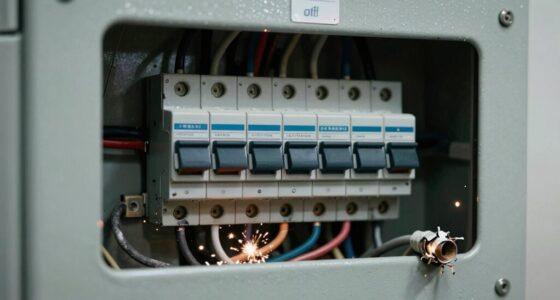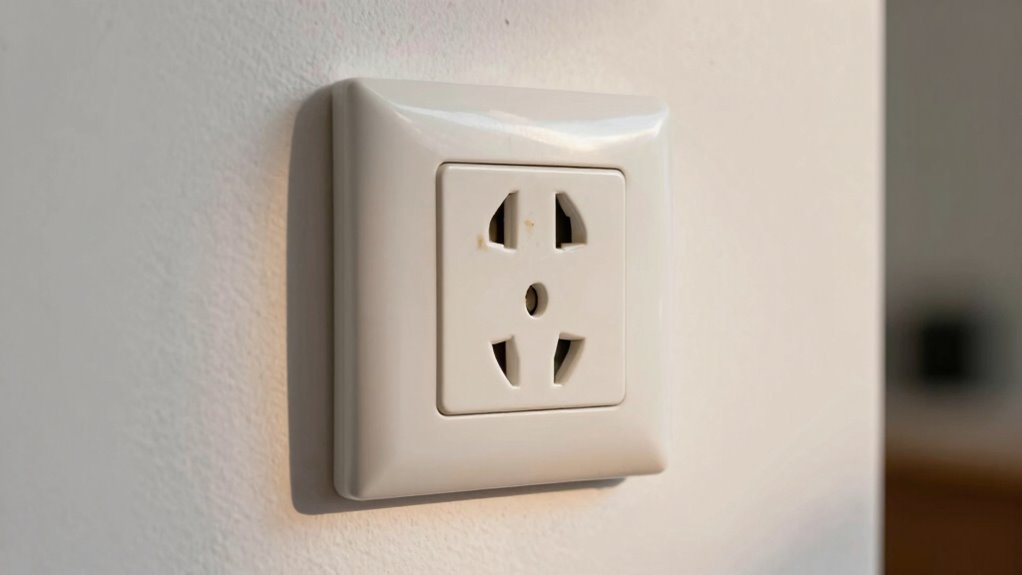

If an outlet feels warm, it’s a sign that something might be wrong with your electrical system. This could be caused by overloaded circuits, loose connections, or appliances drawing too much power. Unplug devices immediately and avoid using the outlet until a professional inspects it. Ignoring warmth can lead to overheating, wiring damage, or even fires. Stay alert—continuing further can help you understand how to keep your home safe and prevent these hazards.

Get backup power and energy gear delivered free — and shop member deals
- Fast, free delivery on millions of items
- Access to Prime Big Deal Days deals on October 6–7
- Prime Video, Amazon Music and more included
Key Takeaways
- Warm outlets often indicate electrical resistance or overcurrent, which can be a sign of underlying wiring issues.
- Overloading circuits by plugging in too many high-power devices causes heat buildup and potential hazards.
- Avoid using warm outlets and unplug connected devices immediately to prevent fire risks.
- Regularly inspect outlets and wiring for signs of damage or overheating to ensure safety.
- Promptly consult a professional if an outlet remains warm to address potential electrical faults.

If your outlets start feeling warm to the touch, it’s a sign that something isn’t right with your electrical system. Warm outlets can be a warning sign of potential electrical issues that, if ignored, could lead to fires or damage to your appliances. Electrical safety is essential, and recognizing the signs of trouble early can help you prevent costly repairs or dangerous situations. When outlets feel warm, it’s often because of increased electrical resistance or an overload. This could be caused by a faulty connection, a damaged outlet, or an appliance that draws more power than the circuit can handle. If you notice warmth, you should immediately unplug any devices connected to that outlet and avoid using it until it’s inspected by a professional.
Warm outlets indicate potential electrical issues; unplug devices and consult a professional promptly for safety.
One common cause for warm outlets is overloading the circuit. This happens when you plug in multiple high-power appliances into a single outlet or power strip, exceeding the circuit’s capacity. Overloading isn’t just inconvenient; it’s hazardous. It causes excessive current flow, which generates heat and can damage the wiring, increasing the risk of electrical fires. Proper appliance maintenance involves not only keeping your appliances in good condition but also ensuring they’re used safely within their rated capacities. Avoid daisy-chaining multiple power strips, and always check the electrical load on a circuit before plugging in additional devices. If an outlet begins to feel warm regularly, it’s a clear sign that the circuit may be overloaded, and you need to redistribute the load or upgrade your electrical system. Recognizing signs like warm outlets early can help prevent more serious dangers. Additionally, understanding cable safety principles, such as managing heat buildup and avoiding toxic fumes in fires, is crucial for overall electrical safety. Ensuring that your wiring and connections adhere to proper safety standards is also vital for preventing issues related to electrical resistance. Regular inspections and adherence to electrical safety guidelines are essential for maintaining a safe and efficient home electrical system.
As an affiliate, we earn on qualifying purchases.
Frequently Asked Questions
Can Warm Outlets Cause Electrical Fires?
Warm outlets can potentially cause electrical fires if they’re not addressed promptly. When outlets feel warm, it often indicates issues like faulty electrical insulation or loose connections that increase resistance. Power surges can also contribute, stressing the outlet and wiring. If you notice warmth, stop using the outlet, unplug devices, and have a professional inspect it to prevent fire hazards and guarantee your home’s electrical safety.
How Hot Is Too Hot for an Electrical Outlet?
Think of an electrical outlet like a car engine; if it runs too hot, it’s a warning sign. Generally, anything above 104°F (40°C) is too hot for an outlet. For electrical safety, regularly check your outlets for warmth or discolouration. If they feel hot to the touch, it’s time for outlet maintenance or professional inspection to prevent potential hazards. Ignoring this risk could lead to electrical fires or damage.
Do All Warm Outlets Indicate a Wiring Problem?
Not all warm outlets indicate a wiring problem; sometimes, outlet insulation can cause slight warmth, especially if multiple devices draw power simultaneously. However, if an outlet feels excessively warm, it might signal circuit overload or poor wiring connections. You should avoid using it until a professional inspects. Overheating can be dangerous, so addressing potential circuit overloads and checking outlet insulation helps prevent electrical fires.
Can Warm Outlets Be Safe if They Don’t Smell?
Warm outlets can sometimes be safe if they don’t smell or show signs of damage, but you should still prioritize outlet safety. It’s important to do electrical troubleshooting to identify the cause of warmth, such as loose connections or overloaded circuits. If you notice persistent warmth, it’s best to consult a professional electrician. Don’t ignore the signs—regular inspection helps prevent potential hazards and guarantees your electrical system stays safe.
Should I Turn off an Outlet That’s Warm to the Touch?
Yes, you should turn off a warm outlet immediately. The warmth indicates excess heat from outlet insulation issues or overloaded circuits, which could be dangerous. To guarantee safety, unplug devices and avoid using power strips that might be overburdened. If the outlet remains warm after turning off devices, consider replacing it or consulting an electrician. Regularly check your outlets for warmth to prevent potential fire hazards.
As an affiliate, we earn on qualifying purchases.
Conclusion
When outlets feel warm, it’s like a warning bell ringing in the distance—a sign that something might be amiss. Think of your electrical system as a delicate dance; if one partner leads too forcefully, it throws off the rhythm. Pay attention to these signals, and don’t ignore the heat. Addressing the issue early keeps your home’s electrical dance smooth and safe, preventing a potential spark that could ignite bigger problems down the line.
electrical outlet inspection kit
As an affiliate, we earn on qualifying purchases.
As an affiliate, we earn on qualifying purchases.
As an affiliate, we earn on qualifying purchases.
Fall Picks
fall essentials
As an affiliate, we earn on qualifying purchases.