
For a cathedral ceiling, I would start with cavity depth, required R-value, and a safe ventilation plan, not the package size. My strongest candidates here are the R-30 unfaced batt for deeper cavities where a separate vapor-control strategy is planned, the R-30 kraft-faced batt for buyers whose assembly and climate call for a kraft facing, and the R-19 bulk pack when a shallower 2×6 cavity or a large project makes coverage the priority. These are fiberglass batts, not a complete roof-assembly design: a cathedral ceiling also needs proper moisture management and, where the roof assembly calls for it, a clear ventilation channel.

Get backup power and energy gear delivered free with Prime
- Fast, free delivery on millions of items
- Prime Video, Amazon Music and more included
- Member-only deals all year
The main tradeoff is straightforward but consequential: R-30 offers more thermal resistance but needs a deeper cavity, while the R-19 products fit shallower framing and may be easier to source in smaller quantities. Facing changes the moisture-control details, but it does not make a batt suitable for every climate or roof assembly. I rank these options by their fit for cathedral-ceiling use, the useful R-value per available cavity, coverage and package scale, and how clearly their limitations can be managed. Before buying, I would verify the exact framing depth, local code requirements, and the insulation manufacturer’s installation directions.
Key Takeaways
- The R-30 kraft-faced batt is the strongest choice in this group when its 9.5-inch thickness fits the cavity and kraft facing is appropriate for the planned assembly.
- The R-30 unfaced batt is the better R-30 alternative when the ceiling design calls for unfaced insulation and separate moisture control.
- The 10-bag R-19 bulk pack covers 875 square feet, making it the practical pick for a large project with 15-inch framing and a shallower cavity.
- The 128-square-foot R-19 pack is the most manageable quantity for a smaller job, but its 24-inch batt width must match the framing layout.
- None of these products alone establishes a safe cathedral-ceiling assembly; cavity depth, ventilation, air sealing, vapor control, and heat-source clearances still need to be addressed.


| cathedral ceiling insulation | Material | R-value | Facing | Thickness |
|---|---|---|---|---|
| Owens Corning R-30 Kraft-Faced | Fiberglass | R-30 | Kraft paper | 9.5 in |
| Owens Corning R-30 Unfaced Fib | Fiberglass | R-30 | Unfaced; no moisture barrier | 10 in |
| Owens Corning R-19 Unfaced Fib | Fiberglass | R-19 | Unfaced | 6.25 in |
| Owens Corning R-19 Unfaced Fib | Fiberglass | R-19 | Unfaced; no vapor barrier | 6.5 in |
| Owens Corning R-19 Unfaced Fib | Fiberglass | R-19 | Unfaced; no vapor barrier | 6.5 in |
More Details on Our Top Picks
Owens Corning R-30 Kraft-Faced Fiberglass Insulation, 16 x 48 in, 8 Bags
I put this R-30 kraft-faced batt first because it combines the highest listed R-value in the group with facing that may suit a cathedral-ceiling assembly designed for a vapor retarder. At 9.5 inches thick, it is a more plausible match for a deeper framed cavity than either R-19 option, and its 469.36 square feet of stated coverage is substantial without being the largest pack here. The 16-by-48-inch pieces are short enough to handle in sections, although buyers should confirm the width against actual framing rather than assuming every cavity is identical.
Compared with the R-30 unfaced option, this product offers kraft facing, which can simplify the assembly when that facing is appropriate and installed on the correct side. That advantage is conditional: the facing is not a blanket fix for condensation risk, and it must be covered by the finish assembly because it can burn. Compared with the R-19 products, the extra R-value is attractive for a roof boundary, but only if the cavity can take the batt without compression and still preserve any required air channel. The product is intended for several framed applications, but its listed coverage and attic recommendation do not by themselves confirm suitability for every cathedral roof.
I rank it above the unfaced R-30 because buyers who have already specified a compatible vapor-retarder layer may value the integrated facing. I would not choose it simply because it has the largest R-value: assembly design determines whether the facing is appropriate, and recessed lights require particular care. If your project calls for unfaced insulation or a different vapor-control arrangement, the R-30 unfaced batt is the cleaner match.
Pros:- R-30 provides the highest listed thermal resistance among these five products.
- Kraft facing may provide a moisture-retarding layer when suitable for the assembly.
- 469.36 square feet of stated coverage across eight bags suits a sizeable project.
- Can serve multiple framed applications, including ceilings, subject to assembly requirements.
Cons:- The 9.5-inch thickness will not fit shallow cavities without compression.
- Kraft facing can burn and must be covered by the finish material.
- Installation must account for recessed-light clearances and the roof’s ventilation design.
Best for: Owners with a deep framed ceiling cavity whose roof assembly calls for kraft-faced insulation and whose project can accommodate the 9.5-inch thickness.
Not ideal for: Buyers whose design requires unfaced batts, shallow framing, or an assembly that cannot safely incorporate kraft facing.
- Material:Fiberglass
- R-value:R-30
- Facing:Kraft paper
- Dimensions:16 x 48 in
- Thickness:9.5 in
- Coverage:About 469.36 sq ft total
- Package:8 bags; 10 batts per bag
- Applications:Attics, walls, ceilings, and floors
Our verdict“My leading pick when a deep cathedral-ceiling cavity and a compatible kraft-facing plan make R-30 the right fit.”
Owens Corning R-30 Unfaced Fiberglass Insulation, 16 x 48 in., 8 Bags
This is my preferred unfaced R-30 choice for a cathedral ceiling when the design needs higher thermal resistance but calls for moisture control to be handled separately. Its 10-inch thickness and 16-inch width give it a clear dimensional identity: it is aimed at deeper framed cavities, not a shallow 2×6 bay. The pack covers about 426.64 square feet, less than the kraft-faced R-30 package, so I see it as a fit-led option rather than the better choice for maximizing coverage.
Against the R-30 kraft-faced batt, this one leaves the vapor-control decision outside the insulation product. That can be an advantage when the roof assembly specifies a separate strategy, but it also means the buyer must understand that strategy before installation. Its unfaced construction does not include a moisture barrier. The product is listed for floor-ceiling assemblies, attics, roofs or ceilings, and framed walls, but a cathedral roof still needs correct air sealing and any required ventilation path. It also carries a warning to keep batts away from open flames and heat sources, with a stated 3-inch separation from recessed lights unless they are IC-rated.
Compared with the R-19 batts, the R-30 rating is the draw, not ease of fit. A 10-inch batt should not be forced into a cavity that cannot hold it properly. The listed 16-inch width may suit framing laid out for that width, while the R-19 bulk pack is described for 15-inch framing. I rank this below the kraft-faced R-30 only because buyers lose the convenience of integrated facing and get slightly less listed coverage; for an assembly that specifically needs unfaced material, those differences may reverse the decision.
Pros:- R-30 rating offers more listed thermal resistance than the R-19 alternatives.
- Unfaced construction suits assemblies where vapor control is designed separately.
- Fiberglass is described as providing thermal and acoustical control.
- Eight-bag package supplies about 426.64 square feet of coverage.
Cons:- The 10-inch thickness requires a suitably deep cavity.
- No facing or moisture barrier is included.
- Must be kept away from heat sources and follow recessed-light clearance directions.
Best for: Buyers with deeper framing who want R-30 fiberglass without kraft facing and have a separate, project-appropriate moisture-control plan.
Not ideal for: Anyone with shallow framing, uncertain vapor-control requirements, or a cavity that needs an unobstructed ventilation channel the batt could block.
- Material:Fiberglass
- R-value:R-30
- Facing:Unfaced; no moisture barrier
- Dimensions:16 x 48 in
- Thickness:10 in
- Coverage:About 426.64 sq ft
- Package:8 bags; 10 pieces per bag
- Applications:Floor-ceilings, attics, roofs or ceilings, and framed walls
Our verdict“Choose this over the kraft-faced R-30 when an unfaced batt better matches the planned roof assembly.”
Owens Corning R-19 Unfaced Fiberglass Insulation, 15 x 105 in, 10 Bags
My pick for a larger project with 15-inch framing and a shallower cavity is this 10-bag R-19 pack. The stated total coverage of 875 square feet is the largest in the lineup, so it reduces the chance of piecing together several small packages for a broad ceiling area. Its 15-by-105-inch batts are intended for 15-inch framing, and the friction-fit design is described as helping the material stay in place. That combination makes it more practical for a long run of repeated bays than the smaller R-19 packs.
The tradeoff is that R-19 is below the R-30 options, so this is not the pick for someone prioritizing the highest listed thermal resistance. Its 6.25-inch thickness suits a shallower cavity than the 9.5- and 10-inch R-30 products, but the actual framing depth and roof details still need checking. The batts are unfaced, meaning there is no kraft layer to serve as a vapor retarder. The supplied description also says attic use requires proper ventilation and at least 2 inches of air space; in a cathedral ceiling, I would treat that as a prompt to confirm the full roof assembly rather than as a complete ventilation specification.
Compared with the 128-square-foot R-19 pack, this option is far better suited to a broad installation and matches 15-inch framing rather than 24-inch batt width. Compared with the R-30 products, it gives up R-value for a thinner profile and broader coverage. I place it third because the bulk size is useful, but the lower rating and lack of facing make it a more conditional choice for cathedral ceilings. Buyers should also note that the listing says it is not intended for exterior walls; I would keep the application within the stated interior and properly ventilated uses.
Pros:- Bulk package covers a stated 875 square feet.
- 15-inch width is designed for 15-inch framing.
- Friction-fit batts are intended to stay in place.
- Provides thermal and acoustical control.
Cons:- R-19 is lower than the R-30 products in this lineup.
- Unfaced batts include no paper or kraft vapor-retarding layer.
- Attic use requires proper ventilation and at least 2 inches of air space.
Best for: A buyer insulating a large ceiling area with 15-inch framing, a cavity suited to 6.25-inch batts, and a separate moisture-control plan.
Not ideal for: Projects requiring R-30, framing that does not match the batt width, or roof assemblies that cannot accommodate unfaced fiberglass and the required air space.
- Material:Fiberglass
- R-value:R-19
- Facing:Unfaced
- Batt dimensions:15 x 105 in
- Thickness:6.25 in
- Coverage:875 sq ft total; 87.5 sq ft per bag
- Package:10 bags; 70 batts total
- Fit:Designed for 15-inch framing
Our verdict“A sensible coverage-first choice for large 15-inch-framed areas, but not my pick when higher R-value is the priority.”
Owens Corning R-19 Unfaced Fiberglass Batt Insulation, 128 sq. ft.
This R-19 pack has a useful role when the job is modest in size and the framing layout matches its 24-inch batt width. It includes five batts measuring 96 inches long by 24 inches wide, with 128 square feet of stated coverage. The listed 6.5-inch thickness is close to the other R-19 options, while the longer, wider pieces may reduce seams in bays designed for that format. The product description also says the batts cut and fit easily, which helps when ceiling cavities contain irregular edges or interruptions.
Compared with the 15-inch-wide bulk R-19 product, this pack is much smaller and has a different fit, so I would not treat the two as interchangeable. The bulk pack is the better match for repeated 15-inch framing and large coverage; this one is a better fit for a smaller job whose framing is laid out at 24 inches. Compared with either R-30 product, it asks less of the cavity depth but provides lower thermal resistance. It is unfaced, so the buyer must plan moisture control separately rather than expecting an included vapor barrier.
I rank it fourth because the pack size is manageable and the fit can be convenient, but the product information emphasizes walls, floors, and crawlspaces more than cathedral ceilings. Attics are listed among recommended uses, yet a sloped roof cavity needs assembly-specific ventilation and moisture planning. Fiberglass that resists moisture absorption is not the same as a vapor barrier or a solution to water intrusion. I would select it only after confirming the framing width and verifying that the R-19 rating and unfaced construction suit the local requirements and roof design.
Pros:- 128 square feet is a manageable quantity for a small project.
- 24-inch width is designed for matching framing layouts.
- Batts are described as easy to cut and fit.
- Resists moisture absorption and helps reduce sound transmission.
Cons:- R-19 provides less listed thermal resistance than the R-30 options.
- Unfaced design has no vapor barrier.
- Product information focuses mainly on walls, floors, and crawlspaces rather than cathedral ceilings.
Best for: A smaller project with 24-inch framing where R-19 is suitable and the buyer wants a limited quantity of unfaced batts.
Not ideal for: Large ceiling areas, 15-inch framing, or projects that require R-30 or an included vapor-retarding facing.
- Material:Fiberglass
- R-value:R-19
- Facing:Unfaced; no vapor barrier
- Batt dimensions:96 x 24 in
- Thickness:6.5 in
- Coverage:128 sq ft
- Package:5 batts
- Recommended uses:Walls, floors, crawlspaces, and attics
Our verdict“A practical small-job R-19 option only when 24-inch framing and the roof assembly both match its limitations.”
Owens Corning R-19 Unfaced Fiberglass Insulation Batts, 15 x 93 in, 77.5 sq ft
This is the small-pack counterpart to the 10-bag R-19 product: both are unfaced and 15 inches wide, but this listing covers only 77.5 square feet in one bag. That makes it easier to size for a limited area or a repair without taking on the bulk package’s 875-square-foot coverage. Each batt is 93 inches long and 6.5 inches thick, and the product is described as fitting 2×6 framing, cutting easily, and recovering quickly after handling.
Against the 128-square-foot R-19 package, its key distinction is the narrower 15-inch width, which may match common 16-inch-on-center framing better than a 24-inch-wide batt. Against the 10-bag bulk pack, it offers less coverage and shorter batts but lets the buyer purchase a smaller quantity. It does not improve on the R-30 choices for thermal resistance, and like the other unfaced R-19 products it includes no vapor barrier. The listing mentions walls, floors, and attics, but that broad application language does not settle whether a specific cathedral-ceiling assembly is appropriate.
I place it fifth because its strongest advantage is package scale, not a technical edge over the other options. A small pack can be convenient, yet it may be a poor match if the ceiling area is large or local requirements call for more than R-19. The product’s 6.5-inch thickness also needs a suitable cavity; it should not be compressed into a shallower bay. If I were choosing between this and the 10-bag version for a full ceiling, I would favor the bulk pack for coverage. For a limited 15-inch-framed area, this smaller listing avoids unnecessary excess while preserving the same basic R-19, unfaced approach.
Pros:- Single-bag quantity covers 77.5 square feet.
- 15-inch width is suited to matching framing.
- Batts are described as easy to cut and quick to recover.
- Provides R-19 thermal resistance and sound reduction.
Cons:- Small coverage is inefficient for a large cathedral ceiling.
- Unfaced construction provides no vapor barrier.
- R-19 is below the two R-30 options.
Best for: A small ceiling area or repair with 15-inch framing where an R-19 unfaced batt is appropriate.
Not ideal for: Large projects, cavities that cannot accept 6.5-inch batts, or assemblies needing R-30 or an included vapor retarder.
- Material:Fiberglass
- R-value:R-19
- Facing:Unfaced; no vapor barrier
- Batt dimensions:93 x 15 in
- Thickness:6.5 in
- Coverage:77.5 sq ft
- Package:8 batts
- Recommended uses:Walls, floors, and attics
Our verdict“A useful limited-quantity choice for 15-inch framing, but I would choose the bulk R-19 pack for a broad installation.”
How We Picked
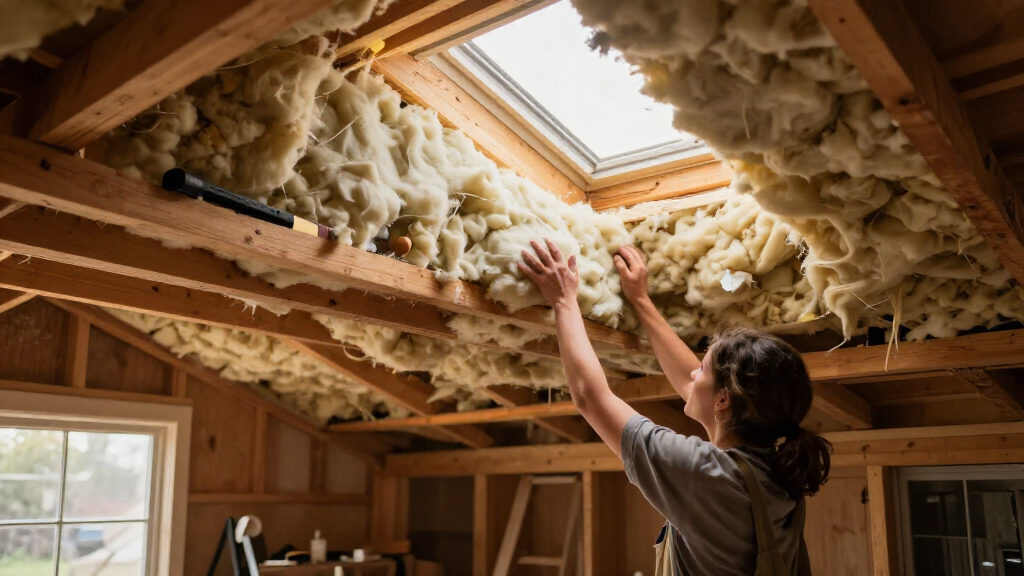
I ranked these products for the specific constraints of cathedral ceilings, where insulation sits in a sloped roof or ceiling cavity and must work alongside the rest of the assembly. A product’s R-value matters, but it cannot be separated from thickness: an R-30 batt is only useful if the framing can accept it without compression and without sacrificing any required ventilation space. I also checked the listed dimensions against common framing widths, since a batt that does not fit the cavity neatly can leave gaps or be compressed.
I gave weight to facing and moisture-control implications. Kraft-facing may serve as a vapor retarder in an appropriate assembly, but it is not a universal moisture solution and must be installed as directed. Unfaced batts leave vapor control to the broader wall or roof design. I also compared coverage and pack size, because a large project benefits from bulk coverage while a repair or single-room job may be easier to handle with a smaller package. Finally, I treated warnings about ventilation, recessed lights, and heat sources as meaningful installation limits, not minor footnotes.
All five entries are Owens Corning fiberglass batts, so the ranking is not a brand-versus-brand contest. The distinctions are R-19 versus R-30, faced versus unfaced, framing fit, and package scale. Product information supplied for this roundup does not establish that a given batt meets code in every location or suits every roof design. I would use the product specifications as a shortlist, then confirm the complete assembly with local requirements and the manufacturer’s instructions. I do not treat any of these batts as a substitute for a continuous air barrier, roof ventilation design, or project-specific moisture analysis.
| cathedral ceiling insulation | R-value | Facing |
|---|---|---|
| Owens Corning R-30 Kraft-Faced | R-30 | Kraft paper |
| Owens Corning R-30 Unfaced Fib | R-30 | Unfaced; no moisture barrier |
| Owens Corning R-19 Unfaced Fib | R-19 | Unfaced |
| Owens Corning R-19 Unfaced Fib | R-19 | Unfaced; no vapor barrier |
| Owens Corning R-19 Unfaced Fib | R-19 | Unfaced; no vapor barrier |
Factors to Consider When Choosing Best Cathedral Ceiling Insulation
For cathedral ceilings, I would choose the insulation only after confirming the whole roof cavity can support it. A sloped ceiling can leave little room for both insulation and ventilation, and a batt that is too thick may be compressed or block an air channel. The following checks help separate a promising product match from a purchase that does not fit the assembly.
Match batt thickness to the actual cavity
Measure the clear depth of the framing cavity rather than relying on a nominal lumber size. The two R-30 products are listed at 9.5 inches and 10 inches thick, while the R-19 choices are around 6.25 to 6.5 inches. If the cavity cannot accept the batt at its intended thickness, compressing it can undermine the expected performance and leave an awkward installation. I would also account for any required ventilation space between insulation and roof sheathing; that air channel reduces the room available for insulation.
This is why an R-30 label does not automatically make the kraft-faced or unfaced R-30 product the right pick. The R-19 products may fit a shallower cavity more readily, but the right value depends on local requirements and the complete construction. If the available depth cannot meet the project’s thermal target while preserving required ventilation, discuss another roof assembly with a qualified building professional instead of forcing a batt into place.
Check framing width and batt length
These products do not share a single fit. The bulk R-19 listing is specified for 15-inch framing; the small R-19 pack is also 15 inches wide, while the other R-19 pack is 24 inches wide. The R-30 batts are listed at 16 inches wide. Measure the clear bay width and confirm the intended framing spacing before ordering. A batt that is too wide may need careful trimming; one that is too narrow can leave gaps, which reduce the quality of the insulation layer.
Length affects handling and the number of seams, but it does not change the need for a neat fit around framing, wiring, and other obstructions. Long batts may suit repeated bays, while shorter pieces can be easier to place in sections. I would not stretch a batt to make it fit, and I would follow the manufacturer’s guidance for cutting, support, and any installation near services.
Decide whether faced or unfaced insulation fits the assembly
The R-30 kraft-faced product is the only faced option here. Its kraft layer may function as a moisture-retarding vapor layer when the assembly calls for it and it is installed in the proper orientation. That does not make it universally appropriate: climate, interior finish, existing layers, and local code can affect where vapor control belongs. The facing must also be covered by the finish material because it can burn.
Unfaced batts offer no built-in vapor barrier. That can suit a design with a separately specified control layer, but buyers should not mistake fiberglass’s stated resistance to moisture absorption for moisture protection of the roof assembly. I would identify how air and vapor are controlled before choosing among the four unfaced products. If the answer is unclear, pause the purchase and ask a qualified professional to review the roof build-up.
Treat ventilation and air sealing as separate requirements
Fiberglass batts do not replace an air barrier or a ventilation plan. In a vented cathedral ceiling, the assembly may require a continuous path for air between the eaves and ridge, kept clear of insulation. The bulk R-19 product specifically mentions proper ventilation and at least 2 inches of air space for attic use, but buyers should verify the full specification for their roof rather than assuming that figure covers every design. A blocked channel can interfere with moisture removal and roof performance.
Air leakage through gaps, joints, and penetrations can also carry indoor moisture into cold parts of the roof. I would review ceiling air sealing around wiring, fixtures, and framing before the finish goes up. The correct details depend on the roof design and local requirements; insulation alone cannot correct a leaky or poorly planned assembly.
Compare package coverage with project size
The package sizes range widely: the 10-bag R-19 product lists 875 square feet, while the smaller R-19 listings cover 128 and 77.5 square feet. The two R-30 products list about 469.36 and 426.64 square feet. Use the coverage figures to estimate how many packages the project may need, then allow for cuts and irregular areas without treating the stated area as a guarantee for every framing layout.
For a whole ceiling, the bulk pack may reduce ordering complexity if its dimensions and R-value fit. For a small room or repair, a smaller pack can limit surplus. I would compare total coverage only after confirming framing width, cavity depth, and facing requirements; buying a larger pack of the wrong batt does not make it a better value for the assembly.
Check fixtures, heat sources, and installation directions
Both R-30 listings include cautions about recessed lights: the unfaced version says to keep insulation at least 3 inches away unless the fixture is IC-rated, and the kraft-faced version also warns that clearance rules apply. Follow the specific product instructions and the fixture’s listing, since clearances can depend on the equipment and installation. Keep fiberglass away from open flames and heat sources, and do not cover a fixture unless its instructions permit that arrangement.
Before closing the ceiling, check the manufacturer’s handling and installation directions, local code, and any electrical or fire-safety requirements. The product descriptions identify thermal and acoustical uses, but they do not replace project-specific instructions. For difficult roof geometry, limited cavity depth, or uncertain fixture clearances, getting professional guidance before installation is safer than improvising after the insulation is in place.
Frequently Asked Questions
Can I use these fiberglass batts in a cathedral ceiling?
Several listings include ceilings, roofs, or attics among their applications, but that does not certify every product for every cathedral-ceiling assembly. I would confirm that the batt thickness fits the cavity, that the framing width matches, and that the roof design includes the required air and moisture control. The R-30 products have more listed thermal resistance but need deeper cavities; the R-19 products are thinner but provide a lower rating. Follow the product directions and local code before installation.
Is R-19 or R-30 better for a sloped ceiling?
Neither rating is automatically better for every project. R-30 provides more listed thermal resistance, but the two products are about 9.5 and 10 inches thick and need enough room to fit without compression or blocking required ventilation. R-19 is thinner and may suit a shallower cavity, though it has a lower rating. I would compare the available cavity depth with local thermal requirements and the complete roof design before selecting either rating.
Should I choose kraft-faced or unfaced insulation?
Choose based on the roof assembly’s vapor-control plan, not on a general assumption that facing is always beneficial. The R-30 kraft-faced batt may suit an assembly that calls for kraft facing in the correct orientation, while the unfaced products leave that control layer to be designed separately. Kraft facing can burn and needs to be covered by the finish material. If you do not know which side needs vapor control or whether a vapor retarder is appropriate, have the assembly reviewed before buying.
Do cathedral ceilings need a ventilation gap above the insulation?
Some cathedral-ceiling designs require a clear ventilation channel between the insulation and roof sheathing, while other assemblies use a different approved approach. The right detail depends on the roof construction, climate, and applicable code. The bulk R-19 listing calls for proper ventilation and at least 2 inches of air space in attic use, but buyers should not treat that product note as a universal design specification. Keep any required channel clear and verify the assembly before closing the ceiling.
Which product should I choose for a small ceiling project?
For a small area with 15-inch framing, the 77.5-square-foot R-19 pack is the most limited quantity in this group. With 24-inch framing, the 128-square-foot R-19 pack may be a closer dimensional match. If the project needs R-30 and has a deep enough cavity, either R-30 product may suit the thermal target, with facing determined by the assembly. I would choose only after checking cavity depth, framing width, and moisture-control requirements rather than selecting solely by pack size.
Conclusion
My recommendation depends on the cavity and roof design. For a deep cavity where kraft facing is appropriate, I would choose the R-30 Kraft-Faced batt as the strongest overall fit in this lineup. If the assembly calls for unfaced insulation and separate moisture control, the R-30 Unfaced batt is the more suitable R-30 option. For a large area with 15-inch framing and a shallower cavity, the 10-bag R-19 pack stands out for its stated 875-square-foot coverage. For limited projects, I would match the 128-square-foot pack to 24-inch framing or the 77.5-square-foot pack to a smaller 15-inch-framed area.
Before ordering, I would measure the cavity, verify the framing layout, and confirm local R-value and vapor-control requirements. Most of all, I would treat insulation as one part of a complete cathedral-ceiling assembly: the ventilation path, air sealing, moisture management, finish covering, and fixture clearances all matter. If those details are unresolved, settle them before choosing a batt.