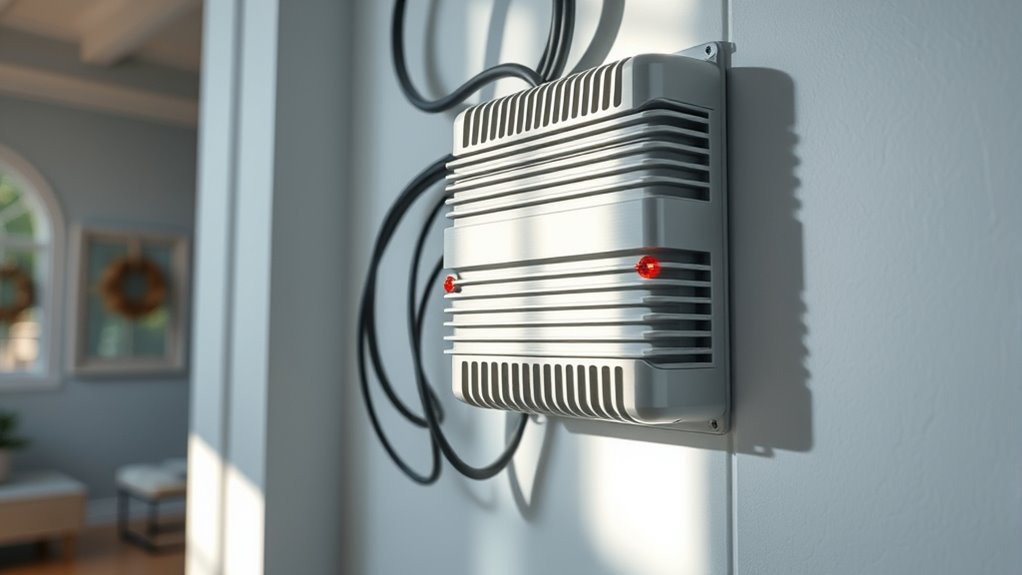

Whole-house surge protection shields your entire home from dangerous power surges caused by lightning, utility issues, or high-demand appliances. It uses surge protective devices, filters, and grounding systems to detect and divert excess voltage away from your electronics and electrical system. Proper installation at your main panel guarantees thorough coverage and safety. Want to know more about how these systems work to keep your home safe and your devices protected? Keep exploring to find out.
Key Takeaways
- Whole-house surge protection is installed at the main electrical panel to safeguard the entire home from voltage spikes.
- Surge Protective Devices (SPDs) detect high-voltage surges and divert excess energy away from connected appliances.
- Components like Metal-Oxide Varistors (MOVs) clamp surge voltages, preventing damage to devices and wiring.
- Proper grounding directs surge energy safely into the earth, enhancing system effectiveness and safety.
- The system works continuously to absorb, divert, and filter electrical spikes during lightning strikes or power fluctuations.
What Is Whole-House Surge Protection?
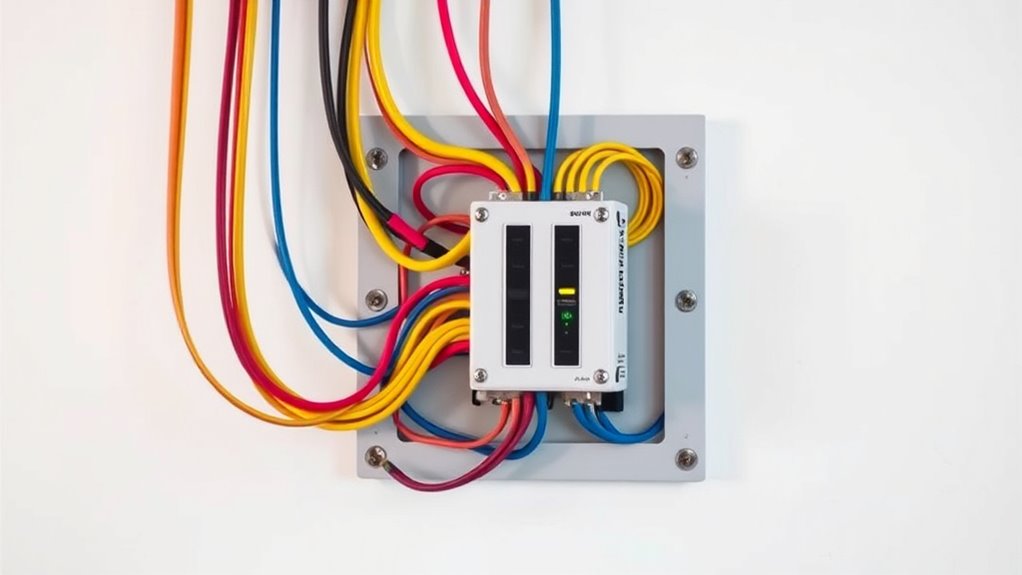
Have you ever wondered how to protect your entire home from unexpected power surges? Whole-house surge protection acts as a first line of defense against sudden spikes caused by lightning strikes or power surges. When lightning strikes nearby, it can send a powerful jolt through your electrical system, damaging appliances and electronics. Power surges, often caused by switching on high-demand appliances, can also harm your wiring and devices over time. Installing a whole-house surge protector ensures that these sudden voltage increases are safely diverted before they reach your outlets and connected devices. This system is typically installed at your main electrical panel, providing extensive coverage and peace of mind. It’s an essential safeguard to keep your home and electronics protected from the unpredictable nature of power surges. Sizing and load‑planning tools are important to ensure your surge protection system is properly configured for your home’s electrical demands. Additionally, understanding the causes of power surges can help homeowners take proactive measures to prevent damage.
Key Components of a Surge Protection System
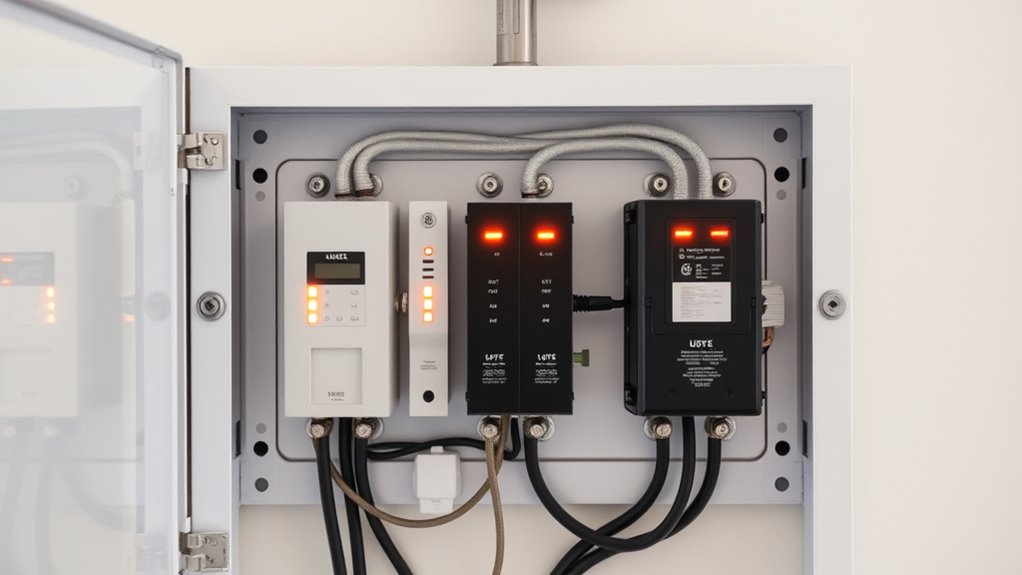
A surge protection system relies on several key components working together to shield your home from voltage spikes. These surge protection components include essential devices that absorb or divert excess energy, preventing damage. Electrical surge filtering is crucial to smooth out sudden voltage fluctuations, ensuring your appliances stay safe. The main components are:
Surge protection relies on key devices that absorb, divert, and filter electrical spikes to protect your home.
- Surge Protective Devices (SPDs): These act as the first line of defense, clamping high-voltage spikes to safe levels.
- Electrical Surge Filters: They remove unwanted electrical noise and spikes, providing clean power to your devices.
- Main Disconnect and Grounding System: Ensures proper dissipation of surge energy into the ground, completing the protection loop. Proper grounding is fundamental to effective surge protection and system reliability.
Together, these components create a reliable barrier against damaging electrical surges, safeguarding your home and appliances.
How Does Surge Suppression Work?

Surge suppression works by quickly detecting and diverting excess voltage before it reaches your appliances. When lightning strikes nearby or a power surge occurs, voltage levels spike unexpectedly. Surge protectors sense these sudden increases instantly. They contain components like Metal-Oxide Varistors (MOVs) that act as a buffer, absorbing and redirecting surplus energy away from your devices. This process prevents damaging high voltage from passing through your wiring. The MOVs clamp the voltage to a safe level, effectively neutralizing the surge. As a result, your home’s electrical system stays protected from sudden events like lightning strikes and power surges. Regular maintenance and understanding the HEPA filtration technology can also help improve overall home safety and air quality. Without surge suppression, your appliances are vulnerable to damage and potential failure caused by unexpected voltage spikes. Implementing proper electrical safety measures can further enhance your home’s protection against electrical hazards. Additionally, incorporating surge protection devices at key points in your electrical system can provide comprehensive safeguarding. Understanding the importance of whole house surge protection can help ensure your entire electrical system remains secure during voltage fluctuations. Incorporating proper grounding techniques can further reduce the risk of electrical shock and enhance surge protection effectiveness.
The Role of Surge Protectors in Your Electrical Panel

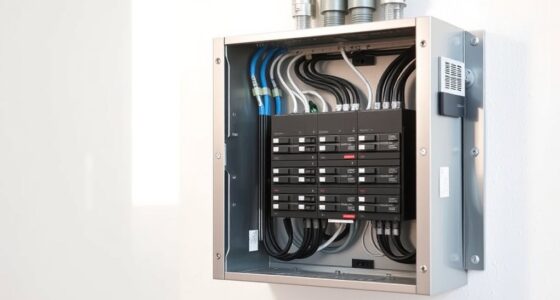
Surge protectors installed in your electrical panel serve as a central defense against voltage spikes that could damage multiple appliances simultaneously. They play a vital role in safeguarding your home’s electrical system by managing excess energy effectively. The grounding effectiveness of these devices ensures that surges are safely diverted away from your circuits, preventing costly damage. Proper grounding enhances surge protection, reducing the risk of damage. In addition, modern surge protectors often include features like automatic shutdown to prevent overloads. There are different surge protector types, such as whole-house units and panel-mounted devices, each offering varying levels of protection. Understanding the technology behind surge suppression can help you select the most suitable protection for your home. Consider these key points: 1. Proper grounding enhances surge protection, reducing the risk of damage. 2. Choosing the right surge protector type ensures thorough coverage. 3. A well-maintained panel protector provides peace of mind during lightning storms or power fluctuations.
Installation and Integration of Whole-House Surge Protectors
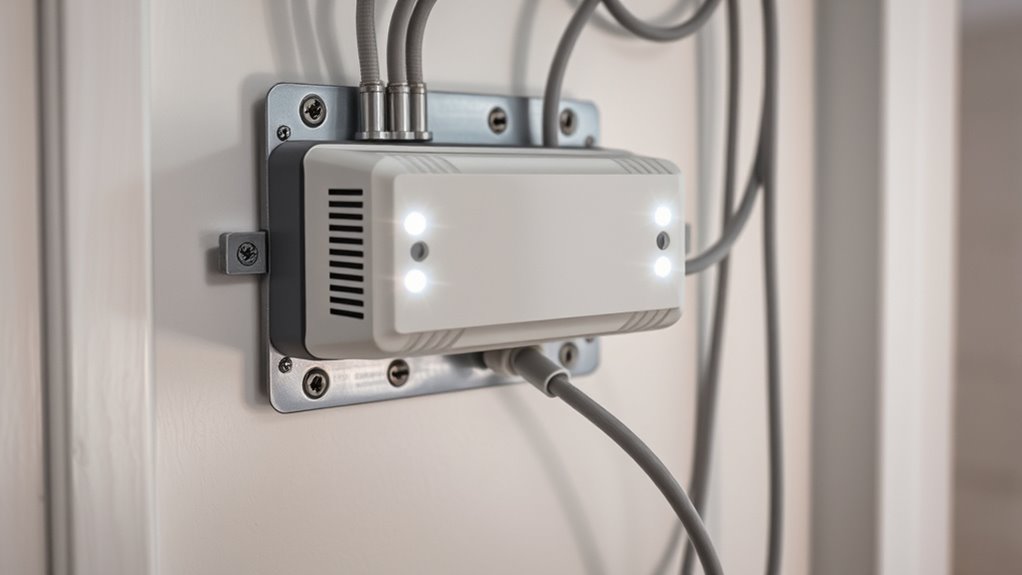
Installing a whole-house surge protector requires careful planning and precise integration into your electrical system. First, assess your home’s electrical panel and determine the best location for the surge protector, typically near the main breaker. Proper grounding techniques are essential; verify your grounding system is solid, with a low-resistance path to earth, to effectively divert surges. When selecting a surge protector, pay close attention to its ratings—specifically, maximum surge current and clamping voltage—to ensure it can handle typical power surges. Installation involves connecting the surge protector across the main power line, following manufacturer instructions and local electrical codes. Proper grounding and appropriate surge protector ratings are critical for top-notch performance and safety, providing reliable protection for your entire home. Additionally, understanding the role of grounding in surge protection helps ensure your system can effectively redirect excess voltage safely to the ground. Regular maintenance and testing your system periodically are vital to ensure ongoing system reliability and safety. Recognizing the importance of proper installation techniques can significantly enhance the effectiveness of your surge protection system. Moreover, consulting with a licensed electrician can help ensure compliance with electrical codes and optimal system performance.
Benefits of Using Whole-House Surge Protection
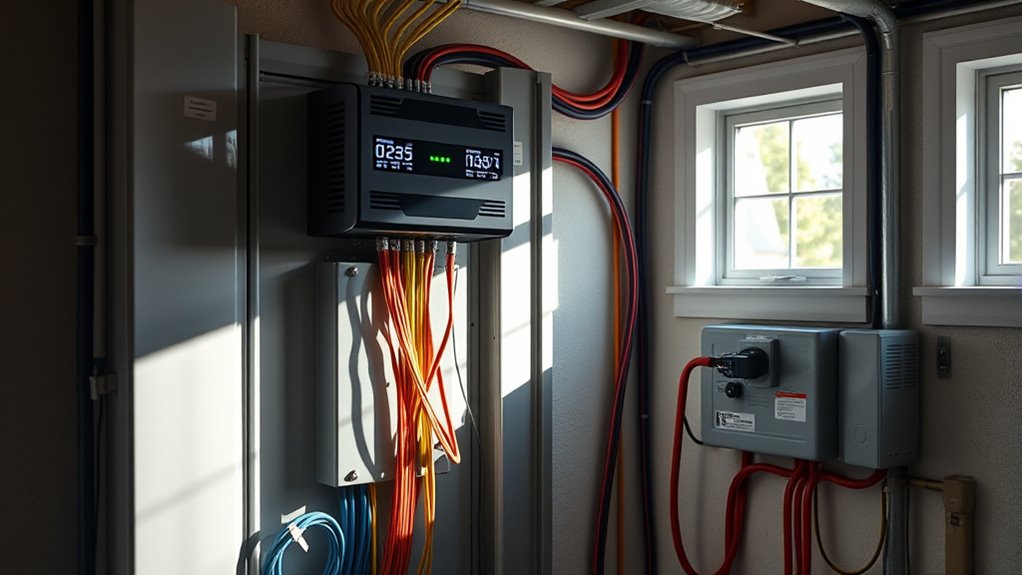
Using whole-house surge protection keeps your entire home safe from unexpected power surges. It helps prevent damage to your appliances and electronics, saving you money on repairs or replacements. With this system in place, you can enjoy peace of mind knowing your home is better protected. Additionally, electrical safety measures ensure that your system functions properly and reduces the risk of electrical hazards. Proper grounding and surge protection devices are essential components that enhance overall safety. Implementing these measures also minimizes the chance of power quality issues, ensuring your electrical system remains stable and reliable. As market volatility increases, investing in alternative investments like surge protection can be a wise decision to safeguard your financial well-being. Furthermore, integrating home security systems can provide an added layer of protection by alerting you to electrical anomalies or surges in real time.
Protects Entire Home
Whole-house surge protection offers all-encompassing safety by shielding your entire home’s electrical system from damaging voltage spikes. You’ll feel more secure knowing that lightning strikes or unexpected power outages won’t threaten your appliances or disrupt your daily life. Here are three reasons why this protection is worth it:
- Peace of mind during storms—knowing your home is safe from lightning strikes that could cause costly damage.
- Prevents costly repairs—avoiding appliance replacements and electrical issues caused by power surges.
- Ensures continuous comfort—keeping your lights, HVAC, and electronics running smoothly despite power fluctuations. This comprehensive approach aligns with the importance of AI safety measures in managing complex systems reliably. Additionally, it helps prevent electrical damage caused by unexpected voltage surges.
- Supports electrical system integrity—by reducing the risk of damage to your home’s wiring and connected devices, whole-house surge protection helps maintain your electrical system’s longevity. Additionally, it can prevent the buildup of harmful voltage that may degrade your electrical components over time. Incorporating proper surge protection also helps preserve the overall electrical system health of your home, reducing potential hazards.
With whole-house surge protection, you’re safeguarding your home’s foundation, giving you confidence and security against unpredictable electrical events.
Reduces Appliance Damage
By protecting your entire home from voltage spikes, whole-house surge protection directly reduces the risk of damage to your appliances. Lightning strikes are a common cause of powerful power surges that can overload your electronics, leading to costly repairs or replacements. Without surge protection, these sudden voltage increases can fry sensitive devices like computers, TVs, and kitchen appliances. Whole-house systems work by diverting excess voltage away from your appliances, preventing damage before it happens. This not only extends the lifespan of your appliances but also saves you money in the long run. With surge protection in place, you can enjoy peace of mind knowing that your valuable electronics are shielded from unpredictable power surges caused by storms or utility issues.
Maintenance and Lifespan of Surge Protection Devices
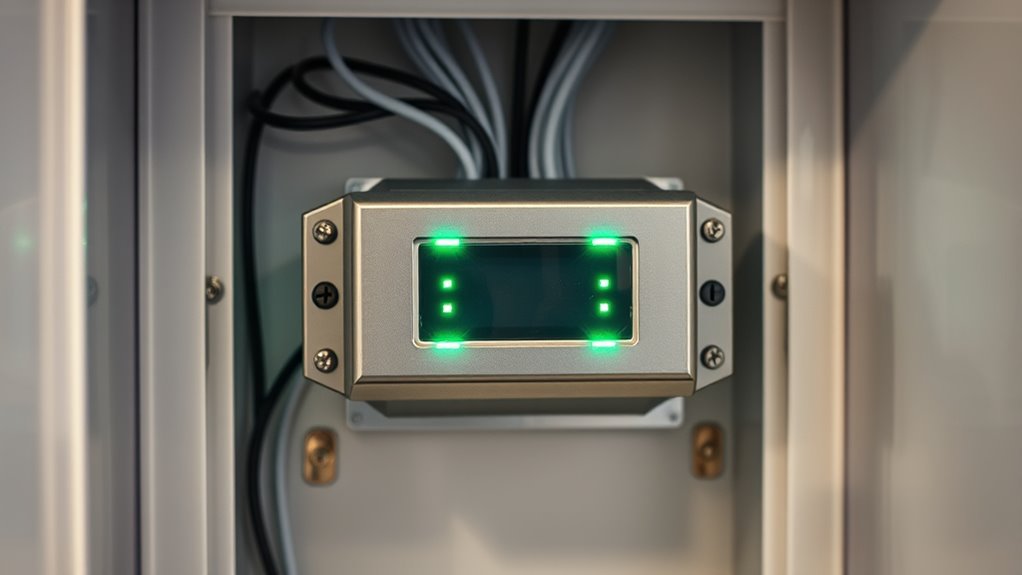
Regular maintenance is essential to guarantee your surge protection devices continue to function effectively and provide reliable defense against power surges. To maximize their lifespan, follow these maintenance tips:
- Inspect regularly for signs of damage or wear — don’t wait until a surge strikes.
- Test your devices annually to ensure they’re still working correctly.
- Replace when needed — surge protection devices have a limited lifespan, influenced by surge frequency and exposure to electrical storms.
Lifespan factors like surge intensity and environmental conditions can shorten your device’s effectiveness. Staying proactive with maintenance not only preserves your investment but also keeps your home safe. Remember, a well-maintained surge protector gives you peace of mind, knowing your home is protected when it matters most.
Frequently Asked Questions
Can Whole-House Surge Protectors Handle Multiple Simultaneous Surges?
Yes, whole-house surge protectors can handle multiple simultaneous surges, thanks to their surge capacity. These devices are designed to absorb high-energy events without failing, providing reliable protection. Proper protection coordination ensures that the main protector handles large surges, while secondary units protect individual appliances. This layered approach allows your entire home to withstand multiple surges at once, maintaining safety and preventing damage to your electronics and appliances.
How Does Climate Affect the Efficiency of Surge Protection Systems?
Climate impact and changing weather patterns can affect your surge protection system’s efficiency. Extreme heat, humidity, or lightning storms may cause surge protectors to wear out faster or become less effective over time. You should regularly check and maintain your system, especially after severe weather events. Ensuring your surge protector is rated for your climate conditions helps it perform reliably, safeguarding your home’s electrical devices from power surges.
Are There Specific Brands or Models Recommended for Different Homes?
You should look into brand recommendations like Siemens, Eaton, or Leviton, which are known for quality whole-house surge protectors. For your specific home, compare models based on joule ratings, clamping voltage, and warranty. Model comparisons can help you find the best fit, ensuring reliable protection. Always choose reputable brands with good reviews to safeguard your appliances effectively, especially considering your home’s size and power needs.
What Are Signs Indicating My Surge Protector Needs Replacement?
Did you know that most surge protectors last about 3-5 years? If you notice frequent power surges or your protector isn’t blocking surges anymore, it’s time to substitute it. Signs include a tripped indicator light or damage visible on the device. Keep in mind, a power surge can shorten your protector lifespan, so regularly check for these signs to ensure your home’s protection stays effective.
How Does Electrical Wiring Quality Influence Surge Protector Performance?
Your electrical wiring quality directly impacts your surge protector’s performance. If your wiring meets Wiring Standards and uses Quality Materials, it guarantees proper grounding and minimizes electrical noise, allowing surge protectors to function effectively. Poor wiring, like outdated or substandard wiring, can cause voltage fluctuations and reduce protection. To maximize surge protection, ensure your wiring is up to code and uses reliable materials, providing a stable environment for your surge protector to work at its best.
Conclusion
Investing in whole-house surge protection keeps your home’s electronics safe from unexpected power surges. For example, during a recent storm, a family with a professionally installed surge protector avoided costly appliance damage. By understanding how surge suppression works and maintaining your system, you guarantee long-lasting protection. It’s a small step that offers peace of mind, safeguarding your home and valuables from the unpredictable nature of electrical surges.