When choosing between wire nuts, Wago connectors, and crimp connections, consider ease of use, reliability, and safety. Wire nuts twist onto stripped wires and are simple and inexpensive, but require proper insulation afterward. Wagos use a lever to quickly secure wires without twisting, making them convenient and secure over time. Crimp connections involve compressing a metal sleeve onto the wire for a strong hold, often used in industrial settings. To understand which method suits your needs best, explore the details ahead.
Key Takeaways
- Wire nuts twist wires together and are inexpensive but require proper insulation and grounding techniques.
- Wago connectors offer easy, tool-less installation with secure connections and often include grounding options.
- Crimp connections provide vibration-resistant, durable links suitable for industrial and outdoor applications.
- Proper insulation—tape, heat-shrink, or built-in—prevents contact, moisture ingress, and corrosion across all connection types.
- Grounding methods vary: wire nuts may use specific grounding techniques, while Wagos and crimps connect to grounding bars or wires.
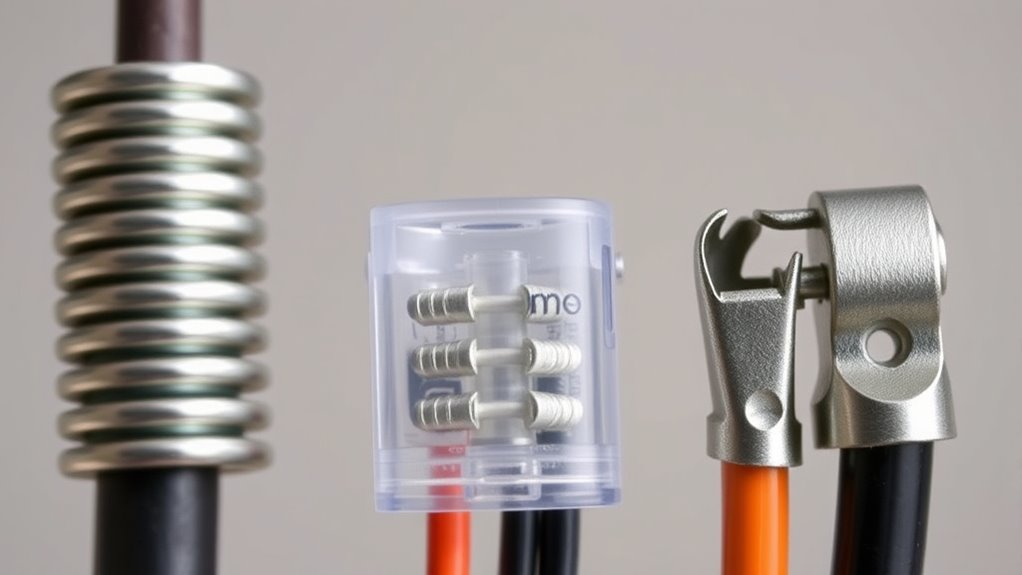
Wire nuts are perhaps the most familiar connection method. They work by twisting together the ends of wires and then screwing a plastic cap over them to secure the joint. Wire nuts are straightforward, inexpensive, and widely used in household wiring. They also incorporate specific grounding methods, ensuring that the electrical system remains safe and grounded properly. Proper grounding methods are crucial because they prevent electrical shocks and protect equipment from surges. When using wire nuts, you should ensure that wires are stripped to the proper length and twisted tightly before attaching the nut. Insulation techniques are vital here; after securing the connection, you can wrap the joint with electrical tape or use heat-shrink tubing to add an extra layer of insulation, preventing accidental contact and moisture ingress. Additionally, understanding grounding techniques is essential for maintaining system safety and preventing electrical hazards.
Wire nuts are simple, cost-effective, and ensure proper grounding in household wiring.
Wago connectors offer a different approach. These are lever-actuated connectors that allow you to insert wires directly without twisting or crimping. Wagos are especially popular for their ease of use and speed. They provide a reliable connection that maintains good electrical contact over time. When using Wago connectors, you don’t need to worry about insulation techniques as much because they are designed to hold wires securely and maintain insulation within the connector. However, you should still ensure that wires are properly stripped and inserted fully to prevent loose connections. Grounding methods are straightforward with Wagos because many models have dedicated grounding ports or can be used with grounding wires to connect multiple circuits. This method simplifies grounding and reduces errors.
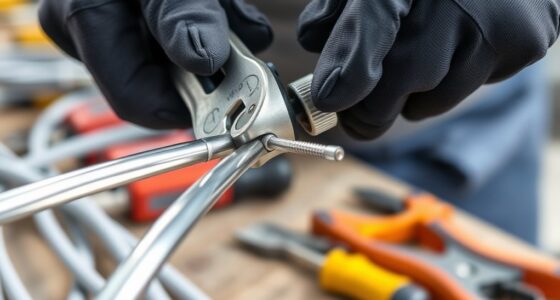
Crimp connections involve attaching a metal connector to a wire by compressing it with a crimping tool. Crimping provides a very secure, vibration-resistant connection, making it ideal for industrial or outdoor applications. To ensure safety, you should follow proper insulation techniques, like using insulated crimp connectors and applying heat-shrink tubing or electrical tape after crimping. Correct insulation protects the connection from moisture, corrosion, and accidental contact. Grounding methods for crimped connections involve attaching grounding wires to grounding bars or terminals, ensuring a solid and safe grounding path that’s crucial for overall system safety. Proper insulation and grounding are vital for maintaining connection integrity and safety in all types of electrical connections.
Frequently Asked Questions
Which Connection Type Is Best for Outdoor Use?
For outdoor use, Wago connectors are your best choice because they offer excellent weatherproofing options and corrosion resistance. Unlike wire nuts or crimp connectors, Wagos are designed to withstand the elements, ensuring a secure connection even in humid or wet environments. They’re easy to install and maintain, making them ideal for outdoor lighting, security systems, or any exposed wiring. Trust Wago for reliable, long-lasting outdoor electrical connections.
Can Wire Nuts Be Reused After Disconnection?
You can’t just reuse wire nuts like you’re swapping out batteries! Reusing them jeopardizes reconnection safety because the original grip weakens, risking loose connections or shorts. Always follow reuse guidelines—if a wire nut shows any sign of damage, corrosion, or looseness, toss it. For a safe, reliable connection, it’s best to replace wire nuts each time. Trust me, your electrical system will thank you for the extra caution!
Are There Size Limitations for Wago Connectors?
Yes, Wago connectors have size limitations based on wire size compatibility and connector color coding. Each color indicates a specific range of wire gauges, such as 22-14 AWG for the orange lever nuts or 18-10 AWG for the gray ones. Always check the color coding on the Wago to guarantee you’re using the correct size, preventing poor connections or damage. Using the right connector for your wire size is essential for safety and reliability.
How Do Crimp Connectors Affect Wire Flexibility?
Crimp connectors can reduce wire flexibility because they create a rigid, solid connection that limits movement. While they offer excellent connector durability, this rigidity means your wires become less bendable and more prone to stress at the connection point. If flexibility is a priority, consider alternative methods like Wago or wire nuts, which maintain more of the wire’s natural flexibility while providing reliable connections.
Which Connection Type Provides the Best Electrical Conductivity?
Your best bet for top electrical conductivity is crimp connections. They offer the lowest electrical resistance and superior contact reliability, ensuring a connection so perfect, it’s like a lightning bolt flowing seamlessly. Crimping creates a secure metal-to-metal bond, reducing contact resistance markedly. This makes crimp connectors ideal for high-current applications where reliable, efficient conductivity isn’t optional but essential. Trust in them for a connection that’s as dependable as your favorite superhero.
Conclusion
Choosing the right connection type depends on your specific needs and safety considerations. While wire nuts, Wagos, and crimps each have their advantages, some believe that crimps provide the most secure, long-lasting connection. However, research shows that proper installation matters more than the method itself. Ultimately, understanding the strengths and limitations of each option helps ensure a reliable, safe electrical connection—proving that technique and attention to detail are key, regardless of the method you select.