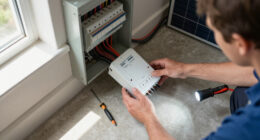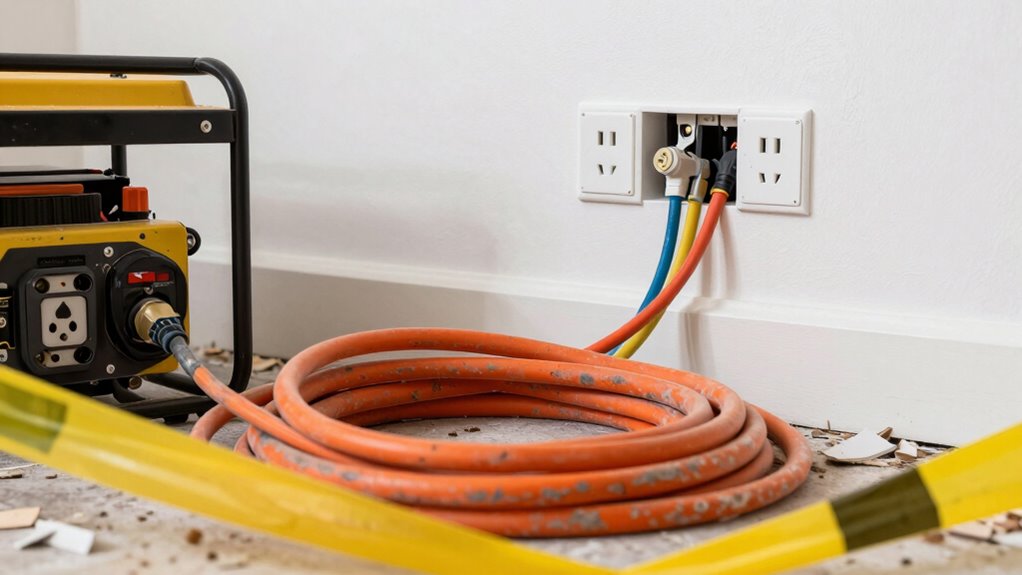

Temporary jobsite power differs from home power because it relies on portable generators and temporary setups, which lack the permanent safety features of residential wiring. Construction sites are unpredictable, so you need strict safety measures, proper grounding, and careful load management to prevent hazards. Unlike steady home power, site power requires regular inspections and careful planning to protect workers and equipment. Keep exploring to understand how these differences impact safety and efficiency on site.

Get backup power and energy gear delivered free — and shop member deals
- Fast, free delivery on millions of items
- Access to Prime Big Deal Days deals on October 6–7
- Prime Video, Amazon Music and more included
Key Takeaways
- Jobsite power relies on portable generators, which have variable output and require careful placement and management.
- Temporary site setups lack permanent wiring, necessitating flexible power distribution points and circuit protection.
- Construction environments pose higher electrical hazards due to moisture, debris, and heavy equipment, requiring stricter safety protocols.
- Home power systems are steady, regulated, and built-in with safety features like circuit breakers, unlike unpredictable temporary setups.
- Regular inspection and maintenance are critical on sites to prevent electrical failures, whereas home systems are more stable and monitored.
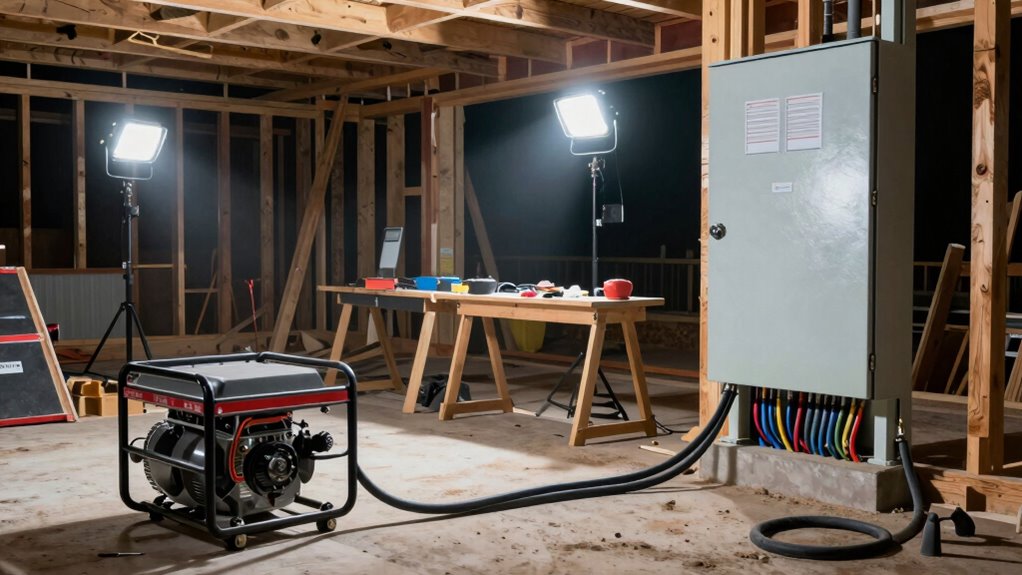
Have you ever wondered how temporary power setups on a construction site compare to the electricity you use at home? The difference lies primarily in the complexity and purpose of the power sources. At a construction site, you rely heavily on portable generators to supply electricity where there’s no permanent wiring. These generators are designed to deliver large amounts of power, often in rugged conditions, and must be maintained carefully to prevent electrical safety hazards. Unlike the steady, regulated power supply at home, portable generators can vary in voltage and current, which means you need to be vigilant about proper connections and grounding to avoid shocks or fires.
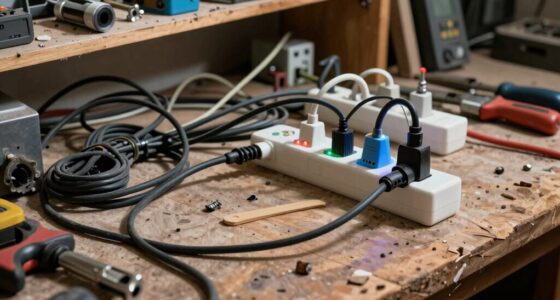
Electrical safety is paramount when working with temporary power sources. On a construction site, the environment is unpredictable—exposed wiring, moisture, and heavy equipment all increase the risk of electrical accidents. That’s why strict safety protocols are essential. Using proper grounding, avoiding overloading circuits, and inspecting equipment regularly help prevent electrical failures. As someone managing or working around temporary power, you should always follow manufacturer instructions and adhere to safety standards. A small oversight, like a damaged extension cord or an overloaded power strip, can lead to dangerous situations, unlike at home where safety measures are often built into the system.
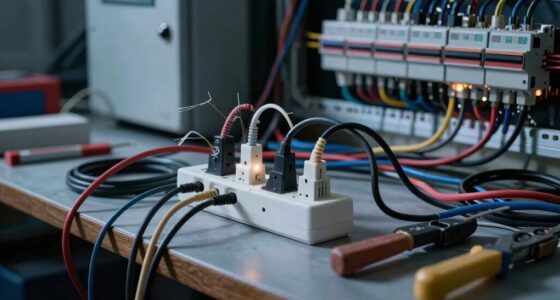
Additionally, understanding the nature of portable generators used on sites helps you better manage their risks and benefits. At home, your electrical system is designed for stability, with circuit breakers, grounded outlets, and built-in safety features. You rarely need to worry about overloading outlets or using extension cords that aren’t rated for the load. In contrast, on a jobsite, you often set up temporary power distribution points, which require careful planning to guarantee each circuit is protected and isolated. Portable generators used in these setups are often mobile, so you can position them conveniently but must also make sure they’re placed in well-ventilated areas to prevent carbon monoxide buildup. Proper power management practices are crucial to minimize hazards and ensure consistent operation. Furthermore, understanding electrical load balancing techniques is essential for maintaining safe and efficient power distribution in complex jobsite environments, reducing the risk of overloads and failures.
Being familiar with these essential safety measures can significantly reduce risks and ensure safe, reliable power during construction activities.
portable construction site generator
As an affiliate, we earn on qualifying purchases.
As an affiliate, we earn on qualifying purchases.
Frequently Asked Questions
How Do Temporary Power Sources Handle Extreme Weather Conditions?
Temporary power sources handle extreme weather by using weather-resistant enclosures that protect equipment from rain, snow, and wind. You’ll also find heavy-duty connectors designed for durability and secure connections in harsh conditions. These features guarantee your power setup remains reliable and safe, even during storms or extreme temperatures. Properly maintained and equipped, temporary power sources can withstand tough weather, keeping your jobsite running smoothly no matter the forecast.
Are There Specific Safety Standards for Temporary Jobsite Power?
About 80% of construction-related accidents involve electrical hazards, highlighting the importance of safety standards. Yes, there are specific safety standards for temporary jobsite power, including OSHA regulations and NFPA codes. You should undergo safety training to understand these standards and guarantee compliance. Following these guidelines minimizes risks, protects workers, and keeps your project running smoothly. Always prioritize adherence to established safety protocols for your temporary power setups.
What Equipment Is Required to Set up Temporary Power On-Site?
To set up temporary power on-site, you need essential equipment like a reliable generator, proper power distribution gear, and safety devices. Regular generator maintenance guarantees peak performance and safety, preventing outages. Use distribution panels and extension cords designed for construction environments to safely transfer power across the site. Always check local codes and safety standards to protect workers and equipment, ensuring a smooth, compliant power setup.
How Is Power Capacity Calculated for Temporary Jobsite Setups?
Imagine powering an entire city with a tiny generator! To do that, you calculate the power load by adding up all equipment’s wattages, then choose a generator with a capacity at least 20-30% above that total for safety. Proper generator sizing guarantees your temporary jobsite power can handle peak demands without overloads, keeping everything running smoothly and avoiding costly shutdowns. Always overestimate slightly for a buffer.
Can Temporary Power Be Used for Sensitive Electronic Equipment?
Temporary power can be used for sensitive electronic equipment, but you need to prioritize electronic safety. Use proper surge protectors and guarantee the power source is stable and clean, minimizing voltage fluctuations that could harm sensitive devices. It’s essential to verify the power quality and use dedicated circuits if possible. This way, you protect your sensitive devices from potential damage caused by inconsistent or unsafe temporary power supplies.
temporary power distribution box
As an affiliate, we earn on qualifying purchases.
As an affiliate, we earn on qualifying purchases.
Conclusion
In the end, understanding the difference between temporary jobsite power and home power is essential—misusing one for the other can lead to disastrous consequences. You’re not just dealing with regular outlets; you’re handling systems that can make or break safety on the job. Think of it like a lightning bolt compared to a flickering candle—one wrong move can turn your project into a catastrophe. Stay informed, stay safe, and respect the power you’re working with.
grounding kit for portable generator
As an affiliate, we earn on qualifying purchases.
As an affiliate, we earn on qualifying purchases.
construction site circuit breaker
As an affiliate, we earn on qualifying purchases.
As an affiliate, we earn on qualifying purchases.
Halloween Picks
halloween
As an affiliate, we earn on qualifying purchases.