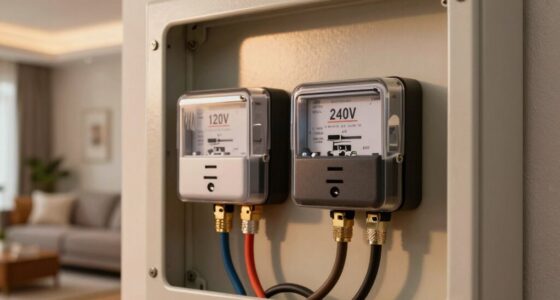
Knowing whether your home runs on 50Hz or 60Hz electricity is essential because it affects how your devices perform and last. Using appliances designed for a different frequency can cause them to run less efficiently, wear out faster, or even get damaged. Motor-driven gadgets like fans and refrigerators are especially sensitive. To guarantee safety and ideal functioning, match your devices to your local Hertz standard. Keep exploring to learn more about how Hz impacts your everyday devices.
Key Takeaways
- Devices operate most efficiently when matched to the local frequency (50Hz or 60Hz), preventing malfunctions and wear.
- Using incompatible frequencies can increase energy consumption and reduce device lifespan.
- Motor-driven appliances may run less smoothly or experience damage if operated on the wrong Hz.
- Frequency converters may be needed for appliances incompatible with local power supplies, adding cost.
- Always verify the device’s Hertz rating to ensure proper performance and avoid potential damage.

When choosing electrical systems, understanding the difference between 50Hz and 60Hz can be crucial. The Hertz rating determines the frequency of alternating current (AC) power supplied to your home, and this difference impacts how your devices operate and how efficiently they function. If you’re living in a region where the power grid supplies 50Hz, or you’re considering appliances from 60Hz regions, knowing these distinctions will help you make smarter choices. Power efficiency is closely tied to frequency because some devices are designed to operate most effectively at a specific Hertz rating. Running appliances on a frequency they weren’t designed for can cause them to work less efficiently or wear out faster. For example, motor-driven appliances like fans or refrigerators may run less smoothly or consume more energy if used with an incompatible frequency. Device compatibility is equally important; many electronic devices and appliances have components calibrated for a specific frequency. Using a 60Hz device on a 50Hz supply might lead to improper functioning, reduced lifespan, or even damage. Conversely, appliances designed for 50Hz may not perform as expected when connected to a 60Hz power source, especially if they rely on frequency-specific components like clocks, timers, or motors. Additionally, some appliances are equipped with frequency-sensitive components that can be adversely affected by voltage or frequency fluctuations, leading to potential malfunctions. When you’re selecting new appliances or planning for electrical upgrades, it’s crucial to check the frequency compatibility. If you’re in a 50Hz region, purchasing devices meant for 60Hz might result in substandard performance or early failure. In some cases, you might need to use a frequency converter or transformer to adapt the device to your local power supply, which can add cost and complexity. Additionally, certain sensitive electronics, such as computers or medical equipment, often specify their compatibility with a particular frequency to guarantee proper operation. Ignoring these specifications can lead to malfunctions or data loss. In terms of power efficiency, mismatched frequencies can cause increased energy consumption, as the device may work harder to compensate for the incompatibility. Over time, this extra effort not only increases your electricity bills but also shortens the lifespan of your devices. Consequently, when planning your electrical system or choosing new appliances, always verify the Hertz rating and confirm they match your local power supply. This attention to detail guarantees most effective device performance, reduces the risk of damage, and maximizes power efficiency. Understanding these differences allows you to make informed decisions, ensuring your home runs smoothly and your devices operate reliably without unnecessary energy waste.

Voltage & Frequency Converter & Transformer – Step-Down 220V 50Hz to 120V 60Hz – Continuous Power, Smart Protection Features, Pure Sine Wave Output – PowerXchanger
World’s Most Powerful Voltage and Frequency Converter for input 220v/50hz to output 120v/60hz. While small and portable, it…
As an affiliate, we earn on qualifying purchases.
As an affiliate, we earn on qualifying purchases.
Frequently Asked Questions
Can I Use a 50HZ Appliance in a 60HZ Country?
You can use a 50Hz appliance in a 60Hz country if the voltage compatibility matches, but be cautious. The different frequency may impact the appliance’s performance or lifespan, especially for motors or timing devices. Additionally, mismatched frequency can increase power surge risks or cause overheating. Check the manufacturer’s guidelines and consider using a frequency converter or transformer to ensure safe operation and prevent damage.
Do 50HZ and 60HZ Power Supplies Affect Appliance Longevity?
A stitch in time saves nine, so addressing power fluctuations is key. Using 50Hz appliances in a 60Hz supply or vice versa can impact appliance durability over time. The difference in frequency may cause motors and timing devices to wear faster, reducing lifespan. While some appliances handle both frequencies, prolonged exposure to mismatched power supplies might shorten their longevity, so it’s wise to check compatibility and consider voltage stabilizers.
Are There Safety Concerns Switching Between 50HZ and 60HZ?
Switching between 50Hz and 60Hz generally isn’t a safety concern, but you should be cautious. A power surge could damage your appliances if you switch improperly, and electromagnetic interference might cause malfunctions. Always check your device specifications, use proper transformers if needed, and avoid sudden power changes. Taking these precautions helps guarantee your safety and protects your equipment from potential issues related to frequency differences.
How Do Frequency Differences Impact Electrical Efficiency?
You might notice that frequency differences subtly influence your power transfer and energy efficiency. Generally, 60Hz systems transfer power more smoothly, potentially reducing energy loss, while 50Hz setups can be slightly less efficient. These variations can impact how your appliances perform and how much energy they consume over time. Embracing these nuances helps you optimize your home’s electrical system, ensuring you get the most reliable and efficient power flow possible.
Can Frequency Conversion Devices Fully Adapt 50HZ to 60HZ?
Yes, a good frequency conversion device can fully adapt 50Hz to 60Hz, but appliance compatibility is key. You need a reliable converter designed for your specific devices, especially for sensitive electronics. These devices work by adjusting the frequency to match your appliance’s requirements, ensuring proper operation without damage. Always check the converter’s specifications to confirm it supports your appliances and provides stable, efficient power conversion.

Klein Tools NCVT1P Voltage Tester, Non-Contact Low Voltage Tester Pen, 50V to 1000V AC, Audible and Flashing LED Alarms, Pocket Clip
NON-CONTACT DETECTION of AC voltage in cables, cords, circuit breakers, lighting fixtures, switches, non-tamper-resistant outlets, and wires
As an affiliate, we earn on qualifying purchases.
As an affiliate, we earn on qualifying purchases.
Conclusion
Choosing between 50Hz and 60Hz can impact your home’s appliances and comfort. For example, if you live in a country with 50Hz but use a device designed for 60Hz, it might run less efficiently or even get damaged. Always check your local standards and your appliances’ requirements. Making the right choice guarantees your devices work smoothly and last longer. So, stay informed and select the frequency that best suits your home for peak performance.

Upgraded Watt Meter Power Meter Plug Home Energy Monitor Electricity Usage Monitor, Electrical Usage Monitor, Energy Voltage Amps Meter Tester with Backlight, Overload Protection, 8 Display Modes
Multi-function power monitor: Our electric usage monitor can monitor the power (W), electricity(kWh), voltage(V), frequency(Hz), current(A), power factor(PF),…
As an affiliate, we earn on qualifying purchases.
As an affiliate, we earn on qualifying purchases.
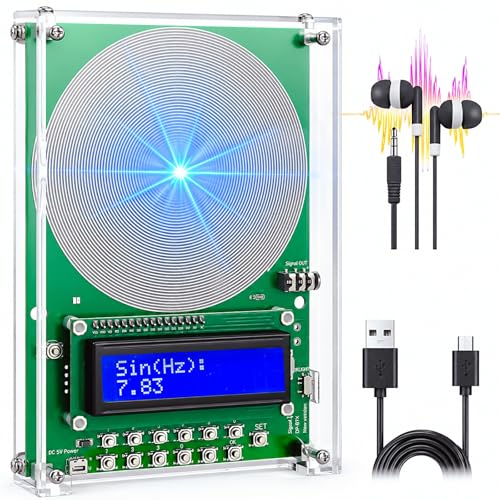
blinvcra Frequency Generator for Healing, 2026 Upgrade 7.83Hz Schumann Resonance Generator, Adjustable 0.01Hz–30kHz Frequency, USB Powered Device for Sleep, Meditation and Yoga with LCD Display
【7.83Hz Schumann Resonance with Quiet Signal Output】Designed to generate the Earth-inspired 7.83Hz Schumann resonance frequency, this frequency generator…
As an affiliate, we earn on qualifying purchases.
As an affiliate, we earn on qualifying purchases.