
When comparing FLA, AGM, and gel batteries, you’ll find that their charge profiles differ markedly. FLA batteries need careful voltage control during bulk, absorption, and float stages and require ventilation. AGM batteries handle higher charge rates with slightly different voltage settings, making charging faster and more efficient. Gel batteries need lower, controlled voltages to prevent damage, requiring a more cautious approach. To optimize safety and performance, understanding these profiles is key—continuing will reveal how to get the most from each type.

Get backup power and energy gear delivered free — and shop member deals
- Fast, free delivery on millions of items
- Access to Prime Big Deal Days deals on October 6–7
- Prime Video, Amazon Music and more included
Key Takeaways
- FLA batteries require higher voltage settings during bulk and absorption stages, with regular ventilation to handle gas release.
- AGM batteries handle higher charge rates with slightly lower voltage thresholds, enabling faster charging without maintenance.
- Gel batteries demand lower, carefully controlled voltages during all stages to prevent damage and ensure longevity.
- Overcharging risks vary: FLA produce hydrogen gas, AGM risk internal pressure buildup, Gel can suffer irreversible damage.
- Proper charger compatibility and voltage settings tailored for each type optimize performance and extend battery lifespan.
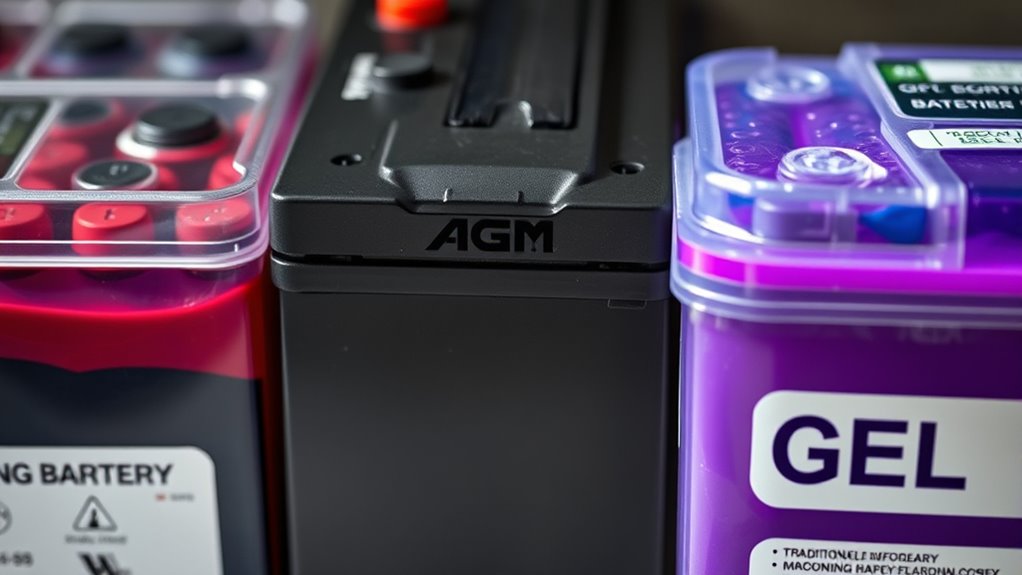
When choosing a battery for your vehicle or energy storage system, understanding the differences in charge profiles is essential. The three main types—Flooded Lead Acid (FLA), Absorbent Glass Mat (AGM), and Gel batteries—each have unique charging requirements that impact how you maintain them and guarantee safety. Knowing these distinctions helps you optimize performance and prevent damage, ultimately extending your battery’s lifespan.
Flooded Lead Acid batteries are the most traditional and commonly used. They require a specific charge profile that includes bulk, absorption, and float stages. During bulk charging, you’ll notice a rapid voltage increase as the battery accepts a high current. As it reaches near-full capacity, the absorption phase maintains a steady voltage to top off the cells gently. Finally, the float stage reduces the voltage to keep the battery topped up without overcharging. Because FLA batteries contain liquid electrolyte, proper ventilation and regular maintenance—like checking electrolyte levels—are crucial. Safety considerations include avoiding overcharging, which can produce hydrogen gas, creating a risk of explosion in enclosed spaces. Battery maintenance for FLA units involves periodic inspection and topping off electrolyte levels, making sure terminals are clean and corrosion-free.
Flooded Lead Acid batteries need ventilation, electrolyte checks, and careful overcharge prevention for safety and longevity.
AGM batteries utilize a glass mat separator soaked with electrolyte, which makes their charge profile slightly different from FLA batteries. They can handle higher charge rates and have a lower internal resistance, resulting in faster charging times. Their charge profile still involves bulk, absorption, and float stages but at slightly different voltage levels optimized for their design. Because AGM batteries are sealed and maintenance-free, you don’t need to check electrolyte levels, but you should still monitor their voltage and current during charging. Safety considerations here focus on avoiding overvoltage, which can cause the internal pressure to rise and potentially damage the sealed case. Proper charger settings are essential to prevent overcharging and overheating, which could compromise safety and performance.
Gel batteries feature a silica-based gel electrolyte, making their charge profile more sensitive. They require a controlled, low-voltage charging process with a slow, steady current. The charge stages are similar—bulk, absorption, and float—but the voltages are lower and more precise, tailored to prevent the gel from drying out or boiling. Because they’re sealed and maintenance-free, you won’t need to top off electrolytes, but you must be cautious not to overcharge, as excessive voltage can cause irreversible damage. Safety considerations include avoiding high-voltage spikes and ensuring your charger is compatible with gel batteries’ specific requirements. Proper charging minimizes gas buildup, reducing the risk of leaks or damage.
Flooded Lead Acid (FLA) battery charger
As an affiliate, we earn on qualifying purchases.
As an affiliate, we earn on qualifying purchases.
Frequently Asked Questions
How Do Temperature Variations Affect Each Battery’s Charge Profile?
Temperature variations can importantly impact each battery’s charge profile by affecting temperature stability and charge efficiency. As temperatures rise, batteries may charge faster but risk overheating, reducing lifespan. Cold conditions slow down chemical reactions, decreasing charge efficiency and overall performance. You should monitor and maintain ideal temperatures for each type, guaranteeing consistent temperature stability. Proper management helps maximize battery life and ensures reliable power output regardless of environmental changes.
Can Different Brands of FLA, AGM, or Gel Batteries Have Unique Charge Profiles?
Yes, different brands of FLA, AGM, or Gel batteries can have unique charge profiles due to brand variations and manufacturing tolerances. These factors influence internal design, materials, and quality control, resulting in subtle differences in how each battery type accepts and maintains charge. Always check the manufacturer’s specifications for ideal charging procedures, as relying solely on general profiles might lead to less efficient performance or reduced battery lifespan.
What Are the Long-Term Impacts of Improper Charging on Each Battery Type?
If you neglect proper battery maintenance, long-term damage looms. Improper charging reduces charging efficiency, causing internal damage and gradual capacity loss. For FLA, you risk sulfation; for AGM, decreased cycle life; and for Gel, potential boil-over or dry-out. Over time, this weakens your battery’s performance and shortens its lifespan. Stay vigilant, follow correct charging protocols, and your batteries will serve you longer, avoiding costly replacements.
Are There Specific Charging Profiles for High-Discharge Applications?
For high-discharge applications, you need specific charging profiles to maximize battery safety and charging efficiency. You should use a high-current, quick-charging profile that prevents overcharging and overheating, especially for AGM and Gel batteries. Properly tailored profiles protect your batteries from damage, extend their lifespan, and ensure reliable performance. Always follow manufacturer guidelines and avoid generic charging methods to optimize safety and efficiency in demanding applications.
How Do Aging and Cycle Life Influence Optimal Charge Profiles?
Like a seasoned sailor tending to a fragile vessel, you must consider aging and cycle life when choosing charge profiles. As batteries age, degradation accelerates, demanding gentler charging to extend their life. Proper maintenance practices slow down battery degradation, preserving capacity and ensuring reliable performance. Ignoring these factors shortens cycle life, leading to costly replacements. Adjust your charging approach accordingly to keep your batteries healthy and maximize their lifespan.
As an affiliate, we earn on qualifying purchases.
Conclusion
Think of FLA, AGM, and Gel batteries as different types of engines, each with its own rhythm. FLA is like a steady heartbeat, reliable but slow to start. AGM is a sprinter, quick to respond and powerful. Gel batteries are the calm, steady tide—long-lasting and resilient. Choosing the right one depends on your needs, but remember, each has its unique dance, guiding your device smoothly across life’s journey.
Gel battery charger and maintenance kit
As an affiliate, we earn on qualifying purchases.
As an affiliate, we earn on qualifying purchases.
As an affiliate, we earn on qualifying purchases.
Fall Picks
fall essentials
As an affiliate, we earn on qualifying purchases.