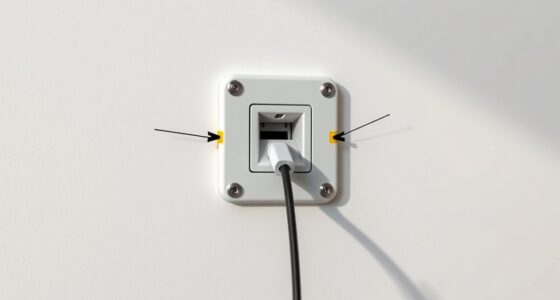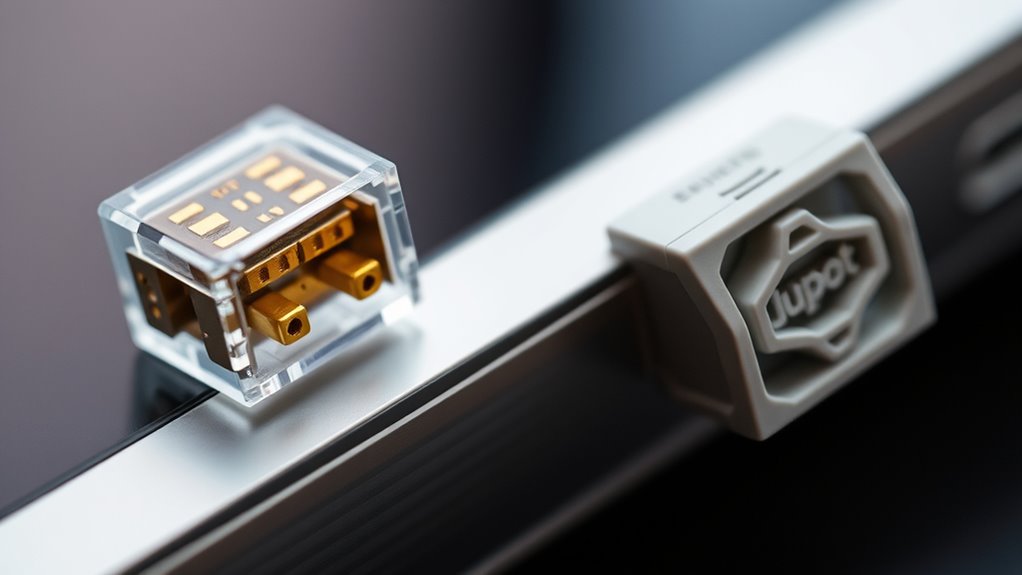

When choosing between open and proprietary connectors, you should consider compatibility, flexibility, and future growth. Open connectors follow industry standards, giving you more options to mix components from different vendors and avoid vendor lock-in. Proprietary connectors offer seamless integration within a specific vendor’s ecosystem but can limit your flexibility and increase costs over time. Understanding these differences helps you make smarter choices for your systems, and exploring further will give you insights to optimize your setup.
Key Takeaways
- Open connectors promote interoperability and flexibility but may face standardization issues, while proprietary ones ensure seamless compatibility within a specific vendor’s ecosystem.
- Proprietary connectors reduce compatibility risks but can lead to vendor lock-in, limiting future upgrades and increasing long-term costs.
- Open standards allow mixing components from different vendors, supporting innovation and future-proofing, though they may require thorough testing for compatibility.
- Proprietary solutions often provide easier initial integration but restrict options, potentially complicating system expansion or vendor changes later.
- The choice depends on whether drivers prioritize system consistency and simplicity (proprietary) or flexibility and avoiding lock-in (open).
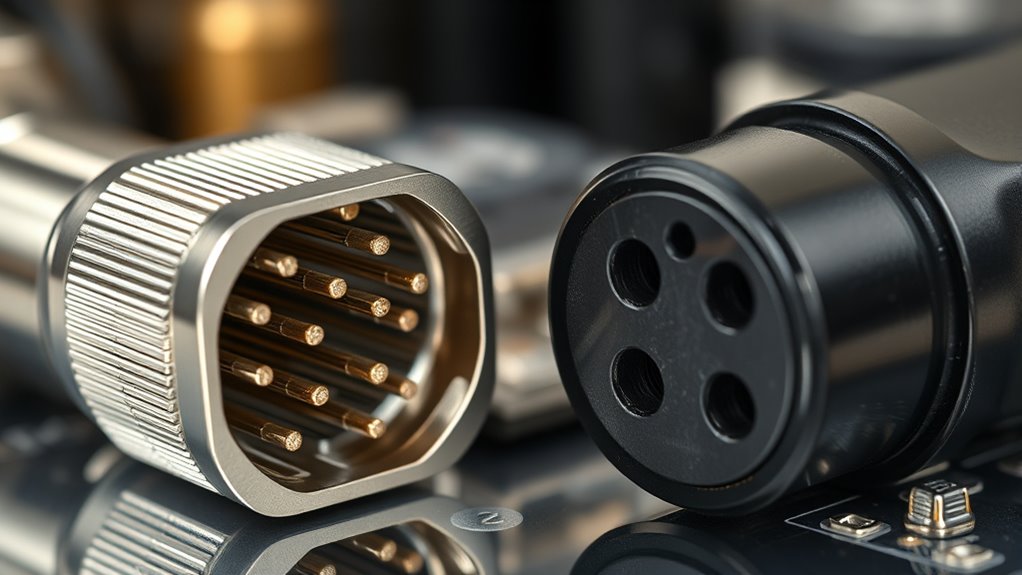
When choosing between open and proprietary connectors, understanding their differences is crucial for ensuring compatibility, flexibility, and future-proofing your systems. Open connectors are designed with standards that promote interoperability across multiple vendors, but they often face standardization challenges that can lead to inconsistencies in implementation. These challenges may result in minor variations that complicate integration, especially when dealing with different hardware or software environments. On the other hand, proprietary connectors are developed and controlled by a single vendor, which can ensure a certain level of optimization and consistency within their ecosystem. However, relying solely on proprietary solutions often means you’re subject to vendor lock-in, making it difficult to switch providers or upgrade components without significant cost or effort.
Choosing between open and proprietary connectors impacts compatibility, flexibility, and future-proofing your systems.
Standardization challenges with open connectors stem from the fact that, even within a set of standards, manufacturers might interpret specifications differently. These differences can cause compatibility issues, requiring you to test and verify each component’s interoperability thoroughly. While open standards aim to foster a competitive ecosystem and promote innovation, the reality is that inconsistent implementations can undermine those goals. This can lead to frustration, increased costs, and delays in deploying new systems. Conversely, proprietary connectors tend to be more straightforward—they’re designed as a complete package by a single vendor, so compatibility is usually assured within that vendor’s ecosystem. The downside is that your options become limited, and you may find yourself locked into a specific vendor’s offerings, making future upgrades or expansions more costly and restrictive.
Vendor lock-in is a significant consideration when choosing proprietary connectors. It can give you a seamless experience initially, but over time, it limits your flexibility. If a vendor’s prices increase, their technology becomes outdated, or if they cease support, you might be forced to replace entire systems rather than simply upgrading components. Open connectors, despite their challenges, offer more flexibility in this regard. They allow you to mix and match components from different vendors, giving you leverage in negotiations and the ability to adapt more easily to evolving technology standards. Still, you need to weigh this flexibility against potential compatibility issues and the increased effort required to manage a heterogeneous environment.
Additionally, understanding the contrast ratio of projectors is essential for optimizing image quality, especially in darker viewing environments. Ultimately, your decision should consider your specific needs, budget, and long-term goals. If consistency and ease of integration are paramount, proprietary connectors might serve you well—despite the risk of vendor lock-in. If you prioritize flexibility, avoiding vendor lock-in, and future-proofing your investment, open connectors provide a more adaptable approach, even if it means tackling some standardization challenges along the way.
As an affiliate, we earn on qualifying purchases.
Frequently Asked Questions
How Do Open Connectors Impact Data Security?
Open connectors can impact data security by exposing security vulnerabilities if not properly managed. They often lack the strict controls of proprietary options, making them more susceptible to attacks. However, if you implement data encryption and regularly update security protocols, you can mitigate these risks. You should carefully evaluate open connectors for security flaws and guarantee strong encryption practices to protect sensitive data from potential breaches.
Are Proprietary Connectors More Durable Than Open Ones?
Proprietary connectors tend to be more durable than open ones because they often have a longer connector lifespan, thanks to higher manufacturing quality standards. You’ll notice they’re built with precision, which reduces wear and tear over time. While open connectors are customizable, proprietary options usually offer better resilience and longevity, making them a smarter choice if you need reliable, long-lasting connections that withstand frequent use.
Which Connector Type Offers Better Compatibility Across Devices?
You’ll find open connectors generally offer better compatibility across devices because they follow industry standards, reducing interoperability challenges. Proprietary connectors often face compatibility issues since they’re designed for specific brands or models. Standardization benefits, like universal acceptance, help guarantee your devices work seamlessly together. If you prioritize broad device compatibility, open connectors are typically the better choice, easing integration and minimizing compatibility headaches.
What Are the Cost Differences Between Open and Proprietary Connectors?
Imagine walking a tightrope where open connectors cost less upfront, like a sturdy bridge built for many travelers, offering flexible cost analysis. Proprietary connectors, however, resemble exclusive, custom-made bridges, often costing more due to vendor lock-in and specialized parts. You’ll find open connectors generally save money initially and over time, while proprietary options may lead to higher expenses and limited choices, making your budget and flexibility the ultimate balancing act.
How Do Open Connectors Influence Future Technology Upgrades?
Open connectors promote standardization benefits, making future technology upgrades easier and more compatible across devices. You’ll find it simpler to integrate new components without needing proprietary adapters or custom solutions. This openness accelerates innovation, allowing faster adoption of cutting-edge tech. As a driver, you benefit from a more flexible, future-proof system that adapts seamlessly, reducing costs and minimizing downtime during upgrades.
As an affiliate, we earn on qualifying purchases.
Conclusion
Choosing between open and proprietary connectors is like selecting the right key for a lock—you want it to fit perfectly and work seamlessly. Open connectors offer flexibility, like a universal key, but may lack some security. Proprietary ones lock in compatibility, like a unique key designed just for your door. Knowing your needs helps you decide which path to take, ensuring your tech setup functions smoothly, like a well-oiled lock turning effortlessly every time you need it.
As an affiliate, we earn on qualifying purchases.
As an affiliate, we earn on qualifying purchases.