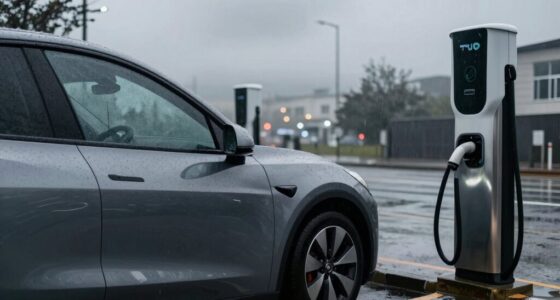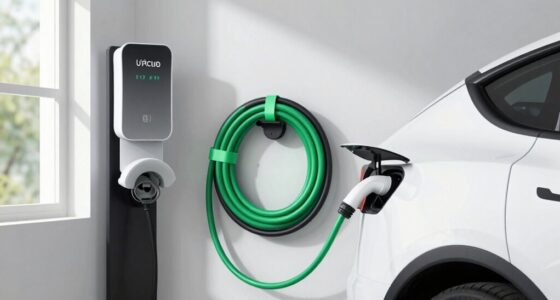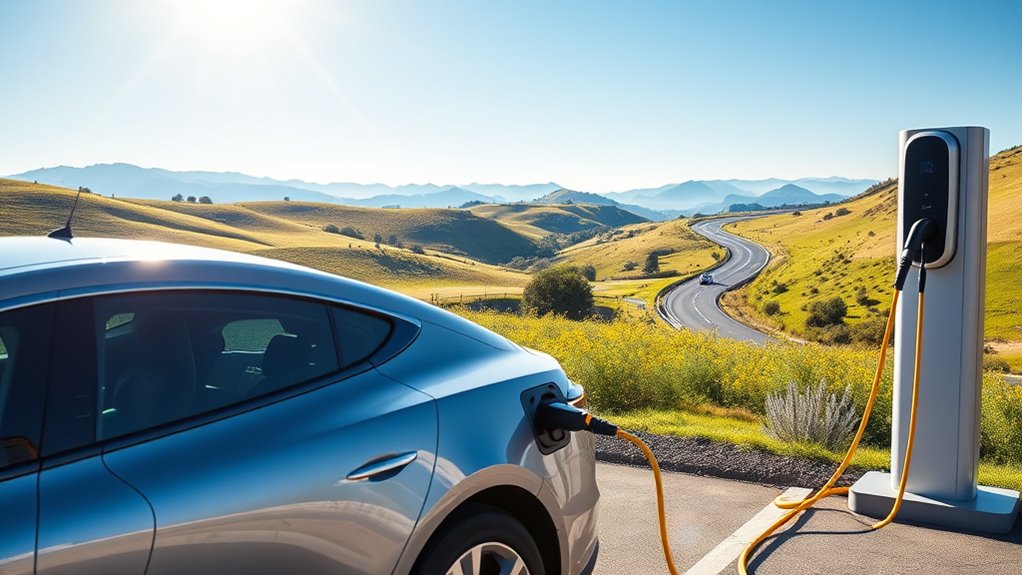

Planning an EV road trip means focusing on energy management instead of gas stops. You’ll use apps or in-car systems to find reliable charging stations along your route, considering charging speed and availability. Think about your vehicle’s range and schedule breaks around charging times for sightseeing or rest. This smarter approach helps avoid delays and makes your journey smoother. Keep exploring, and you’ll discover even more tips to make your trip enjoyable and stress-free.

Get backup power and energy gear delivered free — and shop member deals
- Fast, free delivery on millions of items
- Access to Prime Big Deal Days deals on October 6–7
- Prime Video, Amazon Music and more included
Key Takeaways
- Use real-time charging station data and apps to plan stops around availability and speed.
- Map routes with strategic charging stations to ensure sufficient range and minimize detours.
- Schedule charging breaks around sightseeing, meals, or rest to make stops enjoyable.
- Consider charging speeds, prioritizing fast chargers to reduce downtime during trips.
- Ensure awareness of your EV’s real-world range and plan buffer zones, especially in remote areas.
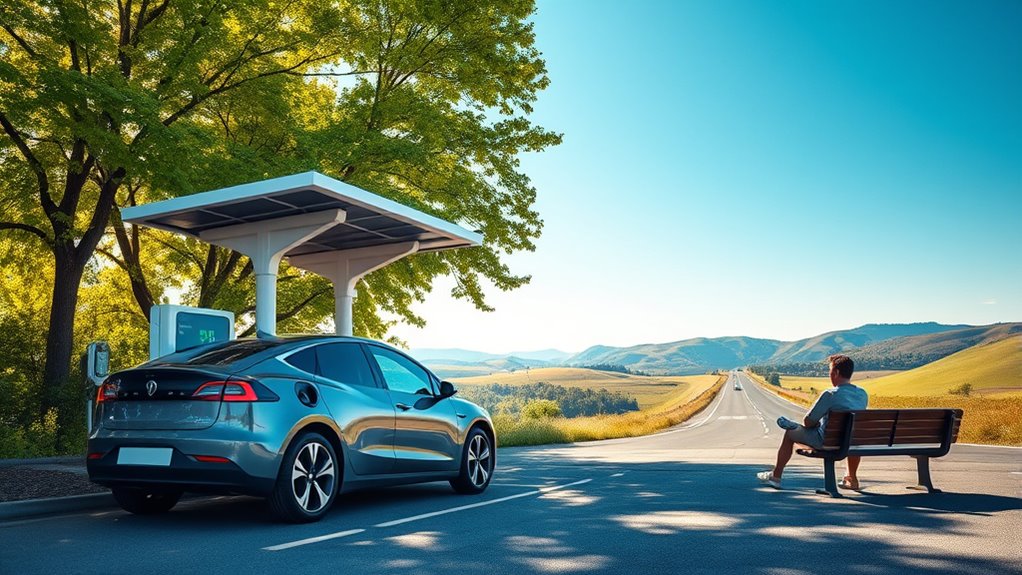
Have you ever wondered how electric vehicle (EV) road trips are transforming travel? It’s a game-changer, shifting the focus from traditional gas stops to intelligent energy management. With the growth of charging station networks, planning your journey has become more strategic but also more adaptable. Instead of racing to the nearest gas station, you map out your route around charging stations that fit your vehicle’s range and your schedule. This shift means you spend less time refueling and more time enjoying the sights and experiences along the way. As EV infrastructure expands, you’ll find charging stations appearing in more locations—rest stops, shopping centers, and even some roadside attractions—making it easier to plan longer trips without the stress of running out of power.
When you’re planning an EV road trip, it’s essential to think ahead about where and when to charge. Unlike gas stations, which are often conveniently located, charging stations can vary in availability and charging speed. That’s why EV road trip planning involves more than just choosing a route; it’s about understanding the network of chargers along your path. Most EV owners use apps or in-car navigation systems that show real-time availability and direct you to the nearest station. This information helps you optimize your stops, ensuring you don’t waste time waiting in line or detouring for a quick top-up. Proper planning also means considering charging times—some stations offer fast chargers that can replenish your battery in 30 minutes or less, while others may take much longer. Knowing this allows you to schedule breaks for meals, sightseeing, or rest, turning every stop into an enjoyable part of your trip. Additionally, understanding how charging station reliability impacts your journey can help you plan more confidently and avoid unexpected delays.
Another aspect of EV road trip planning is knowing your vehicle’s range and how it interacts with charging options. You’ll want to understand your EV’s real-world range under different conditions and plan your route accordingly. It’s wise to keep a buffer in your calculations, especially in remote areas where charging stations might be sparse. This proactive approach minimizes range anxiety and ensures you arrive at each station with enough power to complete your journey comfortably. As the network improves, charging stations are becoming more reliable, and fast-charging options are making long-distance travel more feasible than ever before.
Ultimately, EV road trip planning requires a bit more strategy upfront, but it pays off with smoother, more enjoyable journeys. Instead of stopping at gas stations, you’re stopping at thoughtfully chosen charging points—making energy management your new travel skill. With the expanding charging station networks and smarter planning tools, you can confidently explore new destinations, knowing that your EV will keep you powered along every mile.
As an affiliate, we earn on qualifying purchases.
Frequently Asked Questions
How Do Charging Costs Compare to Gas Expenses?
Charging costs are generally lower than gas expenses, thanks to widespread charging station networks and competitive electricity pricing. You’ll find that charging your EV costs less per mile than fueling a gas vehicle, especially with options like home charging or fast chargers. Since electricity prices vary by location, planning your stops around better rates can save you money, making EV road trips more economical overall.
What Is the Average Charging Time for Long Trips?
Imagine your journey as a symphony, where charging infrastructure plays a crucial role. On long trips, you typically spend 30 to 45 minutes at fast chargers, akin to a coffee break, to restore your EV’s energy. Keep in mind, frequent rapid charging can accelerate battery degradation over time, so balancing convenience with battery health is key to a smooth, harmonious adventure.
Are There Enough Charging Stations on Remote Routes?
You might find charging infrastructure limited on remote routes, which can heighten your range anxiety. While networks are expanding, some areas still lack enough charging stations, so it’s smart to plan ahead. Use apps to locate chargers along your route, and consider carrying a portable charger if possible. With proper planning, you can confidently tackle remote trips without worrying about running out of power.
How Do Weather Conditions Affect EV Range?
Ah, the joys of unpredictable weather impact on your EV range—because who doesn’t love seasonal variation messing with their plans? Cold temperatures drain battery life faster, while scorching heat can also cut your range. Rain or snow? They add extra drag, reducing efficiency. So, when you hit the road, remember weather conditions aren’t just a nuisance—they’re a crucial part of your journey’s planning. Stay prepared and keep that range in check!
Can I Plan a Trip Around Charging Station Availability?
Yes, you can plan a trip around charging station availability by leveraging charging infrastructure data and route optimization tools. Map out your route to include stations along the way, ensuring they’re conveniently located. Use apps that show real-time charging station status, so you avoid waits and detours. This approach helps you stay on schedule, reduces range anxiety, and makes your trip smoother and more enjoyable.
fast charging portable EV charger
As an affiliate, we earn on qualifying purchases.
As an affiliate, we earn on qualifying purchases.
Conclusion
As you set out on your EV road trip, remember that your journey is more about embracing the open road than chasing after every gas station. With a well-planned energy strategy, you’ll glide smoothly through scenic landscapes, leaving behind worries of refueling. Think of it as dancing with the wind, where every charge is a gentle step forward. Enjoy the ride, knowing you’re weaving a path of mindful adventure and eco-friendly exploration.
EV trip planning navigation system
As an affiliate, we earn on qualifying purchases.
As an affiliate, we earn on qualifying purchases.
As an affiliate, we earn on qualifying purchases.
Fall Picks
fall essentials
As an affiliate, we earn on qualifying purchases.