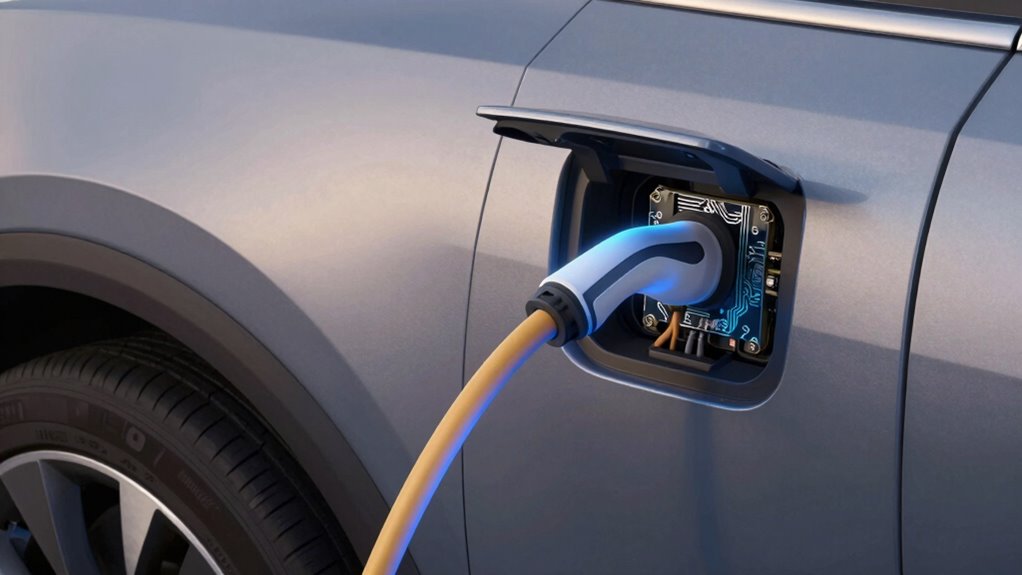
Once you understand your home’s electrical circuit, EV charging becomes much simpler because you see how power flows safely from your main panel to the charger and vehicle. Knowing about wiring, circuit breakers, and battery management helps you troubleshoot issues quickly and plan upgrades confidently. This awareness makes setup and maintenance less stressful. As you get familiar with these systems, charging your EV feels more predictable and manageable—continue exploring to gain even clearer insights.
Key Takeaways
- Understanding the electrical circuit helps identify and troubleshoot issues quickly, making charging more reliable.
- Knowing how power flows prevents overloads and ensures safe, efficient energy delivery to the EV.
- Awareness of system components simplifies planning for upgrades and future electrical needs.
- Recognizing how the battery management system works reassures proper charging and enhances safety.
- A clear grasp of wiring and circuit layout reduces stress and increases confidence during daily charging.
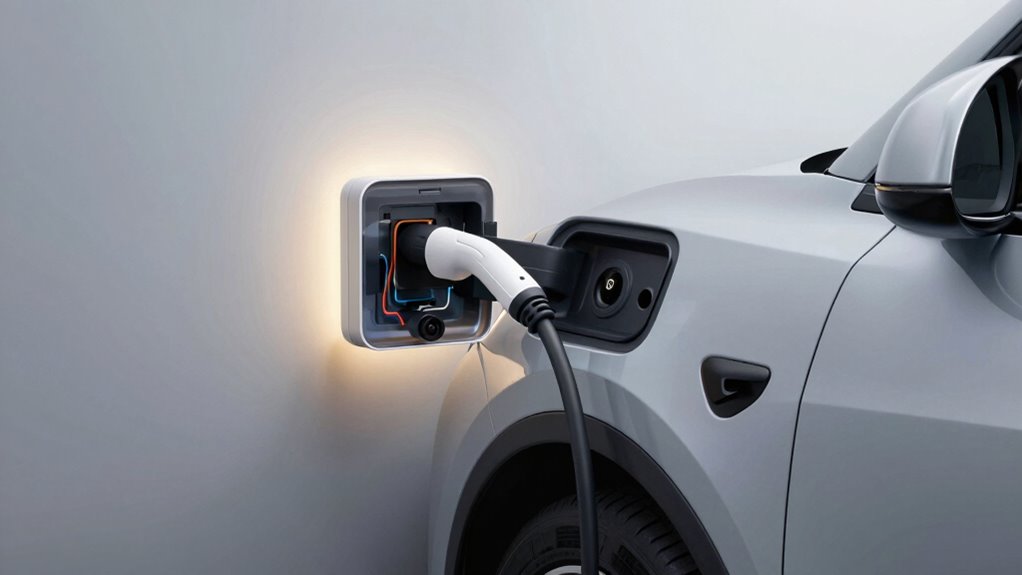
Charging your electric vehicle at home doesn’t have to be complicated. Once you understand how the circuit works, it becomes much easier to manage your charging setup. The core idea lies in grasping how your home’s electrical system handles power, especially through concepts like battery management and power distribution. These elements ensure your EV charges safely and efficiently, so you’re not left guessing about what’s happening behind the scenes.
Think of your home’s electrical circuit as a network that directs power from your main panel to your EV charger. The charger itself acts as a bridge, converting household current into the appropriate form to recharge your vehicle’s battery. When you understand the circuit, you realize that proper power distribution is essential. Your home’s wiring, circuit breakers, and the charger all work together to deliver just the right amount of energy without overloading the system. This knowledge helps you select the correct circuit breaker and charger capacity, preventing potential issues like tripped breakers or overheating. Additionally, understanding the electrical load your system can handle helps prevent overloads and ensures consistent charging performance.
By understanding the flow of power and how your vehicle’s battery management works, you can troubleshoot common issues more effectively. For example, if your charger isn’t delivering power, you might check whether the circuit breaker has tripped, or if your wiring needs an upgrade to handle higher loads. Recognizing the importance of power management in your system can also help you plan for future upgrades or additional electrical needs. Gaining knowledge about home electrical systems enables you to make more informed decisions about your charging setup and upgrades. When you see your home’s electrical system as a well-organized network, it’s easier to see that safe, efficient charging is about proper power distribution and battery management. You don’t need to be an electrician to understand these basics, but having that knowledge makes your daily charging routine smoother and less stressful. Recognizing that battery management systems actively monitor and optimize charging further clarifies how modern EVs ensure longevity and safety.
In essence, once you understand the circuit, you realize that home EV charging isn’t mysterious or complicated. It’s about managing power flow and respecting your vehicle’s battery needs. With this awareness, you can confidently set up your charging station and ensure your EV remains ready to go whenever you are.

EVIQO Level 2 EV Charger J1772 40A NEMA 14-50 – 240V Wall Charging Station
- Universal Compatibility: Works with all North American EVs and PHEVs
- Tesla Compatibility: Supports Tesla with J1772-to-NACS adapter (sold separately)
- Secure Connector: Rubberized J1772 connector with metal latch
As an affiliate, we earn on qualifying purchases.
As an affiliate, we earn on qualifying purchases.
Frequently Asked Questions
What Are the Safety Precautions for Home EV Charging?
Did you know that improper electrical safety causes over 50% of home electrical fires? When charging your EV at home, make sure you use a dedicated circuit with proper circuit protection. Always inspect cables for damage, avoid overloading outlets, and keep chargers away from water. Following these safety precautions minimizes risks, keeps your electrical system safe, and guarantees a smooth, worry-free charging experience.
How Long Does It Typically Take to Charge an EV at Home?
It typically takes anywhere from 4 to 12 hours to fully charge your EV at home, depending on your charging speed and power capacity. Faster charging speeds come with higher power capacity, allowing you to fill up quicker. Your charger’s wattage and your vehicle’s battery size influence the time. If you opt for a Level 2 charger, you’ll notice considerably faster charging compared to standard outlets, making your EV ready sooner.
Can I Upgrade My Existing Electrical Panel for Faster Charging?
Yes, you can upgrade your electrical panel for faster charging. Electrical upgrades often involve increasing your panel capacity, allowing it to handle higher amperage needed for rapid charging stations. Consult a licensed electrician to assess your current panel’s capacity and determine if an upgrade is possible and necessary. This upgrade can substantially reduce your charging time and provide a safer, more efficient electrical system for your EV needs.
What Are the Costs Involved in Installing a Home EV Charger?
Installing a home EV charger typically costs between $500 and $2,500, depending on the charging station type and installation complexity. You’ll need to take into account costs for the charger itself, potential electrical panel upgrades, and professional installation. Opting for an energy-efficient charging station can save you money long-term by reducing electricity use. Keep in mind, some utility companies offer rebates that can offset installation expenses, making the process more affordable.
How Does Electricity Rate Impact Charging Costs?
Think of electricity rates as the tide that influences your charging costs. When rates are high, your cost calculation for charging skyrockets, making each charge more expensive. Conversely, lower rates help you save money. To keep tabs, monitor your local electricity rates; they directly impact how much you’ll pay to power your EV. Staying aware helps you plan your charging times and budget effectively, turning a complex task into a straightforward one.

DIHOOL Ground Fault Circuit Breaker with Voltage Surge Arrester Protection, 15 Amp, 2 Poles, 120/240V, DIN Rail Mount Residual Current Circuit Breaker for EV Charger, Dryer, HVAC
- All-in-One Protection: Combines GFCI and surge protection
- Dual Leakage Detection: Detects AC and pulsating DC leakage
- High Surge Suppression: 20kA SPD for fast surge clamping
As an affiliate, we earn on qualifying purchases.
As an affiliate, we earn on qualifying purchases.
Conclusion
Once you understand the basic circuit, home EV charging feels much simpler than you thought. It’s not magic—just some straightforward electrical principles at work. Some might believe complex setups are necessary, but that’s a myth. When you see how the components connect and work together, it’s easy to grasp. So, next time you plug in, remember: understanding the circuit opens a whole new level of confidence and simplicity in charging your EV at home.
EVIQO Level 2 EV Charger J1772 40A NEMA 14-50 – 240V Wall Charging Station
- Universal Compatibility: Works with all North American EVs and PHEVs
- Tesla Compatibility: Supports Tesla with J1772-to-NACS adapter (sold separately)
- Secure Connector: Rubberized J1772 connector with metal latch
As an affiliate, we earn on qualifying purchases.
As an affiliate, we earn on qualifying purchases.

EV Charging Infrastructure Design: NEC 2026 Compliance, Load Management, and Fleet Charging Solutions (Electric Vehicle & Battery Engineering Series)
As an affiliate, we earn on qualifying purchases.
As an affiliate, we earn on qualifying purchases.